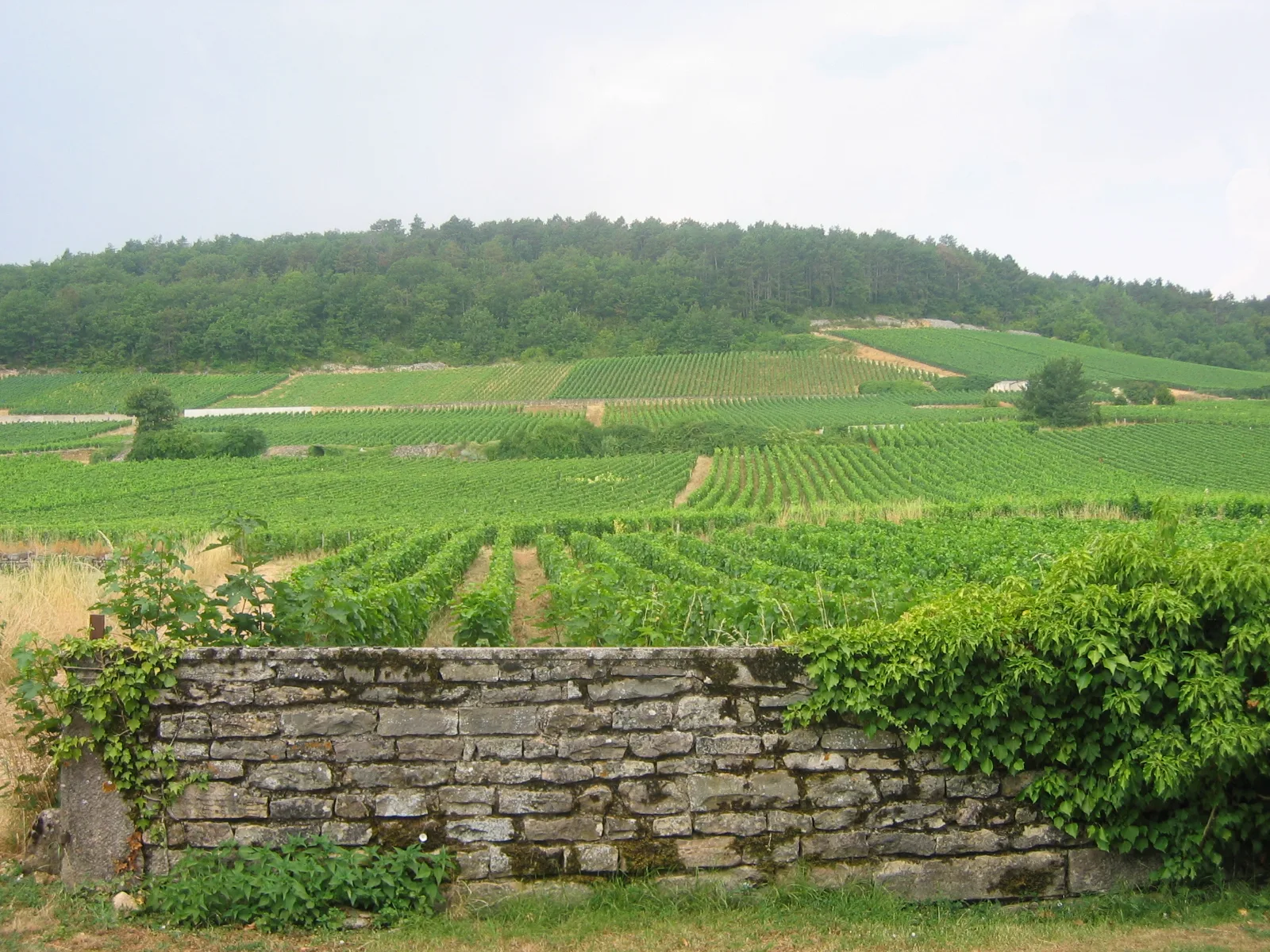
There is a vineyard in Burgundy called Romanée-Conti. It is about the size of two football pitches, under two hectares, and its wine routinely sells for fifteen to twenty thousand euros a bottle. Walk a few metres downhill: same grape, same weather, sometimes the same winemaker, and the wine might cost a tenth of the price. A few metres. One slope.
That is Burgundy in a nutshell. Where Bordeaux ranks the châteaux, the brands, Burgundy ranks the dirt, and it has spent the better part of a thousand years deciding exactly which patch of earth beats the patch right next to it. It is the most confusing fine-wine region on earth. This is our guide to untangling it: the geography, the famous Côte d’Or, the four-tier classification, and the complete roll-call of Grands Crus and Premiers Crus.
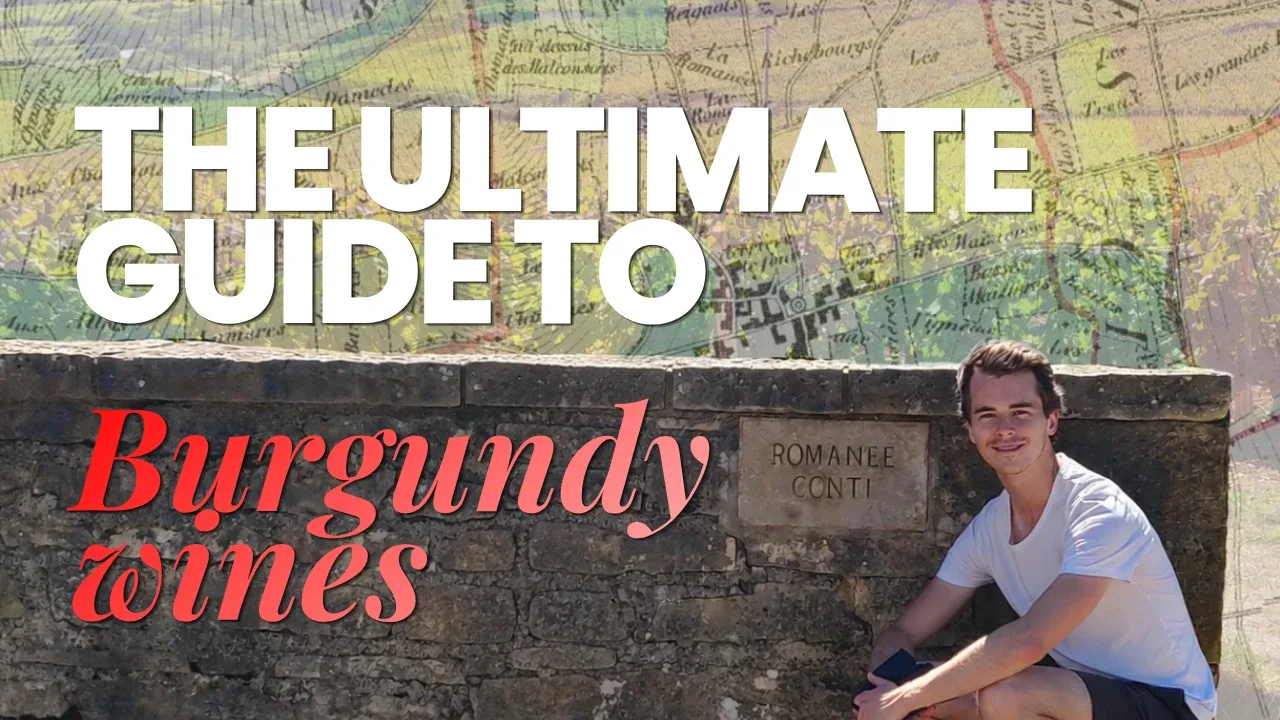
Watch the guide
Bordeaux ranks the brand, Burgundy ranks the dirt
This is the single most important idea, so it is worth slowing down on. In Bordeaux, a great producer like Château Margaux owns a large, more or less continuous estate, and the name carries the prestige. If they buy more land, that land effectively becomes Château Margaux.
Burgundy is the mirror image. Here the land carries the prestige and the producers come and go like tenants passing through history. A vineyard, a climat, has a name and a rank that stay fixed no matter who owns it. The grower’s job is to not get in the way of what the land is offering.
Two pieces of history made it this way:
- The monks. For centuries, Cistercian and Benedictine monks farmed these slopes, tasting and comparing parcel by parcel, year after year, and walling off the best plots. They drew the map we still use today.
- Just two grapes. For the serious wines, Burgundy is Pinot Noir for the reds and Chardonnay for the whites. When everyone uses the same grape, the only variable left to discuss is the place. The dirt becomes everything.
If you know Bordeaux better, our guide to Bordeaux’s wine classifications is the perfect companion to this one: the two regions are opposites, and seeing both makes each one click.
The five regions of Burgundy, north to south
Burgundy, Bourgogne in French, sits in east-central France, southeast of Paris. The shape to picture is long and thin, running north to south. We will travel down it, top to bottom, through the five regions that matter most.
| Region | Where | Mostly | Known for |
|---|---|---|---|
| Chablis | The far north, near Champagne | Chardonnay | Lean, crisp, mineral whites on fossil-rich Kimmeridgian limestone |
| Côte de Nuits | Northern Côte d’Or | Pinot Noir | The greatest reds on earth: Chambertin, Musigny, Romanée-Conti |
| Côte de Beaune | Southern Côte d’Or | Chardonnay & Pinot Noir | The greatest dry whites on earth, plus reds at Pommard and Volnay |
| Côte Chalonnaise | South of Beaune | Pinot Noir & Chardonnay | The value hunter’s paradise: Mercurey, Givry, Rully, Montagny |
| Mâconnais | The warm south | Chardonnay | Soft, sunny, well-priced whites: Pouilly-Fuissé, Mâcon-Villages |
A few notes that round out the map:
- The Côte de Nuits and the Côte de Beaune together form the Côte d’Or, the “Golden Slope”, which holds almost every Grand Cru in this guide.
- The region’s official body, the BIVB, formally counts six areas, adding the Châtillonnais in the north (a major source of sparkling Crémant de Bourgogne) and pairing Chablis with the wider Grand Auxerrois.
- Beaujolais sits just south of the Mâconnais and is administratively linked to Burgundy, but most people treat it as its own world: a different grape (Gamay), different soils, different style.
Want all of this on one wall? It is exactly what our Carte des vins de Bourgogne is built to show, drawn to scale from Chablis to the Mâconnais.
The Côte d’Or: the Golden Slope
Zoom in on the heart of it. The Côte d’Or, the “Golden Slope”, is just the Côte de Nuits and the Côte de Beaune stacked together: a ribbon of hillside only about 60 kilometres long and, in places, a few hundred metres wide. It is the most minutely mapped piece of wine land on the planet.
Here is the trick that makes it work. The slope faces roughly east, so it catches the gentle morning sun, which is ideal for slow, even ripening. And as you move up and down the hill, everything changes:
- At the bottom: deeper, richer soil and more frost risk. This is regional and village land.
- At the very top: thin soil, more wind and cold. Village and some Premier Cru.
- In the mid-slope sweet spot: perfect drainage, perfect exposure, limestone close to the surface. This is where you find almost every Grand Cru.
In other words, the rank of the wine maps almost directly onto its altitude on the hill. Once you can picture that slope, the whole classification suddenly makes sense.
The four levels of Burgundy’s classification
Unlike Bordeaux’s tangle of separate systems, Burgundy has one single pyramid covering the whole region, built on four levels. The level is written on the label and tells you how specific the wine is about its origin.
| Level | What the label tells you | Share of production |
|---|---|---|
| Régionale | A grape and a wide region, e.g. Bourgogne Rouge, Mâcon | About half (50 to 52%) |
| Village (Communale) | A single village, e.g. Gevrey-Chambertin, Meursault | About a third (37%) |
| Premier Cru (1er Cru) | A named vineyard inside a village, e.g. Volnay 1er Cru Les Caillerets | Around a tenth |
| Grand Cru | A single great vineyard, an appellation in its own right, e.g. Corton, Montrachet | Barely 1 to 2% |
The genius and the difficulty both live in the top two levels, and both come down to one word: the climat. A climat is a precisely delimited plot with its own name and reputation. Burgundy has more than a thousand of them, and the Climats of the Côte d’Or were inscribed as a UNESCO World Heritage site in 2015: officially, it is not the wine that is the treasure, it is the map.
The one rule that unlocks the label:
- A Premier Cru is a climat that sits within a village appellation, so the label names both: the village, then “1er Cru”, then the climat (Chambolle-Musigny 1er Cru Les Amoureuses).
- A Grand Cru is a climat so revered it became its own appellation, so the label names the vineyard alone: Chambertin, Musigny, Montrachet. No village, because the vineyard outranks it.
The 33 Grands Crus of Burgundy
There are 33 Grand Cru appellations, almost all of them on that mid-slope band of the Côte d’Or, plus Chablis Grand Cru in the north. Here is the complete list, grouped by where they sit.
Côte de Nuits: 24 Grands Crus (almost all red)
| Commune | Grands Crus |
|---|---|
| Gevrey-Chambertin | Chambertin · Chambertin-Clos de Bèze · Chapelle-Chambertin · Charmes-Chambertin · Griotte-Chambertin · Latricières-Chambertin · Mazis-Chambertin · Mazoyères-Chambertin · Ruchottes-Chambertin |
| Morey-Saint-Denis | Clos de la Roche · Clos Saint-Denis · Clos des Lambrays · Clos de Tart |
| Morey & Chambolle (straddling) | Bonnes-Mares |
| Chambolle-Musigny | Musigny (red, and a rare white) |
| Vougeot | Clos de Vougeot |
| Vosne-Romanée & Flagey-Échezeaux | Romanée-Conti · La Romanée · La Tâche · Richebourg · Romanée-Saint-Vivant · La Grande Rue · Grands Échezeaux · Échezeaux |
La Romanée, at about 0.85 hectare, is the smallest appellation in France. La Grande Rue was promoted to Grand Cru in 1992. Romanée-Conti and La Tâche are both monopoles of the Domaine de la Romanée-Conti.
Côte de Beaune: 8 Grands Crus (mostly white)
| Commune | Grands Crus |
|---|---|
| Aloxe-Corton, Ladoix & Pernand-Vergelesses | Corton (mostly red) · Corton-Charlemagne (white) · Charlemagne (white, now rarely declared) |
| Puligny-Montrachet & Chassagne-Montrachet | Montrachet · Chevalier-Montrachet · Bâtard-Montrachet · Bienvenues-Bâtard-Montrachet · Criots-Bâtard-Montrachet (all white) |
Corton is the Côte de Beaune’s only red Grand Cru and its largest. Montrachet is widely held to be the greatest dry white vineyard on earth.
Chablis: 1 Grand Cru appellation
Chablis Grand Cru is a single appellation made of seven climats on one south-west-facing slope above the town: Blanchot, Bougros, Les Clos, Grenouilles, Les Preuses, Valmur and Vaudésir. All white, all Chardonnay.
That makes 24 + 8 + 1 = 33 Grand Cru appellations. Between them, these names are the reason Burgundy sits at the very top of the fine-wine world.
The Premiers Crus of Burgundy
Below the Grands Crus sit the Premiers Crus: climats good enough to be named on the label but ranked one step down. There are around 640 of them (the BIVB counts 662 individual climats), and they are where a lot of the real interest, and the best quality-to-price, lives. A great Premier Cru from a serious grower often outshines a lesser Grand Cru.
You cannot memorise 640 names, so the useful map is by village. Here are the Premier-Cru villages with a few of the most celebrated climats to look for in each.
Côte de Nuits
| Village | Climats to know |
|---|---|
| Fixin | Clos du Chapitre · Clos Napoléon · Les Hervelets |
| Gevrey-Chambertin | Clos Saint-Jacques · Les Cazetiers · Combe aux Moines |
| Morey-Saint-Denis | Les Ruchots · Clos des Ormes · Les Millandes |
| Chambolle-Musigny | Les Amoureuses · Les Charmes · Les Fuées |
| Vougeot | Le Clos Blanc (white) · Les Cras · Les Petits Vougeots |
| Vosne-Romanée | Aux Malconsorts · Les Suchots · Cros Parantoux · Les Beaux Monts |
| Nuits-Saint-Georges | Les Saint-Georges · Les Vaucrains · Les Cailles |
Côte de Beaune
| Village | Climats to know |
|---|---|
| Ladoix-Serrigny | Le Clou d’Orge · Les Joyeuses |
| Pernand-Vergelesses | Île des Vergelesses · En Caradeux |
| Aloxe-Corton | Les Valozières · Les Fournières |
| Savigny-lès-Beaune | Aux Vergelesses · Les Lavières · Aux Guettes |
| Beaune | Clos des Mouches · Les Grèves · Les Bressandes |
| Pommard | Les Rugiens · Les Épenots |
| Volnay | Les Caillerets · Clos des Chênes · Taillepieds |
| Monthélie | Les Duresses · Sur la Velle |
| Auxey-Duresses | Les Duresses · Climat du Val |
| Meursault | Les Perrières · Les Genevrières · Les Charmes |
| Blagny | La Pièce sous le Bois |
| Puligny-Montrachet | Le Cailleret · Les Pucelles · Les Combettes · Les Folatières |
| Chassagne-Montrachet | Morgeot · Les Caillerets · La Boudriotte |
| Saint-Aubin | En Remilly · Les Murgers des Dents de Chien |
| Santenay | Les Gravières · Clos de Tavannes · La Comme |
| Maranges | Clos des Rois · La Fussière |
Côte Chalonnaise
| Village | Climats to know |
|---|---|
| Rully | Grésigny · Les Cloux · Rabourcé |
| Mercurey | Clos du Roi · Champs Martin · Clos des Barraults |
| Givry | Clos Salomon · Cellier aux Moines · Clos Jus |
| Montagny | Les Coères · Les Burnins · Le Vieux Château |
A useful detail for reading the map: some famous villages have no Premier Cru at all. Marsannay (a rosé specialist), Chorey-lès-Beaune, Saint-Romain and Bouzeron are village-level only, which often makes them smart value. Chablis also has Premier Cru and Grand Cru vineyards, with its own logic that we will save for a dedicated guide.
Why one vineyard can have eighty owners
Now for the thing that makes Burgundy uniquely maddening. In Bordeaux, one château owns its whole vineyard. In Burgundy, a single vineyard can be split between dozens of owners. The classic example is Clos de Vougeot, a Grand Cru of about 50 hectares behind one medieval wall, divided among roughly 80 different owners, each farming a few rows and making their own wine.
Why so fragmented? Blame the French Revolution, which confiscated the Church and noble estates and broke them up, and then Napoleonic inheritance law, which required estates to be divided equally among all heirs. Generation after generation, every plot was chopped into smaller pieces among more cousins.
Here is why it matters to you as a drinker: the vineyard name alone is not enough. Two bottles can share the exact same origin and taste worlds apart, because one was made by a brilliant, obsessive grower and the other by someone coasting. So in Burgundy you have to know two things: the vineyard (the dirt, which is the classification) and the producer (the domaine, which is the skill). Great dirt plus a great grower is the magic. Great dirt plus a lazy grower is an expensive disappointment. The land sets the ceiling; the producer decides how close you get to it.
If you want to go deeper than a single article can, our wine courses at the Academy walk through regions, tasting and pairing step by step.
How to read a Burgundy label
Put the pyramid and the climat rule together and almost any Burgundy label becomes readable. Two rules:
Rule one, find the place words.
- Bourgogne alone → regional, the base.
- A village name like Pommard → village level.
- Village name plus “1er Cru” plus a vineyard (Pommard 1er Cru Les Rugiens) → Premier Cru.
- A single standalone vineyard with no village (Corton) → Grand Cru.
Rule two, always note the producer. Find the domaine and remember it, because the grower matters as much as the ground. Building a short mental list of producers you trust is the most useful thing you can do in Burgundy.
One trap worth knowing: many villages annexed their most famous vineyard to their own name in the 1800s to borrow the glory. That is why Gevrey became Gevrey-Chambertin and Puligny and Chassagne both bolted on Montrachet. The hyphenated village name is not the Grand Cru: Gevrey-Chambertin is a village, while Chambertin alone is the Grand Cru.
Where to start with Burgundy
You do not need a Grand Cru to understand Burgundy. You need to taste the steps next to each other.
- Learn the grapes first. A clean, unoaked Chardonnay from the Mâconnais and a bright Pinot Noir from Marsannay or the Côte Chalonnaise show you the raw materials without the markup.
- Find value off the famous slope. Mercurey, Givry, Rully and Montagny in the Côte Chalonnaise, plus the Hautes-Côtes de Nuits and de Beaune, give you real Burgundy character for a fraction of Côte d’Or prices.
- Then climb one ladder. Pour a village Meursault next to a Meursault 1er Cru Les Genevrières, or a village Gevrey next to its Clos Saint-Jacques. That jump in precision is the whole lesson.
- Do not forget the bubbles. Crémant de Bourgogne is made the traditional way from the same grapes and is one of France’s great sparkling bargains.
For the wider picture, our guide to the main French grape varieties and our overview of the main wine regions of the world are good next reads.
Keep exploring Burgundy with us
We have spent a lot of the podcast inside this region. A few episodes that bring the map to life:
- Philippe Pacalet on discovering Burgundy, a masterclass in terroir and natural winemaking.
- Paul Zinetti at the Clos des Épeneaux, inside one of Pommard’s great monopoles.
- Antonin Pillot, a new generation in Chassagne-Montrachet.
- Maxime Girardin on leaving the family Burgundy wine name for Pegasus, a Meursault distillery making premium spirits.
- Damien Leclerc of La Chablisienne on the cool north.
And if you want the whole region on your wall, the Carte des vins de Bourgogne maps every appellation in this guide, climat by climat.
Frequently asked questions
How many Grands Crus are there in Burgundy?
Burgundy has 33 Grand Cru appellations: 24 in the Côte de Nuits, 8 in the Côte de Beaune, and Chablis Grand Cru, which groups seven climats under one name. Grands Crus are barely 1 percent of the region's production, which is why they are so sought after.
What is the difference between a Premier Cru and a Grand Cru?
Both are single named vineyards, called climats. A Grand Cru is its own appellation, so the wine is labelled with the vineyard name alone, like Corton or Montrachet. A Premier Cru sits one level below: it is a climat inside a village, so the label shows the village and the climat together, like Volnay 1er Cru Les Caillerets.
What grapes are used in Burgundy?
Almost everything is Pinot Noir for the reds and Chardonnay for the whites: together about 90 percent of the vineyard. Aligoté is the other white grape, with its own appellation, and Gamay rules just to the south in Beaujolais. Because nearly every serious wine uses the same two grapes, the only thing left to talk about is the place.
What is a climat in Burgundy?
A climat is a precisely bounded plot of vineyard with its own name, history and rank. Burgundy has more than a thousand of them, and the Climats of the Côte d'Or were listed as a UNESCO World Heritage site in 2015. They are the reason a single village can hold dozens of different wines.
Why is Burgundy wine so expensive?
The famous Grands Crus are rare and tiny: Romanée-Conti is under two hectares, so demand vastly outstrips supply. But most Burgundy is regional or village wine, and there is real value in the Mâconnais, the Côte Chalonnaise and the Hautes-Côtes. A good village Marsannay, Saint-Aubin or Mercurey is the smart way in.
Where should I start with Burgundy?
Start with one grape and one village, not at the top. Pour a village Chardonnay from the Mâconnais or a Pinot Noir from Marsannay or the Côte Chalonnaise, then taste a Premier Cru from the same area beside it. Tasting the steps next to each other teaches the hierarchy faster than any chart, and the producer matters as much as the plot.