Two bottles of red Bordeaux can share the same vintage and the same grapes, yet one costs fifteen euros and the other fifteen hundred. Often, the difference isn’t the wine in the glass. It’s a single line of text on the label, rooted in a classification system written down 170 years ago.
Bordeaux has five different classification systems. They contradict each other. Some haven’t changed in nearly two centuries, others are revised every decade. And one of the region’s most legendary appellations, Pomerol, refuses to have one at all.
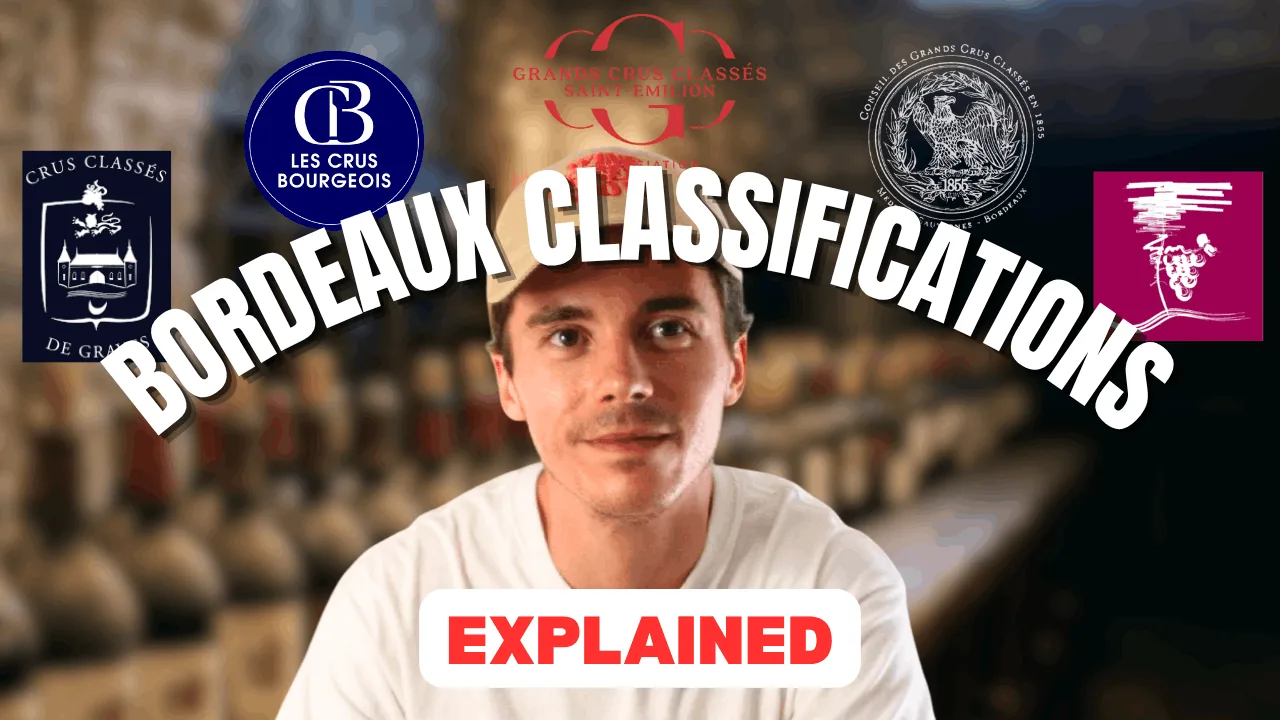
This guide breaks down every Bordeaux wine classification so you can read any label and understand exactly what you’re paying for.
Why does Bordeaux have so many classifications?
Bordeaux is enormous, roughly 110,000 hectares of vineyard, around 5,000 to 6,000 producers, and about 65 appellations. It isn’t one place, it’s a federation of wine regions split by water: the Gironde estuary.
On the Left Bank (west of the river), gravelly soils favor Cabernet Sauvignon. This is home to appellations like the Médoc, Pauillac, Saint-Julien, Margaux, and Graves.
On the Right Bank (east of the river), clay and limestone soils favor Merlot. The famous names here are Saint-Émilion and Pomerol.
These regions developed separately, with different soils, grapes, merchants, and cultures. So when rankings of “the best” wines emerged, Bordeaux never built one unified system. Each region wanted its own. That’s why a First Growth in the 1855 Classification isn’t equivalent to a Premier Grand Cru Classé in Saint-Émilion. They aren’t comparable rankings, they’re entirely different conversations.
The 1855 Classification (Médoc and Sauternes)
In 1855, Napoleon III hosted the Exposition Universelle in Paris, essentially a World’s Fair, and asked Bordeaux to provide a ranked list of its best wines to show off to the world.
Bordeaux’s Chamber of Commerce, wary of the politics of tasting, handed the task to the Syndicat des Courtiers, the wine brokers. The brokers didn’t taste anything either. Instead, they ranked châteaux by their historical selling prices, reasoning that the most expensive wines year after year were obviously the most reputable.
The result was 60 red wines, almost all from the Médoc, plus one outlier from Graves, Château Haut-Brion, sorted into five tiers called Growths (Crus in French).
At the top sit the First Growths (Premiers Crus). Originally there were four: Lafite, Latour, Margaux, and Haut-Brion. Below them came Second, Third, Fourth, and Fifth Growths. For a feel of what life inside a classified château actually looks like, our visit to Château Cantenac Brown, a Third Growth in Margaux, is a good place to start.
The one change in 170 years
The 1855 list is almost frozen in time. There has been exactly one promotion: in 1973, after roughly fifty years of relentless lobbying by Baron Philippe de Rothschild, Château Mouton Rothschild rose from Second Growth to First Growth. Today there are five First Growths: Lafite, Latour, Margaux, Haut-Brion, and Mouton Rothschild.
Depending on your view, this permanence is either the system’s genius or its greatest flaw. Some Fifth Growths now outperform Second Growths. Château Lynch-Bages, for instance, is a Fifth Growth that often drinks like a Second, while some higher-ranked estates have coasted on prestige for decades.
The sweet wines of Sauternes and Barsac
The 1855 Classification also ranked the sweet white wines of Sauternes and Barsac. Here, an even rarer rank exists. Château d’Yquem stands alone in a category created just for it: Premier Cru Supérieur. Below it are eleven Premiers Crus and fifteen Deuxièmes Crus.
1855 Classification at a glance:
- 60 red wines from the Médoc, plus one from Graves, in five tiers
- 27 sweet whites from Sauternes and Barsac in three tiers
- Only one change since 1855 (Mouton in 1973)
- Based on historical price, not blind tasting
- Ignores Saint-Émilion, Pomerol, and most of Graves
That last point is exactly why Bordeaux needed more classifications.
The Saint-Émilion classification
Saint-Émilion, on the Right Bank, is a medieval town and UNESCO World Heritage Site producing wines based mostly on Merlot blended with Cabernet Franc. In 1855, it was completely ignored.
After a century of frustration, Saint-Émilion created its own classification in 1955, and made it the opposite of the 1855 in one crucial way: it is revised roughly every ten years. Châteaux can be promoted or demoted. It’s alive, competitive, and occasionally chaotic.
There are three tiers:
- Premier Grand Cru Classé “A”, the absolute summit
- Premier Grand Cru Classé “B”
- Grand Cru Classé
The current version, the seventh edition, was released in 2022. It includes two châteaux at the “A” level, twelve at “B”, and 71 Grands Crus Classés, 85 estates in total.
The 2022 drama
Of the four Premier Grand Cru Classé “A” estates from the 2012 ranking (Cheval Blanc, Ausone, Angélus, and Pavie), three withdrew before the 2022 classification was announced.
The reason: the criteria had shifted. The ranking now weighed factors beyond wine quality, including marketing, wine tourism, winery architecture, and even social media presence. Cheval Blanc, Ausone, and Angélus walked away rather than be judged on those terms.
That left only Château Pavie from the original “A” group. Château Figeac was promoted to join it after years of feeling overlooked. Today, if you see “Premier Grand Cru Classé A” on a Saint-Émilion label, it represents just two châteaux on the entire planet. The three that withdrew still make spectacular wine, they simply no longer carry the title.
Watch out: “Grand Cru” vs. “Grand Cru Classé”
A common trap: wines labeled simply “Saint-Émilion Grand Cru” are not the same as Grand Cru Classé. “Grand Cru” without the Classé is merely an appellation rule that more than 200 estates qualify for, a much lower bar. Always look for “Grand Cru Classé”.
The 1959 Graves classification
South of the Médoc on the Left Bank lies Graves, named for its gravelly soil. It’s the oldest fine wine region in Bordeaux. Producers were making serious wine here when much of the Médoc was still swamp. Yet in 1855, only Haut-Brion earned recognition.
In response, Graves drew up its own classification in 1953, revised in 1959, and it’s the simplest of all. There are no tiers, just a single level: Grand Cru Classé de Graves, covering 16 châteaux. Some are classified for red wine, some for white, some for both. Notable estates include Haut-Brion, Domaine de Chevalier, Pape Clément, Château Haut-Bailly, and Smith Haut Lafitte.
Three things to know:
- Haut-Brion appears here despite already being an 1855 First Growth, the only château classified in two different systems.
- Almost all classified Graves estates fall within Pessac-Léognan, a sub-appellation carved out in 1987. If you see “Pessac-Léognan” on a label, you’re in classified Graves territory.
- Graves is unusual in classifying both reds and whites. The dry whites of Pessac-Léognan, made from Sauvignon Blanc and Sémillon, rank among France’s greatest and can age for decades.
Like the 1855, the Graves classification has barely changed since 1959.
The Crus Bourgeois du Médoc
The 1855 classified only 60 Médoc châteaux, but the region has hundreds of estates. The Crus Bourgeois account for many of the rest. The name dates back centuries, originally referring to wealthy Bordeaux citizens who owned vineyard land outside the city.
The first formal classification came in 1932, followed by a turbulent history including being annulled by a court in 2007. Since 2020 it has been on modern footing: a classification revised every five years, with three tiers. The most recent edition arrived in 2025:
- Cru Bourgeois Exceptionnel, 14 châteaux (2025)
- Cru Bourgeois Supérieur, 36 châteaux
- Cru Bourgeois, 120 châteaux
That’s 170 estates across the eight Médoc appellations.
This is where to look for seriously good Bordeaux without spending a fortune. A Cru Bourgeois Exceptionnel from a strong vintage often delivers much of a classified growth’s experience at a fraction of the price. Names worth knowing include Château Phélan Ségur, Château Potensac, Château d’Arsac, and Château du Taillan.
The modern system is also the most forward-looking of all Bordeaux classifications. Cru Bourgeois Supérieur and Exceptionnel estates must hold Level 3 High Environmental Value certification, and every classified bottle carries a QR code that traces the wine back to its estate.
The Crus Artisans du Médoc, the underdog
The fifth and least-known classification is the Crus Artisans du Médoc. These are the truly small estates, where one person or family grows the grapes, makes the wine, and sells it directly: no corporate ownership, no big consultants. The most recent edition, from 2023, recognizes 31 estates.
You’ll rarely find Crus Artisans wines outside specialty shops or the properties themselves, which makes them a treasure for wine travelers willing to knock on the door and taste with the owner.
Pomerol: the great anomaly
Finally, Pomerol, which has no classification at all.
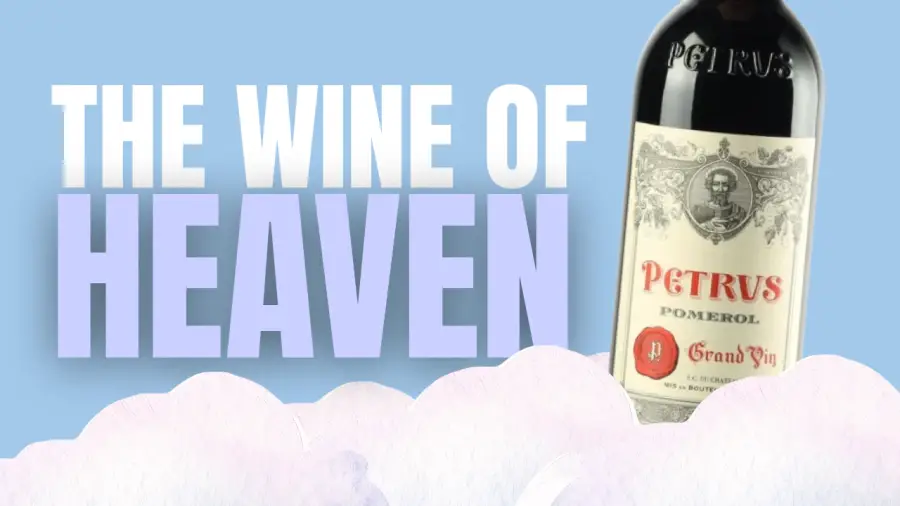
This tiny Right Bank appellation is home to Château Pétrus, arguably the most expensive Merlot on the planet, and Château Le Pin, sometimes pricier still. Both command thousands of euros a bottle, yet officially they’re ranked nowhere. Pomerol’s producers have always refused to create a hierarchy among themselves, trusting that the market and the drinkers already know.
What it all means for buying Bordeaux
Five classifications, summed up:
- 1855 Classification, Médoc reds plus Sauternes/Barsac sweet whites. Frozen in time, still the most prestigious, and endlessly debated.
- Saint-Émilion, the Right Bank’s own system, updated each decade, currently turbulent after three of its four top châteaux withdrew.
- Graves / Pessac-Léognan, from 1959, the only classification ranking both red and white wines.
- Crus Bourgeois, the best-value play in the Médoc, refreshed every five years, modern and transparent.
- Crus Artisans, tiny family estates, gold for wine travelers.
- Pomerol, no classification whatsoever.
The honest takeaway: a classification is a starting point, not a verdict. The 1855 ranking tells you what was great in 1855, not what’s great today. Some classified growths under-deliver, some unclassified estates beat them outright.
The label is a clue. Your palate is the answer.
Related reads
- Discovering Château Haut-Bailly, a Pessac-Léognan classified growth where the visit lives up to the reputation.
- Meeting Corinne Mentzelopoulos at Château Margaux, one of the five First Growths of 1855.
- Revealing the terroirs of Bordeaux with Jean-Baptiste Duquesne, a maverick view of what Bordeaux can be beyond the classifications.