Last week I got to dig a little deeper into California wine, at a tasting put on by Keenan Winery here in Hong Kong. Reilly Keenan, the third generation of the family, had flown over to walk us through the estate and its philosophy. The room was quiet and focused, and between a direct, funny and refreshingly transparent host and four honest wines, I came away with a clear picture of what this Napa Valley estate is about. So here is everything you need to know about Keenan Winery on Spring Mountain.
About the estate: the geography and climate of Keenan Winery
The history of Keenan Winery in Napa Valley
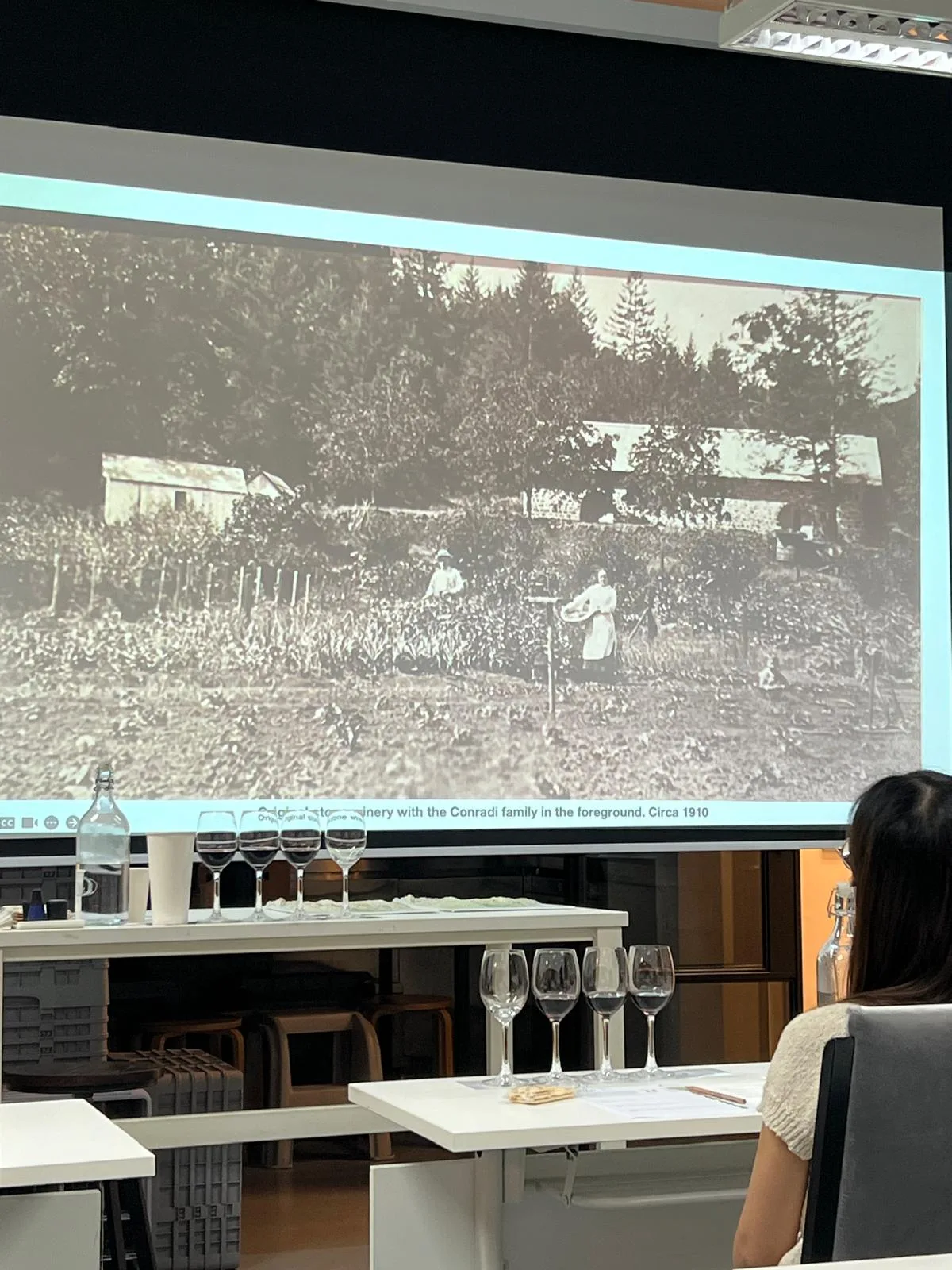
Keenan Winery was founded in 1974, when Robert Keenan bought 180 acres high up in the Spring Mountain District and rebuilt a working winery inside the walls of a long-abandoned stone cellar. That cellar was not his to begin with. It was first raised by Peter Conradi, a German immigrant who settled the site in 1890, planted Zinfandel and Syrah, and built the stone winery in 1904 that still anchors the estate today. Prohibition emptied the place out, and it sat quiet for decades until Robert arrived and brought it back to life.
The next chapter is a family one. By the late 1990s the estate had drifted, and in 1998 Robert’s son, Michael Keenan, took it back in hand and replanted the vineyards to lift the quality. Michael still runs it today, and the person pouring for us, Reilly, is the third generation to live and breathe the place. The estate has roughly 57 of its 180 acres under vine and makes somewhere around 12,000 cases a year, which is small by Napa standards. You can read the fuller story on the Keenan Winery website.
A mountain estate: altitude, water and dry farming
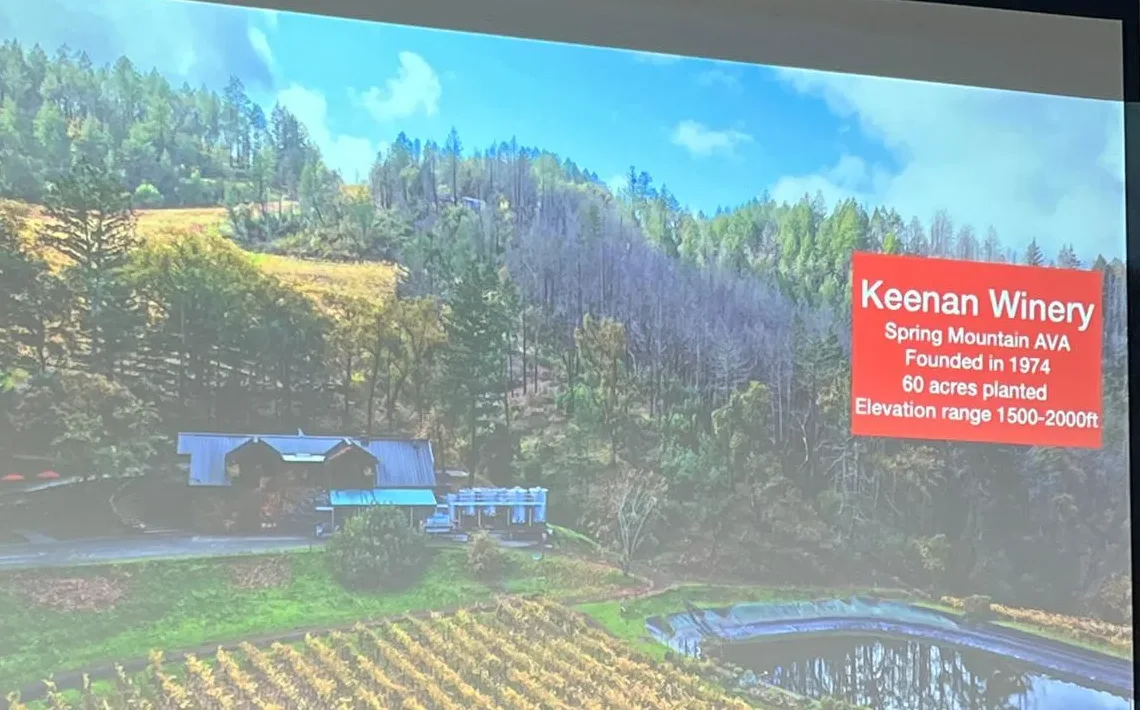
Almost everything about the wines starts with the address. The vineyards sit between roughly 1,500 and 2,000 feet on the eastern slopes of the Mayacamas range, inside the Spring Mountain District AVA. This is the coolest and wettest corner of Napa, mostly above the fog line, with cool days, nights that stay warmer than the valley floor, and a patchwork of volcanic and sedimentary soils.
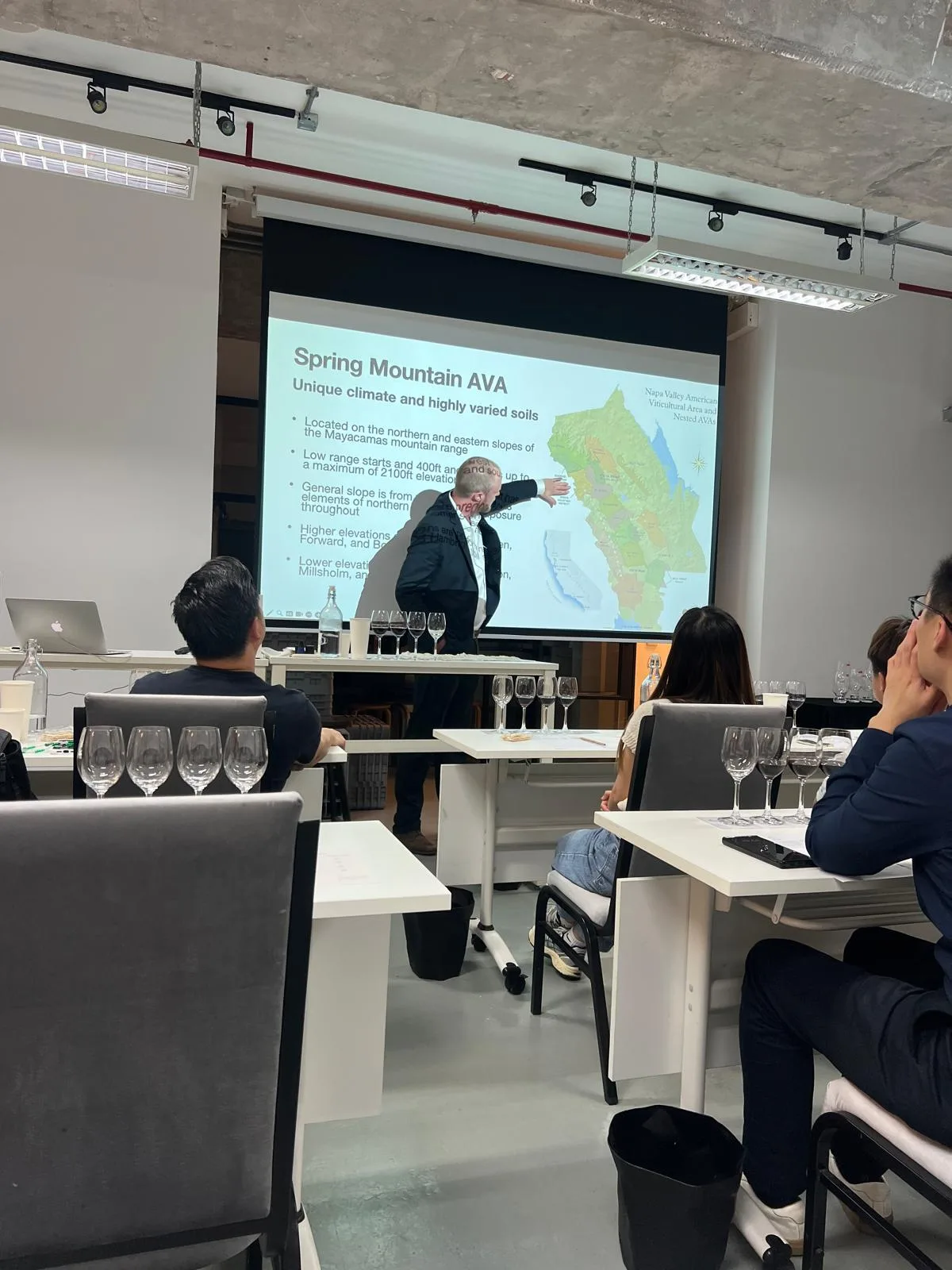
Two things stuck with me. First, the altitude and the mountain stress give smaller berries and naturally firmer structure, the kind of fruit that makes wine built to age. Second, Keenan dry-farms most of the estate, letting the vines find their own water instead of irrigating. That is genuinely rare in California, and it tells you a lot about how the family thinks: less intervention, more trust in the site.
The Keenan Winery wines we tasted
We worked through four wines, one white and three reds, and they made a tidy case for the house style: balance over power.
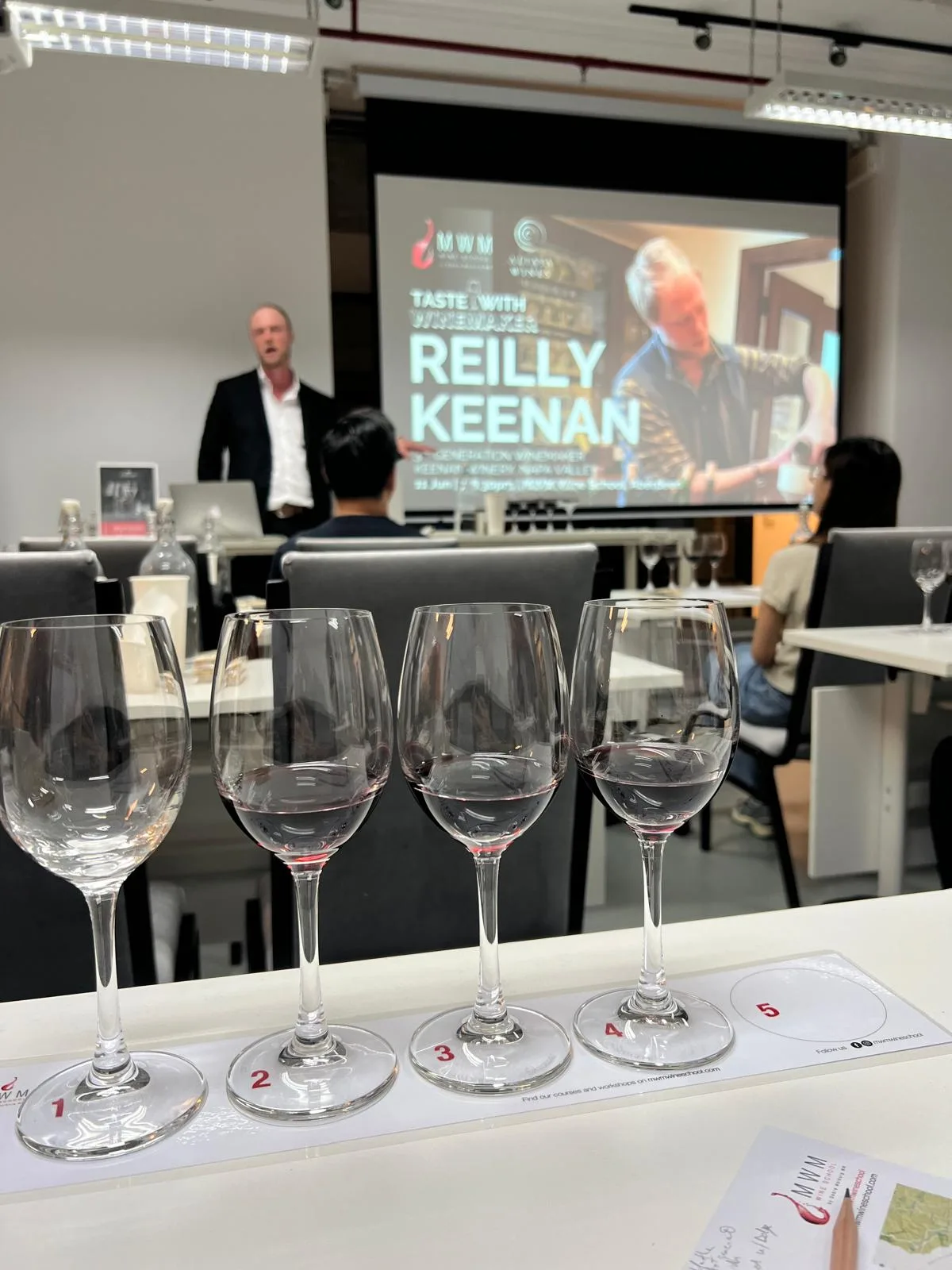
- Chardonnay, Spring Mountain District 2021. A clean, well-judged Chardonnay, raised about half in stainless steel and half in oak, so it has texture without ever tipping into heavy or buttery. Balanced and very easy to like.
- Merlot, Napa Valley 2019. My wine of the night. The texture is beautifully balanced, the tannins are present but never push, and it makes the case for Merlot as the estate’s real identity, which is unusual in a valley obsessed with Cabernet. Really well done.
- Mernet, Spring Mountain Proprietary Red 2019. You are probably wondering what a “Mernet” is. It is a word Reilly’s father, Michael, coined for the estate’s blend of Merlot and Cabernet Sauvignon: Mer for Merlot, net from Cabernet. You can find it cheesy (Reilly clearly does) or charming (I do). Either way, the wine is excellent: a classic, properly made expression of that blend.
- Cabernet Sauvignon, Spring Mountain District Reserve 2019. On paper this could be the safe, slightly boring wine of the set. In the glass it was the opposite. The tannins were fully resolved and melted in, it was elegant rather than showy, and the length genuinely impressed me. This is what “very good wine” quietly tastes like.
These are mountain reds with real structure, the same lineage of Napa Cabernet that famously upset the French at the Judgement of Paris in 1976. They are also built to age, so they are worth a proper spot in the wine cellar.
What I’ll remember from Keenan Winery
Two things, really. The wines first: all four were good, but the Merlot had a true identity that the others, as polished as they were, did not quite match. And then the people. Reilly was open and humble about what they do and how they do it, which is not always a given in Napa. The photos he showed of the vineyards were stunning, and his stories from the estate (some of which I cannot print) made it sound like a place you would happily disappear to for a week. Great wines, great people. That is usually the whole game.
View this post on Instagram