On 24 May 1976, a small blind tasting in Paris quietly broke the most stubborn belief in wine: that France made the best of it, and everyone else made the rest. Nine of France’s own experts tasted French and Californian wines without knowing which was which, and ranked a California wine first in both colours. The result became known as the Judgment of Paris (also spelled the Judgement of Paris), and the wine world never looked at itself the same way again.
Here is the full story: what happened, who won, the actual scores, why France was furious, and whether the upset held up over the next 50 years.
The Judgment of Paris at a glance
- What: a blind tasting pitting top California wines against French Bordeaux and Burgundy
- When: 24 May 1976
- Where: the InterContinental Hotel, Paris
- Organised by: Steven Spurrier, a British wine merchant in Paris, with Patricia Gallagher
- The panel: 11 tasters, 9 of them eminent French experts (only their scores counted)
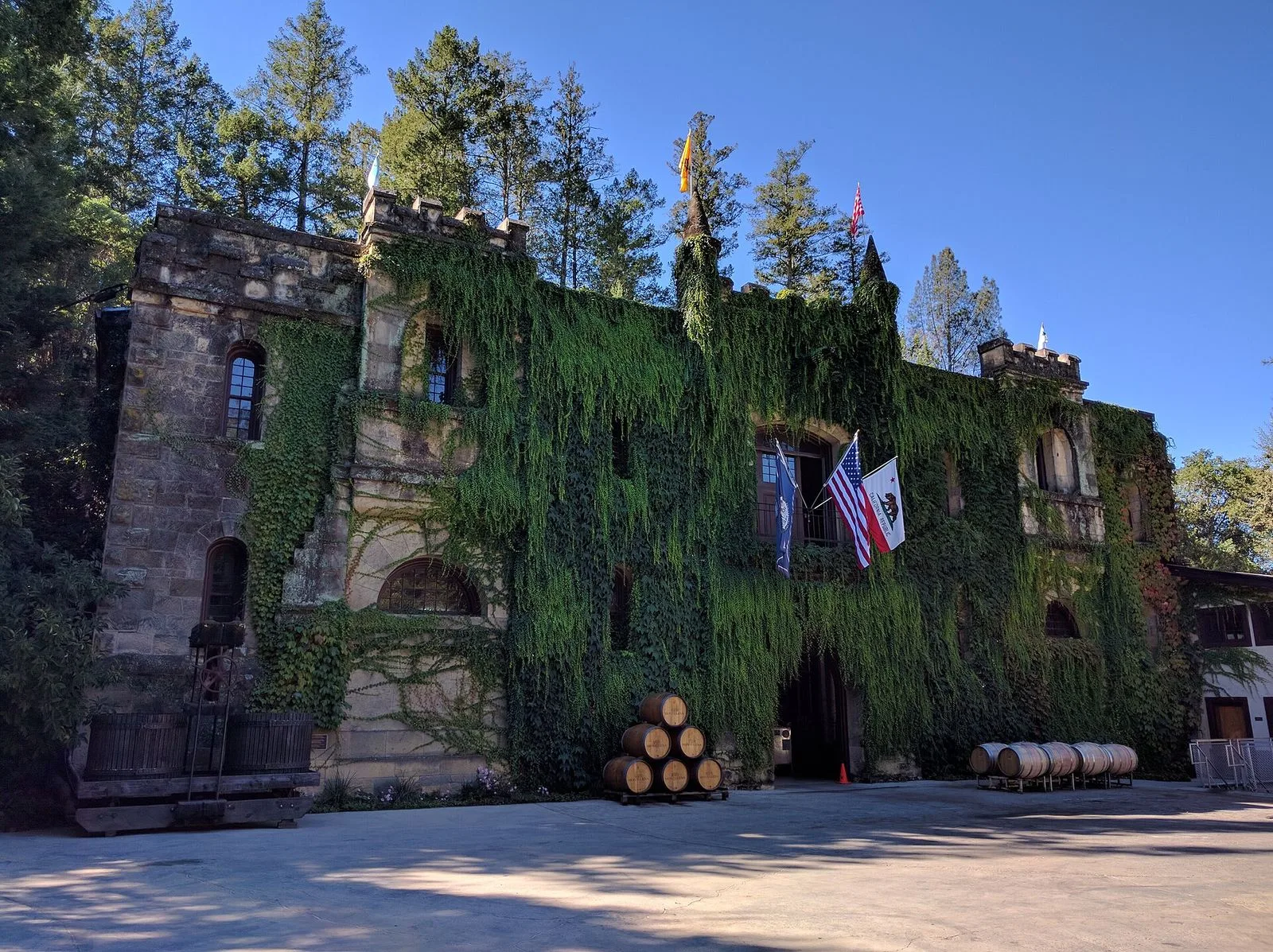
- White winner: Chateau Montelena 1973, a Chardonnay from Napa Valley
- Red winner: Stag’s Leap Wine Cellars 1973, a Cabernet Sauvignon from Napa Valley
What was the Judgment of Paris?
The Judgment of Paris was a blind wine tasting held in Paris in 1976 in which a panel of French judges scored Californian wines above some of the most famous names in Bordeaux and Burgundy. Because the judges could not see the labels, they could not lean on reputation. They simply tasted, scored, and, to their visible discomfort, kept rating the Californians at the top.
It was the first time the New World beat the Old World on the Old World’s home turf, judged by the Old World’s own palates. That is why a single afternoon of tasting is still remembered as the moment fine wine went global.
The setup: Steven Spurrier’s quiet experiment
In 1976 Steven Spurrier ran a wine shop and a wine school in Paris. He was British, which mattered, because it made him an outsider to the French establishment he was about to embarrass. With his colleague Patricia Gallagher, he had been tasting the new wave of ambitious wines coming out of California and thought they deserved a serious audience.
The timing was pointed. 1976 was the bicentennial of American independence, so a France-versus-California tasting had a certain cheek to it. Spurrier lined up celebrated French Burgundies and Bordeaux against a handful of upstart Californian Chardonnays and Cabernets, and invited a panel of French wine royalty to judge them blind on a 20-point scale.
The judges were not amateurs. They included Aubert de Villaine of Domaine de la Romanée-Conti, Odette Kahn, editor of France’s leading wine review, Michelin-starred chef Raymond Oliver, and senior figures from the country’s top appellations. These were exactly the people who were supposed to prove French superiority. Eleven people tasted in total, but only the nine French judges’ scores were averaged into the result.
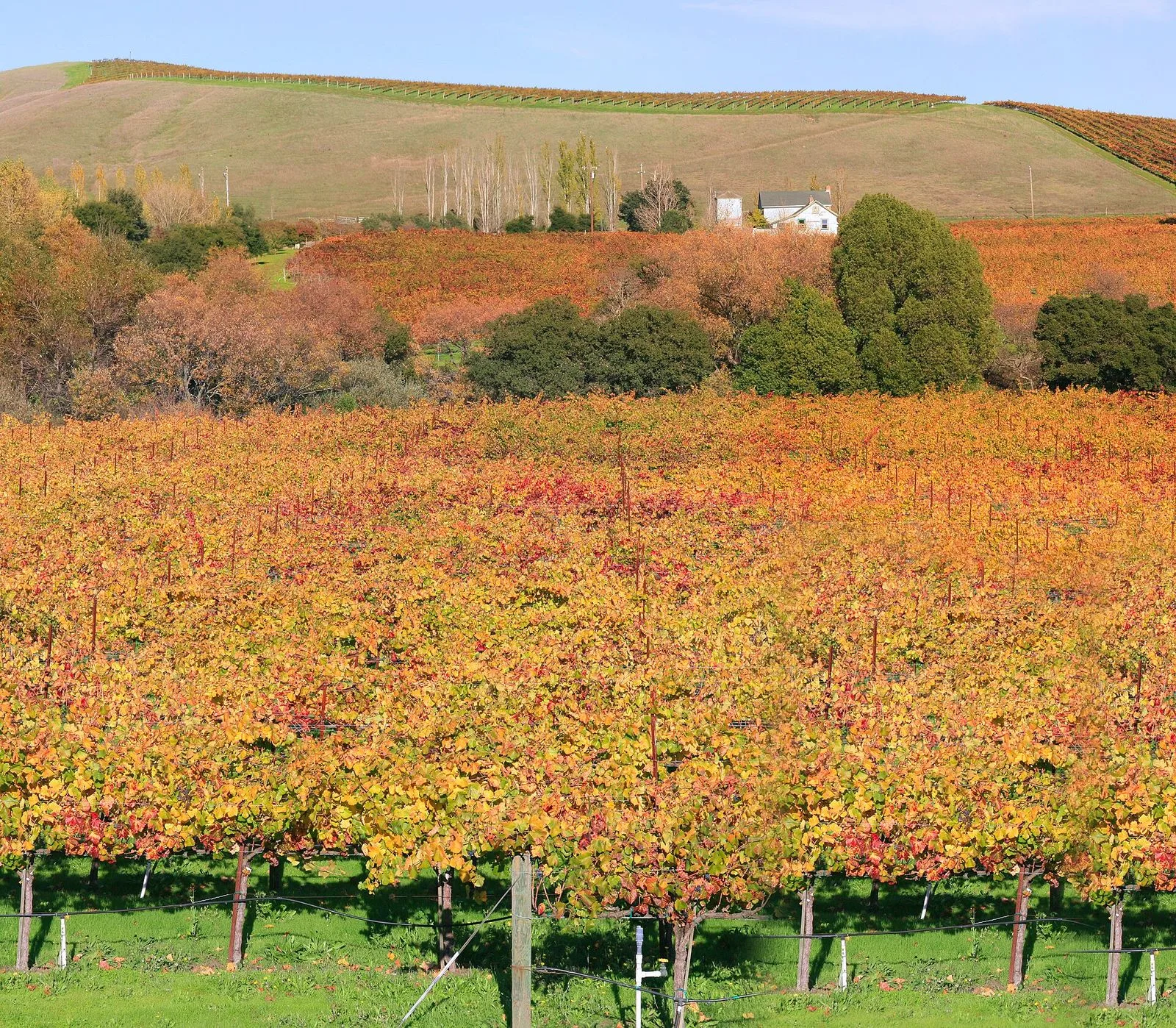 Napa Valley. In 1976 it was still an upstart region; the Judgment of Paris put it on the world wine map.
The results: the upset, in full
Spurrier expected the French wines to win. So did the judges. Instead, a Napa Chardonnay topped the whites and a Napa Cabernet topped the reds.
White wines (Chardonnay)
A six-bottle field of California Chardonnays against white Burgundies. The judges put California first, third, and fourth.
| Rank | Wine | Vintage | Origin | Points |
|---|---|---|---|---|
| 1 | Chateau Montelena | 1973 | California | 132 |
| 2 | Meursault Charmes, Roulot | 1973 | France | 126.5 |
| 3 | Chalone Vineyard | 1974 | California | 121 |
| 4 | Spring Mountain Vineyard | 1973 | California | 104 |
| 5 | Beaune Clos des Mouches, Joseph Drouhin | 1973 | France | 101 |
| 6 | Freemark Abbey | 1972 | California | 100 |
| 7 | Bâtard-Montrachet, Ramonet-Prudhon | 1973 | France | 94 |
| 8 | Puligny-Montrachet Les Pucelles, Leflaive | 1972 | France | 89 |
| 9 | Veedercrest Vineyards | 1972 | California | 88 |
| 10 | David Bruce | 1973 | California | 42 |
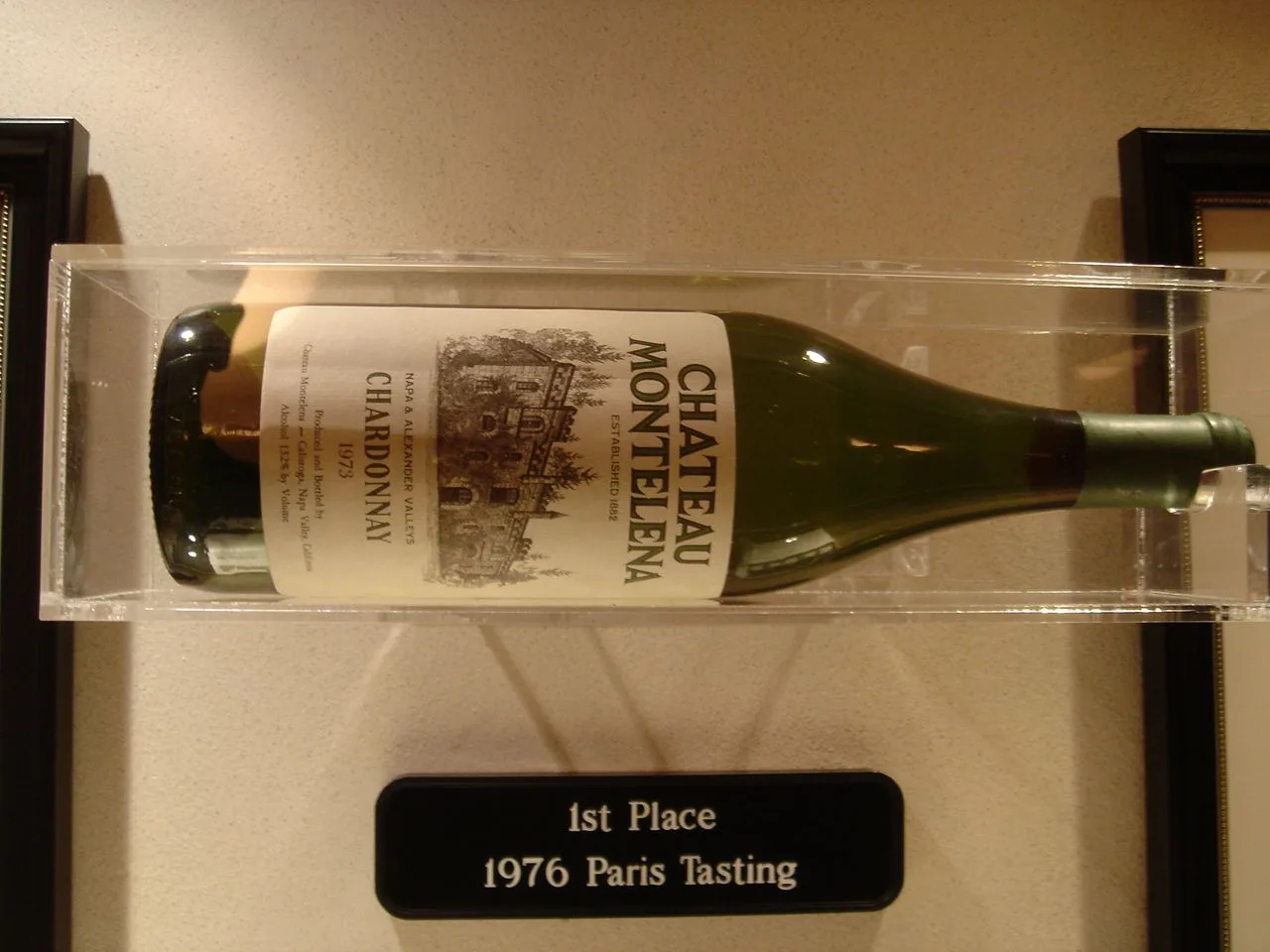 The white winner: Chateau Montelena 1973, a Napa Chardonnay. A bottle of it now sits in the Smithsonian.
Red wines (Cabernet Sauvignon and Bordeaux)
Top California Cabernets against first-growth and classified Bordeaux from the excellent 1970 vintage. The closest, most contested flight of the day, and California still took the top spot.
| Rank | Wine | Vintage | Origin | Points |
|---|---|---|---|---|
| 1 | Stag’s Leap Wine Cellars | 1973 | California | 127.5 |
| 2 | Château Mouton-Rothschild | 1970 | France | 126 |
| 3 | Château Haut-Brion | 1970 | France | 125.5 |
| 4 | Château Montrose | 1970 | France | 122 |
| 5 | Ridge Vineyards Monte Bello | 1971 | California | 105.5 |
| 6 | Château Léoville-Las-Cases | 1971 | France | 97 |
| 7 | Mayacamas Vineyards | 1971 | California | 89.5 |
| 8 | Clos du Val | 1972 | California | 87.5 |
| 9 | Heitz Cellars Martha’s Vineyard | 1970 | California | 84.5 |
| 10 | Freemark Abbey | 1969 | California | 78 |
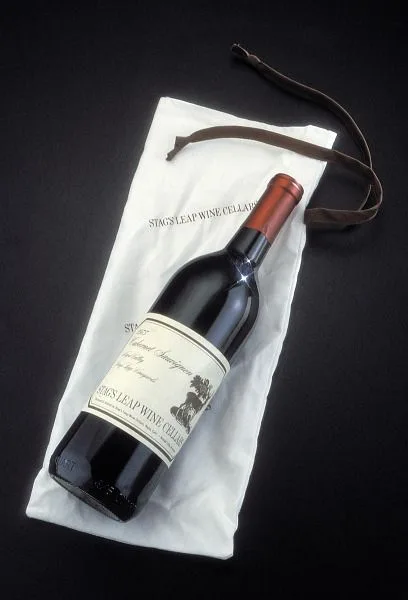 The red winner: Stag’s Leap Wine Cellars 1973, which edged Mouton-Rothschild and Haut-Brion by a point and a half.
Look at the red podium: Stag’s Leap beat Mouton-Rothschild and Haut-Brion, two of the five First Growths of the famous 1855 classification. On reputation alone, that was not supposed to be possible.
There was even a now-legendary moment of confusion. Odette Kahn, tasting blind, is said to have praised a wine she was sure was French, only to find she was admiring a Californian. The labels had been hiding more than anyone wanted to admit.
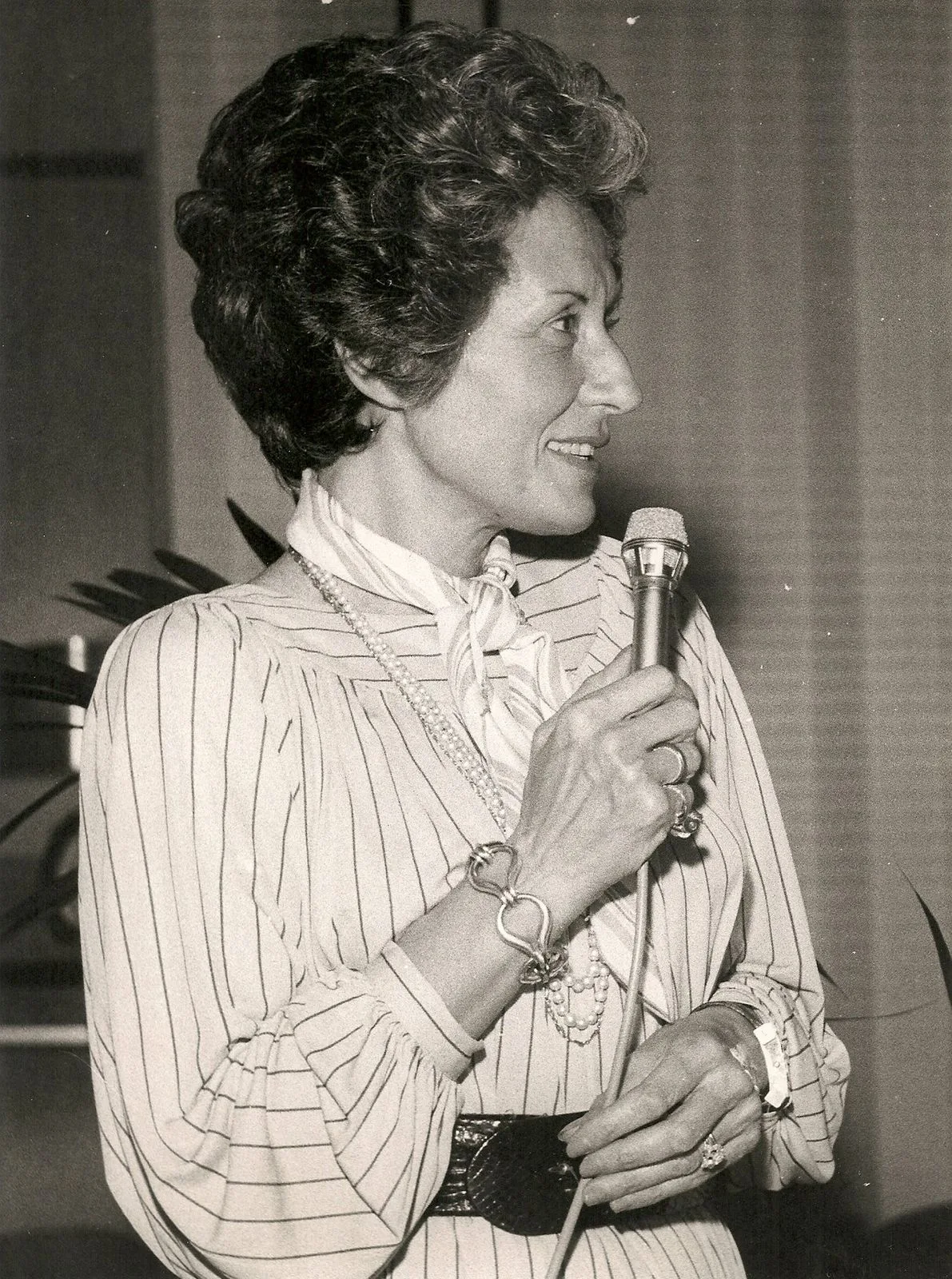 Odette Kahn, editor of France’s leading wine review and one of the judges. She reportedly asked for her scorecard back when she realised what she had ranked.
The reaction: outrage in France
Only one journalist bothered to show up: George M. Taber of TIME magazine. His short report, headlined “Judgment of Paris,” gave the event its name and turned a private tasting into international news.
France was not amused. Le Figaro called the result “laughable.” Le Monde ran a dismissive piece months later. Spurrier, the man who had dared to organise it, was reportedly frozen out of France’s prestigious wine-tasting circuit for a year. The establishment’s instinct was not to ask “what did we get wrong?” but “how dare you ask the question?”
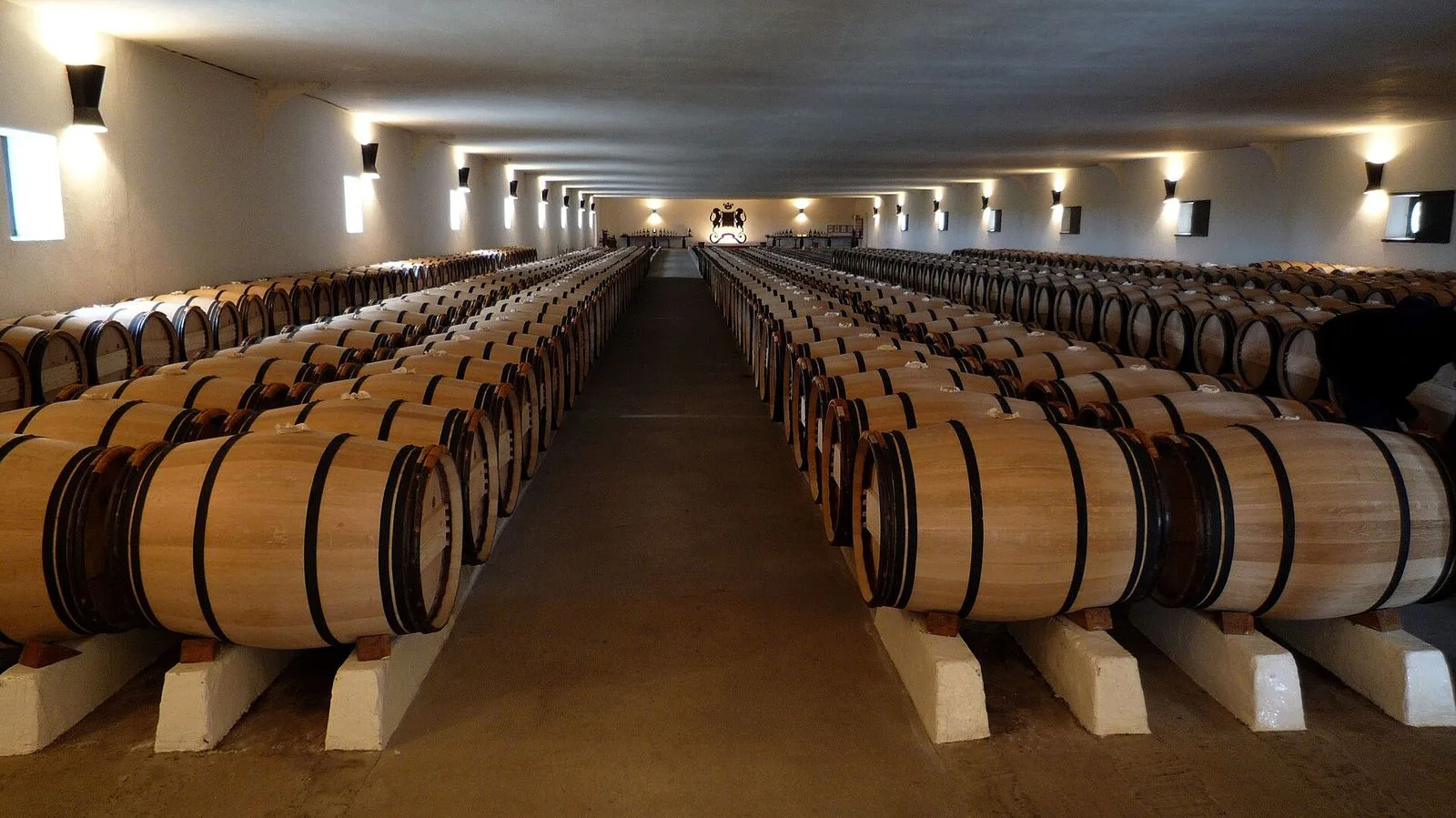 The barrel cellar at Château Mouton-Rothschild, whose 1970 finished second among the reds by a single point.
Why it mattered: the wine world cracked open
The Judgment of Paris did not prove that California made better wine than France. A single tasting of a few bottles on one afternoon cannot prove that. What it proved was bigger and more uncomfortable: that greatness in wine is not the private property of one country, and that even expert palates cannot reliably tell origin from quality once the label is gone.
The consequences were enormous:
- Napa Valley arrived. Overnight, California had proof it could play in the top division. Investment, ambition, and prices followed.
- The New World was legitimised. What happened for California soon happened in spirit for Australia, Chile, South Africa, and beyond. If Napa could do it, why not anyone with the right place and the right care?
- The myth got a dent. The idea that a French label was an automatic guarantee, and a non-French one an automatic compromise, never fully recovered.
This is also why we are, frankly, allergic to wine snobbery. The Judgment of Paris is the single best argument that what is in the glass matters more than what is on the label.
Did it hold up? The rematches
The most common French defence was that California wines might taste flashy young but would fall apart with age, while great Bordeaux only gets better. So people kept re-tasting the same wines as they aged.
- 1978, San Francisco: California won again, in both colours.
- 1986, the 10th-anniversary re-tastings of the reds: California wines took the top spots again, with Clos du Val and Ridge Monte Bello leading one panel.
- 2006, the 30th anniversary: the original 1976 reds were re-tasted simultaneously in Napa and London. California did not just hold up, it swept the top five places, led by Ridge Monte Bello 1971, with Stag’s Leap close behind.
So the “they won’t age” argument lost too. Thirty years on, the Californians were not just alive, they were on top.
The legacy: a bottle in a museum and a 50th birthday
The story has only grown since. The winning 1973 Chateau Montelena Chardonnay sits in the Smithsonian’s National Museum of American History, treated as a genuine piece of cultural history. The 2008 film Bottle Shock, with Alan Rickman as a fictionalised Spurrier, brought the tale to a wider audience (with the usual cinematic liberties). George Taber later wrote the definitive book, Judgment of Paris.
And the timing could not be better for revisiting it: 2026 marks the 50th anniversary, complete with anniversary tastings and even a new opera at Festival Napa Valley. Half a century on, the most important wine tasting in history is still being argued about, which is exactly how you know it mattered.
What the Judgment of Paris can teach you
You do not need to care about 1970s Bordeaux politics to take something useful from this story:
- Taste blind when you can. Covering the label is the fastest way to find out what you actually like, rather than what you are told to like.
- Place matters, but so does the person making the wine. Terroir is real. So is talent. The Judgment of Paris was a win for skilled winemaking finding great ground in a new place.
- Price and prestige are not the same as pleasure. Some of the “losers” cost many times more than the winners. Drink what moves you.
That, more than any scoreline, is the lasting verdict of Paris.
Frequently asked questions
Who won the Judgment of Paris?
Two California wines from Napa Valley. Chateau Montelena 1973 won the white (Chardonnay) flight, and Stag’s Leap Wine Cellars 1973 won the red (Cabernet Sauvignon) flight.
When and where was the Judgment of Paris?
On 24 May 1976, at the InterContinental Hotel in Paris.
Who organised it?
Steven Spurrier, a British wine merchant running a shop and wine school in Paris, together with Patricia Gallagher.
Is it “Judgment” or “Judgement” of Paris?
Both spellings are used. The event is most often written “Judgment of Paris” (the American spelling, following TIME’s original headline), but “Judgement of Paris” is common in British English.
Did France ever win the rematch?
No. The same wines were re-tasted in 1978, 1986, and 2006, and California wines came out on top each time, including a clean sweep of the top five reds at the 30th-anniversary tasting in 2006.
Why was the Judgment of Paris so important?
It was the first time New World wines beat famous French wines in a blind tasting judged by French experts. It put Napa Valley and California on the world stage and challenged the assumption that the best wine could only come from France.
The estates today
Many of the wines that made history that day are still made now. The official sites of the key estates:
- Chateau Montelena (Napa) — winner of the white flight
- Stag’s Leap Wine Cellars (Napa) — winner of the red flight
- Château Mouton-Rothschild (Pauillac), second in red
- Château Haut-Brion (Pessac-Léognan), third in red
- Château Montrose (Saint-Estèphe), fourth in red
- Ridge Vineyards (California) — its Monte Bello later won the 2006 rematch
Related reads
- Bordeaux wine classifications explained, to understand the First Growths that Stag’s Leap beat.
Image credits, via Wikimedia Commons: Château Montelena by Grendelkhan (CC BY-SA 4.0); Napa Valley vineyards by Brocken Inaglory (CC BY-SA 3.0); Chateau Montelena 1973 bottle by ayako (CC BY 2.0); Stag’s Leap Wine Cellars 1973 bottle (public domain); Odette Kahn by Jean-Michel Kahn (CC BY-SA 3.0); Château Mouton-Rothschild cellar by MPW57 (public domain).