For this 8th episode of the Club, I’m telling you about a grape variety: Merlot. Before going further, if this is the first time you’re listening to this podcast, there are already 7 other episodes that you can also listen to. If you like this podcast, I also invite you to give it 5 stars on Apple Podcasts. It pushes it up the rankings and it helps me enormously to produce more. You know it, wine isn’t a drink like any other. Every bunch of grapes has a story to tell you. So let’s set off to discover Merlot. By the end of this episode, you’ll know the history of this French grape variety, how it’s used today, and how to recognise it. I’ve also got a little bonus for you at the end of the episode.
History of Merlot
So let’s start with the history of Merlot. First, it should be said that Merlot is a red grape variety. According to the latest research carried out by laboratories in France, Merlot was apparently born in the Charentes after a cross between Cabernet Franc and Magdeleine Noire des Charentes. The first mention of this grape variety dates back to 1857, when Louis Marie Victor Rendu cites it in his work “Ampélographie française”. Louis Marie Victor Rendu is an ampelographer, that is to say he studies grape varieties. He indicates in his work that Merlot is part of the make-up of the Grands Crus of Bordeaux. It is thus traditionally a Bordeaux grape variety. We find the first mention of Merlot in the Libournais, where it was spelled Merlau. As you’ll surely have understood, the name of this grape variety refers to the merle (blackbird), mainly because of its black colour, close to the bird’s plumage.
Use of Merlot today
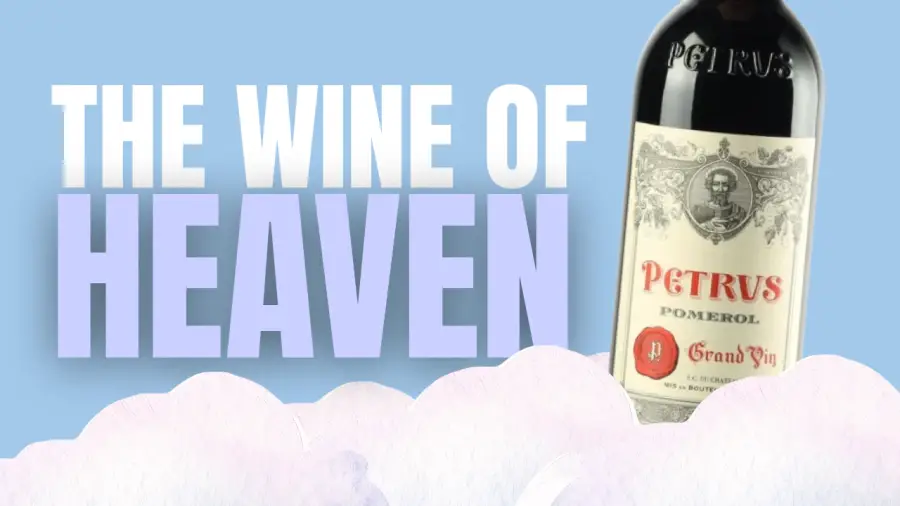
Today, Merlot is the most widely planted grape variety in Bordeaux, where it occupies around 58% of the vineyard area. In some places, it occupies an even more important position. That’s the case in Pomerol. By way of example, the vineyard of the famous Château Pétrus is made up of 95% Merlot. Merlot is also the most planted grape variety in France, with more than 115,000 hectares to its name. It’s also among the most planted grape varieties in the world. That tells you the importance of this grape variety, and therefore of this podcast about it. Around the world, Merlot is present in almost all the greatest wine regions. We find it of course in Italy, in the vineyards of Tuscany for example, but also in the United States, in the Napa Valley in particular, in South Africa, in Chile, and in Argentina.
How do you recognise Merlot?
In the vines, you can recognise this grape variety thanks to the very dark colour of the fruit. We also say that Merlot buds early. If you don’t know what budding means, head over to the podcast episode on how to make wine. So, when you’re walking through the vines, you’ll be able to recognise it easily. It should be stressed that the fact it buds early also makes it more vulnerable to frost. When you taste a wine made from Merlot, two words should come to mind: suppleness and fruit. So, when tasting a Merlot-based wine, you’ll find the following aromas:
- Red fruits and black fruits, with strawberry, raspberry, blackcurrant and blackberry;
- Plum and sweet spices;
- Undergrowth, leather and, in slightly rarer cases, truffle.
Note that Merlot is rarely worked on its own. It’s often blended with Cabernet Franc or with Cabernet Sauvignon, but we’ll come back to those grape varieties in upcoming episodes of the Club.
What food and wine pairings go with a Merlot?
Now that I’ve whetted your appetite by mentioning the aromas of Merlot, it’s time to talk about the food and wine pairings you could put together. That should drive the point home. I’m sure you’re going to rush into your kitchen to prepare a good meal and pull a fine Merlot from your wine cellar. Remember to raise a toast in our honour at the moment of your tasting. So, with a still-young Merlot, there’s no doubt you’ll delight in charcuterie or a roast white meat. Once the Merlot is a little more evolved, you can head towards duck or lamb. The match between these meats and the structure of your wine will be perfect. Don’t worry, in upcoming episodes we’ll detail how to put together food and wine pairings well.
And there you have it, well done, you now know Merlot by heart. Once again we’ve seen that wine isn’t a drink like any other. Every bunch of grapes has a story to tell you. Learning about wine is crucial to finally being able to enjoy it fully. So I’ll see you in the next episode.
In the meantime, if you’d like to understand why a Merlot works so well with duck or lamb, our food and wine pairing method teaches you the mechanism behind each pairing, so you can find the right wine for any dish yourself.