Every week we open something on a Sunday and write down what it did. We call it Sunday’s Delight, and this is the second one.
This bottle had been waiting its turn since September. I ran the Marathon du Médoc with the Tour des Termes running club, and they put me up at the estate, ten minutes from the start. So you know where we stand: that is a reason to open this bottle, not a reason to go easy on it.
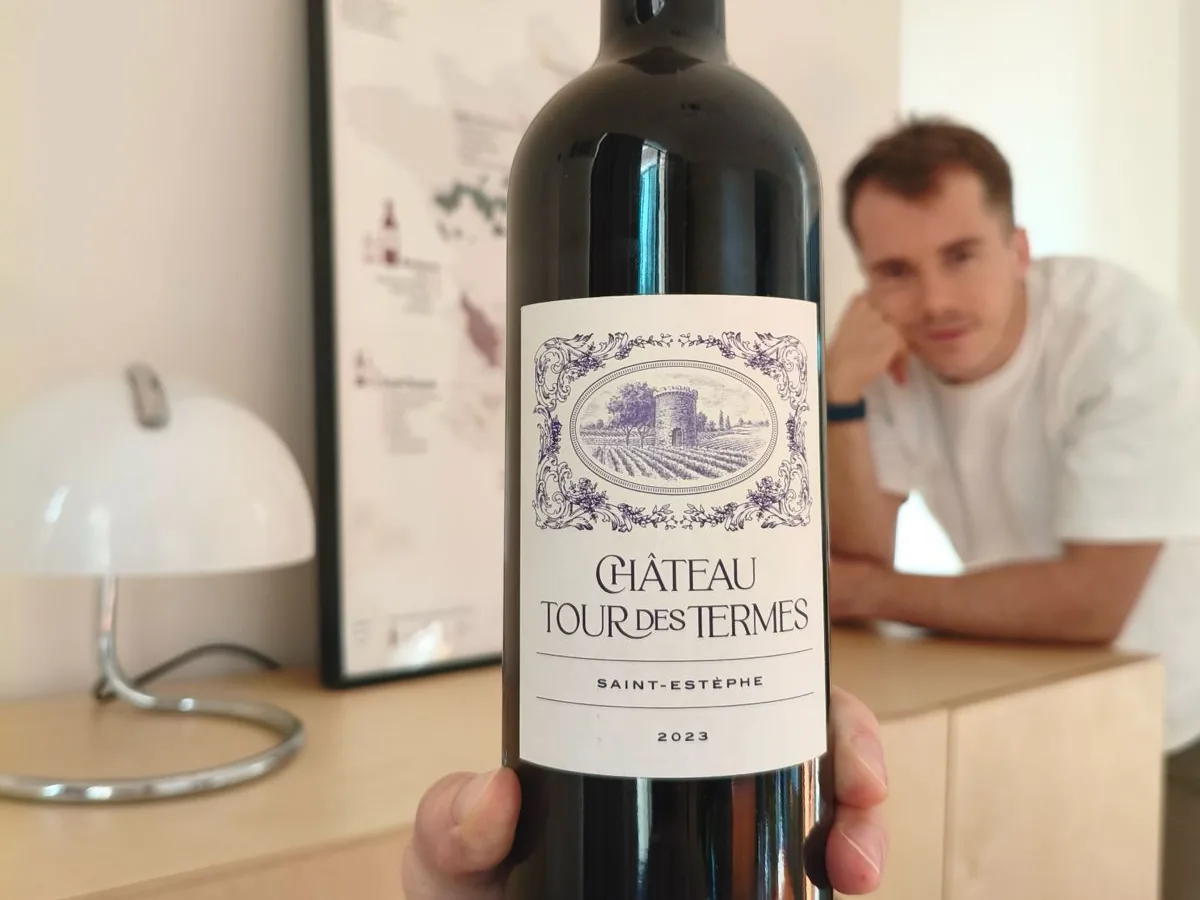
Tour des Termes 2023 is the grand vin of Château Tour des Termes, a Cru Bourgeois Supérieur in Saint-Estèphe, about a kilometre from Château Calon-Ségur. It is a young, dark red with blackcurrant, black cherry and violet, oak still very much on show, and tight tannin. Give it an hour in a carafe and it relaxes into something juicy and precise, finishing on liquorice and cedar.
What is in the glass
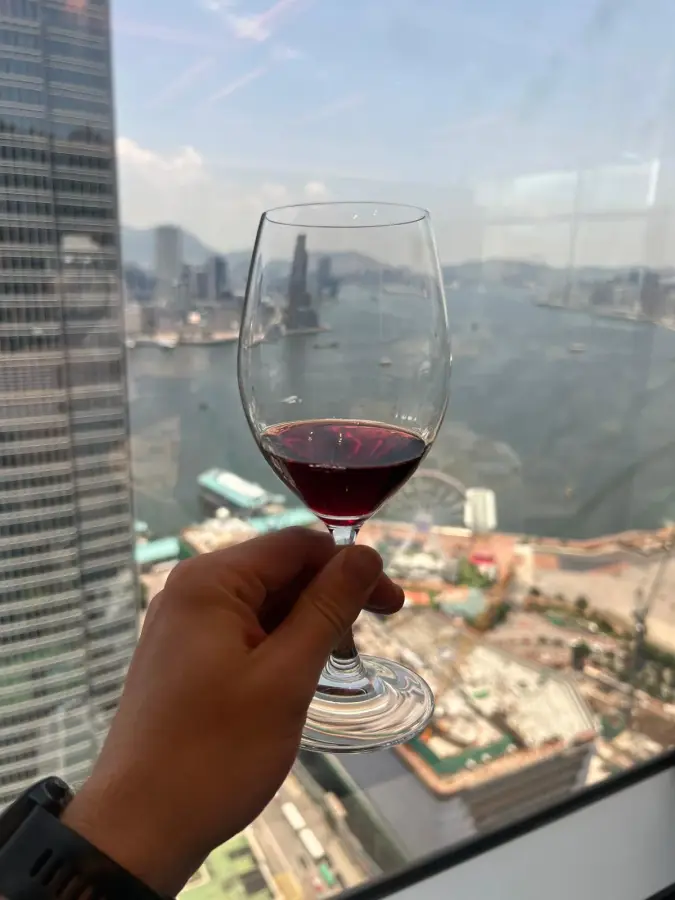
The colour is deep purple, close to black at the core, with a violet rim: a wine that has barely turned three.
The first glass, poured straight from the bottle, was all oak to begin with. Toast, a little vanilla, then blackcurrant and sour cherry hanging back behind it. On the palate it starts fresh, there is real substance through the middle, and the tannin arrives early and grips the gums. Nothing unpleasant, just a wine standing with its arms folded.
I poured the rest into a carafe, and an hour later it was a different conversation. The fruit stepped forward: ripe blackcurrant, plum, and violets lifting out of the glass as you swirl it. The toast had melted into cedar and pencil shavings. The tannin is still there, this is Saint-Estèphe after all, but the grain had turned finer and it was holding the wine up instead of holding it back.
The last glass, with dinner, was the best. Liquorice, a touch of black pepper, and an almost salty freshness on the finish that makes you reach for the next sip rather than put the glass down. Good length, without going on forever.
What it is not is mature claret, all leather, forest floor and cigar box. That will come, but it is years away. Nor is it a sunny, jammy, hot-climate red. And it is not a wine to sip on its own before dinner: without food in front of it, the tannin takes up too much room.
Why Saint-Estèphe tastes like this
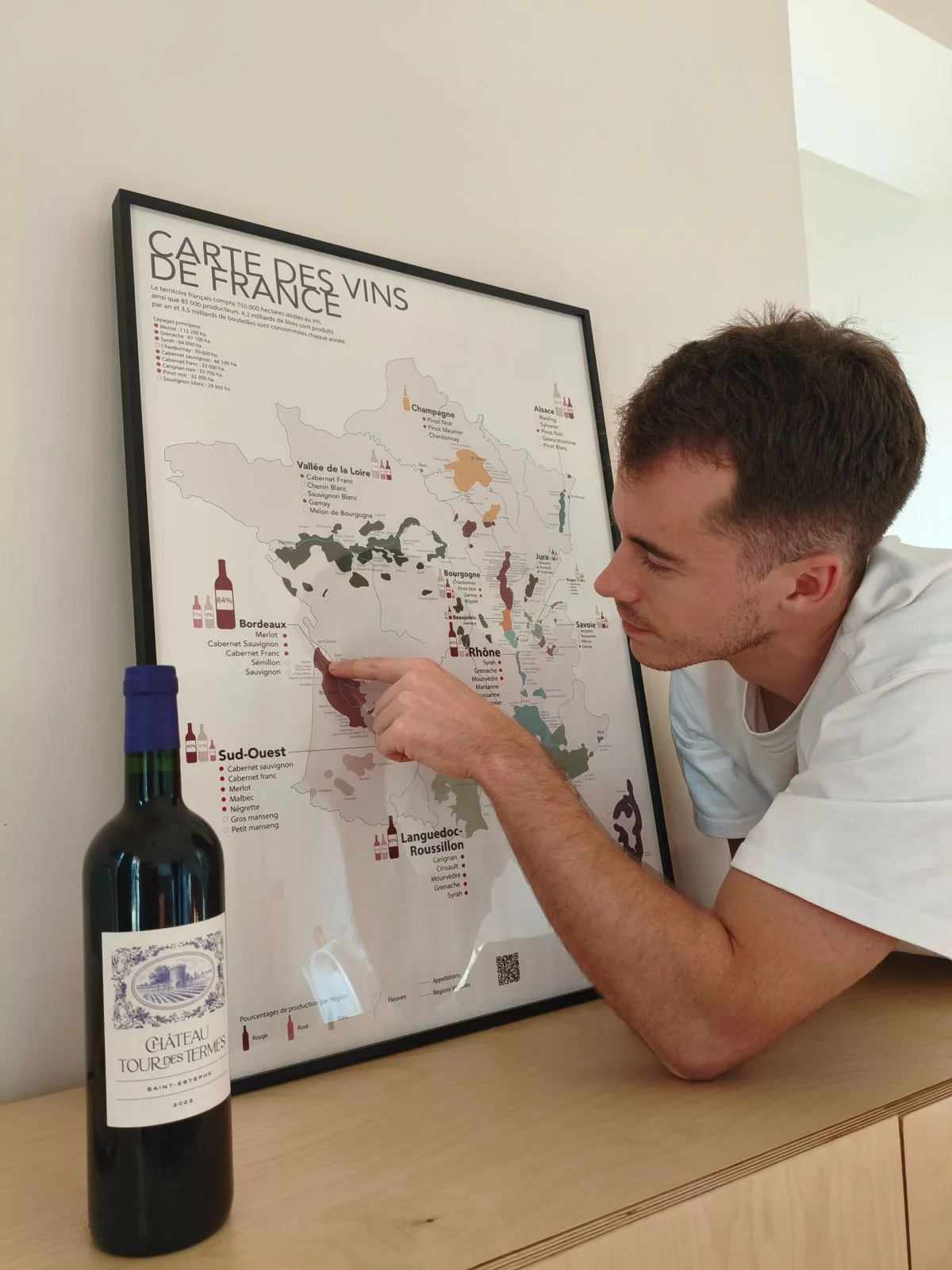
On our French wine map, the framed one in the living room, Saint-Estèphe fits under a fingertip: the top of the Bordeaux patch, on the left bank of the Gironde estuary, about 50 kilometres north of the city. It is the northernmost of the Médoc’s famous village appellations, just above Pauillac, and the appellation itself is reserved for red wine.
What sets it apart is underfoot. The Médoc is famous for gravel, stones and sand that drain fast and warm up in the sun. In Saint-Estèphe that gravel sits on clay, marl and limestone, with noticeably more clay than in Pauillac, Saint-Julien or Margaux. Clay holds on to water and coolness where gravel lets them drain away, which protects the vines in dry years and suits Merlot. Saint-Estèphe also has a long-standing reputation for firm wines that take their time to open, which writers usually put down to that cooler clay. The estuary next door takes the edge off temperature extremes.
Cabernet Sauvignon is still the main grape here, roughly half the vineyard, but Merlot carries more weight than in Pauillac. As Véronique Dausse of Phélan Ségur put it in our interview, gravel is the temple of Cabernet and Saint-Estèphe’s clay calls for Merlot.
Tour des Termes goes further, with a vineyard planted to 60% Merlot, a majority the estate itself calls unusual here, plus 30% Cabernet Sauvignon and 5% each of Cabernet Franc and Petit Verdot. The grand vin blend shifts every year, though (2021 was 60% Cabernet Sauvignon), and the estate has published nothing for 2023. One French magazine reports 56% Merlot, 42% Cabernet Sauvignon and 2% Petit Verdot: a pointer, not gospel.
The 2023 vintage
2023 was a year of two halves in Bordeaux. A damp spring brought what the ISVV, the University of Bordeaux’s wine research institute, called unprecedented mildew pressure, with Merlot hit hardest. Then, from mid-August, came a heatwave the ISVV also calls unprecedented, this time for arriving so late in the season. It stopped the vines growing shoots and switched them over to ripening their grapes, which is exactly what you want at that stage.
Soil decided the rest. On free-draining ground some Merlot shrivelled, while on clay and clay-limestone it held up far better, and Cabernet Sauvignon mostly came through fine. The reds came in slightly lower in alcohol than 2022, with good acidity and deep colour. The ISVV describes Merlot from clay-limestone as “bright and saline”, which is more or less the word I was looking for on that finish.
Saint-Estèphe seems to have done rather well: merchants tasting the wines en primeur reported that it looked drier than the rest of the Médoc through the summer and missed the late-September showers, so picking never had to pause. For an estate with two thirds of its vines on clay-limestone, that looks like the right side of the vintage.
A tower at the end of the land
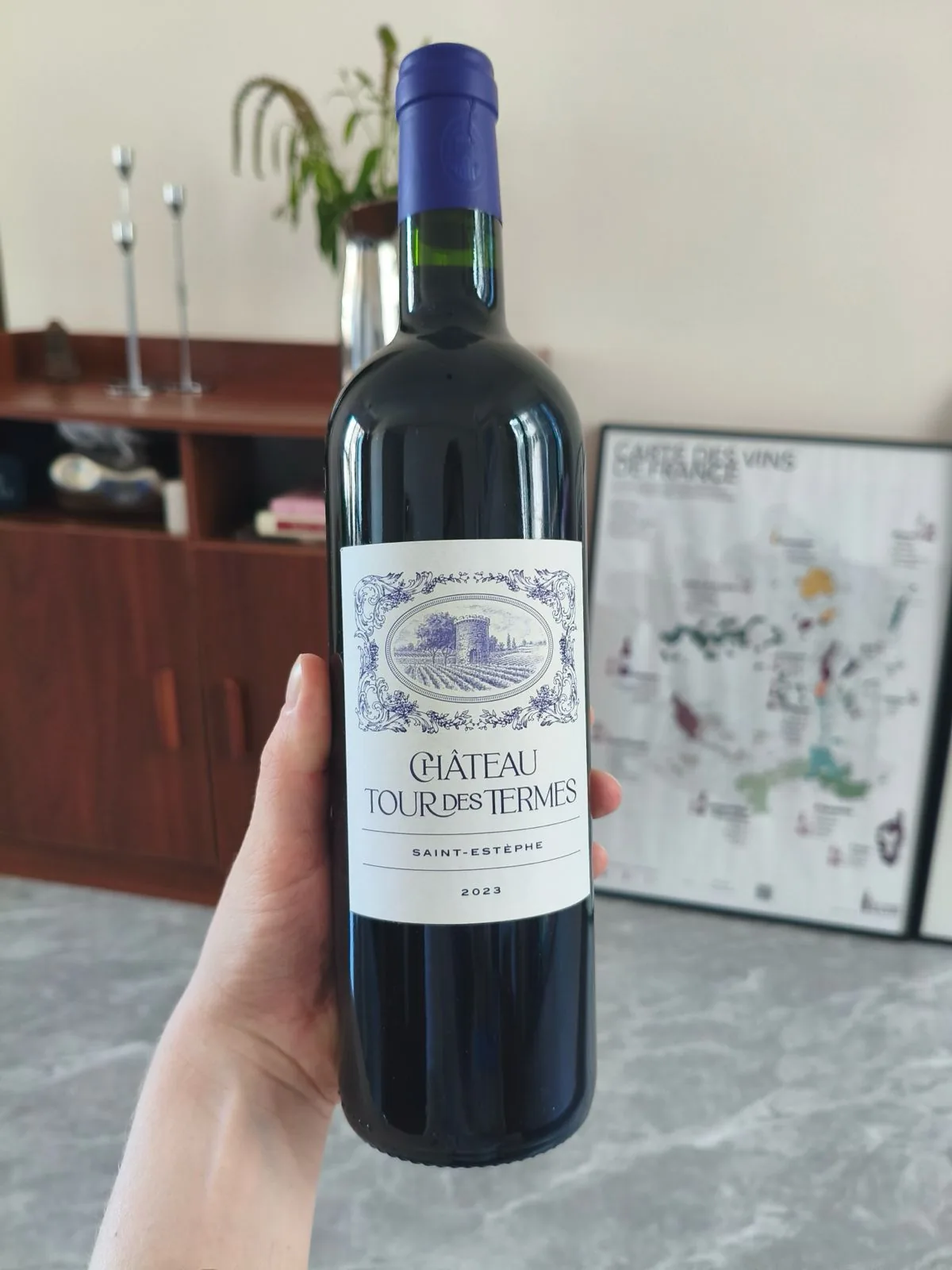
The label shows a round tower among the vines, and that tower gives the château its name. It stands on a plot called “les Termes”, which the estate says means “the end of the land”, and the estate’s story is that remains of boat moorings point to a Gallo-Roman lighthouse, marking an outer harbour of Brion, a town a few kilometres away. Brion is real (the remains of its first-century theatre at Saint-Germain-d’Esteuil are a listed historic monument), but we found no independent source for the harbour, and an older estate sheet calls it a “feudal-type” tower. Estate lore, then. Still a great story to tell while you pour.
The family story, as the estate tells it, goes back to an Anney working the land at Potensac in 1678, but the château enters it in 1938, when Pierre Anney bought the property with its old tower and a tenant farm at Saint-Corbian. His son Jean and grandson Christophe expanded the vineyard from 1979. In 2023 it was bought by the O’Connors, an Irish family from the renewable energy business, and, fittingly, the new cellars begun in 2025 are designed to run on renewable power. The general manager is Julien Brustis, previously at Dauzac, Latour-Martillac and Angélus. According to the French magazine Paris Gourmand, 2023 is his first vintage here.
The 35 hectares sit in three blocks, one on deep gravel and two on clay over limestone, with vines averaging 40 years old. The estate is certified HVE level 3, the top tier of France’s High Environmental Value scheme (not the same thing as organic), and Terra Vitis: cover crops, no chemical weedkillers, lots of handwork. The estate gives the grand vin 15 months in barrel, half of them new, which squares with the oak on that first glass.
Then there is the title the front label leaves out. The Crus Bourgeois are the Médoc’s other classification, for estates outside the 1855 list, and Tour des Termes kept its Supérieur rank in the stricter 2025 edition, cut from 249 estates to 170. That ranking covers the 2023 to 2027 vintages, so 2023 is the first vintage it applies to, and Château de Côme is the only other Supérieur in Saint-Estèphe. Our guide to Bordeaux classifications explains where the Crus Bourgeois sit next to the 1855 growths.
What to eat with it
The estate suggests red and white meat, game, Brie and Camembert. We are with them on red meat. White meat and game are a different story with a bottle this young: our chicken guide warns that a three-year-old Bordeaux hardens the sauce and dries out lean meat, and game wants a claret with ten years on it.
This wine has dark fruit, young oak and tannin looking for something to grip, so it wants protein, fat and salt:
| Dish | Why it works |
|---|---|
| Sunday roast lamb, garlic and rosemary | Pink meat and rendered fat meet the blackcurrant, and rosemary picks up the cedar |
| Ribeye cooked rare, seared hard, flaky salt | Protein and fat soften tannin, and salt rounds the wine out |
| Duck breast cooked pink, skin crisped | The tannin cuts the fat under the skin, the dark fruit meets the juices |
| Squab roasted pink | Dark, rich meat that takes tannin the way duck breast does, and the jus meets the dark fruit |
| A homemade burger, well salted, hold the ketchup | Fat, salt and protein do a steak’s job for less; ketchup’s sugar would undo it |
On cheese, we part ways: a young, tannic red is one of the worst bottles for a cheese board, and our cheese board guide explains why.
One rule worth remembering: sweetness and umami in food make wine taste drier, more bitter and more astringent than it is. So no sticky barbecue glaze, and no duck confit, whose savoury depth hardens the tannin of a wine this young.
How to serve it
The estate recommends 16 to 17°C (about 61 to 63°F), and our red wine serving temperature guide puts tannic reds at 16 to 18°C. Cooler, and the tannin firms up and tastes hard. At 22°C in a heated room, alcohol and oak push to the front. Twenty to thirty minutes in the fridge brings a bottle down from room temperature.
Then air. Our guide to aerating wine suggests about two hours in a carafe as a rule and names young Bordeaux among the wines that gain most. That is exactly what I saw: opening after one hour, properly there after two. No carafe? Open the bottle two hours ahead and pour yourself a first glass to let the air in.
The estate’s own figures run from fifteen to twenty years of ageing on one page to as much as thirty on its technical sheet. Our take: open one now with a carafe, or wait four or five years for the tannin to settle on its own.
Would we buy it again
Yes, and probably six at a time. The one complaint is that first glass: without air it is austere and the oak takes up too much room. If you want a red to open and pour without thinking, this is not it.
But at around €34 in France, this is a proper estate Saint-Estèphe, a neighbour of Calon-Ségur, from a vintage that was kind to clay, and made the year the estate changed hands. Handily, the estate’s online shop has a six-bottle minimum: one for an October Sunday with a carafe and a piece of beef, five to forget until the tannin has made its peace.
You can find the wine, and estate visits, at chateautourdestermes.com.
A marathon to meet the estate. One hour in a carafe to meet the wine.
Frequently asked questions
Where is Château Tour des Termes?
In Saint-Estèphe, the northernmost of the Médoc's famous village appellations, on the Left Bank of Bordeaux about 50 km north of the city. The cellars are in the hamlet of Saint-Corbian, around a kilometre west of Château Calon-Ségur, and the 35 hectares are split between gravel and clay-limestone.
Is Tour des Termes a Cru Bourgeois?
Yes, a Cru Bourgeois Supérieur, the middle of the three tiers. It held that rank in 2020 and kept it in the 2025 classification, which lists 170 estates and covers the 2023 to 2027 vintages. That makes 2023 the first vintage the new ranking applies to.
When should I drink Tour des Termes 2023, and should I decant it?
You can open it now if you give it one to two hours in a carafe: young, its tannin is tight and the oak shows first. The estate talks about fifteen to twenty years of ageing, up to thirty on its technical sheet, and we think it will be more relaxed in four or five. Serve it at 16 to 17°C.
What food goes with Tour des Termes 2023?
Red meat with fat and salt: roast lamb, a rare ribeye seared hard, pink duck breast or squab. Protein and fat soften tannin, and salt rounds the wine out. Avoid sweet glazes, duck confit and lean white meat, and save the bottle for the main course rather than the cheese board.
Where can I buy it, and how much does it cost?
Around €34 to €35 in France. The estate's online shop sells it at €34, with a six-bottle minimum, a €29 delivery charge below €300 and delivery within mainland France only. The château has also been sold through the Nicolas chain (we found the 2021 there) and independent merchants; elsewhere it goes through importers, so prices vary.