Anyone can memorise a list of pairings. This teaches you to build your own.
- Taste a wine and name what is actually in itin fourteen families and seventy words, not "notes of forest floor"
- Choose the wine for any dish on the tablestarting from the plate, not from someone else's list
- Design the dish to fit the winenot just pick a wine to survive the dish
- Explain out loud why it worksso you stop saying "it just works" and sounding like you guessed
If you have ever frozen in front of a wine list, or been asked why a pairing works and had nothing to say, that is not a knowledge gap. Nobody ever taught you the mechanism.
Pre-order for €99Until 12 October · Full refund until the course is complete
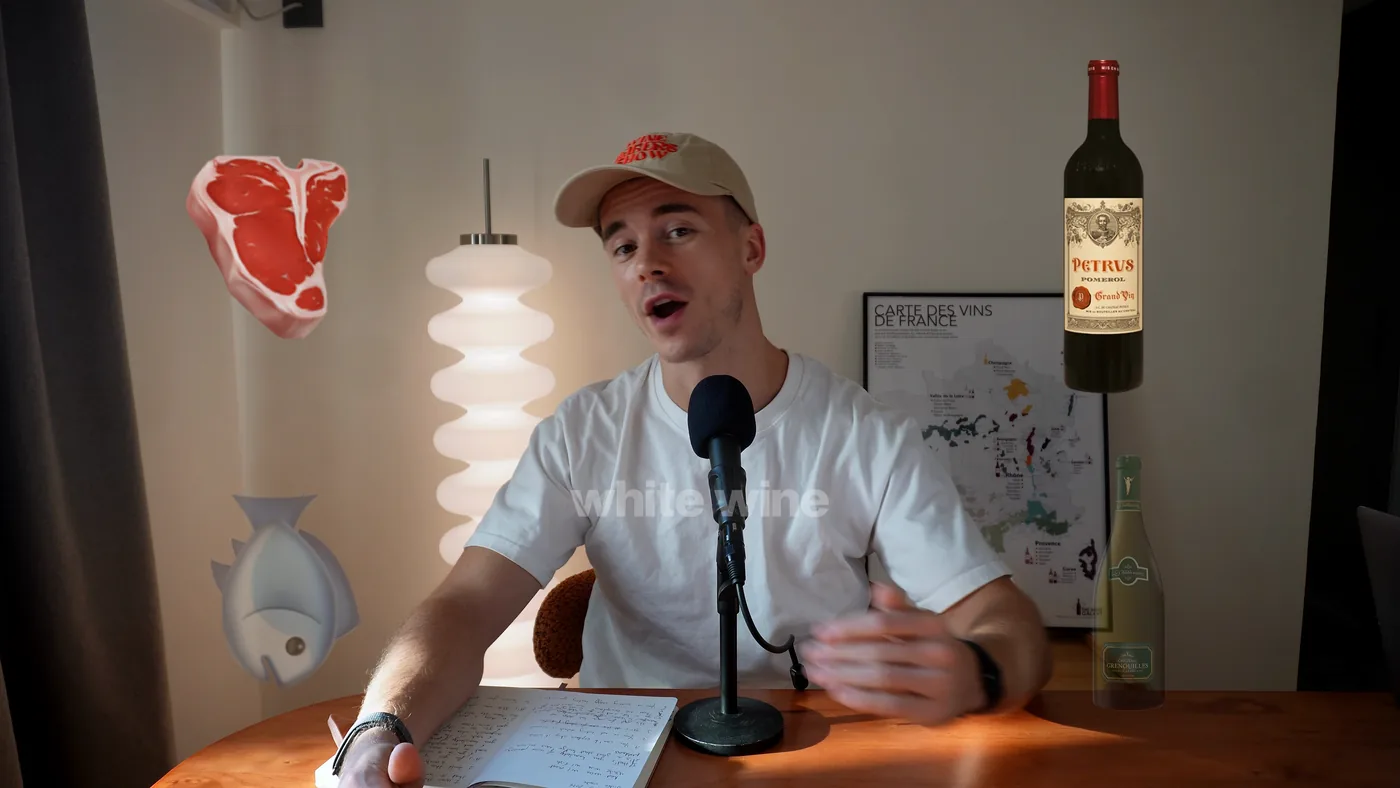
If your knowledge of food pairing is red wine with meat, white wine with fish, you have a problem
Those rules are not wrong, they are just the first page. They tell you what usually works and never once tell you why, so the moment you meet a bottle nobody has written about, you are guessing. Three minutes on the part nobody teaches: a pairing is decided in the nose, not on the tongue, and once you can see that happening you stop needing the rules at all.
Sound familiar?
- You know the rules. Acid with fat, tannin with protein. You still freeze when someone hands you a wine list and a menu.
- You can tell a bottle is good. You cannot say why it works with the dish in front of it.
- Someone asks you to explain a pairing and you hear yourself say "it just works".
- You have a pairing chart saved somewhere. You have never once opened it standing in front of a real bottle.
None of that is a knowledge problem. It is a missing mechanism. You were handed answers when what you needed was the method that produces them.
Fix that for €99What you can do at the end
Profile any drink cold
Taste something you have never met, and describe what it releases in a vocabulary that is comparable and precise.
Build a pairing from scratch
Structure check first, aroma bridge second. A repeatable procedure, not a hunch.
Design the dish, not just pick the wine
Adjust a plate to meet a bottle, which is the part sommeliers rarely get to do and chefs rarely know how to.
Defend it out loud
Explain to a table, a client or a kitchen exactly why it works. That is what separates an enthusiast from an authority.
Seven modules
Each one comes with tasting exercises you run at home, from a shopping list sent with the module.
- 01
Why pairing works
Flavour is mostly smell. We prove it on you with a glass of orange juice, then show the mechanism sitting under every pairing you have ever liked.
- 02
The aroma toolkit
Fourteen aroma families, seventy descriptors. Read any aroma profile in four seconds and say what it will go with.
- 03
Structure meets aroma
Acid, tannin, alcohol, sweetness. Where the classic rules genuinely help, and the exact point where they run out of answers.
- 04
Two wines, all the way down
Sauvignon Blanc and Cabernet taken apart compound by compound, so you can then do it to any grape on your own.
- 05
From bridge to dish
Complement the aromas, contrast the tastes, contrast the textures. Building a plate around a bottle, and knowing when to stop.
- 06
Beyond wine
The same method for beer, gin, tequila, bourbon, coffee and tea. Including why a good sencha beats most wines with shellfish.
- 07
Practicum
A drink you have never studied. Design a pairing, defend the reasoning, find out whether the method actually transferred.
Why this is different
Almost every pairing resource in existence is a lookup table. This is a method.
The science it runs on
Ingredients that share key aroma molecules tend to work together.
This is not a metaphor. Gas chromatography maps what an ingredient actually releases into the air, roughly ten thousand aroma compounds sorted into fourteen families. When two ingredients share the same key compounds, they tend to sit well together, and you can find that overlap on paper before you ever open a bottle.
A barrel-aged Cabernet and the crust on a seared steak literally share molecules, which is why that pairing has always worked.
Sancerre
the wine
fruity floral green · apple-like spicyGreen apple
on the plate
fruity waxy green · apple-like sourFresh dill
on the plate
herbal spicy green · apple-like citrusBy module four you are using these by name. Pyrazines, the green pepper thread in Sauvignon and Cabernet. Thiols, grapefruit and cat pee. Esters, banana and pear. Lactones, the coconut that comes out of the barrel. Vanillin, the oak itself. Rotundone, the black pepper in Syrah.
You will learn to read this in four seconds
An aroma profile shows which families an ingredient releases and how strongly. Once you can read one, you can look at any ingredient and say what it will meet. This is the vocabulary that replaces "notes of forest floor and crushed violets".
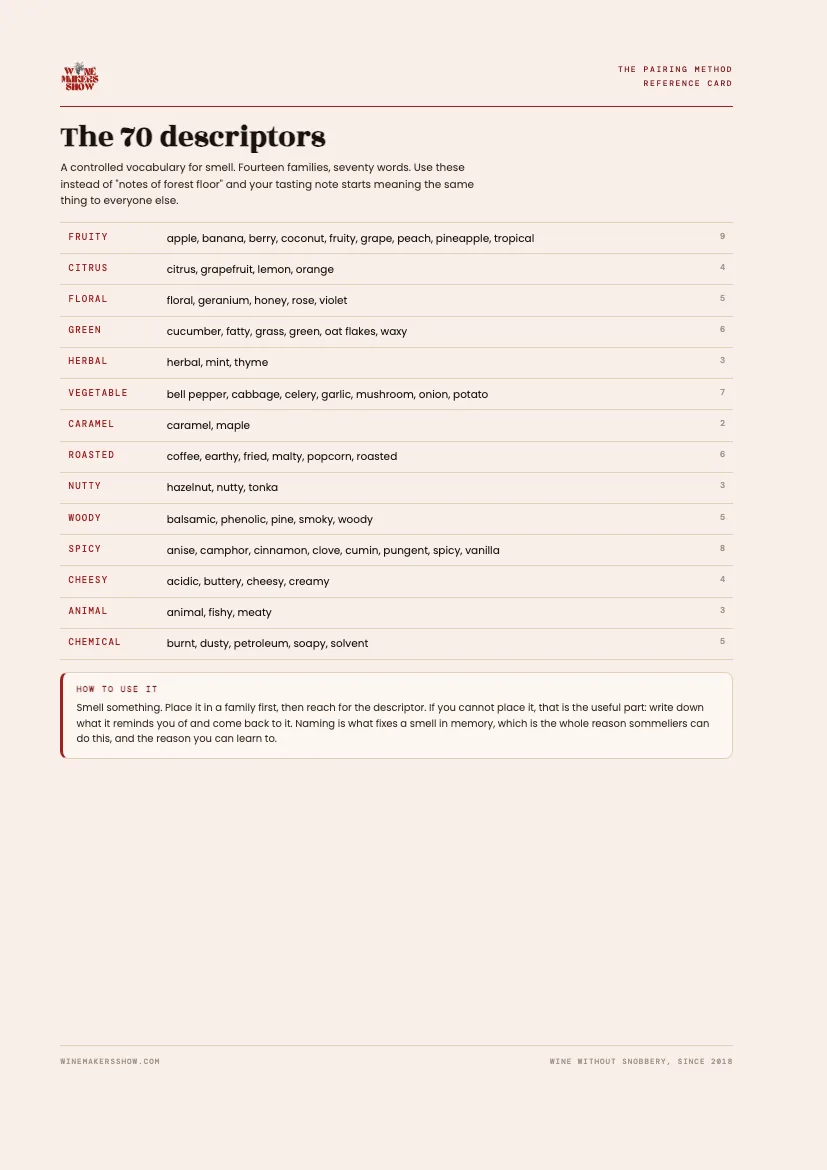
The fourteen families
A controlled vocabulary, so your tasting note means the same thing to you as it does to anyone else who has done this course.
Where you end up
Who it is for
- Enthusiasts who know the rules and want the mechanism
- Enthusiasts who drink well but were never taught the rules, and would rather learn how it works than memorise a list
- WSET students who know the interactions, acid, fat, salt and sweetness, and want the aroma layer the syllabus stops short of
- Cooks who want to build a dish around a bottle
- Sommeliers and trade who need a better answer than "it just works"
Who it is not for
- Absolute beginners who have not started tasting yet. Start with Wine 101, then come back.
- Anyone wanting a safe list to memorise.
Coffee and tea are two of the best-documented subjects in the course and both appear in the final assessment. The aroma analysis works identically without alcohol.
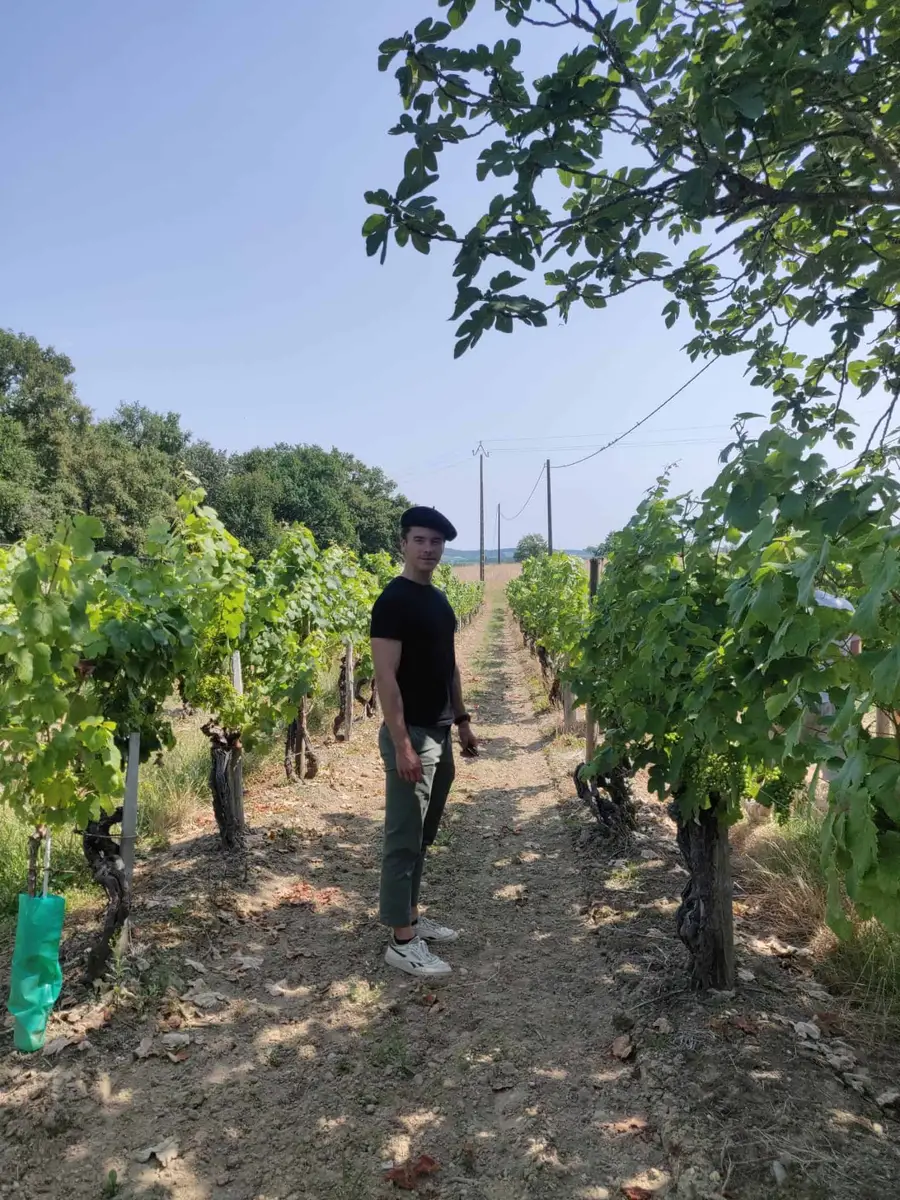
Antoine Desferet
Founder and host, Wine Makers Show · WSET Level 3
Since 2018 I have been asking winemakers how their wine actually works, across more than 110 episodes of the Wine Makers Show. One question kept coming back and never got a satisfying answer: why does this bottle work with this dish? Everyone had matches. Almost nobody had the mechanism. This course is the thing I kept wishing existed. Not another list of safe pairings, but the reasoning underneath, taught plainly and without the snobbery.
What's included
Seven video modules
Around forty minutes each, at your pace, yours for good
Tasting exercises
A shopping list per module so you taste the point, not just hear it
The aroma wheels
Original wheels with a readable concentration scale, plus a blank template
The 70-descriptor card
The controlled vocabulary, printable
Six assignments
Real work, because reading about a method does not transfer it
The practicum brief
Design and defend an original pairing, with the marking rubric
Shared aroma compounds generate candidates, not verdicts. The principle describes Western cooking considerably better than East Asian cooking, where deliberate contrast is the whole point, and plenty of great pairings work by opposition instead. You get taught that in module one rather than discovering it in module five. A method you know the edges of is worth more than one you half believe.
Reserve your place at the founding price
Pay once, keep it for good. Modules arrive as they are finished. The founding price closes on 12 October, and after that it is €149.
Twelve hours on one subject, about €8 an hour, and it is yours for good. A single sommelier-led pairing dinner costs more and you cannot replay it.
Price includes VAT · Secure payment by Stripe · Full refund on request until the course is complete
Delivery promise. If the last module is not in your inbox by 31 December 2026, I refund you in full, automatically. You do not have to notice it, ask for it, or chase me.
Satisfaction promise. Full refund on request at any point until the course is finished, and for thirty days after. One reply to any of my emails, no form and no reason needed.
Not ready to buy? Take the vocabulary anyway.
The 70 descriptors on one printable page: the fourteen aroma families and every word inside them. It is the reference card students keep beside the glass for the whole course, and it is useful on its own whether you ever buy anything.
One page, PDF, free. No spam, unsubscribe in a click.
Questions
When do I get it?
Module one first, then the rest as each is finished, with everything delivered by 31 December 2026. Every module is emailed to you the moment it is ready. If that date slips and you would rather not wait, you get your money back.
How much wine do I need to buy?
A shopping list per module, usually one or two bottles and a few supermarket ingredients. Nothing rare, nothing expensive.
English or French?
English first, with French to follow at no extra cost. Pre-order now and you get both as they land, whichever you prefer to learn in.
Do I need Wine 101 first?
No, but it helps. This course assumes you already know what tannin and acidity are.
Is this just the Foodpairing book?
No. The molecular approach draws on Coucquyt, Lahousse and Langenbick (Firefly, 2020) and on the research that pushes back on it, including Ahn and colleagues in Scientific Reports, who found the principle inverts in East Asian cooking. The book covers two wines; the course teaches the method so you can do it to any of them. You do not need a copy.
The rules will only take you so far.
Learn the mechanism underneath them, and you stop needing anyone else to tell you what goes with what.
Pre-order for €99Price includes VAT · Secure payment by Stripe · Full refund on request until the course is complete