Every week we open something on a Sunday and write down what it did. We call it Sunday’s Delight, and this is the first one.
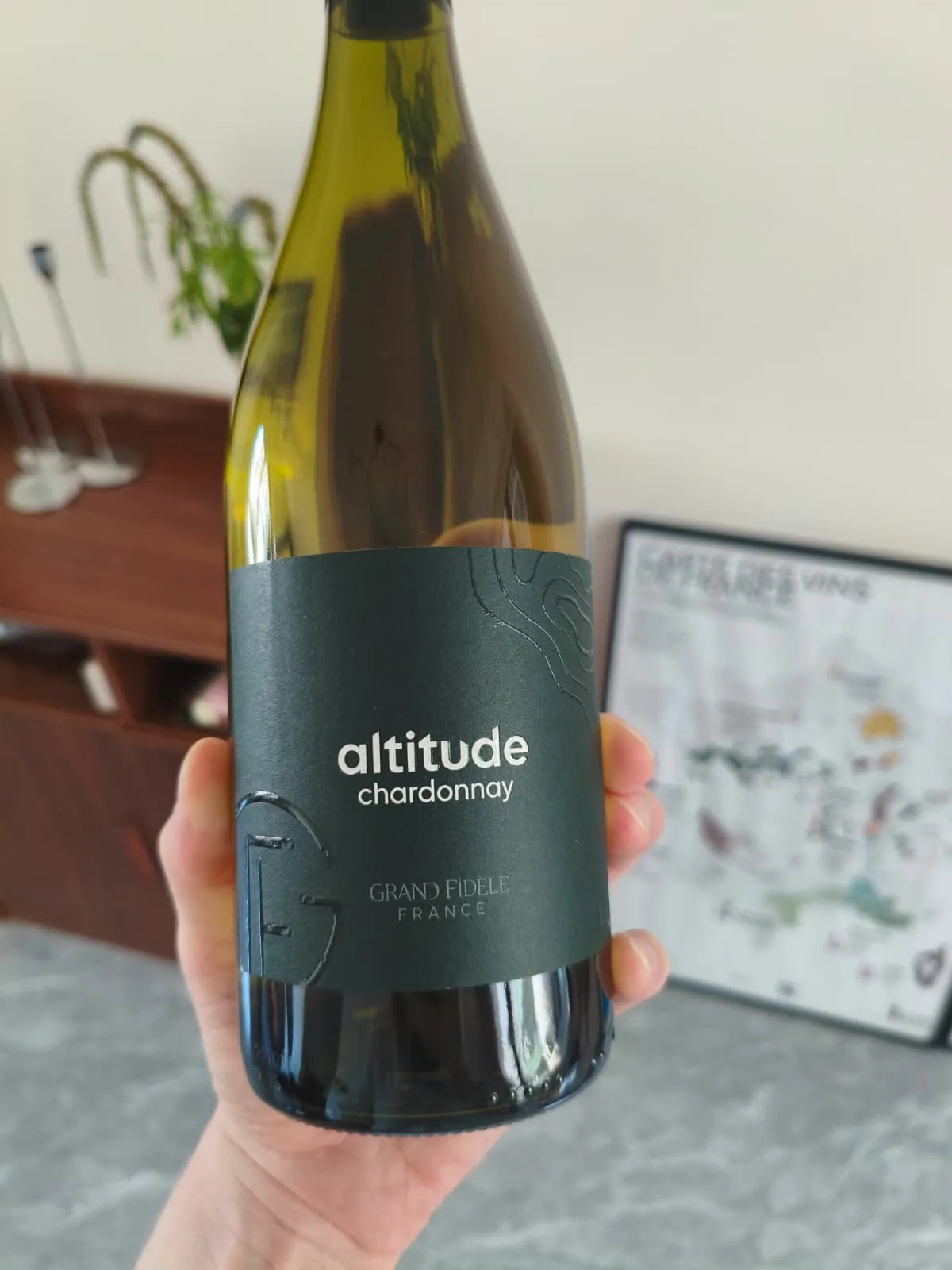
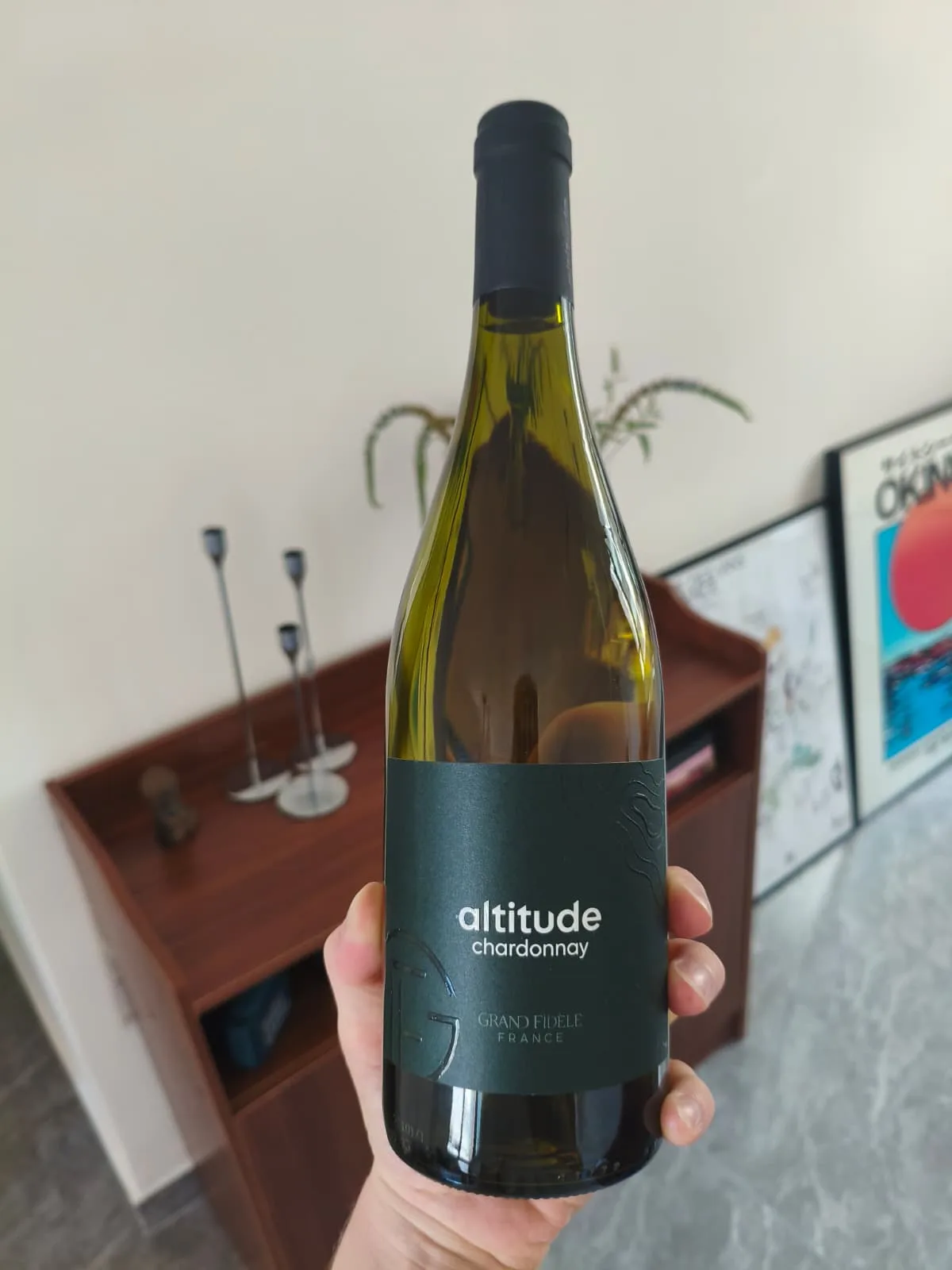
Altitude Chardonnay is a white from Domaine Grand Fidèle, an 1830 estate in the Corbières hills behind Narbonne. It is ripe and textured, with pear, citrus zest, hazelnut and a warm brioche note, held together by the acidity its highest parcels manage to keep. Generous rather than lean, and much better at 11 to 12°C than straight from the fridge.
What is in the glass
The colour is a pale gold with a green edge, brighter than you expect from this latitude.
The nose opens on ripe pear and yellow apple, then gives up the second layer slowly: toasted hazelnut, a lick of warm brioche, and citrus zest sitting over the top of it rather than underneath. It smells like a wine that has seen some lees and some wood, though neither is shouting.
On the palate it is round first and fresh second, which is the right order for this style. There is weight across the middle of the tongue, a texture closer to cream than to water, and then a citrus line that arrives late and cuts through it. The finish is mid-length and leaves the hazelnut behind rather than the fruit.
What it is not is a taut, flinty, oyster-bar Chardonnay. If that is what you want, this is the wrong bottle. What it does instead is hold generosity and freshness in the same mouthful, which in this part of France is the harder trick.
Why the name is doing real work
Cuvée names are usually decoration. This one is a technical explanation.
Chardonnay is a cool-climate grape. It built its reputation in Burgundy, Chablis and Champagne, places where the growing season is long, the nights are cold and the grape ripens slowly enough to keep its acidity. Move it somewhere hot and it ripens too fast. Sugar climbs, acid falls away, and you end up with a wine that is high in alcohol, broad in the mouth and dull on the finish. Plenty of southern Chardonnay tastes exactly like that.
Elevation is the standard answer, and it works for a simple reason: it is not the daytime heat that matters so much as how cold the nights get. Higher parcels lose more heat after sunset. That wider day-to-night swing slows sugar accumulation and preserves the natural acidity the grape would otherwise burn off, while the Mediterranean sun still does the ripening during the day.
That is the whole idea behind the cuvée. Grand Fidèle sources it from the estate’s highest parcels, and the range is named after the thing that makes it possible. The Hautes Corbières massif rises steeply behind Narbonne, so there is genuine height available a short distance inland from a coast that is otherwise flat and warm.
A deliberate outsider
Here is a detail worth knowing, because the label will not tell you.
Chardonnay is not one of the grapes the Corbières appellation permits. Corbières Blanc is built on Mediterranean varieties: Grenache blanc, Bourboulenc, Macabeu, Marsanne, Roussanne, Vermentino and their neighbours. Plant Chardonnay in Corbières and whatever you make cannot be sold as Corbières.
So this is bottled outside the appellation, under one of the regional IGPs. We could not confirm which one from the label or the estate’s website, and it does not much matter. What matters is that people read “IGP” as a demotion when it is usually just a description of what the rulebook allows. Appellation law encodes tradition, not quality. Some of the most interesting wine in the Languedoc is made by producers who looked at the permitted list and planted something else anyway.
The estate behind it
Domaine Grand Fidèle was founded in 1830 and sits between the Vals hills and the Hautes Corbières massif, with around thirty hectares split across four micro-terroirs. It is run today by Thomas Magnani, who describes the project in terms of refinement and conviviality rather than trophy bottles, which fits the wine.
The estate also tells a good story about itself: it traces a connection to the aristocratic line of Antoine de Saint-Exupéry, the author of The Little Prince. We have not verified that lineage and we would treat it as estate lore rather than established fact, but it is a nice thing to have on the table when you pour.
Grand Fidèle is not only a wine business any more. There are three villas with private pools and fifteen bedrooms between them, plus wine tours and events. That is an increasingly common shape for a Languedoc estate of this size, and honestly a sensible one.
What to eat with it
The producer says Mediterranean dishes, which is true and slightly useless. Here is the more practical version.
This wine has fat-friendly texture and a citrus line, so it wants food with richness for the texture to match and enough salt to keep things lively:
| Dish | Why it works |
|---|---|
| Roast chicken, skin properly crisped | Rendered fat meets the wine’s texture; the hazelnut note sits perfectly with browned skin |
| Grilled squid or prawns, garlic and olive oil | Salt and char against the citrus lift |
| Brandade de morue, or a good aioli | Salt cod and emulsified oil are exactly the weight this wine carries |
| A young Comté or Ossau-Iraty | Fat and protein soften a wine and round it out |
| Roasted Mediterranean vegetables with anchovy | The anchovy salt does more for the pairing than the vegetables do |
One thing to avoid: anything noticeably sweet. Sweetness in food makes wine taste drier, more bitter and sharper than it is, which will strip the generosity that is the whole point here. Save it for the savoury part of the meal.
And do not over-chill it. Our guide to serving temperature puts dry whites with texture at 11 to 12°C. At fridge temperature, around 5°C, the pear and hazelnut simply do not show up and you are drinking acid and alcohol. Take it out twenty minutes before you pour, or pull it from the fridge and let the first glass warm in the glass while you drink it.
Would we buy it again
Yes, with a clear idea of when. This is not a bottle for a hot afternoon on a terrace when you want something cold and sharp. It is a dinner wine: a roast chicken on a Sunday, which is more or less how we came to it.
If you want to understand why the grape behaves the way it does before you open one, our piece on Chardonnay covers the variety across its different homes. And for the wider region, our conversation with Gérard Bertrand is the best introduction to what the Languedoc has become in the last twenty years.
You can find the wine, and the villas, at grandfidele.fr.
Summer does not have to end on schedule.
Frequently asked questions
Where is Domaine Grand Fidèle?
In the Corbières, inland from Narbonne in the Languedoc, southern France. The estate dates to 1830 and farms around thirty hectares spread across four micro-terroirs, between the Vals hills and the Hautes Corbières massif.
Is Altitude Chardonnay a Corbières wine?
Geographically yes, legally no. Chardonnay is not one of the varieties the Corbières appellation permits, so a Chardonnay grown there is bottled outside the AOC under a regional IGP. That is a rulebook distinction, not a quality one.
What temperature should I serve it at?
Between 11 and 12°C, the same band we recommend for any dry white with texture. Straight from a cold fridge at 5 or 6°C the hazelnut and brioche notes disappear and you taste mostly acid.
What food goes with Altitude Chardonnay?
Anything with fat and salt: roast chicken with crisp skin, grilled squid or prawns in garlic and olive oil, brandade, aioli, or a young Comté. Salt softens a wine and makes it taste rounder, which is why salty Mediterranean cooking flatters this style.
Where can I buy it?
Direct from the estate at grandfidele.fr, which also runs villa stays and wine tours on the property.