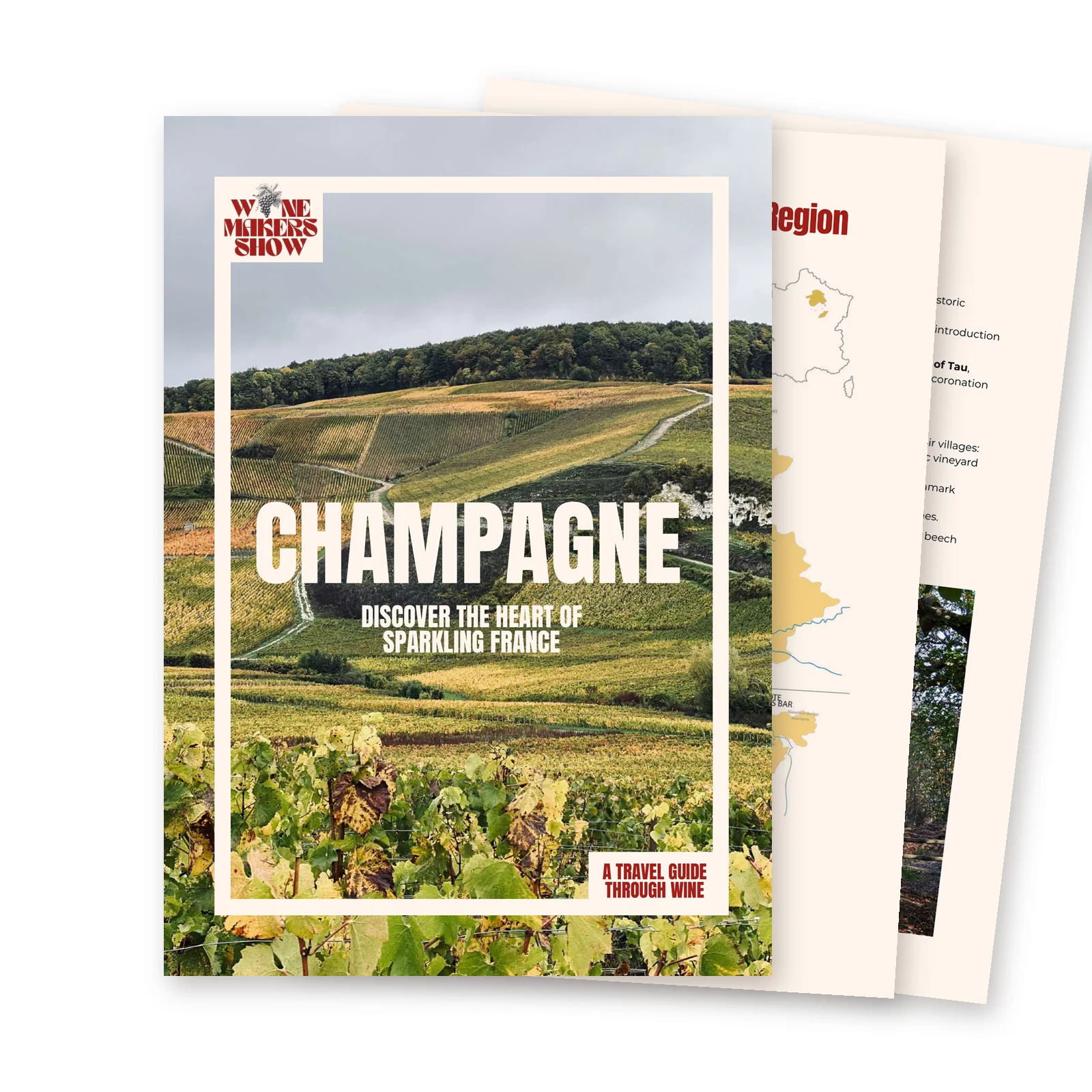
Champagne travel guide (PDF)
€2
Our 53-page guide to visiting Champagne: itineraries from one to five days, houses and growers to book, where to stay and eat. Instant PDF download.
PDF · instant download, link emailed too
Champagne is 45 minutes from Paris by TGV: close enough for a day trip, and deep enough to fill a week. This guide is how we would plan either one.
Fifty-three pages and nine chapters, with the practical detail you need on the road: addresses, which houses only open by appointment, what a tasting costs, and when to go.
Three itineraries, from one day to five
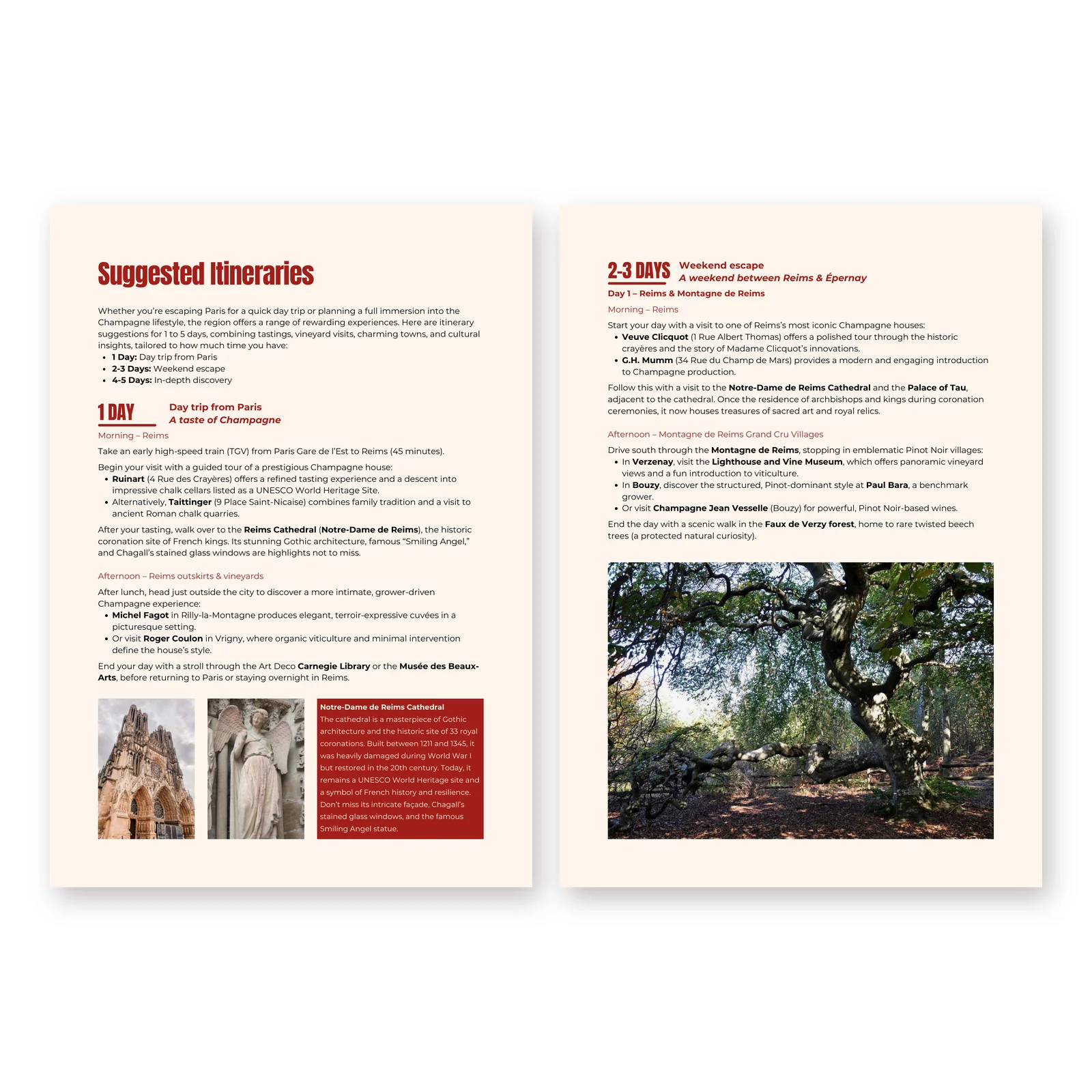
- A day trip from Paris. The TGV to Reims, a descent into the chalk cellars at Ruinart or Taittinger, the cathedral, then a grower in the Montagne de Reims in the afternoon.
- A weekend. Reims and the Grand Cru villages of the Montagne de Reims on day one, Épernay, the Avenue de Champagne and Hautvillers on day two, and an optional third day in the Côte des Blancs.
- Four to five days. More Grand Cru growers in the Côte des Blancs, then two hours south to the Côte des Bar, Pinot Noir country, with a detour to Renoir’s village of Essoyes.
25 houses and growers, with their addresses
The big names have the grandest cellars: Veuve Clicquot, Ruinart, Taittinger, Moët & Chandon, Bollinger and six more. Then fourteen independent growers, from Pierre Péters in Le Mesnil-sur-Oger to Marie Courtin in the Côte des Bar, where you often taste with the people who made the wine.
Each one comes with its address and what makes the visit worth it, plus the habits that save a trip: book ahead, count €10 to €50 per tasting, and allow 30 minutes to two hours per visit.
Beyond the cellars
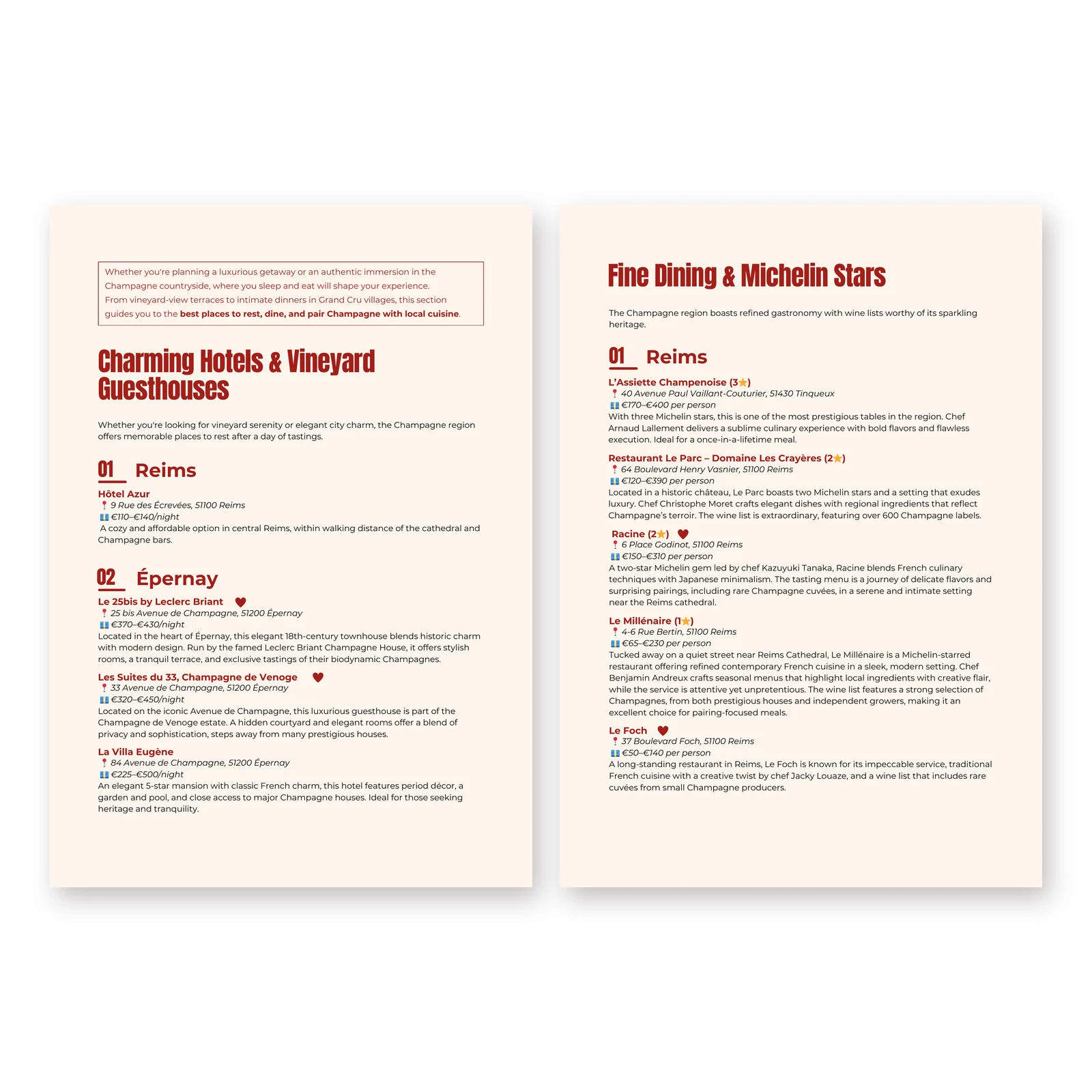
Cycling through the Grand Cru villages of the Côte des Blancs, harvest days with a family estate in September, sabrage, yoga among the vines, then the hotels, bistros and Michelin tables across the region. The practical chapter covers trains, cars and bikes, and a daily budget from about €170 to €750 and up.
Before you go
Leclerc Briant, one of the Épernay stops, has been on the podcast: episode #25 with Frédéric Zeimett. If a sabrage lesson is on your list, our guide to sabering Champagne covers the technique. And for the region on your wall once you are home, there is our Champagne wine map.
Specifications
- Format
- PDF, 53 pages, A4
- Language
- English
- Chapters
- 9, from the region's history to its culture and anecdotes
- Delivery
- Instant download after payment, plus the link by email
- Reads on
- Phone, tablet or computer. Prints on A4
- Edition
- 2025
Frequently asked questions
What is inside the guide?
Nine chapters: an introduction to the region, how Champagne is made and how to read a label, suggested itineraries, the houses and growers to visit, must-have experiences, where to stay and eat, the wine events worth planning around, practical travel tips with a budget, and the region's culture and anecdotes.
How do I get it after paying?
Straight away. After payment you land on a page with the download button, and we email you the same link, so you can download the guide again whenever you need it.
Which itineraries does it cover?
Three, depending on the time you have: a day trip from Paris by train to Reims, a weekend between Reims, the Montagne de Reims and Épernay with an optional day in the Côte des Blancs, and four to five days that add more Grand Cru growers and the Côte des Bar.
Is there a French edition?
Not yet. The guide is written in English.
Can I print it?
Yes. The pages are A4, so it prints at home or in any copy shop. It also reads well on a phone, so the addresses travel with you.
What if it is not for me?
Email us at winemakersshow@gmail.com within 14 days and we will refund you.