At the end of his interview, Michel Chapoutier suggested we sit down with Gérard Bertrand. Mission accomplished. Wine Makers Show headed off to meet Gérard Bertrand: without a doubt one of the world’s great winemakers, particularly in biodynamics. So we invite you to spend an hour with Gérard and trace his journey through this terrific interview.
Can you start by introducing yourself?
I’m Gérard Bertrand. I was born in Narbonne, lived in the Corbières for the first 30 years of my life in a village called Saint-André-de-Roquelongue. I moved 5 kilometers, so I haven’t traveled far in life: I live at Domaine Cigalus, in the Bizanet area. I’m a citizen of the world, a French patriot, and a representative of the wines of Occitanie and Languedoc-Roussillon in particular. We’re now present in 175 countries and we have 16 estates across the Languedoc. It’s truly thrilling work to promote both the wines and the lifestyle of this superb region.
A first thing really interests us: how you got here. When you started, there was a single estate. How did the early days unfold? Were you always in wine? Were you always drawn to it?
We’re always influenced by our parents, our grandparents, the world we grow up in. I was born in the Corbières. From the age of 10, my father took me along to my first harvests. After 15 days of work he told me, “you know, you’re lucky, because when you’re 50, you’ll have 40 years of experience.”
It seemed so far away that I couldn’t picture it. Now I’m 55, and this is my 46th harvest. So it’s a long process. My father really encouraged me to taste, to work in the vines. My mother was also involved in the work, my sister too, so it was truly a family adventure. When my father died in an accident, I was 22, and I’d officially started working with him. I had two passions: rugby first, then wine. Rugby wasn’t professional. I played at the highest level, but I was at work all week. When my father died, I took over the family activities, so Château de Villemajou, which he had bought in the 1960s, plus the brokerage office he had founded. That’s how I started. My passion was still touring stadiums across France with my Narbonne team, then with Stade Français. When I stopped playing in 1995, I launched my activities in a more serious way.
How did it work back then, when you kept playing rugby and at the same time had this whole wine business? How did you juggle the two? Was it weekdays here in the vines and evenings at training?
It was thrilling, but a bit tiring, because I was already working 50 to 60 hours a week. So I lived like a monk, meaning I’d spend my Saturday resting at home, taking naps, sleeping 12 hours the night before, to be in shape with enough energy on Sunday. When we’d take the bus to Grenoble, Paris or somewhere else, I’d spend the whole ride sleeping. My life was paced by work in the vines, then commercial work on one side, and training on the other. I was already training every day: twice with the club and 3 times alone. My life was tightly paced, and I kept 8 hours a day for sleep. I had a slightly monastic life, which I loved, because rugby was truly a reason to live for me, it was very powerful.
Then I learned the ropes in the wine world by meeting wonderful people who put me on the right track. For example, Marc Dubernet who was, and still is, my oenologist in the Corbières; Jean-Claude Berrouet who reached out, who was for 50 years the man at Petrus and at all the great crus of the Moueix group. I also met Aubert de Villaine at Romanée-Conti, who opened my eyes to precision; Nicolas Joly, who I crossed paths with, sparked my passion for biodynamics. I drew on every contact I made, and like a sponge I tried to capture all this information that came in, then sort through it, find my own path and forge my convictions.
It’s a very monastic, focused moment. Did you see something for later, or did you tell yourself “I’m doing this now and I’m giving it everything”? Did you have a vision, did you imagine reaching the stage you’re at today?
Reality always exceeds dreams, or reality always exceeds fiction. There’s a saying that “success is always proportional to the risks you take,” and I’ve always taken plenty of risks in my life. When I bought Château l’Hospitalet in 2002, I wrote a check bigger than my annual revenue, so the banks supported me for many years and still do. It took a long time, because for 25 years I didn’t make much money and carried significant debt. But I always had this vision of building an international group, creating an international brand, promoting the lifestyle of the region, and getting into organics and biodynamics. Since I’ve used homeopathy for over 30 years, I saw the effects on my body, my behavior, my way of approaching the living world. Biodynamics was an essential step in my construction and in building the wines we make, like a foundation for our group.
Biodynamics, was that a practice already in your family, or even short of biodynamics, was organic farming or limiting chemical inputs something already at home?
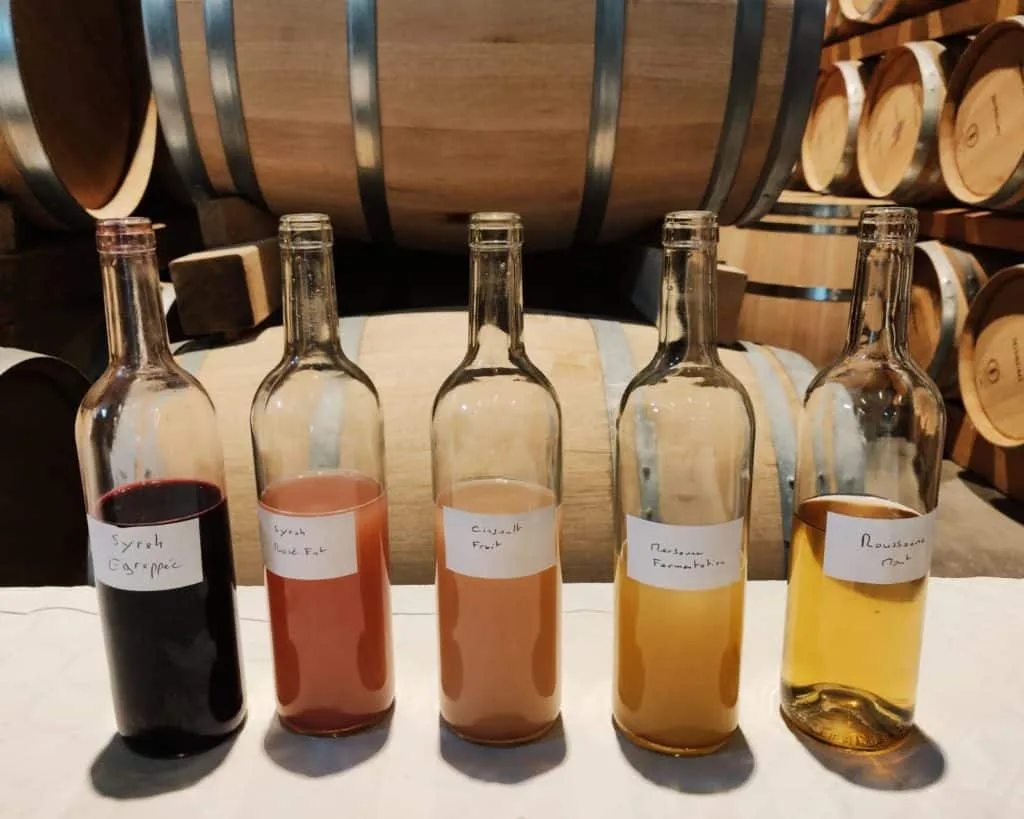
No. When I started, my father, my uncles who also worked in viticulture didn’t have an awareness of organics. Simply because they began in the 1950s and 60s, when everything was organic. I remember very well, in the 1970s synthetic products arrived and it was a major shift, since it was the easy path: herbicide on one side, fungal products, fungicides, insecticides and pesticides on the other. We changed model in just a few years without realizing it. By way of pendulum effect, it went too far. When I ate grapes before harvest, I didn’t like it because the grapes were full of product residues, so they gave me canker sores. One day I said “I should apply to the vine what I apply to myself, that is, homeopathy.” I read Rudolf Steiner’s book, The Agriculture Course, which was a revelation for me. I read it 3 times in a row: at first I said “this guy flies very high,” so I had to read it again, and again, and then we started. Since I’m a pragmatic person, we started small with 4 hectares: on the same plot, 2 hectares grown biodynamically and 2 hectares conventionally. We did this for 2 years and saw the change, both in the vine, with better balance, and in the cellar, with wines showing a bit more freshness, better acidity, lower pH and a more interesting qualitative potential. So we went, in 18 years, from 2 hectares to nearly 1,000 hectares today.
This first experiment, was that at Villemajou?
It was at Cigalus, because that’s where I live and my wife is also conscious of organics. We wanted our children, Emma and Mathias, to be raised in this world. It happened quickly, and after that we set out on a program to convert all the vineyards. Now all our group’s vineyards, the 16 vineyards, are biodynamic.
On top of that, you support the estates you work with, because you have a négociant arm too, so you also support them in this organic transition?
That’s right, we’re also leaders in France for organic wines. We’ve developed the various organic categories. There’s conversion: we have 1,000 hectares of vines in conversion with our partners. We’ve signed 10-year partnerships and we guarantee them 90% of the organic price during the first 3 years of transition, which is a real investment for us. Then there’s organic, in particular in France with a very established brand called Autrement, which leads the market. We’ve also developed sulfite-free and additive-free wines, that was in 1991, with Naturae and Prima Nature, two brands that are doing very well and are developed internationally. That was a revolution, because making wines without sulfur, without additives, that are very good to drink but also good for your health, is a challenge. So we did a lot of research to see how to keep this fruit potential, to avoid aromatic deviation, neither at bottling nor afterwards in storage. We have a real competitive advantage since we explored all that and understood what to do to guarantee this quality. Then we develop, particularly with the IGP Cévennes in the Cévennes Valley, called the Vallée Heureuse, “Bee friendly” wines, that is, wines that protect bees. It’s a valley where there’s no input that could harm bees, the greatest pollinators. You should know that bees do the work of pollination, and if in the world we had to replace the work of bees, it would cost 350 billion dollars per year. It’s a wonderful invisible machinery. Symbolically for us, it’s very important to take care of them. In the Cévennes Valley, which is wonderful, we’ve involved all the winemakers of the Cévennes, particularly the cellars of St Maurice, of Marsillargues, of Dufort.
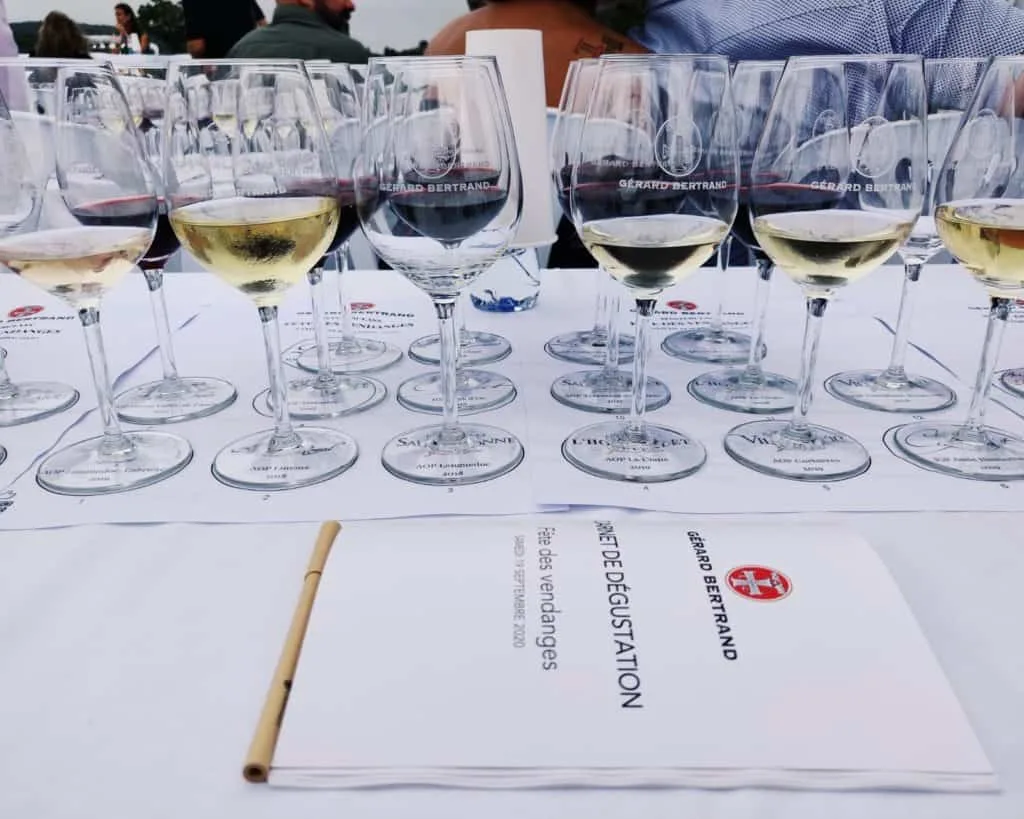 Then, of course, we have biodynamics. Biodynamics is reserved for people who have an awareness that goes beyond the soil. Biodynamics is about understanding the influence of cosmic forces interacting with soil and subsoil. The subsoil with silica connected to the planets beyond the Sun, whether Mars, Jupiter and Venus, and limestone connected to the Moon, Mercury and Venus. When you say that, the first time you think “that’s strange, that’s not real,” but when you experiment, when you understand, it’s good. Today, it’s not just biodynamic practitioners who use the lunar calendar made by Maria Thun. All the market gardeners have integrated it into their process. So we’ve developed biodynamics. The young people who work with us and are in organics, we also try, when they want, to train them in biodynamics. We always tell them “start small, experiment at home, take 2 to 3 hectares, see how it works, and little by little, expand if you feel it.” Because it’s complex, it’s an opening to the living world, to the power and influence of planets on Earth. It’s a bit of a revolution, but it’s thrilling. I consider biodynamics a bit like homeopathy, it changed my life, it changed my view of the world, and it lets me say and believe that nature is stronger and more intelligent than us. We need to respect nature because it’s nature that commands us, not the other way around. Humans commit the sin of pride by believing they are more powerful than nature, but you should know that it’s nature that’s responsible for wind, storms, cyclones, etc., and that if we disturb it too much, it gets into a state that causes us harm. So I think we need to grasp all these processes, fight against climate change which creates disturbances, try to look at how we can minimize all the problems, like all the fires happening today. All this happens through an awareness, and today I find there’s been a tipping point, a loss of balance in the ecosystems.
That’s why there are more and more disasters in the world. Right now it’s the fires in California, but it’s been three years in a row; there was Australia 6 months ago, so all this is not neutral. In Australia, the surface area of Belgium burned in a year. So we need to take care of the planet, since all those trees that burned won’t fix carbon anymore. It’s a circle that’s no longer virtuous. I think biodynamics also opens up consciousness and campaigns for engagement in respect for the planet: consuming seasonal products, local products; changing our worldview a little.
Then, of course, we have biodynamics. Biodynamics is reserved for people who have an awareness that goes beyond the soil. Biodynamics is about understanding the influence of cosmic forces interacting with soil and subsoil. The subsoil with silica connected to the planets beyond the Sun, whether Mars, Jupiter and Venus, and limestone connected to the Moon, Mercury and Venus. When you say that, the first time you think “that’s strange, that’s not real,” but when you experiment, when you understand, it’s good. Today, it’s not just biodynamic practitioners who use the lunar calendar made by Maria Thun. All the market gardeners have integrated it into their process. So we’ve developed biodynamics. The young people who work with us and are in organics, we also try, when they want, to train them in biodynamics. We always tell them “start small, experiment at home, take 2 to 3 hectares, see how it works, and little by little, expand if you feel it.” Because it’s complex, it’s an opening to the living world, to the power and influence of planets on Earth. It’s a bit of a revolution, but it’s thrilling. I consider biodynamics a bit like homeopathy, it changed my life, it changed my view of the world, and it lets me say and believe that nature is stronger and more intelligent than us. We need to respect nature because it’s nature that commands us, not the other way around. Humans commit the sin of pride by believing they are more powerful than nature, but you should know that it’s nature that’s responsible for wind, storms, cyclones, etc., and that if we disturb it too much, it gets into a state that causes us harm. So I think we need to grasp all these processes, fight against climate change which creates disturbances, try to look at how we can minimize all the problems, like all the fires happening today. All this happens through an awareness, and today I find there’s been a tipping point, a loss of balance in the ecosystems.
That’s why there are more and more disasters in the world. Right now it’s the fires in California, but it’s been three years in a row; there was Australia 6 months ago, so all this is not neutral. In Australia, the surface area of Belgium burned in a year. So we need to take care of the planet, since all those trees that burned won’t fix carbon anymore. It’s a circle that’s no longer virtuous. I think biodynamics also opens up consciousness and campaigns for engagement in respect for the planet: consuming seasonal products, local products; changing our worldview a little.
I’d like to come back to what happened between when you fully arrive at Villemajou and when you buy Cigalus, the first one you bought. How much time passed? How did it happen?
Villemajou is my youth, I started in 1975 at age 10. In 1987 when my father died, my mother said “it’s time for me to step back a bit,” so I took the reins of the estate. My sister Guylaine wasn’t interested. From 1987 to 1995 I managed this estate while taking care of my sporting career, and when I stopped playing, I had a fairly clear vision in front of me of what I wanted to do: I wanted to develop a brand. I had traveled a bit, I had realized that the trailblazers, the pioneers, like Robert Mondavi in California, like the Marchesi Antinori in Italy in particular, had embodied the renewal of their region or country. I liked that and it allowed me to start. I had the opportunity to buy Domaine Cigalus in 1995, then Château Laville Bertrou in 1997. I went from a vision where I had two labels to sell, to several terroirs. Little by little I had to travel the world, to both understand the global market, develop commercial contacts with the main distributors, and forge a vision that led to a clearer, more precise strategy. After that, little by little, with an action plan, resources, goals, that grew more ambitious day by day, because we have the chance, in this Occitan region, to have the largest vineyard in the world and to have the greatest variety of grape varieties since we have more than 70, since we make white wines, rosé wines, red wines, sparkling wines, and we’ve developed different typologies of organic wines. We meet every consumer need. It’s a chance, but also a demand, because in Bourgogne there’s Chardonnay and Pinot, in Bordeaux there are 5 grape varieties; we have the whole panoply. We also have terroirs, from the Spanish border to Provence, with different grape varieties, different climates, different soils and different altitudes. It’s extraordinary, because it’s a wonderful pool. Occitanie is a bit like Europe’s California. It’s Europe’s New World. It’s a chance to link it with the lifestyle of the region, that is, gastronomy, whether the gastronomy of the Sud-Ouest, with magrets, foie gras, ducks from Gers, etc., or the Mediterranean diet. Then we have the culture of the region, since for 5,000 years this region has been very powerful. You should know that the Greeks arrived in Narbonne-plage 24 centuries ago. They brought us the first grape varieties, particularly Clairette. Then we had the Romans: Narbonne, Narbo Martius, was the capital in Roman times. It was a flourishing city, a hub, with the second port of the Mediterranean after Rome, and it lasted 200 years. Then we had the arrival of the Visigoths in the 7th century, who stayed in Narbonne for 150 years; then we had the Cathars in the 12th and 13th century. So it’s a region steeped in history. We’ve added a fourth string to our bow, which is art, in all its forms. Since here we hold music festivals, in particular a jazz festival every summer; we also have a gallery for painting and photo exhibitions. We’re always making this link to celebrate Mediterranean lifestyle. Our craft goes a bit beyond the framework of vine-growing culture. We have a chef, Laurent Chabert, a hugely talented chef, we have a hotel resort. So we have many projects to promote what makes this region a unique region and a region where you feel good.
Can you tell us more about the jazz festival? Is jazz a passion for you, and every year there’s a festival held here?
Yes, when I bought l’Hospitalet in 2002, it was the third estate I bought. I immediately understood that this estate deserved a special welcome. First because it’s called “l’Hospitalet,” and the motto of l’Hospitalet in Latin is “sine vino, vana Hospitalitas,” meaning “without wine, hospitality is in vain.” When you want to promote hospitality, you have to open your heart and your doors to welcome people. We started with a classical music festival, since I had a friend, Jean-Bernard Pommier, a great virtuoso. But here, it didn’t work, because there’s always a bit of wind, and outdoor concerts are a bit tricky for classical music. Since I love jazz, we started. The first year we had 30 people, it didn’t work; the second year 120; from 2006/2007 we started having a bit of a crowd; and now, since 2010, we’ve been sold out every year, welcoming between 7,000 and 8,000 people each year. We’ve had the greatest French and international artists pass through here. Special emotions, with Maceo Parker, with Jamie Cullum… we also had Michel Legrand in another register. This year wasn’t very jazz-oriented, but we had Patrick Bruel, Christophe Maé. We always have 2 or 3 jazz nights and 2 or 3 more “open” nights, a bit more variety or international, which let us have a wide audience. When we do this in late July, it’s very good for the vines, because music, as they say, soothes the soul, but it’s also good for the grapes. We notice it creates a kind of alchemy in the vines. And for artists it’s very good to play in the vines. It’s very rare for them, I’ve often noticed it was the first time they were playing in the vines. It also created an event that became a ritual. We’re full every year. We do a dinner before the concert in the park, a beautiful gastronomic dinner for two hours. Then we have the concert in the château courtyard. After the concert, there’s the after-party, with another group, mostly regional groups, who extend the night until 2 or 3 in the morning. On these summer evenings we love to share. Hospitality is important to us.
It also makes the region shine, brings people here, creates an event for the people of Narbonne.
We have a clientele that’s 50% regional and 50% national or international. All year round, we have jazz nights every Friday. At the same time, since Château l’Hospitalet was named best red wine in the world in 2019 by the International Wine Challenge, we’ve had even more visits, more and more people want to come to our shop to buy our wines. This year, with Clos du Temple, we were named best rosé in the world by Drink Business. We also have, on all our iconic wines, more recognition, which means people want to come here. We also have a restaurant, l’Art de vivre, where we promote food and wine pairings. Laurent Chabert cooks at a very high level, deserving at least one Michelin star, I hope it’ll come soon. Being able to discover food and wine pairings, or wine and food pairings, depending on the day, is a plus. There’s a certain sweet melody, a certain sweetness of life, that makes people happy to spend 2 or 3 days with us.
You mentioned two awards: best red wine in the world, best rosé in the world, respectively for Clos d’Ora and Clos du Temple. These are two wines that are emblematic of the wines you make. There are dozens and dozens of other ranges, but these are special. Can you tell us a word about them?
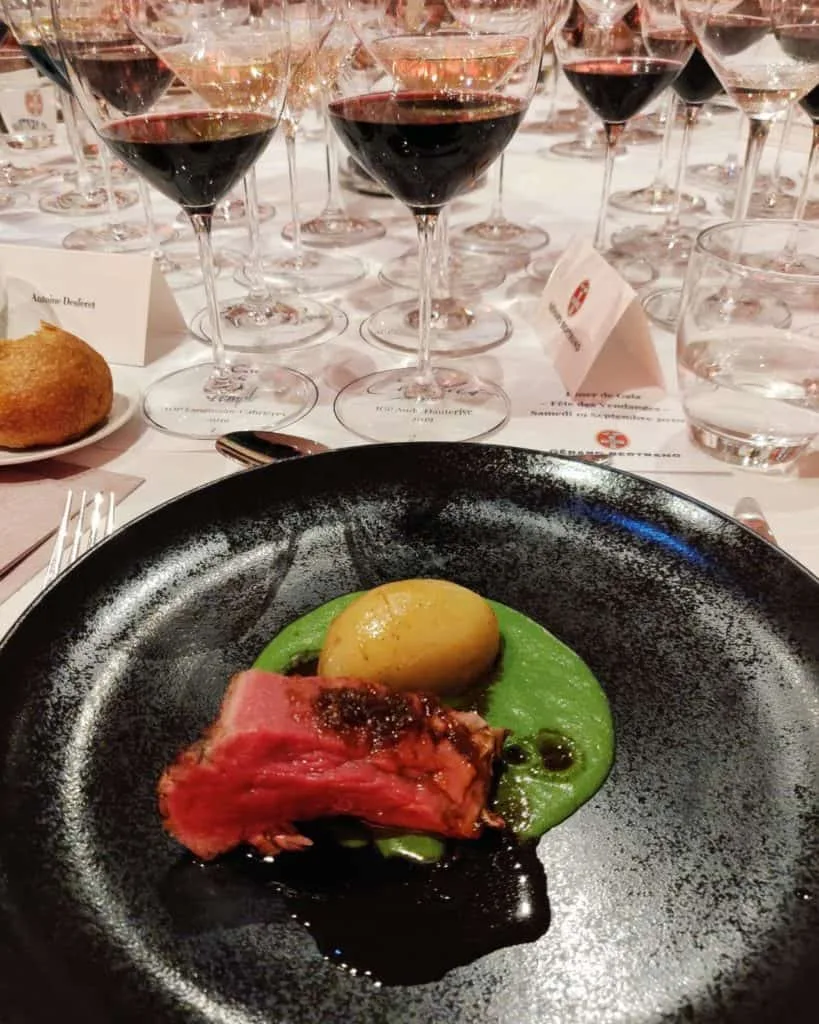
The best wine in the world was Château l’Hospitalet. Clos d’Ora has won many awards too, even though we don’t chase awards. What’s important about Clos d’Ora is that it was a culmination. Clos d’Ora is in La Livinière. It’s an iconic wine. Michel Bettane said it was the first grand cru of the Languedoc. It’s an essential quest. We’re above a geological fault, on vines of Grenache, Syrah, Mourvèdre and Carignan. Something happened the first time I went there: I felt the soul of the place. It’s a wine at altitude, more than 300 meters above sea level. I understood you could make great wines for long aging, with lots of freshness and expression. Being biodynamic, with cultivation by mule, means symbolically we connect the four kingdoms: mineral, vegetal, animal and human. It’s the complete cycle of biodynamics. We make wines of great expression, like Clos du Temple, where we wanted to make a rosé for aging. It’s said that Clos du Temple is the most expensive rosé in the world, but above all it was named best rosé in the world. We started from the principle that there were great red wines, great white wines. We had to bring rosé up to the same level as reds and whites, because rosé isn’t just a product you drink under the arbor. Rosé is also a wine with aging potential. For that you need old vines, which is the case at Cabrières, at Clos du Temple. A great terroir and winemaker know-how, since we age the rosés like whites, in barrel for seven months. Then we did very particular work, a very particular approach, to keep freshness, minerality, to be able to travel through time. Behind all this there’s a message, “Peace, Love, Harmony,” meaning we respect the biotope, we respect the energy of the place. The people who work there have an openness of mind, an openness of heart that’s very particular. The message of Clos du Temple is terroir, time and transcendence. It’s a wine that, for a rosé, has a lot of verticality, a wine that will move you with its tension. Nothing moves, everything is well aligned. When you drink this rosé, you enter into osmosis with the territory.
There’s a little anecdote about this rosé: in your historical research here, you realized that the spot where Clos du Temple is made was where Louis XIV’s favorite rosé was made, and that it benefited from a royally controlled appellation, since he came to the court. Is that right?
King Louis XIV loved 2 wines from the region: Muscat de Frontignan, and the wine of Cabrières, which at the time was called vin vermeille. Without knowing it, he was making a wine between white and red, that is, vin vermeille. They were one-night wines, lightly colored rosés, but rosés. Even then, the terroir of Cabrières stood out. Even then, the Cinsault and Grenache of Cabrières had their full expression. We just brought back to taste this royally controlled appellation of Louis XIV.
It’s all the more impressive that it’s the first time we’ve seen a rosé with so much blending.
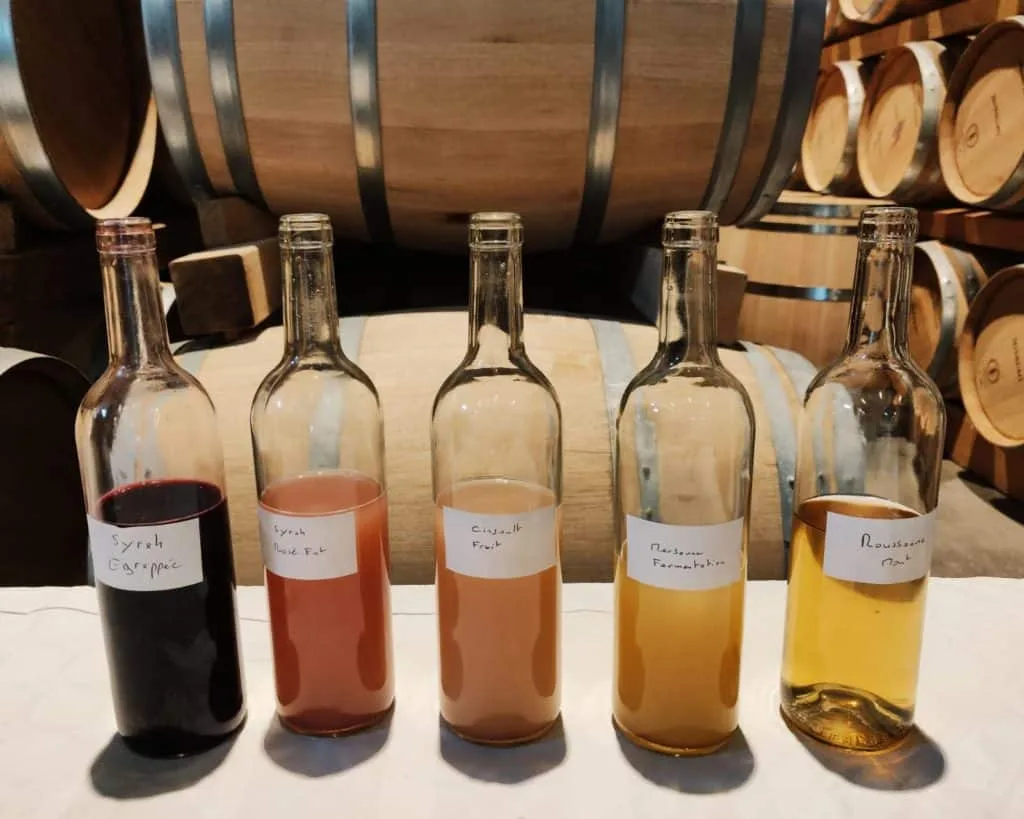
Making a blend is alchemy. You never know what’s going to happen. We taste the different vats, the different barrels, and the work begins. We let ourselves be guided, because there can be millions, even billions of possibilities, when you have 10, 20, 30 or 40 different lots. There, the complementarity between Cinsault and Grenache, the base grape varieties, with a bit of Syrah, Mourvèdre and Viognier, a white grape, appeared as obvious. It’s always interesting, since when you start from a blank page, with the first blend, here 2018, you don’t know at all where you’re going. As soon as we did it, we had a reference point. The goal isn’t to redo the same one, but we try to stay in the same line. So we always use the five grape varieties. It’s like children, when one isn’t well behaved, you don’t take them off the table, but sometimes we put less of one or the other, depending on each vintage. But it always stays around Cinsault and Grenache.
How does it work? I was told you participate in all the blends, that none leave here unless validated by you. But how does it work at the start, especially when it’s the first one? How does it work when you do your blend?
First of all, if I could no longer blend wines, I’d do another job. If I have to choose what I prefer in this profession, it’s making wine, that is, doing the blends. It’s like a painter with their palette, their colors, their brushes, their canvas: either they’re inspired and they make a masterpiece, or they’re not inspired and they’ll throw it in the trash. When you make a blend, of course there’s a very important period before, the date of grape picking. We work very hard on that, so we have the best grapes, coming from living terroirs, which has been the case since we went biodynamic. Once the time of blending arrives, between February and March, we enter as if into a religion. Alone I can’t extract the quintessence. I always work in a triptych, with my estate director and my general cellar master, with Richard Planas, or one of his collaborators and Ghislain Coux. We close the door, we cut off the phones, we re-situate the vintage a bit to know how it went. Then we taste the wines from the estate. Each time we do the same for all the estates. We start, we taste everything, and we try to imagine what the vintage will look like. Imagination is important. There are always strong lines that emerge, and then the work of blending begins. It’s like a temple, stone by stone we try to build. The most important thing is to have the foundation. The foundation is to ask “what are the two, three or four vats, or four lots of barrels, that will really be the beam of the blend?” Then we put the second floor, then the third, etc., up to the top of the pyramid. When you have perfect balance, you know it. Sometimes it takes 2 sessions, sometimes 3, sometimes 4, sometimes 5. We also use the different days, because in the lunar calendar there are flower days, fruit days, root days and leaf days. Based on all this, nature and intuition guide us and let us draw out the quintessence. You really need to enter into connection with the product, you really must not be disturbed. It’s an asceticism. The day before a blend, you have to eat light, go to bed early, have a fresh palate, well rested, and tackle the day without having been upset. At 8 in the morning, we start, we arrive, we’re fresh, we’re focused. And then the experience begins. It can last 3 hours, 4 hours, 5 hours, you don’t watch the clock. When we’ve finished the session, we look at where we are. Sometimes we’re far from the goal, sometimes we’re ready. But until you’ve touched the goal, you know it. The day we’ve touched it, we know we got there. Then it’s alchemy, because when you’ve created the best possible blend, it’s done, you close the book, you go down to the cellar, you make up the blend and prepare the wines for bottling. It’s alchemy, it’s like searching for the philosopher’s stone, once you’ve found it. Each year you have to renew it. That’s what excites me most.
I’ve never made a blend, but I think I’d be tempted to always try something extra, to add a bit of this or that.
That’s what we do, we do that endlessly. We do this work of adding a bit more of this, a bit more of that. When you’ve done 20 hours of tasting to make a wine, all that process you’re talking about, we’ve done it. It’s precisely by deduction, by small touches, that we get closer to the moment we know we can’t do better. When you can’t do better, you know it. After that it becomes vanity, pride or ego to try to do better than perfection. But when you’re in perfection, you must touch nothing more. It’s a habit, a will and a memory. We have as much olfactory memory as visual memory. Over the years, over time, we’ve recorded different sensations that stay etched in our subconscious, and when we need to find them in this catalog, we find this analogy with such-and-such vintage, such-and-such wine, such-and-such grape variety. It guides us. Experience is there and improves every year.
Today, Gérard Bertrand is 16 estates. What are your criteria when you go searching for an estate? How does it work?
First, someone has to offer me something for sale. I’m not going to go see the neighbor if he’s not selling his estate. I wait to see what’s offered to me, and when I arrive at an estate, I only run on one thing, the love at first sight. After 5 minutes I know if I’m going to buy an estate or not, or if I’m going to want to buy it. After that there’s the financial issue. But when I arrive somewhere, if after 5 minutes I don’t have the love at first sight, I leave. In an estate, the only thing you can’t change is the terroir. You can change the grape varieties, you can change the people, you can change the buildings, but the terroir you can’t change. When you walk in the vine, either the terroir speaks to you, or it doesn’t. If it doesn’t speak to you, you have to leave. If it speaks to you, you have to discuss it.
Have you ever wanted to go somewhere other than the region?
No. No, because in fact there’s so much to do here. This region is the world’s leading wine region, and I’m an expert, after 30 years of work, on this region. I know every nook and cranny. I’ve adapted to the climate, to the grape variety, to the environment, to the men and women, so it speaks to me. In other wine regions, I’d say “I’d be an outsider.” What interests me is excellence and quintessence, tracing a furrow and being able to bring people along. For now, we have everything we need here. What would tempt me one day is to have a small vineyard in Greece, because that’s where wine really started in the West. Even if wine was made in Georgia and a few countries, but Greece is really where wine was linked with philosophy, with rhetoric. Having 2 or 3 ancestral grape varieties in Greece would please me. I love Greece, I go there every year. Today the opportunity hasn’t presented itself, but if it presents itself one day, maybe I’ll let myself be lulled, it’ll give me an extra reason to spend a bit more time there.
In everything you say, I get the impression that different values emerge. The first is discipline. When you talk about the moment you were training, working at the same time, and today when you do your blends, I get the impression you’re really in the discipline of what you do.
Yes, first of all you have to have faith in what you do, that’s important. Wine, you have to go beyond discipline, you have to have understanding, you have to try to connect with the world of nature, try to transcend your action. Then, you just have to symbolically understand that a grape, after fermentation, can give the aromas of all the other fruits of nature, or vegetables. It’s a symbolism, it’s called transmutation. It’s like turning lead into gold.
With a grape, you can also turn lead into gold. You have to understand that, and you have to understand the humility you must have, since you have to be at the service of nature, at the service of the terroir. My goal is to reveal the terroir. The wine has to taste of somewhere, not taste of something. Tasting of a grape variety is good, it’s the first floor. That’s why I created the pyramid of taste, with pleasure, taste, emotion and message. The ultimate message of wine is the soul of wine. It’s a process of reflection, of integration. Of course you need discipline, rigor and will. I’d say it’s the foundation. Without it, you’re like a bird on a branch, the slightest gust of wind can carry you away. For 25 years, I didn’t earn money, it was a long process. Now our group is doing very well in France and internationally, the Gérard Bertrand brand is recognized, all our estates, Château l’Hospitalet, Château de Villemajou, Cigalus, La Sauvageonne, La Soujeole, Domaine de l’Aigle, and all the others, are very recognized. We’ve created international distribution and above all, we’ve won the hearts of consumers and wine lovers.
Because in fact there’s only one thing that doesn’t lie about wine: when you taste a wine, even if you can’t say why, you either like it or you don’t. Even novices know if they like it or not. When there’s an attachment to a brand, an expression, a know-how, it creates trust. This bond, that we’ve managed to create here with consumers around the world, is our most precious asset. It demands strength, but also humility, questioning yourself. You should never rest on your laurels, you should always aim for excellence. My father taught me one thing in particular in this profession: that wine is 1,001 details. When you understand that, you know that if you only do 998, you’ll just make good wine, if you’re below, you’ve missed your shot. If you want excellence, you have to be between 1,000 and 1,001. From pruning to commercialization and resale to the customer, there are all these 1,001 details, which are 1 or 2 complete cycles of the year. During all that time, things have to happen with the 2 most important dates, which are the choice of the harvest date and the blend. It’s wonderful because every month and every day there’s something different to do.
There’s a second thing you mention often and that comes through in your speech, the importance of the collective, in a broad sense, with the wine consumers, the group’s employees and also with your family. There’s a great value of transmission, whether from your father and grandparents to you, and from you to your children. Is that something important for you?
Yes. First, as I always say, I went past my threshold of incompetence a long time ago. So I have to hire people in the company who are better than me in their field. My job is 3 things: first, to keep the vision for the company; then, to manage people and instill in them a certain dynamic, a will, a spirit of conquest and also humility; then, to keep the focus on the essential, that is, the quality of the products. I have a wonderful team of oenologists, but no wine leaves us without me having validated it, without my having validated the blends before bottling. It’s always important, because my job today isn’t to do the cooking, it’s to add salt and pepper, that is, to give a dimension to all the wines we produce, that we’re going to sell around the world.
And on the family side?
There’s a saying that dogs don’t make cats. When you have children and they’ve been raised since birth on certain experiences around wine and gastronomy… With my wife Ingrid, we’ve never stopped having them taste wines from around the world, traveling with them. Emma and Mathias will do what they want. My daughter Emma already works with us, she’s passionate about what she does. It’s a long process since she has to learn the ropes, so with humility and work, progress every day and want to project herself, but without pressure, because she’s 22. My son Mathias is in advanced math studies. For now he wants to keep doing math and physics, and if one day he decides to work in the group, he’ll be welcome. The most important thing in this profession, especially when you have children and especially at the stage we’re at today, is that: one, if they come, they must really want to; two, they must be motivated; and three, they must have understood they’re doing something bigger than themselves, that is, that surpasses them. We’re now part of a family group, in a transgenerational dimension. My grandmother started with 9 children, they had 2 hectares. My father, the youngest of the 9, bought vines and started with nothing. He passed the torch to me. If I can pass a torch, the day I stop, to my children, who will pass it on themselves, it’s wonderful because it gives perspectives. It’s wonderful not just for the transmission of the heritage, because the heritage doesn’t matter, it comes and goes: it’s for the transmission of a certain way of life, of values, and for the embodiment of the spirit, the state of mind of a region.
Today, the Gérard Bertrand group is a considerable company, you’re 330. Can you say a word about the scale this represents, the big numbers?
The Gérard Bertrand group is 330 full-time people, plus 150 seasonal people in full-time equivalents. It’s 16 wine estates. It’s 175 distribution countries. It’s several subsidiaries. It’s a human adventure, men and women passionate about the company, about the region, about the values we try to convey, about contributing to wanting to change the world, with a much greener world, that is, turned toward organics, toward respect for nature, toward biodynamics, toward a new paradigm for viticulture and agriculture in general.
What would you advise a young producer who’s starting to work, who’s taking over an estate? You’ve done it 15 times, what would you advise?
What I’d advise is to take risks. The biggest risk in life is not to take any, because you’re sure you’ll be wrong. Taking risks is just trying to feel alive. When you try, you’re not obliged to succeed. You just have this will to undertake something. If providence means you have a bit of success, that’s good. Sometimes you have very great success, but it never comes overnight. You have to integrate that in viticulture, to succeed, you need a minimum of 5 to 10 years, when you’re very good. When you’re good, it takes 20 years. And if it doesn’t work, the advantage in viticulture is that you’ll resell your estate at least at the price you paid for it. So it’s not a big risk. What I recommend is to set the bar very high, not to be timid, not to have complexes, to have great ambitions, to travel, to meet people, and above all to have strong convictions. It’s a profession made for strong souls, not for those who’ll let themselves be discouraged at the slightest setback. I’ve experienced everything, I’ve made mistakes, errors too. As Oscar Wilde said, “experience is the name we give to our mistakes.” You have to make them, what’s important is not to make them twice, because that’s expensive. But there’s always the calm after the storm, and the advantage of viticulture is that it’s resilient, it’s a profession where you don’t die easily. There’s always the possibility of bouncing back, and the sun is always at the end of the road. It’s a school of life, if you want to learn to know yourself better, you can do this profession.
My next question is one I’m borrowing from a podcast called Génération Do It Yourself, by Matthieu Stefani: if you had the opportunity to meet yourself, at the moment when you decide to dedicate yourself fully to wine, at the moment of taking over the activity entirely, and the chance to slip a word in your ear, what would you say to yourself?
I’d say “go for it Gérard, go all in.”
Is that what they told you in rugby too?
Yes, my father told me that when I was 19, when I wanted to play in the first team in Narbonne, and I’d say “you know dad, I’m only 80 kilos.” He’d tell me “start moving the kilos you have before wanting to move what you don’t have, and you’ll see that in your head if you weigh 100 kilos, you’ll feel like you weigh 100 kilos.” You should never shrink, you should always aim high and look at the stars. I don’t set limits for myself. You have to think big and have this demand on yourself: shrinking yourself doesn’t serve the world. It’s not me who says that, it’s Nelson Mandela, during his inaugural speech, when he was elected president of South Africa. The minimum is to aim for the Moon.
Thank you very much, that was very interesting. I’m going to move to the 3 final questions, traditional in this podcast. The first is: do you have a wine book to recommend?
There are plenty of books on wine. If I recommend one, it’s not just about wine, but about biodynamics: “The Agriculture Course,” by Rudolf Steiner. He wrote this book in 1924, and he explained his vision of agriculture and also of viticulture. This book changed my life. You have to read it 2 or 3 times, you have to be focused.
I wrote a book, called “Le Vin à la belle étoile.” For those who want to understand my journey a bit, you can read it, since it’s an autobiographical book.
I’m finishing writing another one, not on viticulture, but on my vision of tomorrow’s world.
Do you have a date in mind?
First quarter 2021.
We haven’t talked about it much, but you’re very engaged in climate change in general. Maybe you want to say a word about it, in passing?
Yes, I’m aware of climate change. Of change and global warming. I think indeed, through what we put in place at the level of organics, of biodynamics, it’s an approach that helps fight in part against global warming, that goes beyond carbon footprint. The carbon problem is a stake, but it’s not the only stake. The stake is also the quality of air, the quality of water, which are essential, since these are free and universal goods. Today, depending on where you live, you don’t benefit from these goods of basic necessity at the level you should have. That’s important. Then, for me, the most important political act is what you put on your plate every day. Without realizing it, you influence almost every profession. In particular, when you consume seasonal vegetables, when you eat less meat, more vegetables and plant proteins, you contribute to stopping deforestation. Because today, the main responsibility for deforestation is soy farming, and soy is grown to feed livestock. So if we reduced meat consumption by a third, we’d still live just as well, there’d be fewer problems with weight-related diseases, and we’d have a better balance on the planet. The main political act is to eat well and pay attention to what you do.
Do you have a recent tasting that blew you away?
Tastings I love, I have plenty. I love tasting wines from around the world, and inevitably, the more wines I taste, the more I love French wines. That doesn’t mean I don’t like wines from elsewhere. We’re lucky in France, in Spain and in Italy: one, to have great terroirs; two, to have terroirs that have been identified. We sometimes criticize our organizations, like the INAO which is responsible for terroirs in France, because they’re on a long timeframe. But often they’re the ones who are right, because the vine is a centuries-old plant, it takes time for it to express the best of itself. When you taste the great French terroirs, the great Spanish terroirs, the great Italian terroirs, even when you go to Switzerland for example, or to Germany for white wines, there are great terroirs, and that’s what makes the difference with New World wines. Because the great terroirs in France are often very old vines, that have been tested. And people, generation after generation, on one hand have a respect for tradition, but on the other hand they know where they want to go, that is, they have a very clear vision of the product to make, a product that will last, that will be aged over time, that will be drunk after 10 years, 20 years, 30 years… It’s not my favorite wine because I don’t drink it often, but if I had to pick just one, it would be Romanée-Conti. Why? Because the prince de Conti had a vision and all the generations after him, including Aubert de Villaine now, are the temple guardians of the estate. Their goal isn’t to put their ego forward, but to continue perpetuating this tradition of excellence, even of exceptional wines, in France and around the world, and to continue spreading a spirit. The spirit of French wines blows around the world, the great tradition of the wines of Bordeaux, of Bourgogne, of Côtes du Rhône, and now of the Languedoc. The advantage in the Languedoc and the Roussillon is that we bring a new spirit. We’ve nourished ourselves a bit at the breast of this French tradition, and we in this region bring a new wind, that pleases people a lot, because we make the transition between the Old World and the New World. I’d say, to answer your question, of course for me, Romanée-Conti is the Mecca of wines, it’s the absolute Beacon in the universe of wines. And then, I’d tell you that there are plenty of gems to discover in the Languedoc, including some at our place, and I leave the choice to all our listeners to come taste them with us.
To finish, last question, who should be my next guest, in this podcast?
Your next guest, you don’t have a choice, it’s Jean-Claude Berrouet, who made 50 vintages of Petrus, who is one of my mentors, who is my friend, and who is at once, which is rare, first a poet, then a scientist. Alone, he is the Yin and the Yang. He has the rigor of the scientist and the magic of the poet. You have to go see him, because he’ll transport you, and explain to you, in the hollow of his hand, what a terroir is, what a Bordeaux grand cru is, and what it is to drink, to taste a wine, and to enter into resonance with a great product, and also with food and wine pairings. So Jean-Claude, if you hear me now, you must be the next!
Amazon links on this page are affiliate links. They cost you nothing extra, and they help me keep this going.