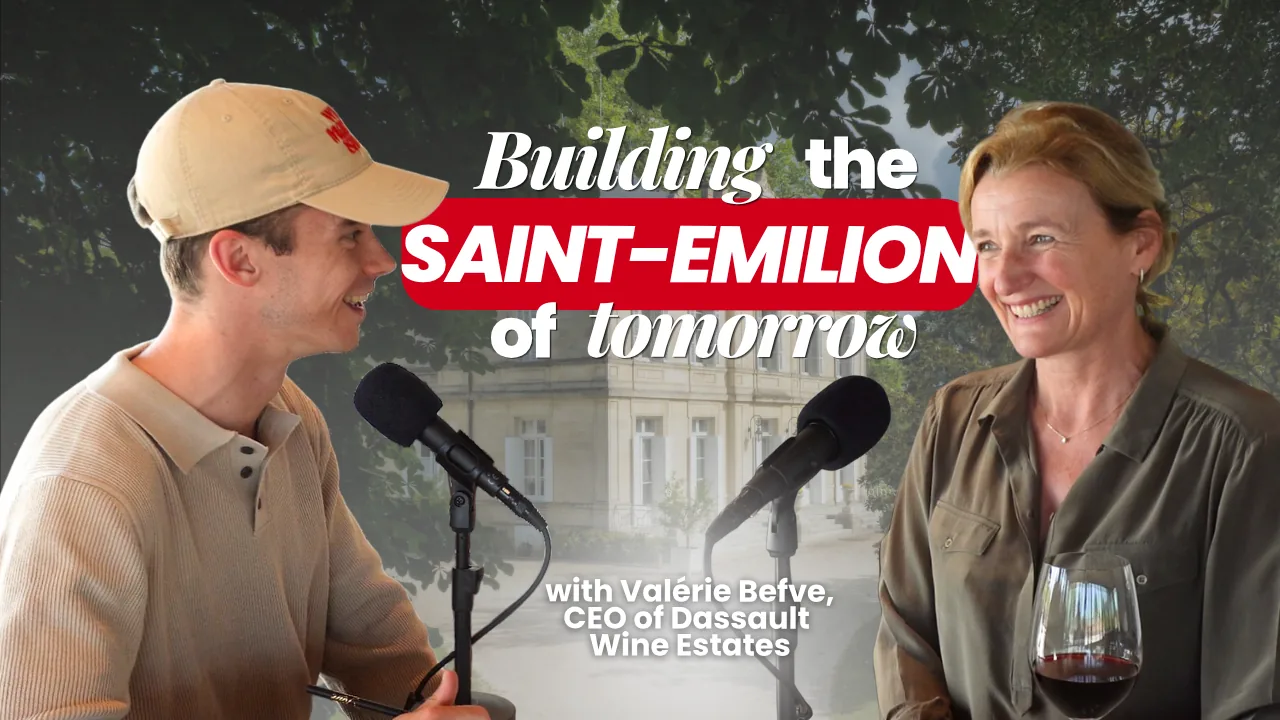
Is Saint-Émilion already what it needs to be, or is its future still being written? For Valérie Befve, the answer is clear: Bordeaux must keep building, adapting, and rethinking itself to remain at the forefront of fine wine. As CEO of Château Dassault, the Grand Cru Classé owned by the Dassault family since 1955, she is actively shaping what the next chapter of the region will look like.
Over the course of our conversation, Valérie traces her unusual path from running her own family winery to leading one of the largest estates in Saint-Émilion. We dig into the singular Saint-Émilion classification that makes every estate re-sit an exam every ten years, the gulf between north and south-facing terroirs, and how the region is adapting to a tougher market.
From hospitality and wine tourism to grape-variety choices made for a warming climate, this is a clear-eyed case for why Bordeaux is anything but finished, and why its best value-for-money wines might be the smartest bottles to put in your cellar right now.
Watch the full interview with Valérie Befve
Listen to the podcast with Valérie Befve
A recap of the conversation with Valérie Befve
From the Médoc to Saint-Émilion
Valérie Befve grew up in the vineyards, the granddaughter of a winemaker in Margaux, and for years she swore she would never do the job. After studying in Bordeaux, she spent several years in the sales department of the Accor hospitality group, looking after large companies across the west of France. But the pull of her roots won out, and at 30 she went back to wine.
With her husband she took over a small estate in Saint-Émilion in 2006, along with a wine merchant business. Rather than chasing a single diploma, she trained on the ground with the local Conseil des Vins and the university, learning alongside the viticulture and oenology specialists she hired. It was a demanding apprenticeship: a difficult first vintage, constant mildew pressure, and a team of older men who were not used to being led by a young woman.
Arriving at Château Dassault
In 2018 she sold her shares and joined Château Dassault to lead sales. The estate had grown from 24 to 39 hectares, and alongside it sits Château La Fleur, spread over another 20 hectares, for a total of around 60. Doubling production meant the château needed someone who could actually sell the extra bottles.
For Valérie, selling Bordeaux means knowing exactly how the Place de Bordeaux works, with its courtiers and négociants, staying genuinely attentive to customers, and speaking their languages. Tellingly, her most recent hire comes from Champagne rather than Bordeaux: she wanted someone free of the region’s habits, bringing fresh ideas from the outside. Six years later she was named CEO, taking over the whole estate at a moment when, as she freely admits, the wider wine business is going through a tougher patch.
Two châteaux, two terroirs
Château Dassault and Château La Fleur sit almost side by side, yet they make very different wines. Dassault’s plots all face north while La Fleur’s all face south, and with global warming that exposure matters more than ever. Dassault keeps a natural freshness, while La Fleur is harvested two to three weeks earlier. More sun means riper grapes, more sugar, and ultimately more alcohol, which is why the two estates produce such distinct profiles.
The Dassault family has owned the estate since 1955, when Marcel Dassault, founder of the aviation company and a passionate wine lover, fell for the property during a visit and renamed the former Château Couperie after himself. The estate celebrated its 70th anniversary last year and is still run by his grandchildren.
The Saint-Émilion classification: an exam every ten years
One of the most fascinating parts of our conversation is the Saint-Émilion classification, which is unlike any other in France. Created in 1955, a full century after the 1855 Médoc ranking, it is revised every ten years, so estates have to re-apply and can be promoted, hold their rank, or lose classified status entirely.
The crucial difference with the Médoc is that in Saint-Émilion it is the terroir that is classified, not the château name. You cannot simply buy a neighbouring plot and bottle it under your label; you have to wait for the next classification to have that land assessed. In 2022, Dassault successfully applied to fold in the neighbouring Château Faurie de Souchard, which is why it can now produce a little more.
The review covers everything from vineyard and cellar work to ageing, plus a blind tasting of the last ten vintages that must score at least 14 out of 20. It is, as Valérie puts it, like choosing to sit an exam. In 2022 more than 250 estates applied and only 84 were classified, just over 10%. The next round comes in 2032, with the files to prepare from 2030.
For anyone still untangling the labels: there is Saint-Émilion, then Saint-Émilion Grand Cru, then the more selective Grand Cru Classé, and at the top the Premier Grand Cru Classé, with Château Figeac and Château Pavie as the two Grand Cru Classé A estates. Our guide to Bordeaux wine classifications breaks down all five systems.
Bordeaux is not dead
Valérie is refreshingly direct about the state of the market. Her conviction is simple: open the bottles, pour the wine, and put Bordeaux back on the table. Quality has never been higher, the value for money has never been better, and the job now is to make sure people around the world know it, by training the next generation and supporting the sommeliers who are the region’s best ambassadors.
She points to a long stretch when Bordeaux was strangely absent from local restaurants and wine lists, and sees winning those tables back as a big part of the answer. That is changing fast, helped by initiatives like the négociant Duclot’s Bordeaux at the Table event, which puts a strong selection on restaurant lists at a small margin. Her message to restaurateurs: price the bottles fairly and you will sell whole bottles, not just glasses.
Adapting to how people actually drink
The estate is also adapting its wines to a generation that does not want to wait twenty years before opening a bottle. The aim is wine that can still age but is approachable younger, easy to share over an aperitif rather than only at a formal dinner. The special release of the 2023 vintage, in magnum with a label drawn by a local artist, marks the first wines made in this slightly softer, more accessible style.
In the vineyard, a ten-year terroir study led the team to pull out and replant a quarter of the vines, shifting from 75% Merlot down to around 60% and planting more Cabernet Franc and Cabernet Sauvignon. Those varieties are better suited to both the soils and the changing climate. The replanting runs until 2035, a vivid illustration of how patient wine really is.
A long-term vision
Dassault Wine Estates is more than two Saint-Émilion châteaux. It also holds minority stakes in estates including Clos des Varouales in Burgundy, Château Cheval Blanc, Château L’Évangile in Pomerol, Rieussec in Sauternes and Champagne Taittinger, though Valérie’s remit is Saint-Émilion.
A new gravity-fed, air-conditioning-free cellar, built in 2022 to be sober, practical and sustainable, underpins the next chapter. The châteaux will open to visitors for the first time next year, with rooms a possibility further down the line.
Throughout, one idea keeps coming back: wine is a story for life, rewarding precision, patience and the willingness to keep learning.
Valérie Befve’s recommendations
A book: Vigneronne, by Laure Gasparotto
Learn more about: Château Dassault
From the shop
Cellar Bordeaux with confidence
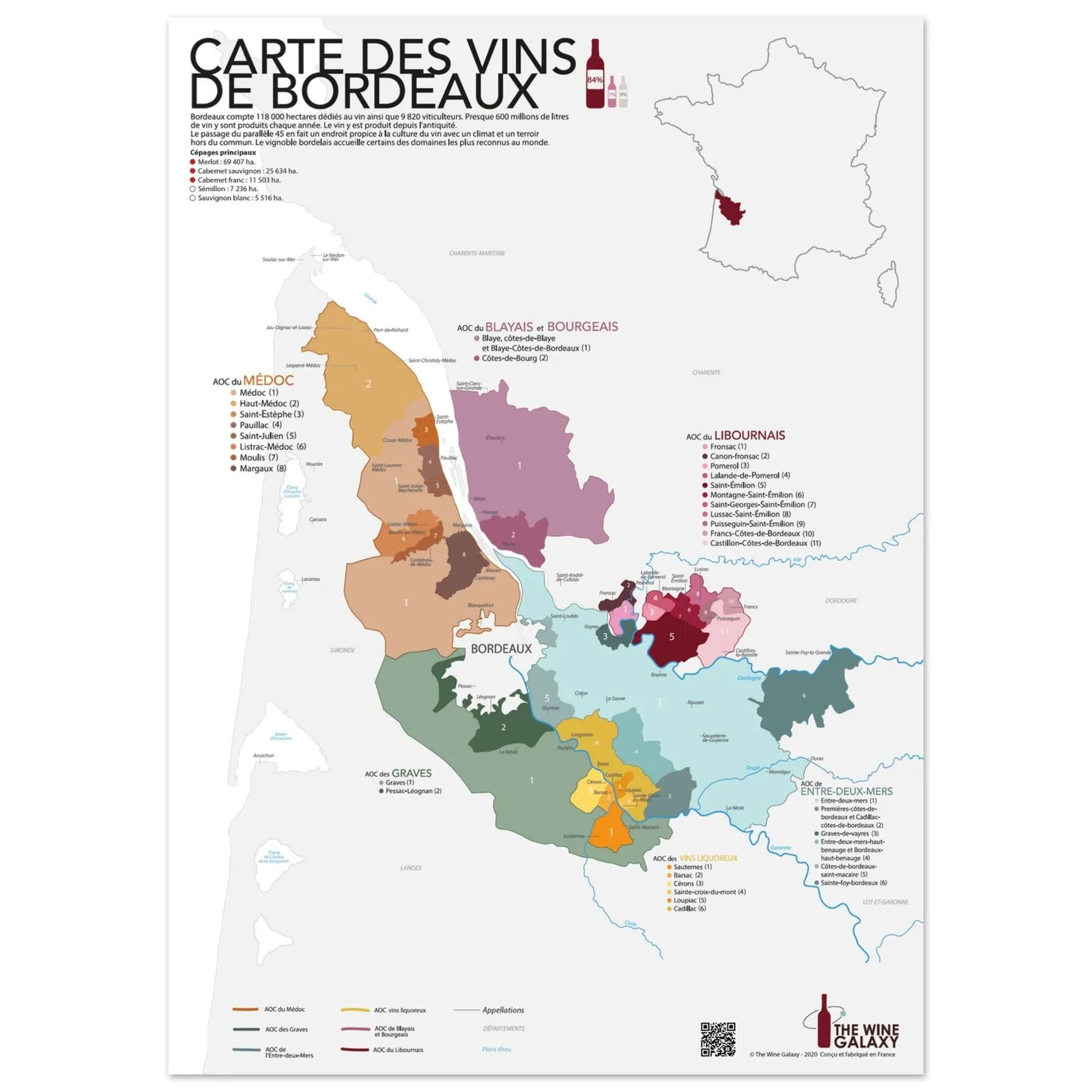
Loved Valérie's tour of north and south-facing terroirs? Our Bordeaux wine map draws the whole region to scale, Médoc to Saint-Émilion to Pomerol, on heavyweight matte paper. The thing that finally makes the geography click.
Browse the map →Amazon links on this page are affiliate links. They cost you nothing extra, and they help me keep this going.