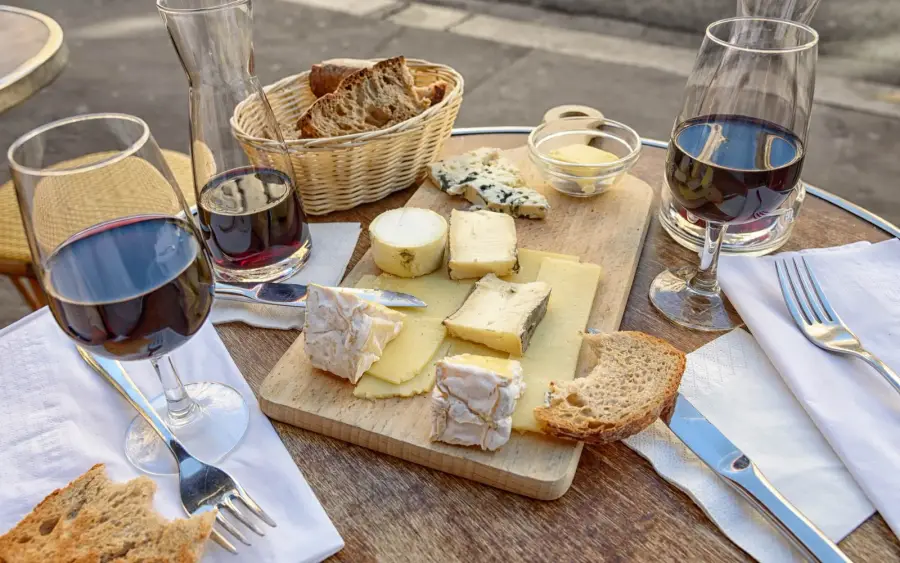
On a cheese board, reach for a crisp dry white rather than a red: Sancerre, Chablis, dry Alsace riesling or Loire chenin blanc. White acidity cuts the fat, while the umami in an aged cheese makes red tannin taste hard and bitter. For a mixed board, dry chenin blanc is the single best compromise.
That is the short answer, and it surprises almost everyone. Here is why it holds up, cheese family by cheese family, plus what to do when there is only one bottle on the table.
Why does white wine beat red on a cheese board?
“Red wine and cheese” is one of the most durable myths in food. It mostly comes from the running order of a meal: the board arrives after the main course, the red is already open, so people keep pouring. That is a habit, not a pairing.
Mechanically, cheese brings four things: fat, salt, a lot of umami, and often an ammoniated rind. It is the umami, the glutamate that builds up as a cheese ages, that amplifies bitterness and the perception of tannin. So a young structured red goes dry, hard and slightly metallic by the second bite. White wine arrives with acidity instead, which slices through fat and gets the palate producing saliva again, exactly as it does with raclette.
There is one exception, and only one: mild pressed cheeses that are low in salt, where a light red is genuinely good. More on that below.
What wine goes with fresh and goat cheeses?
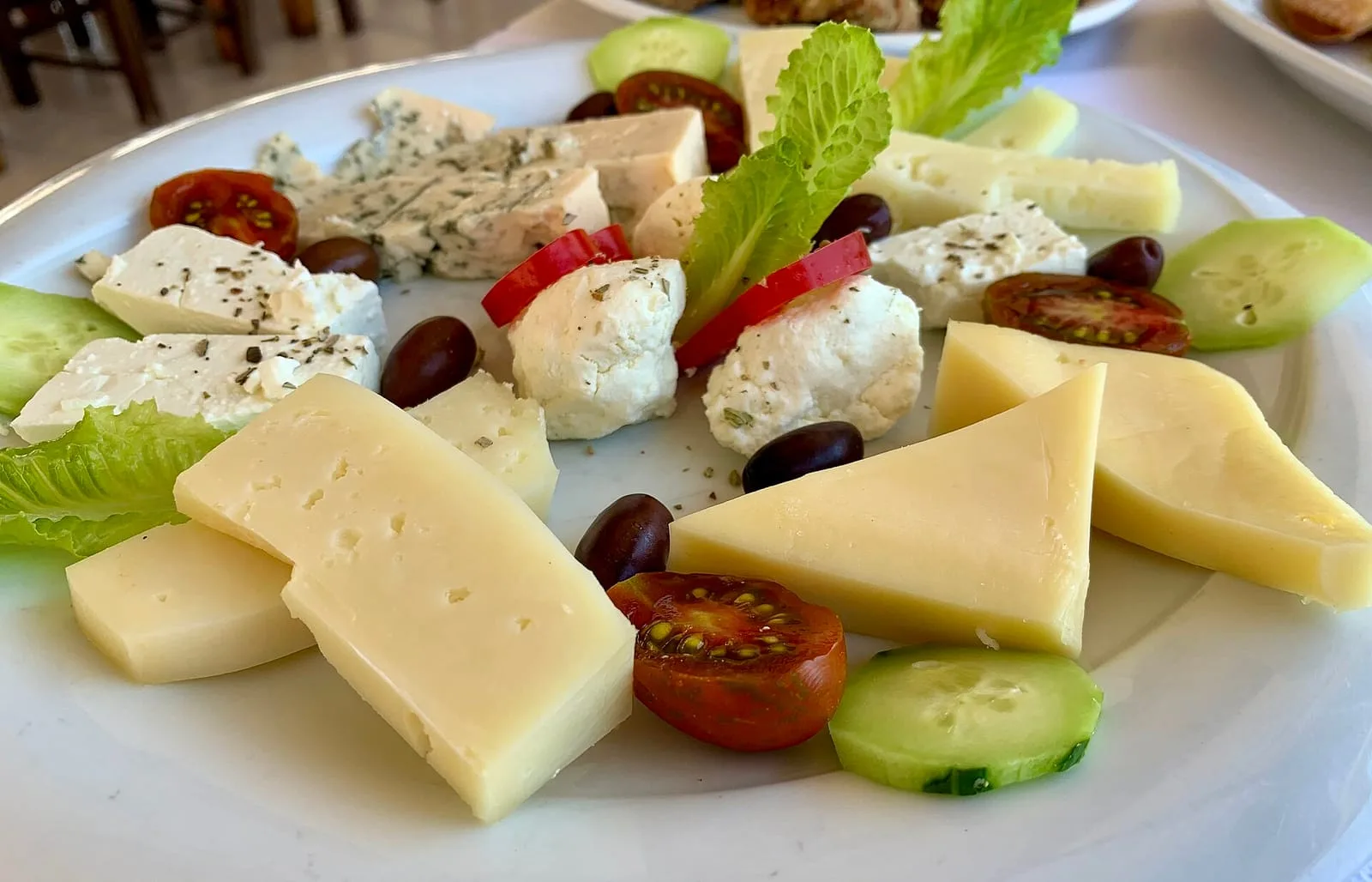
This is the easiest family on the board, and the one where the regional rule works best. Fresh chèvre, Crottin de Chavignol, Sainte-Maure, ricotta, young feta and fresh curd cheeses all share a clean lactic acidity and a faint green note.
The answer is Loire sauvignon blanc. Sancerre and Pouilly-Fumé are the famous names, but Quincy, Reuilly and Menetou-Salon deliver the same tension for five to eight euros less. Wine and cheese grow on the same hillside and speak the same language. A simple Touraine sauvignon covers it on a budget, and a good New Zealand sauvignon works too if that is what your shop stocks.
If the goat cheese is aged, dry and peppery, step up: a riper Sancerre, a dry Vouvray or an unoaked white with a bit more weight will absorb the extra intensity.
What wine goes with soft, bloomy-rind cheeses?
Brie, Camembert, Chaource, Brillat-Savarin, triple crèmes and their British cousins like Tunworth. Here fat is the dominant force, with a mushroomy rind that builds quickly.
Bubbles are the best answer. Champagne, Crémant de Bourgogne or Crémant de Loire scrub the palate on every sip, and the bready note of a bottle-aged sparkling echoes the rind itself. On a triple crème like Brillat-Savarin it is the only genuinely comfortable pairing, because nothing else shifts that much butterfat.
For a still wine, lightly oaked white Burgundy, Saint-Aubin, Rully or Mâcon-Villages, is lovely with brie. When a Camembert is fully runny and ammoniated, stop fighting it with wine: dry cider or a Norman calvados wins that round.
What wine goes with washed-rind cheeses?
Époisses, Munster, Taleggio, Pont-l’Évêque, Langres, Stinking Bishop. The family that smells enormous and breaks every rule. These cheeses are washed in brine or spirit during ageing, which builds aromas that steamroll any polite wine.
You need an aromatic white with volume, and sometimes a trace of residual sugar. Alsace gewurztraminer with Munster is a classic for a good reason: the lychee and spice of the grape stand up to the cheese instead of being swallowed by it. Alsace pinot gris plays the same tune with a rounder shape.
For Époisses, try a ripe Bourgogne aligoté, or a very small glass of marc. Taleggio is friendlier and takes a dry Italian white like Soave, or a light red like Valpolicella. And with the most pungent washed rinds, a Belgian-style ale genuinely outperforms wine. Saying so is not a defeat.
What wine goes with hard and aged cheeses?
Cheddar, Comté, Beaufort, Gruyère, aged Gouda, Manchego, Parmigiano, aged Mimolette. This is the most crowd-pleasing family on the board, and the only one where red wine truly belongs.
With a twelve to eighteen month Comté, the summit is Jura vin jaune, or more affordably a Jura chardonnay aged under flor: walnut, dried apple and salinity that line up precisely with the crunchy tyrosine crystals in the cheese. That is the glass I hand to anyone convinced white wine cannot handle serious cheese.
On the red side, stay light and fruity: Beaujolais, simple Burgundy pinot noir, Loire cabernet franc from Chinon or Bourgueil. Serve them at 14 to 15 degrees. A sharp mature cheddar is the one cheese where a slightly firmer red still works, and where aged Gouda and Manchego open the door to oloroso sherry or tawny port.
What wine goes with blue cheese?
Stilton, Roquefort, Gorgonzola, Cashel Blue, Fourme d’Ambert. Salt is extreme here and the texture is piercing. A dry wine is demolished in a single bite.
Sugar is the solution. Salt in the cheese and sugar in the wine neutralise each other, and what survives is candied fruit and cream. Stilton with a ten-year tawny port is the British institution, and it deserves the reputation. Roquefort with Sauternes is the French version, with Jurançon moelleux, Coteaux du Layon, Monbazillac and Maury costing far less for a very similar result. Same logic as foie gras: fat plus salt calls for sweetness.
Which bottle for which cheese family?
| Cheese family | Wine to pour | Why it works | Typical price |
|---|---|---|---|
| Fresh and aged goat cheese | Sancerre, Quincy, Menetou-Salon | Sharp green sauvignon grown on the same hillsides | 12 to 20 € |
| Bloomy rind, brie and camembert | Crémant de Loire or brut Champagne | Bubbles and acidity slice through creamy fat | 10 to 35 € |
| Triple crème, Brillat-Savarin | Extra-brut Champagne | The only style that shifts that much butterfat | 25 to 40 € |
| Washed rind, Époisses and Taleggio | Alsace gewurztraminer or pinot gris | Aromatic power is the only thing that holds its ground | 12 to 22 € |
| Hard alpine, Comté and Beaufort | Jura chardonnay or vin jaune | Oxidative walnut and salt mirror the aged cheese | 15 to 45 € |
| Cheddar, Gouda, tomme | Beaujolais or Loire cabernet franc | The one slot where a light red genuinely wins | 10 to 18 € |
| Blue cheese, Roquefort and Fourme | Jurançon moelleux or Coteaux du Layon | Sugar cancels salt and leaves the fruit behind | 12 to 25 € |
| Stilton and Gorgonzola | 10-year tawny port | Gentle spirit and nuttiness against the blue bite | 18 to 30 € |
| Mixed board, one bottle only | Dry Vouvray or Savennières | Chenin: acidity for goat, body for cheddar | 14 to 28 € |
Can one bottle really cover a whole board?
Yes, as long as you accept an honest compromise rather than a perfect match. Two options hold up.
Dry Loire chenin blanc first. A dry Vouvray, a Montlouis or a Savennières has the cutting acidity of a sauvignon, the volume of a chardonnay and a quince note that slots in almost anywhere. It is the bottle I bring when I have no idea what will be on the table.
Extra-brut Champagne second, or a bone-dry crémant if the budget matters. Bubbles reset the palate between wildly different cheeses, which is precisely the problem a varied board creates.
One caveat: no dry wine survives a blue. Serve it last with two small glasses of something sweet, or leave it off the board entirely. There are more wine pairing guides on the site if you are building a full meal around it.
What mistakes ruin a cheese and wine pairing?
Mistake number one is saving the best red for the board. Opening a cellared Bordeaux or a serious Napa Cabernet over ripe, umami-heavy cheese sabotages both: the umami hardens the wine, the cheese turns aggressive. If you own a great bottle, drink it with the main course.
Three other traps come up constantly. Cheese served cold, which has neither texture nor aroma left. The nine-cheese board, which makes any pairing impossible and exhausts the palate before dessert. And fig or walnut bread, delicious but sweet enough to rewrite the balance of the wine. A neutral baguette or a plain cracker lets the cheese speak. Chutney and quince paste have the same effect, so keep them to one side rather than spooning them onto everything.
Last detail: lay the cheeses out mildest to strongest and taste in that order. Start with the blue and everything after it disappears, whatever you are drinking.
Frequently asked questions
What white wine goes with a cheese board?
A dry, high-acid white with little or no oak. Loire chenin blanc is the most versatile single answer: dry Vouvray, Savennières or Anjou blanc, roughly 12 to 25 euros. Chablis, dry Alsace riesling and Sancerre do the same job. What you want is acidity plus a bit of body, not oak and not sugar. A heavily barrel-aged chardonnay gets flattened by salty rinds.
Can you actually serve red wine with cheese?
Yes, but with far fewer cheeses than people assume. Red works on mild pressed cheeses, young cheddar, Gouda, tomme, young Comté, provided it is light and low in tannin: gamay, pinot noir, Loire cabernet franc. On fresh goat cheese, washed-rind cheese or blue, tannin turns metallic and the wine tastes bitter. A big young Cabernet is the worst bottle on the table.
What wine goes with blue cheese and Stilton?
Sweet wine, and it is the most spectacular pairing on the whole board. The salt in the blue and the sugar in the wine cancel each other out and leave pure fruit. Stilton with tawny port is the British classic. Roquefort with Sauternes is the French one, and Jurançon moelleux, Coteaux du Layon or Monbazillac get you most of the way there for a third of the price.
If I can only open one bottle, what should it be?
Dry Loire chenin blanc, Vouvray or Savennières, if you want maximum safety: enough acidity for goat cheese, enough body for aged Comté or cheddar. Otherwise an extra-brut Champagne or a bone-dry sparkling wine, because bubbles reset the palate between very different cheeses. No single dry bottle survives a blue, so serve that last or leave it off.
How many cheeses should a board have, and at what temperature?
Five is plenty, one per family, around 40 to 60 grams per person in total. Take them out of the fridge a full hour before serving, because cold cheese has almost no flavour and makes any pairing pointless. Serve whites at 10 to 12 degrees, light reds at 14 to 15, and sweet wine much colder, around 8 degrees.