With a seafood platter, open a Muscadet Sèvre-et-Maine sur lie and serve it at 10°C. It is the driest, saltiest, least aromatic white in the French repertoire, which is exactly what raw shellfish needs. Chablis, Picpoul de Pinet and a bone-dry brut nature Champagne do the same job just as well.
The catch is that a seafood platter is not a dish, it is a collection. An oyster, a whelk, a langoustine and a crab claw do not share the same salinity, the same texture or the same sweetness. So the pairing runs on a principle rather than on one magic bottle.
Why do salt and iodine decide the pairing?
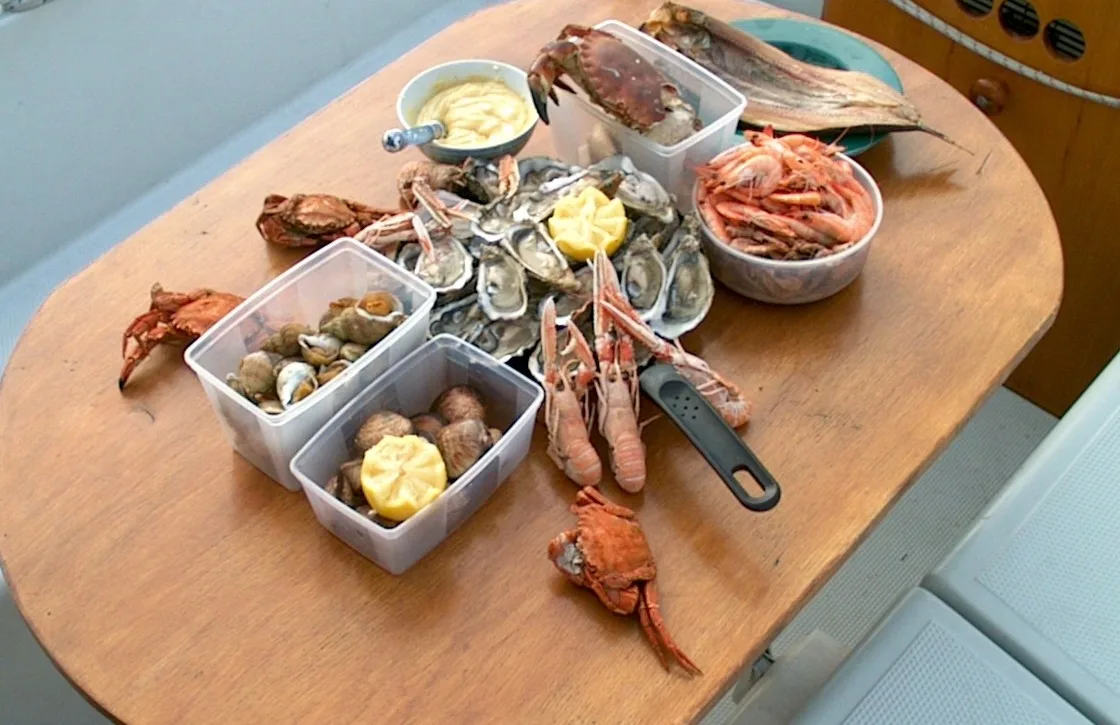
A platter is, above everything else, salt and seawater. The shellfish arrive in their own juice, you add lemon, maybe a shallot vinaigrette, and the whole thing is served ice cold.
That salt changes how you taste wine, and not by a small margin. Salt suppresses bitterness and softens the perception of acidity, so a white that feels almost aggressive on its own turns round and fruity from the first oyster. This is precisely why razor-sharp wines, the ones people call thin at an aperitif, are the kings of the seafood table.
Salt cuts the other way too. It amplifies your perception of alcohol and of oak. A 14 percent white aged in new barrels tastes hot and vanilla-heavy next to shellfish, and the iodine pushes it towards bitterness.
As for the iodine itself, those bromophenol compounds that give shellfish their sea-breeze character, it needs a wine that extends it rather than argues with it. A saline wine carries it forward. An aromatic, grapey or faintly sweet wine turns it into a fishy aftertaste.
Three criteria, in this order: dry, high acid, no oak. Everything else is detail.
What white wine goes with a seafood platter?
Muscadet Sèvre-et-Maine sur lie is the best value answer in the whole category, by a wide margin. Melon de Bourgogne gives almost no dominant aroma, the lees ageing adds a faintly creamy texture that rounds off the edges, and the finish is genuinely saline. It costs 8 to 12 euros at a decent merchant. It never grandstands, and that is the point.
Chablis comes next, with a chalky tension that answers salt very directly. Do not climb too far up the ladder though: a barrel-aged premier cru loses the advantage. Stay on a village or a Petit Chablis.
Beyond those two classics, Picpoul de Pinet punches far above 10 euros, Bourgogne Aligoté is back in fashion for good reasons, and a Sancerre or Quincy brings a little more fruit if your platter carries a lot of cooked flesh. Outside France, Albariño from Rías Baixas and a dry Assyrtiko from Santorini are both built for this.
Then there is the Spanish shellfish-bar answer, which is excellent and which almost nobody tries: a Fino or Manzanilla sherry, served properly chilled. Aged under a veil of flor yeast that keeps air off the wine, it stays dry, saline and tangy, and it is the only wine that genuinely enjoys the bitterness of whelks and periwinkles.
How do you pair oysters, crab and prawns from one tray?
This is the real difficulty, and nobody talks about it. Three different logics sit on the same platter.
Oysters are the most saline and most iodine-heavy item. They set the ceiling and demand the driest, most neutral wine on the table. If you want the detail on varieties and cup shapes, we wrote a full guide to wine with oysters.
Langoustines and cold pink prawns are softer, almost sweet, and usually come with a bowl of mayonnaise. They tolerate a rounder white and they need acidity to cut through the fat, which is the same mechanic we cover in our piece on wine and shrimp.
Crab and spider crab raise a third problem. The brown meat under the shell is rich, slightly bitter and almost buttery, so it needs more body than an oyster ever will. Our article on wine and crab works through that case.
Two strategies follow. The simple one: pick the wine for the most saline item, the oyster, and the rest falls in behind without ever clashing. The ambitious one: open two bottles at once, something razor dry and saline on one side, something rounder on the other, and let people match as they go. If a lobster sits in the middle of the tray, it arrives plain and cold, so it wants a taut dry white with a little more depth and no oak at all, as we explain in our guide to wine and lobster.
Which wines turn metallic with shellfish?
This is trap number one, and it has a concrete explanation. The iron in wine reacts with the unsaturated fats in seafood, and that pairing produces a metallic, fishy aftertaste that lingers long after you swallow. Reds carry far more iron than whites, and their tannins add a drying, astringent edge on flesh that is already salty.
In practice, here is what goes wrong on a platter:
- Any tannic red, no exceptions. Bordeaux, Madiran, Cahors, a young Côtes du Rhône: the result is genuinely unpleasant.
- Heavily oaked whites. Vanilla, butter and coconut against iodine reads as tinned food.
- Aromatic and off-dry whites. Gewurztraminer, Muscat or a soft Vouvray taste sweet and heavy against salt, and the fishiness comes back on the finish.
- Rosés with residual sugar, very common on supermarket shelves, which cause exactly the same problem.
- Wine served too cold. At 5°C there is no fruit and no salinity left, only acid.
One exception worth knowing: a very light, low-tannin red served cool can work with shellfish cooked in tomato sauce, but never with a raw platter. In that case the wine is matching the sauce, not the shellfish.
What if your seafood platter is fried?
In Britain and much of the United States, a seafood platter often means breaded and fried: scampi, calamari, whitebait, popcorn shrimp, with tartare sauce and a wedge of lemon. That is a completely different pairing problem, and the French answer does not transfer.
Fried food needs two things from a wine: acidity to cut the oil, and either bubbles or a cold serving temperature to reset the palate. Muscadet still works, but this is where Champagne, Crémant, Prosecco and even a dry English sparkling wine earn their place. A crisp Verdejo or a Vinho Verde does the job for very little money. Beer logic applies here more than wine logic, which is why sparkling wine wins: it is the closest a wine gets to being a lager.
Which wine for which part of the platter?
| Platter item | Appellation | Why it works | Price band |
|---|---|---|---|
| Rock oysters | Muscadet Sèvre-et-Maine sur lie | Dry, saline, unperfumed: it follows the iodine instead of fighting it | 8 to 12 € |
| Flat oysters, very briny | Village Chablis | Chalky tension answers the salt with no invasive aroma | 16 to 24 € |
| Whelks, winkles, clams | Fino or Manzanilla sherry | Saline, dry and tangy, the one wine that enjoys their bitterness | 10 to 16 € |
| Cold prawns with mayonnaise | Brut nature blanc de blancs Champagne | Bubbles and acidity scrub the fat with every sip | 35 to 45 € |
| Langoustines | Dry Alsace Riesling | Lemon and a saline finish, respectful of sweet flesh | 14 to 22 € |
| Brown crab, spider crab | Sancerre or Pouilly-Fumé | Acidity for the brown meat, fruit for the white meat | 15 to 22 € |
| Lobster or crayfish | Chablis premier cru or dry Alsace Riesling | Served plain, lobster wants a taut dry white, and oak is what it handles worst | 15 to 45 € |
| One bottle for the whole platter | Picpoul de Pinet | Neutral and lemony, never wrong on any shellfish | 7 to 10 € |
| One bottle, celebration version | Brut Crémant de Loire | Fine bubbles at a soft price, holds from oyster to crab | 12 to 16 € |
What is the mistake people make?
Trading up. A seafood platter feels like an occasion, so the instinct is to open the best bottle in the rack. That is exactly the wrong move.
A 60 euro white Burgundy, rich and oaked at 13.5 percent, will taste worse with oysters than a 10 euro Muscadet. This is not about quality, it is about shape: the platter does not want power, it wants clarity. On this particular dish the cheap wine wins, and it is one of the rare times the rule flips that clearly.
The second mistake is quieter: buying only one bottle. A platter is eaten slowly, by several people, over an hour or more. Buy generously, serve cold but not frozen, between 9 and 11°C, and let the bottle sit on the table rather than in a bucket of ice.
If you want the reasoning behind all of this beyond seafood, our wine pairing hub runs the same method dish by dish.
Frequently asked questions
What is the best wine for a seafood platter?
Muscadet Sèvre-et-Maine sur lie, served at 10°C. It is bone dry, faintly saline, low in alcohol and almost free of dominant aromas, which is exactly what raw shellfish asks for. Chablis, Picpoul de Pinet, dry Sancerre and a brut nature Champagne all do the same job. Every one of them is dry, high in acidity and unoaked, and that is the whole formula.
Why does red wine taste metallic with seafood?
Because of iron. The iron naturally present in wine reacts with the unsaturated fats in shellfish and fish, and the reaction leaves a lingering metallic, fishy aftertaste. Red wines carry noticeably more iron than whites, and their tannins add a drying, astringent edge on top of already salty flesh. It is not snobbery or tradition, it is a chemical mismatch you can taste in one mouthful.
Is Champagne worth opening with a seafood platter?
Yes, if you pick the right style. Go for a brut nature or extra brut, ideally a blanc de blancs. The bubbles cut the fat of mayonnaise and the acidity resets your palate between an oyster and a crab claw. Avoid rich, long-aged, brioche-heavy Champagnes and anything demi-sec, because the sugar and the toasty notes bury the shellfish. Crémant de Loire does the same job for a third of the price.
Can one bottle cover oysters, crab and prawns at once?
Yes. Pick the wine for the most saline item on the tray, which is almost always the oyster, and everything else falls into line behind it. Muscadet sur lie or a village Chablis will never be wrong on any part of a platter. If you want to go further, open two bottles: something razor dry for oysters and whelks, and something rounder like dry Alsace Riesling for crab and langoustines.
What temperature should the wine be with seafood?
Between 9 and 11°C, and no colder. The platter itself comes out on crushed ice and is already freezing, so a wine served at 5°C tastes of nothing but acid, with no fruit and no salinity left. Take the bottle out of the fridge about ten minutes before you sit down, and leave it on the table rather than buried in an ice bucket.