Keep it simple with beaujolais nouveau: charcuterie, young cheeses, roast chicken and one-pot autumn food. A board of cured meat, a wedge of comte, sausages and lentils, or Thanksgiving turkey all work. It is a light, fruity, low-tannin red served chilled, so it partners a meal rather than standing up to a rich dish.
That is the short answer. This one runs backwards compared with our usual pairing pieces: the wine is fixed, the food is the variable. On the third Thursday of November nobody chooses the bottle, it is already on the table. The only question is what to put next to it.
Why does beaujolais nouveau need simple food?
Let us be honest, and this is not an insult: beaujolais nouveau is a simple wine, and simple is exactly the job it was built for. It is fermented in a few weeks, bottled straight after harvest and sold before it has had time to settle. For the full story of how it is made, we wrote a whole guide to beaujolais nouveau.
In the glass that means a lot of red fruit, often a banana note from carbonic maceration, very little tannin, no oak, bright acidity and moderate alcohol. It is a wine of thirst, not a wine for cellaring and not a wine for sauces.
Two consequences follow, and they decide the whole menu. First, it cannot answer a dish with real structure: a long-reduced sauce, meat marinated in wine, game, and the wine vanishes. Second, it cannot survive aromas that shout louder than it does, heavy spice, a pungent cheese, a smoky rub.
So the safe move is what they serve in a Lyon bouchon a few miles from the vineyards: cured meat, cheese, one pot on the table. This is a wine for a loud kitchen, not a three-course dinner.
What cheese and charcuterie go with beaujolais nouveau?
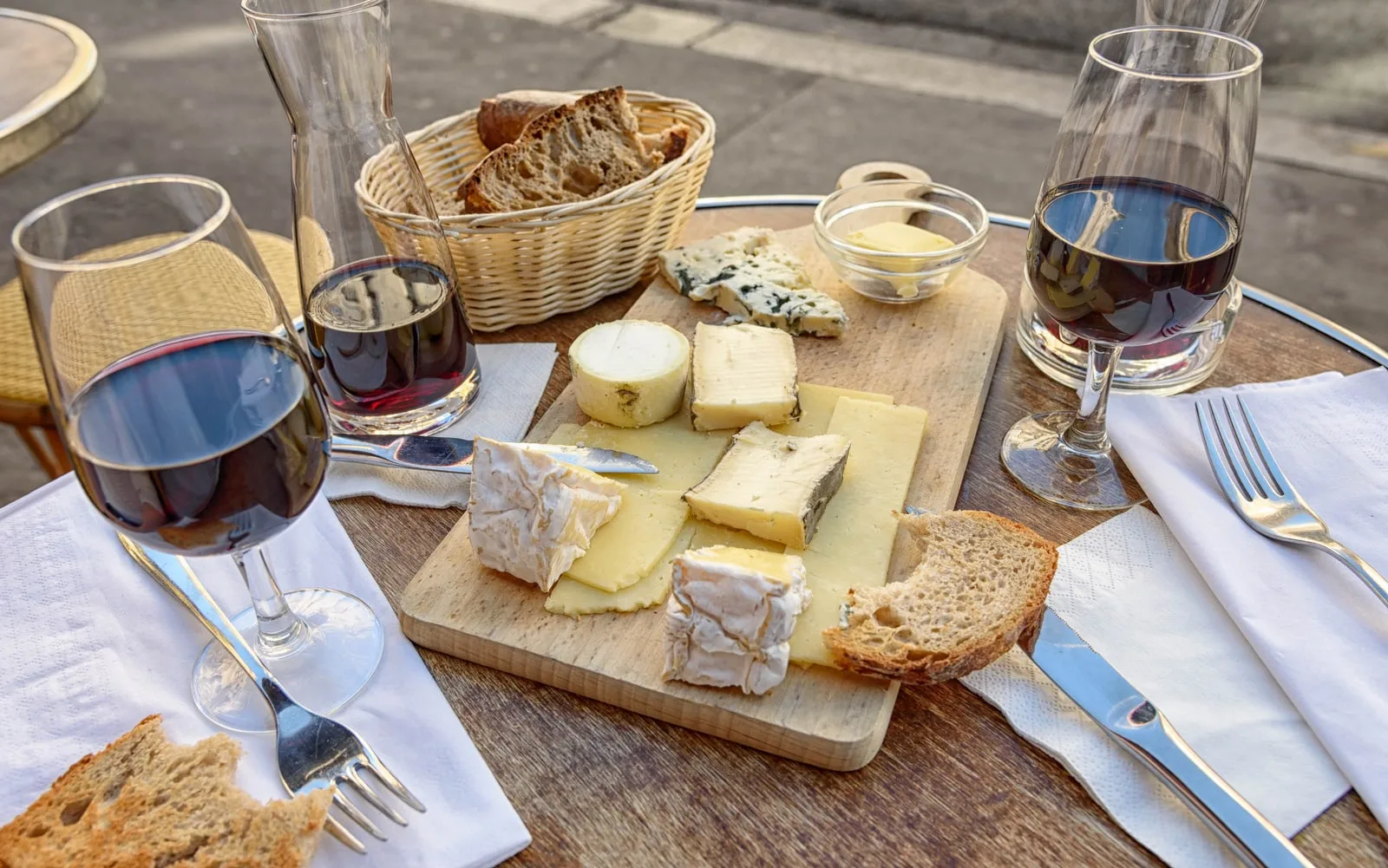
This is the strongest pairing by a distance. Gamay has fruit, acidity and almost no tannin, which is precisely what a salty, fatty board needs.
On the meat side: dry salami, saucisson sec, prosciutto, coppa, bresaola, country pate, rillettes, a good pork pie. Cornichons and pickles are fine here, which is worth saying, because they would wreck a more serious red. Vinegar cannot hurt a wine that already leads with freshness.
On the cheese side, stay young and mild: comte at twelve to eighteen months, saint-nectaire, tomme de Savoie, young cheddar, morbier, fresh goat cheese, young brie. Fresh goat cheese is genuinely excellent, because its lactic tang answers the wine’s acidity head on.
What to leave off the board: blue cheese, whose salt leaves the wine tasting thin; washed-rind cheeses like epoisses or taleggio, which erase it; and heavily aged hard cheese, a thirty-six month comte or an old gouda, which wins without trying. When the cheese is strong and the wine is six weeks old, the wine loses.
Go easy on heavily smoked meats too. Smoke coats the fruit and leaves a dry bitterness behind, so serve a little and pour the wine colder.
Is beaujolais nouveau good with Thanksgiving dinner?
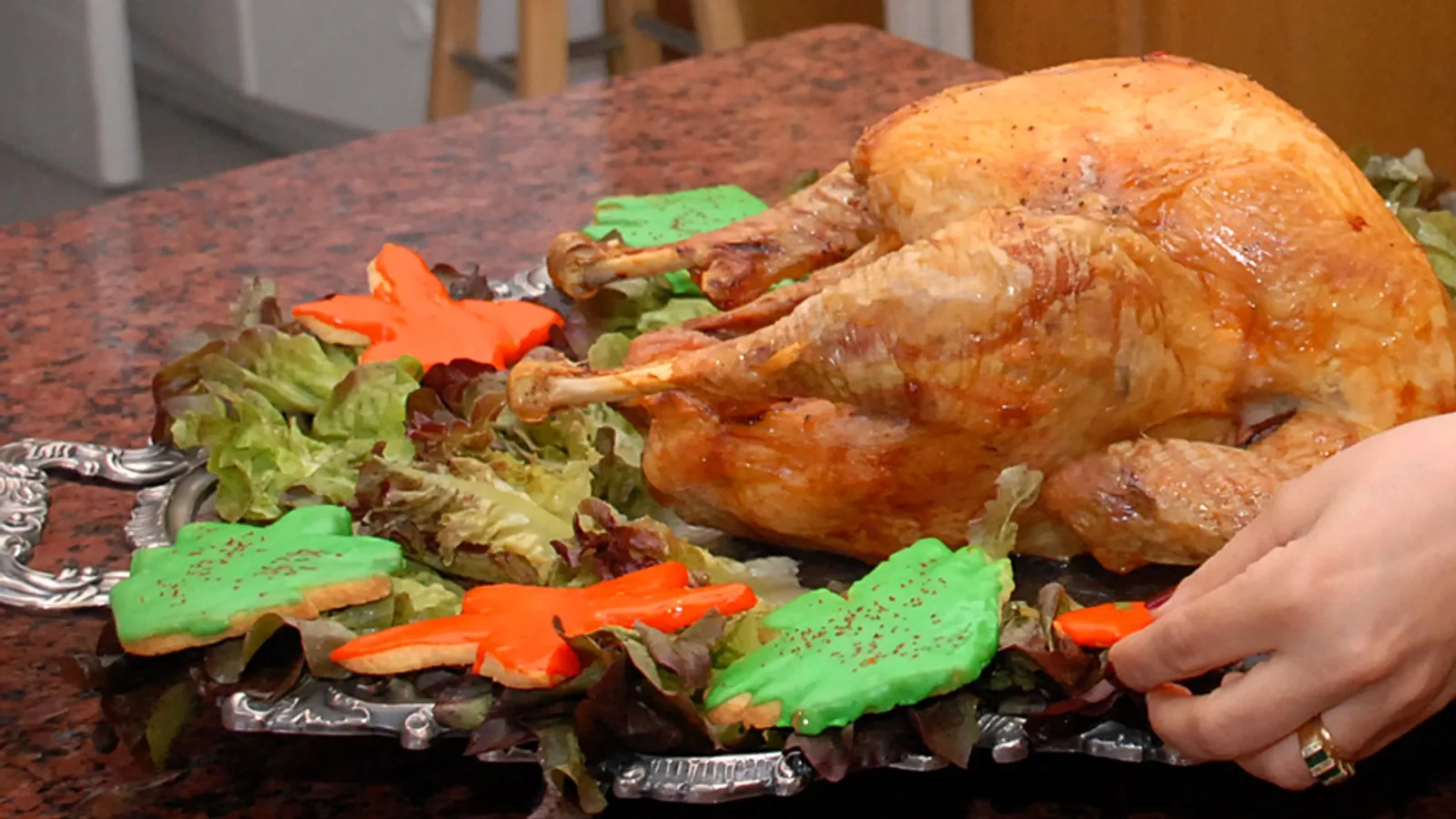
Yes, and the timing is not a coincidence. Beaujolais nouveau is released on the third Thursday of November, which puts it in American shops the week before Thanksgiving. That is how a French village tradition turned into a fixture of the US holiday table.
It works for a real reason, not just marketing. Thanksgiving is the hardest meal of the year to pair, because there are eight things on the plate at once: white and dark turkey meat, sweet potato, cranberry sauce, stuffing, green beans, gravy. A big tannic red fights the cranberry and dries the breast. A light, fruity, chilled red gets along with all of it, for a fraction of the price.
Two practical notes. Serve it cool, because a warm dining room pushes it to 68 Fahrenheit within minutes. And open a second, sturdier bottle for whoever wants more weight, ideally a Beaujolais cru so the table stays coherent.
What hot dishes work with beaujolais nouveau?
It is cold in the third week of November, and a cheese board is not dinner. The right register is one pot, cooked simply, no concentrated sauce.
Sausages with green lentils is probably the single best hot dish for it: earthy lentils and the fruit of gamay speak the same language, the sausage brings fat, and nothing on the plate outweighs the wine. Then, in no order: roast chicken and potatoes, onion tart, quiche, potato gratin, a pan of autumn mushrooms. Stuffed cabbage and a quick beef casserole sit just the other side of the line, and want a Beaujolais cru rather than the nouveau. Roast chicken is reliable enough that we gave it its own article.
Two alpine dishes also work if the wine is properly cold, tartiflette and raclette, though each has a better-known match of its own.
The moment the dish becomes a sauce, change the bottle. Beef bourguignon, coq au vin, venison or a long daube need substance. That is when you step up to a Beaujolais cru: Morgon, Moulin-a-Vent, Fleurie. Same region, same grape, but a wine raised properly that stands on its own.
| What you serve | Why it works | The bottle and the price |
|---|---|---|
| Charcuterie board, salami, prosciutto, pate | Fruit and acidity cut salt and fat, with no tannin to turn hard | Beaujolais nouveau, 6 to 10 EUR |
| Warm sausage with potato salad | Fatty and warm, the chilled wine resets the palate between bites | Beaujolais nouveau, 6 to 10 EUR |
| Sausages with green lentils | Earthy lentils and gamay match exactly, neither one dominates | Beaujolais-Villages nouveau, 8 to 13 EUR |
| Roast chicken and potatoes | Mild white meat and pan juices leave the wine plenty of room | Beaujolais-Villages nouveau, 8 to 13 EUR |
| Thanksgiving turkey with all the sides | Low tannin survives cranberry sauce, light enough for breast meat | Beaujolais-Villages nouveau, 8 to 13 EUR |
| Young cheeses, comte 12 months, saint-nectaire, tomme | Supple and lightly salted, they let the fruit come forward | Beaujolais nouveau, 6 to 10 EUR |
| Onion tart, quiche, potato gratin | Fat and sweetness, the wine plays contrast without effort | Beaujolais-Villages nouveau, 8 to 13 EUR |
| Beef casserole, stuffed cabbage, quick braise | Needs a little more substance, so move up a step in the region | Beaujolais cru, Brouilly or Fleurie, 12 to 20 EUR |
| Game, coq au vin, long red-wine stew | Too concentrated for a wine made to be drunk young, this needs age | Morgon or Moulin-a-Vent, 14 to 22 EUR |
The crus in the last two rows are not nouveau at all. They are the serious wines of the same region, on sale all year, and the backup bottle worth having in the house.
What should you not serve with beaujolais nouveau?
Mistake number one is serving it at room temperature. At 68 Fahrenheit the alcohol comes forward, the banana note turns sticky and the charm is gone. Thirty minutes in the fridge changes the wine completely, and it costs nothing. The same goes for every light red, as we covered in our piece on red wine serving temperature.
Mistake number two is trying to make it shine. Putting out aged cheeses, dark chocolate or a venison roast on beaujolais nouveau night sets the wine up to fail in front of everyone, and then people conclude it is bad wine. It is not bad, it is young.
Mistake number three is quieter: keeping it. A nouveau is made to be drunk within months, ideally before spring. A bottle forgotten until June will not have aged, it will simply have lost its fruit, which was all it ever had.
One last thing. Quality varies enormously between producers. A grower bottling costs two or three euros more than a supermarket own-label, and the difference is obvious on the first sip. If beaujolais nouveau disappointed you once, the bottle was probably the problem, not the appellation.
How do you serve beaujolais nouveau at a party?
Serve it at 12 to 14 Celsius, that is 54 to 57 Fahrenheit, in a normal glass, with no decanter: there is nothing to open up. Thirty to forty minutes in the fridge, or twenty in a bucket of ice and water, and it is ready.
For quantities, count one bottle for two guests over a full meal, one for three if you stay on the board and the cheese. Always chill two or three more than the maths says: nothing kills the night like running out at nine.
Then set the table in the right spirit: a big board, bread, pickles, one hot dish out of the oven around eight, and nobody analysing the wine for more than ten seconds. This is a harvest party in a bottle, not a tasting exercise.
Want to go further? All our guides are collected in our wine pairing hub.
Frequently asked questions
What cheese goes with beaujolais nouveau?
Young and mild cheeses win. Comte aged twelve to eighteen months, saint-nectaire, tomme de Savoie, young cheddar, fresh goat cheese and young brie all let the fruit of the wine come through. Skip blue cheese, aged gouda and washed-rind cheeses like epoisses or taleggio: their salt and power make a few-week-old wine taste thin and sharp instead of juicy.
Is beaujolais nouveau good with Thanksgiving turkey?
It is one of the best value options on the table, which is why it became a Thanksgiving habit in the United States. It lands the Thursday before, it is light enough for white meat, low in tannin so it survives cranberry sauce, and it costs under fifteen euros. Serve it chilled, and pour a second red for anyone who wants more weight.
Can you drink beaujolais nouveau with steak or stew?
Not with either, honestly. Even a quick beef casserole carries more concentration than a wine bottled six weeks after harvest can answer, so move up to a Beaujolais cru such as Brouilly or Fleurie. A grilled steak, a long red-wine daube, game or coq au vin ask for more still, and against those the nouveau simply disappears: pour Morgon or Moulin-a-Vent, same region, same grape, real structure.
What temperature should beaujolais nouveau be served at?
Between 12 and 14 Celsius, or 54 to 57 Fahrenheit, so noticeably cooler than a standard red. Thirty to forty minutes in the fridge does it, or twenty minutes in a bucket of ice and water. At room temperature the alcohol comes forward, the banana note turns heavy and the wine loses the freshness that is its whole point. There is no need to decant it.
How many bottles do you need for a beaujolais nouveau party?
Beaujolais nouveau night runs long and people drink standing up around a board. Count one bottle for two guests if you serve a full meal, one for three if it is only charcuterie and cheese. Chill two or three more than your calculation says, put as much water on the table as wine, and open them as you go.