With chicken, the cooking method decides the wine, not the bird itself. Roast chicken wants white Burgundy, or a sweet white against the crisp skin. Chicken in a cream sauce wants a Jura Chardonnay. Coq au vin wants a structured red Burgundy. Fried chicken wants Champagne, poured very cold.
Which is why “what wine goes with chicken” has no single answer. It has six or seven, and they depend entirely on what is happening in the pan.
Why does the cooking method matter more than the bird?
Chicken has a quiet flavour. It is lean, mild, almost neutral next to duck or lamb. The consequence is simple: the bird never drives the pairing. Whatever you put around it does.
Three things actually decide.
- The cooking. Roasted, the skin caramelises and brings toasty, salty notes. Poached, the meat stays delicate and silky. Grilled, it picks up smoke and a little bitterness.
- The sauce. Cream needs richness and acidity opposite it. A red wine sauce needs a red. A spiced sauce needs a little residual sugar.
- The texture. Crisp, fatty batter calls for bubbles. Poached meat calls for a light, tense white.
A Sunday roast and a chicken curry are not the same dish, even though they are the same animal. That is the logic behind our whole food and wine pairing hub: we match the preparation, never the ingredient on its own.
What wine goes with roast chicken?
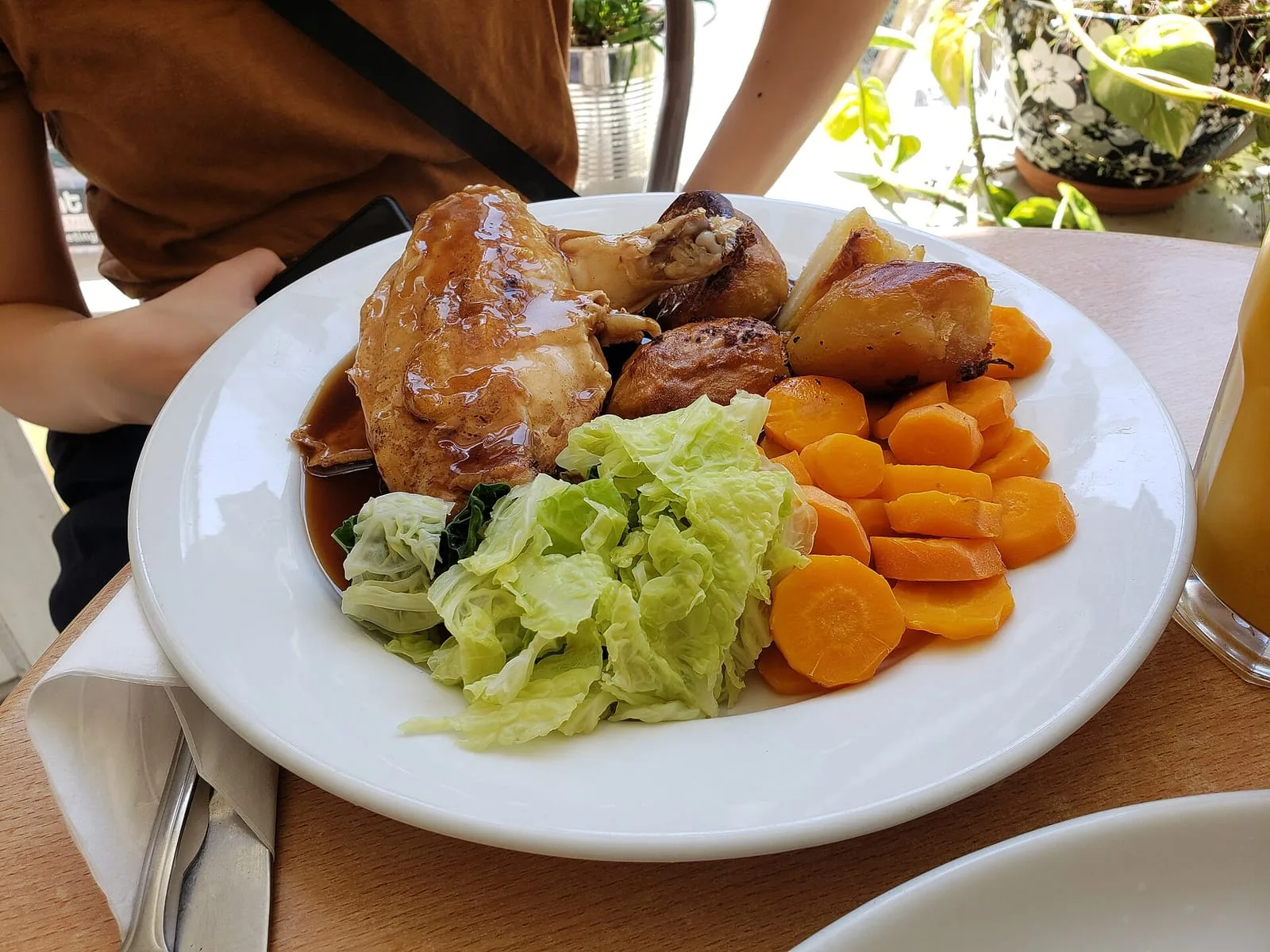
Roast chicken is the most asked-about pairing and the easiest to get right. The meat is tender, the juices are rich, and the skin brings salt, fat and toasty notes. So you want a wine with some substance and enough acidity to rinse that fat away.
Chardonnay is the obvious call. From Burgundy, a Saint-Véran, a Rully or a Montagny gives you exactly the right thing: yellow fruit, a little roundness, a clean finish. A lightly oaked white does even better, because the vanilla of the barrel answers the caramelised skin. From the Loire, a dry Vouvray or a Savennières plays the same role with more tension.
Then there is the pairing everyone forgets: a sweet white. A Jurançon, a Monbazillac or an Alsace late-harvest Pinot Gris against deeply golden skin is a spectacular sweet-and-salty contrast. The sugar does not make the dish sweet, it underlines the crackling.
For reds, stay light: red Burgundy, Loire Pinot Noir, cru Beaujolais, Saint-Nicolas-de-Bourgueil. Fruit, resolved tannins, no new oak.
What wine goes with grilled or barbecue chicken?
The moment a grill is involved, two things change: smoke, and the bitterness of the well-charred bits. Marinades usually add lemon, garlic, paprika or honey, and those matter as much as the meat does.
A serious rosé is the safest bet here. A Bandol, a Tavel or a proper gastronomic Provence rosé has enough body to stand up to smoke without flattening the meat. In white, a Touraine Sauvignon or a Rueda Verdejo answers the lemon and garlic head-on.
In red, come down in power and up in freshness: a cru Beaujolais served at 14°C, a Languedoc Cinsault, a Loire Gamay. The instinct to avoid is the big, high-alcohol red. Against slightly bitter charred skin it turns drying and hard.
What wine goes with chicken in a cream sauce or with mushrooms?
This is where chicken gets genuinely interesting. Cream, butter, mushrooms, a splash of white wine in the pan: the dish gains fat, umami and depth all at once.
The near-perfect answer comes from the Jura. An Arbois or Côtes du Jura Chardonnay, especially one raised under a veil of yeast, brings walnut and spice notes that wrap around mushrooms like nothing else. With chicken and morels, a Savagnin or a vin jaune is one of the great pairings of French cooking. It is expensive, but once in your life it is worth the detour.
Simpler and cheaper: an ambitious white Burgundy, a Mâcon-Villages or a Saint-Aubin. An oaked Loire Chenin also does the job well.
In red, a red Burgundy with some age on it, ten years or more, works beautifully: the forest-floor character of the wine and the mushrooms on the plate speak to each other directly. What to avoid is the rich, low-acid white, which weighs the sauce down instead of lifting it.
What wine goes with coq au vin?
The rule here is easy: drink what went into the pot, or its slightly better neighbour. Bacon, onions, reduced wine and stock give you a dark, salty, deep dish that needs a structured red without aggression.
A Burgundian coq au vin calls for a Mercurey, a Givry or a Savigny-lès-Beaune. Coq au vin jaune obviously calls for a Jura white. Made with Riesling in Alsace, it drinks with Riesling. Made with Cahors, it stands up happily to a South-West Malbec.
The one real trap is young, tight tannin. A three-year-old Bordeaux hardens the sauce. A twelve-year-old Bordeaux, with its tannins resolved, becomes magnificent instead. Same logic as in our wine with duck piece: the sauce gives the orders, and the age of the wine does the rest.
What wine goes with fried, breaded or curried chicken?
Fried chicken, nuggets, schnitzel or tandoori pose a different problem: fat, salt, and sometimes chilli.
Against fat and salt, bubbles are unbeatable. Brut Champagne, Crémant du Jura or Cava served very cold scrub your palate with every sip. This is not a sommelier’s party trick: fried chicken and Champagne is one of the most reliable pairings in existence.
The moment spice arrives, whether that is curry, tandoori, jerk or hot sauce, the mechanism shifts again. Chilli amplifies alcohol and tannin, so you come down in strength and up in sugar. A German Riesling Kabinett, an off-dry Vouvray or a Mosel Spätlese calm the burn rather than feeding it.
Which wine for which chicken dish?
The table below covers the preparations we cook most often, with an indicative price band for a good bottle, not a prestige one.
| Preparation | Wine to pick | Why it works | Indicative price |
|---|---|---|---|
| Classic roast chicken | White Burgundy (Saint-Véran, Rully) | Yellow fruit and acidity that rinse the juices and the fat | €12 to €20 |
| Roast chicken, deeply golden skin | Sweet Jurançon or Alsace late-harvest | The sugar underlines the salt and the crackling | €15 to €25 |
| Grilled or barbecue chicken | Bandol or Tavel rosé | Enough body for the smoke, enough freshness for the marinade | €12 to €22 |
| Chicken in cream sauce, with mushrooms | Jura Chardonnay (Arbois, Côtes du Jura) | Walnut and gentle oxidation that echo the mushrooms | €15 to €28 |
| Chicken with morels | Savagnin or vin jaune | The deepest pairing in French cooking | €25 to €60 |
| Coq au vin | Mercurey, Givry or Savigny-lès-Beaune | Same wine in the pot and in the glass, supple tannins | €15 to €28 |
| Fried or breaded chicken | Brut Champagne or Crémant du Jura | Bubbles and acidity cut straight through the batter | €15 to €35 |
| Tandoori or curried chicken | Riesling Kabinett or off-dry Vouvray | Residual sugar and low alcohol that settle the spice | €12 to €20 |
What serving temperature, and how much wine per person?
This is the detail that turns a decent pairing into a very good one. White Burgundy and Jura whites want 11 or 12°C, not 6: too cold and they lose their substance, which makes the chicken taste dry. Sweet whites go colder, around 8°C, or the sugar turns heavy. Light reds gain enormously at 14 or 15°C: a cru Beaujolais or a Pinot Noir straight out of the fridge has its fruit shut down, and it is the warmth that opens it back up. A simpler red sits at the bottom of that range, around 13°C, and our guide to red wine serving temperature gives the range style by style.
On quantity, count one bottle for three people across a full meal. For a roast chicken shared between four, open two different formats rather than one large bottle: a white for the bird and its sauce, a light red for whoever prefers it. Nobody feels obliged to follow along, and both pairings genuinely work.
If you only remember one thing, make it this. Look at the sauce and the skin, not at the label on the chicken. Everything else follows on its own.
Frequently asked questions
What white wine goes with roast chicken?
White Burgundy is the safest answer: Saint-Véran, Rully, Montagny or Mâcon-Villages. The yellow fruit answers the pan juices, the acidity cuts the fat, and a touch of oak echoes the caramelised skin. From the Loire, a dry Vouvray or a Savennières does the same job with more tension, and usually for less money.
Can you drink red wine with chicken?
Yes, as long as you keep it light. A red Burgundy, a cru Beaujolais, a Saint-Nicolas-de-Bourgueil or a Loire Gamay have the fruit and the soft tannins the dish needs. What does not work is a young, tannic, oaky red: it dries out lean meat and flattens the plate. With coq au vin, on the other hand, a structured red becomes essential.
What wine goes with creamy chicken or chicken and mushrooms?
A white with both richness and acidity. Jura Chardonnay is the benchmark pairing, its walnut and spice notes wrapping around cream and mushrooms better than anything else. A white Burgundy, a Saint-Aubin or an oaked Loire Chenin also works beautifully. Avoid soft, rich whites with no acidity, because they make the sauce feel heavy.
What wine goes with fried chicken?
Bubbles, served very cold. Brut Champagne, Crémant du Jura or Cava cut through the fat of the batter and reset your palate between bites. If the recipe is spiced, hot sauce or jerk seasoning, switch to a Riesling Kabinett or an off-dry Vouvray instead: the residual sugar calms the chilli that alcohol would otherwise amplify.
Is sweet wine with chicken really a good idea?
Yes, and it is the most underrated pairing on this list. With a roast bird and deeply golden skin, a Jurançon, a Monbazillac or an Alsace late-harvest creates a sweet and salty contrast that makes the crackling sing. Serve it properly chilled, around 8°C, and in small glasses: it is an opening pairing, not a whole-meal wine.