With duck, the sauce decides more than the bird does. A pink-seared duck breast wants a tannic, fruity red: Madiran, Cahors or northern Rhone Syrah. Confit prefers something softer. Duck a l’orange and Peking duck need residual sugar, so reach for demi-sec Vouvray, Alsace Pinot Gris or Banyuls.
Most pairing guides treat duck as one ingredient. But confit and Peking duck have almost nothing in common in the glass. Three things settle it: how the bird is cooked, how much fat is on the plate, and above all what is in the pan.
Why does the sauce matter more than the duck?
Duck has three traits that steer the pairing. The meat is red, closer to beef than to chicken, with an iron edge that takes tannin well. The skin carries a thick layer of fat that needs acidity or it coats the palate. And the flavour of the bird itself, once cooked, is surprisingly discreet.
That is exactly why the sauce takes over. A red wine reduction pulls the match towards a structured red. An orange, cherry or honey sauce brings sugar, and sugar on the plate makes any dry red taste harder, more bitter and more alcoholic. A soy and five-spice glaze adds umami, which sharpens tannin further still, while the salt in the soy actually rounds it off.
The rule we use at home fits in one line: look at the pan first, the bird second.
What wine goes with seared duck breast?
This is the most common preparation and the easiest to get right. A breast cooked pink gives you crisp skin, rendered fat and a rare centre, so you want tannin to cut the fat and fruit to meet the juices.
Madiran is our first choice, not least because it grows where duck farming does: firm Tannat tannin, compact dark fruit, prices that are still sane. For the view from inside the appellation, Antoine Veiry of Château Montus and Château Bouscassé explains how a new generation is reshaping it. Cahors plays the same tune in Malbec, with more roundness.
Second route, northern Rhone Syrah: Saint-Joseph, Crozes-Hermitage, Côte-Rôtie if the budget allows. Its pepper and smoke suit a well caramelised skin, especially if you grind pepper on generously before cooking.
Third route, mature right bank Bordeaux, Saint-Émilion or Pomerol, softer than the Médoc and very good on a breast that is simply salted.
On the barbecue the char brings its own bitterness, so lean towards ripe fruit and supple tannin rather than another notch of grip, which is the same logic we use across our wine and barbecue pairings.
What wine goes with duck confit?
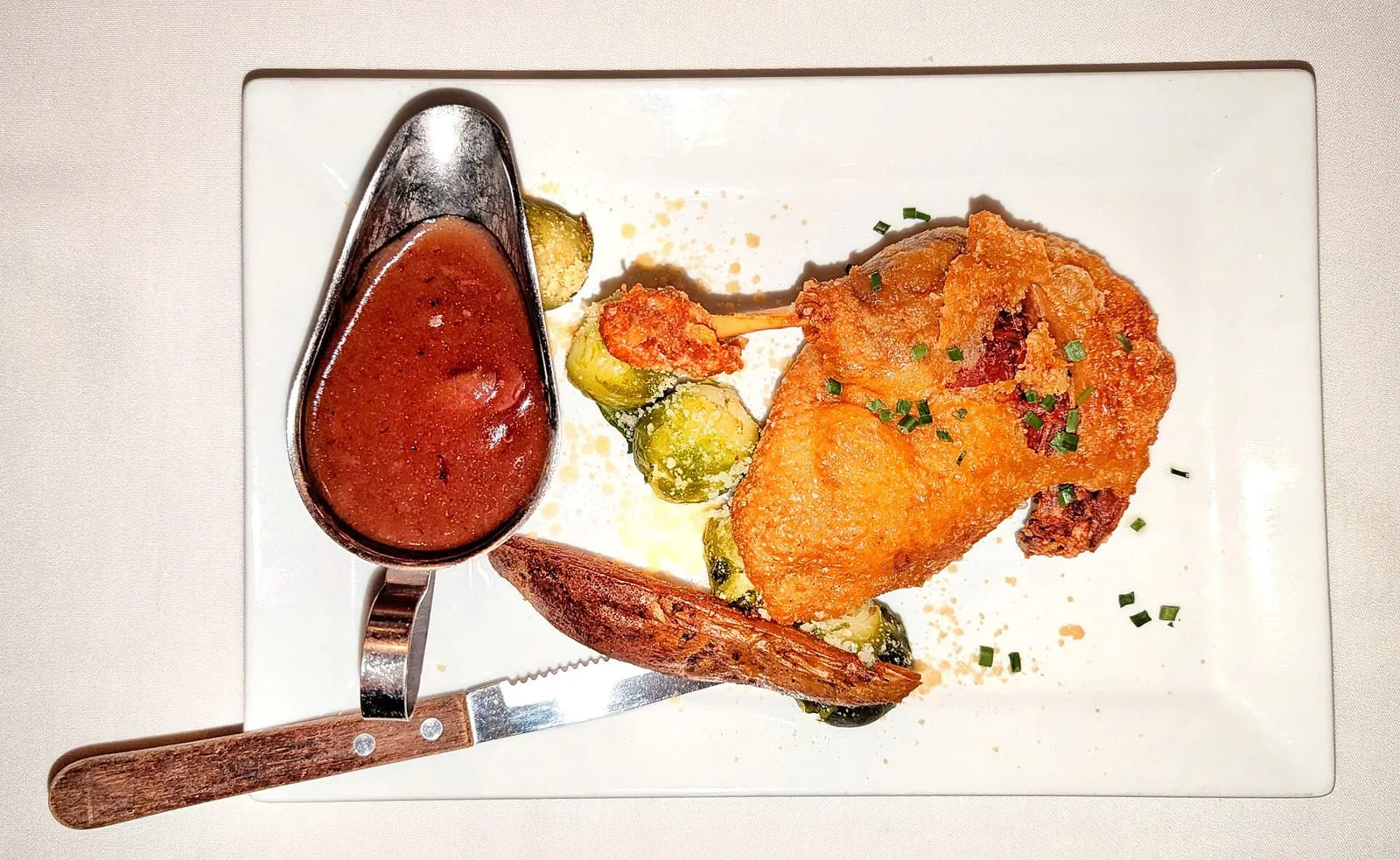
Confit changes the maths. The leg has cooked slowly in its own fat, the meat is salty, fibrous and deeply savoury, and the skin is crisped in a pan at the end. Fat is everywhere, but the meat juices are gone.
The direct consequence: the leg is intensely savoury, and that umami makes tannin taste drier and more bitter. The fat and the salt push the other way and round the wine off, but not enough to save a young, hard, oaky red. Look instead for a medium-bodied red with fruit and freshness. A supple Cahors works, and Buzet, red Gaillac or Côtes du Marmandais do the same job for about ten euros.
The best regional match is the one everyone forgets: a Madiran with eight to ten years on it, tannins resolved, with confit and sarladaise potatoes. The wine has lost its bite and kept its freshness, which is precisely what the dish needs.
What wine goes with a whole roast duck?
A whole roast duck is gentler than a breast. The leg meat is soft, the crown is drier, the skin is very crisp, and the gravy is usually just a deglaze.
This is Pinot Noir territory. A red Burgundy from the Côte de Nuits, Gevrey-Chambertin, Nuits-Saint-Georges or a well made Marsannay, brings silk, tart red fruit and enough acidity to slice through the skin without flattening the meat. It is the one case where we suggest spending a little more, because the finesse is audible.
Cheaper and nearly as good: a ripe Loire Cabernet Franc, Chinon or Bourgueil, served at 15 degrees. If the bird is stuffed with chestnuts and dried fruit, a Châteauneuf-du-Pape or Gigondas brings the generosity you need.
With a fruited roast, cherries, figs or prunes, shift towards more fruit and less tannin, as we do in our wine and game pairings.
What wine goes with duck a l’orange?
This is the dish that catches everyone out. The orange brings acidity and bitterness, the sauce brings sugar, and the wine has to absorb all three at once. A dry tannic red goes metallic within two mouthfuls.
Two answers work. The first is a white with sugar left in it: demi-sec Vouvray, sweet Jurancon, or Alsace Pinot Gris vendange tardive. The sugar in the glass matches the sugar on the plate, and the acidity of Chenin or Petit Manseng answers the citrus.
The second is a very fruity, low-tannin red served cool: a cru Beaujolais such as Fleurie or Morgon, or a light Pinot Noir. You lose some power and gain a lot of comfort. If the sauce is frankly sweet, a Maury or Banyuls settles the argument.
The same sugar logic governs the starter that often precedes it, which we cover separately in what wine goes with foie gras?
What wine goes with Peking duck?
Lacquered skin, hoisin sauce, pancakes and spring onion: this is not a job for claret. The sugar in the glaze, the umami of the soy and the smoke of the oven will take a tannic red apart.
Our default is Alsace: a Pinot Gris, or an off-dry Gewurztraminer if the hoisin is flowing. The sweet spices of Gewurztraminer track the five-spice, and the residual sugar absorbs the glaze. A German Riesling at Kabinett or Spatlese level does the same work with more nerve.
In red you want fruit and no aggressive tannin: light Pinot Noir, Beaujolais, or a Ningxia red if you want to go all in. Rosé Champagne is surprisingly good with the filled pancakes.
The duck pairing table
| Appellation | Why it works | Indicative price |
|---|---|---|
| Madiran | Firm Tannat and dark fruit, tannin that cuts grilled duck breast | 12 to 20 € |
| Cahors | Round, dark Malbec, as good on confit as on a seared breast | 10 to 18 € |
| Saint-Joseph or Crozes-Hermitage | Syrah pepper and smoke against caramelised skin | 15 to 30 € |
| Gevrey-Chambertin or Nuits-Saint-Georges | Pinot Noir silk and acidity, the benchmark for whole roast duck | 35 to 70 € |
| Chinon or Bourgueil | Ripe Cabernet Franc, crunchy fruit, roast-duck finesse on a budget | 10 to 18 € |
| Pomerol or Saint-Émilion | Supple, velvety Merlot with a plainly salted duck breast | 25 to 60 € |
| Demi-sec Vouvray | Sugar in the glass matches the orange sauce, Chenin acidity holds the citrus | 12 to 20 € |
| Alsace Pinot Gris or Gewurztraminer | Residual sugar and sweet spice, the answer to Peking duck | 15 to 25 € |
| Banyuls or Maury | Fortified sweet red, dark fruit and cocoa, for genuinely sweet sauces | 15 to 25 € |
Which wines should you avoid with duck?
Three mistakes come round again and again.
Tannic, oaky reds with a sweet sauce: the classic duck a l’orange failure, and there is no rescuing it once the bottle is open.
Light, lean dry whites with breast or confit: Sancerre and Muscadet are excellent elsewhere, but duck fat simply erases them.
Young, hard reds with confit, which finish dusty because the umami of the dish sharpens tight tannin further.
What temperature, and how much?
Serve structured reds between 16 and 17 degrees, never at summer room temperature. Light reds and cru Beaujolais at 13 to 15, which changes everything with duck a l’orange. Sweet whites at 9 to 11, fortified sweet reds around 14. Our guide to red wine serving temperature covers the rest.
Count half a bottle per person when duck is the main course, and decant the structured red twenty minutes before you sit down.
In short
Seared breast: Madiran, Cahors or northern Rhone Syrah. Confit: a supple south west red, or an aged Madiran. Whole roast: red Burgundy. Duck a l’orange: demi-sec Vouvray or Banyuls. Peking duck: Alsace Pinot Gris or Gewurztraminer.
One rule to keep if you keep only one: the sauce decides. All our other food and wine pairings sit on a single page.
Frequently asked questions
What is the best wine with duck breast?
A tannic, fruity red served around 16 degrees. Madiran is our first reflex: the Tannat grape gives firm tannin that cuts through the fat under the skin, and dark fruit that answers the meat juices. Cahors does the same thing with rounder Malbec. If you like pepper, take a northern Rhone Syrah such as Saint-Joseph or Crozes-Hermitage. On a plainly salted breast, a mature Pomerol is superb.
What wine goes with duck confit?
A medium-bodied red with fruit and freshness, not a young tannic monster. Confit leg is fibrous and deeply savoury, and that umami makes tannin taste drier and more bitter, so a big young Cabernet turns dry and dusty. Buzet, Gaillac or a simple Cahors do the job for around ten euros. The best match of all is a Madiran with eight or ten years on it.
What wine goes with duck a l'orange?
Something with residual sugar, because sugar in the sauce makes any dry red taste harder and more bitter. Demi-sec Vouvray, sweet Jurancon or an Alsace Pinot Gris vendange tardive answer both the sweetness and the bitterness of the citrus. If you want red, pick a cru Beaujolais served cool, or a Banyuls when the sauce is genuinely sweet.
Can you drink white wine with duck?
Yes, as long as the white has body. A lean Sancerre or Muscadet, excellent with shellfish, gets flattened by duck fat. Aim instead for Alsace Pinot Gris, a ripe Loire Chenin, a Marsanne-based white from the Rhone, or an oaked white Burgundy with roast duck and a clear pan gravy. Sweet whites take over as soon as the sauce turns sweet.
What is a good cheap wine for duck?
South west France is the most generous shelf here. Buzet, red Gaillac and Cotes du Marmandais cost 8 to 14 euros and handle confit or grilled duck breast without complaint. Entry-level Cahors is a safe bet too. For roast duck, a Loire Chinon or Bourgueil gives you much of the silkiness of red Burgundy at a third of the price.