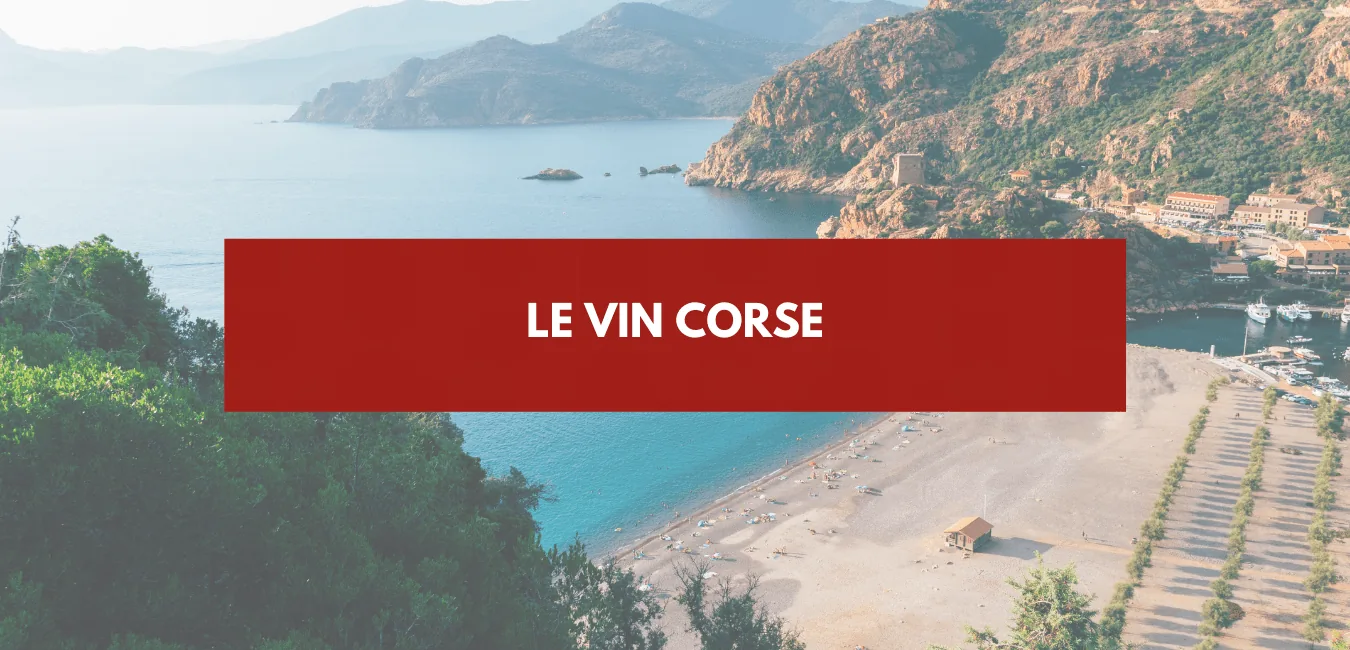
Corsica, that beautiful French island, is hiding some really good wines. Thanks to a glorious climate year-round, the vines get plenty of sun. In this piece, we explore Corsican wine, dive into the regions, and share all the best tips for getting your hands on a bottle.
Corsican white wine
The dominant grape
One grape rules Corsican wine: Vermentino, also called Vermentinu. It’s the lead grape across most Corsican AOCs. This white grape brings real finesse and gentle aromas. There are over 1,000 hectares of it on the island, about 17% of the total vineyard surface.
Bottles made from Vermentino are everywhere, you’ll find it across 75% of Corsica. Most often it’s bottled solo as a single varietal. It shows lovely floral notes with citrus on top.
You’ll also find Muscat blanc in Corsica. These are sweet wines made in the north. There are real similarities with Muscat à petits grains. They’re very fresh, and unlike Languedoc-Roussillon Muscats, they’re less oily, less syrupy.
Pairings with Corsican white
Corsican wine is no exception when it comes to food and wine pairings. Corsican white sings with seafood platters or light charcuterie. On the terrace, with family or friends, these wines are made for sharing.
On the cheese front, Vermentino calls for lighter styles. Muscat, on the other hand, can stand up to bigger cheeses like Roquefort.
Where to buy Corsican white
Even if you’re not heading to the île de Beauté, you can still find Vermentino. Big online retailers like Cdiscount and Vinatis will get you what you need.
Your local wine merchant probably has a few Corsican references worth a look, and they can recommend domaines you can contact directly.
Corsican red wine
Same story for red. Two main grapes: Niellucciu in the north, around Patrimonio, and Sciaccarello in the south, around Ajaccio.
Niellucciu, the traditional grape of northern Corsica
- A red grape originally from Italy, planted in Corsica in the 12th century
- The island’s main grape, with 35% of the vineyard surface
- Gives colored, balanced wines
- Tannin-rich
- Drought-resistant, suited to stony terrain
- Fruity, spicy aromas
- Excellent ageing potential
Sciaccarello, the southern Corsican grape
- A black grape used for both red and rosé
- The name means “crunchy”
- Very fine tannins
- Peppery aromas
- Niellucciu and Sciaccarello blend beautifully together
- Gives a sturdy, structured red
What to drink with Corsican red
Corsican red is wonderfully versatile, it can carry a meal from start to finish. There’s a wide range of dishes that work with it.
With Niellucciu: charcuterie as an aperitif, then a côte de boeuf or roast chicken with potatoes, finishing with a sheep’s-milk cheese.
With Sciaccarello: charcuterie again, then a beef stroganoff with rice, finishing with something like Roquefort.
Corsican rosé
As mentioned, Sciaccarello also makes rosé. The rosé from this grape is hugely popular in Corsica, fruity, with strawberry and almond notes, somehow both incredibly fine and surprisingly light.
Rosé is generally an aperitif wine more than a table wine. That said, you can absolutely serve it at the meal with white meat or fish.
Corsican wine: the appellations
Corsica is rich in appellations. With centuries of viticultural history, the island is full of treasures to explore on your tasting expeditions.
- Patrimonio: mostly red, some white, located on Cap Corse
- Vin de Corse: several terroirs in Calvi and Figari
- Ajaccio: powerful reds with great ageing potential
- Muscat du Cap Corse: in the north, with excellent whites
- IGP de l’île de beauté: around Bastia, producing Chardonnay, Merlot, or Cabernet
Now Corsican wine is no longer a mystery, and you’ll be able to taste some superb grapes if you head to the island. And don’t forget to store your wine properly. A decanter for a young Corsican wine can be an excellent move to make tasting easier.