For a charcuterie board, open a light red served cool, around 14°C or 57°F: Beaujolais, Loire Cabernet Franc or an unoaked Pinot Noir. Salt and fat need acidity and almost no tannin. A dry sparkling wine or a crisp Provence rosé does the same job, and copes far better with the pickles.
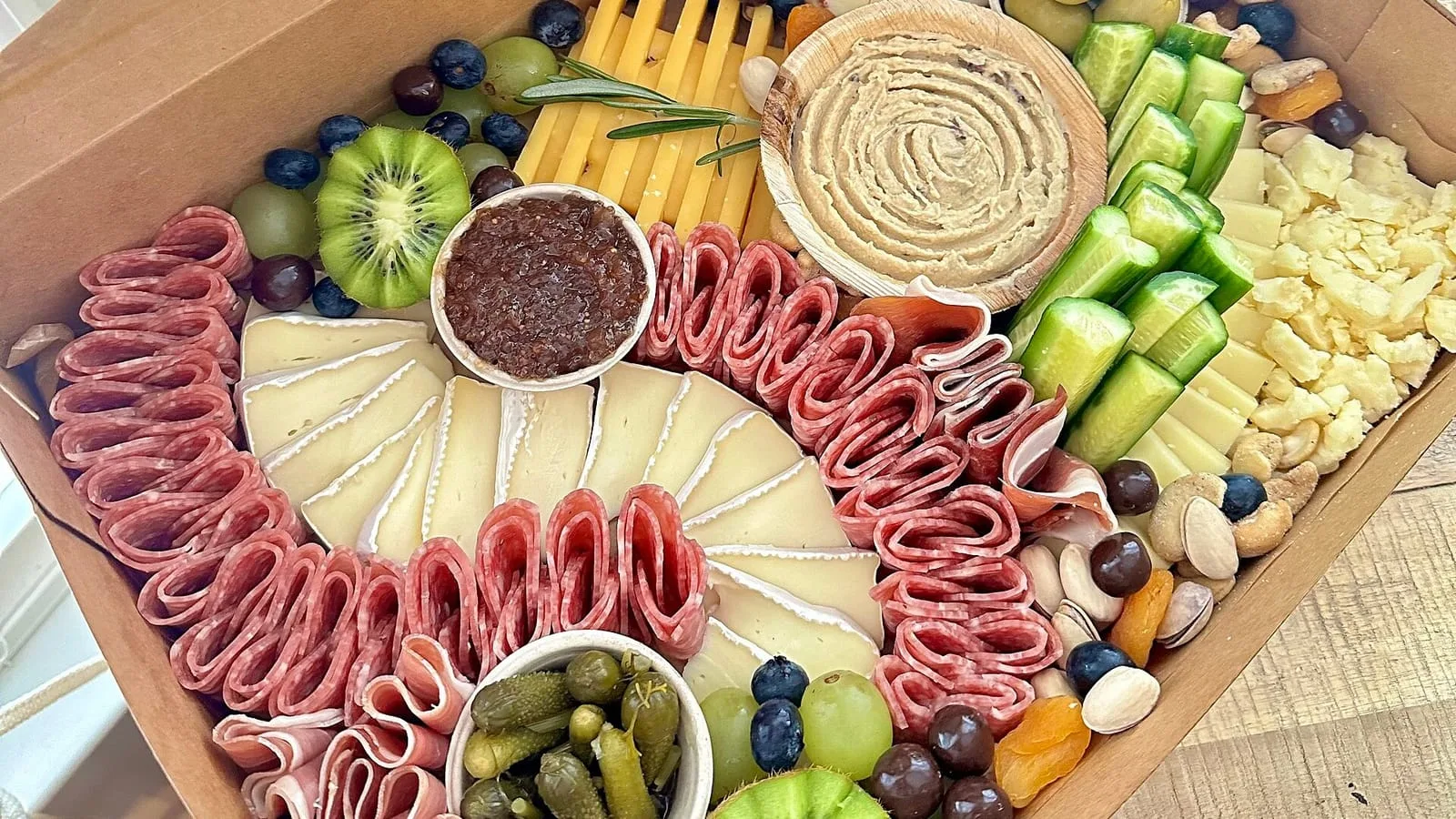
A charcuterie board is not really a dish, it is a texture: salt, fat and usually something vinegary on the side, repeated bite after bite. Here is how to choose the bottle, and why the cornichons cause more trouble than the salami ever will.
Why do salt and fat decide the pairing?
Salt actually softens wine. It makes you salivate, it rounds tannin off and it takes the edge off bitterness, so a structured red does not turn harsh on cured meat: it goes smooth and loses the detail you paid for by the third slice. Cured meat is among the saltiest food you will put on a table.
Fat pushes the same way, only thicker. It coats your mouth, rounds off every edge and swallows quiet wines whole. A soft white or a red with no backbone simply disappears behind a spoon of rillettes.
Two levers, one conclusion. You need acidity, to cut the fat and keep the mouth clean, and very little tannin, which salt and fat flatten out anyway and which leaves nothing here but weight on an already rich bite. That is exactly the profile of a light red served cool, a brut sparkling wine or a dry rosé.
There is a third trap: alcohol. Above 14.5%, against peppery, chilli-spiced charcuterie, alcohol burns. A warm-climate Grenache that felt generous on opening turns aggressive after four bites of salami.
What red wine goes with a charcuterie board?
This is the question people actually ask, and red is a good answer with one condition: light and properly cold. Not vaguely cool, cold, fifteen minutes in the fridge before you sit down, aiming for 13 to 14°C. A red at 21°C in a heated room flattens the meat and pushes the alcohol forward. Nowhere does red wine serving temperature matter more than here.
Three families work almost every time.
Gamay first. The Beaujolais crus, Fleurie, Chiroubles, Brouilly, Régnié, are built for this: crunchy red fruit, clean acidity, barely any tannin. Morgon and Moulin-à-Vent are firmer and suit pâté and rillettes better.
Loire Cabernet Franc second. Chinon, Bourgueil and Saumur-Champigny bring the same lightness with a graphite and bell pepper edge that wakes the fat up instead of drowning in it. It is my default on prosciutto and coppa.
Unoaked Pinot Noir third: village Burgundy, red Sancerre, German Spätburgunder, cool-climate Oregon or New Zealand bottles at the lighter end. The Jura adds Poulsard and Trousseau, pale saline reds that seem designed for cured meat. Most of the board is pork, so the logic in our wine and pork guide applies here too.
Is sparkling wine the safest choice?
If I could keep only one category, this would be it. Bubbles reset the palate between bites, acidity slices the fat, and carbonation deals with vinegar better than anything still.
Brut or extra brut Champagne is glorious, especially a blanc de noirs whose Pinot core answers dry-cured ham. But the pairing is not a Champagne privilege: a Crémant du Jura, de Loire or de Bourgogne does the same work for €10 to €16, and English sparkling wine is excellent here for the same reason.
Avoid high dosage. A demi-sec against salt reads as cloying within two glasses. And if the board leans Italian, mortadella, bresaola, Milano salami, a well-chilled Lambrusco secco is an unbeatable regional match, often under €12. Check the label says secco, because the sweet style is still everywhere.
Does rosé work with charcuterie?
Yes, as long as it is genuinely dry. It is the picnic bottle, the shared-board bottle, and it annoys nobody at the table.
A pale, tense Côtes de Provence or Coteaux d’Aix does fine work on prosciutto, salami and light terrines. Our guide to rosé covers the styles; the selection rule is what matters: dry, from the most recent vintage, served at 10 to 12°C.
A spicy board needs more. Chorizo, ‘nduja, hot soppressata and pimentón-rubbed lomo call for a Tavel, a saignée rosé from the Languedoc or a Bandol, which have the body to carry chilli instead of being erased by it. The trap is the faintly sweet rosé: residual sugar plus salt gets heavy, and the whole thing tastes like boiled sweets by the third glass.
What do you do about the pickles, mustard and jam?
Here is the real problem, and almost nobody writes about it. What breaks a charcuterie pairing is not the salami, it is the little dish of cornichons sitting next to it.
Vinegar is acetic acid, far more aggressive and far more volatile than the tartaric acidity in wine. When it arrives first, it resets your palate upwards, and the wine that follows tastes flat, short and stripped of fruit. On a tannic red the effect is worse, with a distinctly metallic edge.
Three fixes, in order of usefulness. First, choose a wine acidic enough that it is not outgunned: Crémant, extra brut Champagne, Aligoté, Muscadet sur lie, Touraine Sauvignon, Gamay. A soft wine loses to a pickle every time.
Second, separate the actions. Eat the cornichon between sips, not in the same mouthful as the wine, and never immediately before. It sounds fussy, but it is the difference between a wine that lasts the whole board and a wine you find disappointing without knowing why.
Third, adjust the condiments themselves. Mild pickles, cider-vinegar onions or low-acid German gherkins are far gentler than sharp cornichons in spirit vinegar. Dijon mustard is fine, because its heat leads rather than its acidity. Fig jam, quince paste and hot honey move the problem to sugar instead: sweetness makes a dry wine taste thin and sour. If the board carries jam, sparkling wine and rosé handle it much better than red does.
Which bottle for which meat?
| On the board | Wine to open | Why it works | Price band |
|---|---|---|---|
| Prosciutto, jamón serrano, dry-cured ham | Chinon or Saumur-Champigny, served cool | Light fruit and a green edge against the salt of the cure | €10 to €18 |
| Salami, soppressata, saucisson sec | Beaujolais cru: Fleurie, Brouilly, Morgon | Crunchy Gamay, no tannin to pile weight on a rich, salty bite | €9 to €18 |
| Pâté, terrine, rillettes, liver mousse | Crémant de Loire or dry Vouvray | Bubbles and Chenin acidity cut straight through the fat | €10 to €20 |
| Mortadella, coppa, bresaola | Chilled Lambrusco secco | Regional match, dry bubbles over soft creamy fat | €8 to €14 |
| Chorizo, ‘nduja, spicy soppressata | Tavel or Bandol rosé | Enough body to carry chilli without being erased | €12 to €25 |
| Hard cheese: cheddar, Comté, manchego | Chablis or unoaked white Burgundy | Tense saline white that takes salt and meat alike | €12 to €22 |
| Blue cheese, fig jam, hot honey | Sauternes, Coteaux du Layon or tawny port | Sugar cancels salt, the only style that survives jam | €15 to €30 |
| A big mixed board, one bottle | Beaujolais cru or brut Crémant | The two styles that cross meat, cheese and pickle | €10 to €20 |
Can one bottle cover the whole board?
Yes, and there are only two good answers.
Brut Crémant is the safer one. Loire, Jura or Burgundy, it absorbs the fat, the salt, the pickles and the cheese that almost every English-language board carries. No still wine covers that much ground.
A Beaujolais cru is the friendlier one. A Fleurie pulled from the fridge at the last moment pleases everyone, including committed red drinkers, and it never gets flattened.
One warning. Blue cheese ends every dry pairing on the board, so serve it last with a small glass of something sweet, or leave it off. If you are building a whole meal around the board, the rest of our wine pairing guides are in one place.
What mistakes should you avoid?
The number one mistake is saving the serious red for the board. A structured Bordeaux, a Cahors or a young Châteauneuf-du-Pape against salami wastes both: salt and fat smooth the wine out until the detail you paid for disappears, and its alcohol wakes the pepper and chilli in the meat. Keep the good bottle for a main course.
Three more traps come up constantly. Red served too warm, which turns alcohol into raw heat. Heavily oaked Chardonnay, whose vanilla and butter stack on top of the fat instead of cutting it. And the twelve-item board, which saturates the palate in ten minutes: six well-chosen things are better, with neutral bread or plain crackers rather than anything fruit-and-nut.
One last detail. Take the meat out of the fridge a good twenty minutes before serving. Cold salami is hard and mute, cold fat tastes of nothing, and no wine can fix that.
Frequently asked questions
What is the best wine for a charcuterie board?
A dry sparkling wine is the safest single answer, because bubbles and high acidity handle salt, fat, pickles and cheese all at once. A Crémant from the Loire, Jura or Burgundy costs €10 to €16 and does almost everything Champagne does. If the room wants red, pour a Beaujolais cru such as Fleurie or Brouilly, straight from the fridge.
Does red wine work with cured meat?
Yes, as long as it is light and genuinely cool. Salt and fat round tannin off rather than sharpen it, so a big oaky red does not turn harsh, it just goes shapeless and piles weight onto an already rich bite. Beaujolais crus, Loire Cabernet Franc such as Chinon or Bourgueil, and unoaked Pinot Noir all work. Fifteen minutes in the fridge before serving makes more difference than the label does.
Is sparkling wine really good with charcuterie?
It is the most reliable style on the board. The bubbles reset your palate between bites, the acidity cuts the fat, and the carbonation copes with vinegar better than any still wine. Choose brut or extra brut, never demi-sec, because residual sugar plus salt tastes cloying fast. A blanc de noirs Champagne on dry-cured ham is the luxury version of this.
What wine works when the board has cheese on it too?
Most English-language charcuterie boards are really grazing boards, with cheddar, brie or manchego next to the meat. A brut Crémant or Champagne crosses both without effort. In still wine, an unoaked Chablis handles hard cheese and dry ham equally well. Blue cheese is the exception: nothing dry survives it, so pour a small glass of something sweet alongside.
How cold should the wine be for a charcuterie board?
Colder than most people serve it. Light reds want 13 to 14°C, which means fifteen to twenty minutes in the fridge, not room temperature. Rosé and white want 10 to 12°C, sparkling wine 8 to 10°C. A red served at 21°C in a heated room tastes alcoholic and flattens the meat, and no appellation on earth fixes that.