With shrimp, pour a dry unoaked white with real acidity: Muscadet, Picpoul de Pinet or Chablis. Then let the cooking decide. Cold cocktail wants bubbles, garlic butter wants sharp citrus, grilled shrimp want more body, and anything chilli or curried wants a low alcohol, off dry riesling instead.
A word on words first. Americans say shrimp, the British and Australians say prawns, and on most menus the two cover the same thing. The biological distinction changes nothing in the glass, so everything below applies to both.
Why does the cooking method matter more than the shrimp?
Shrimp on its own has almost no dominant flavour: light, faintly sweet, faintly briny. What fills the plate is everything around it, smoke from the grill, garlic and chilli, coconut milk and curry paste, batter, or a bowl of cocktail sauce.
So hunting for the one shrimp wine is the wrong question. A tiger prawn charred over wood and a cold peeled shrimp dunked in sauce want different bottles. It is the logic we use across the whole wine pairing section: match the dish, not the ingredient.
One rule holds throughout: no new oak. Vanilla, butter and toast steamroll this meat every time.
What wine goes with cold shrimp and cocktail sauce?
The shrimp cocktail is the trickiest, because the wine is not really facing shrimp at all. It is facing ketchup, horseradish, lemon and Worcestershire: sweet, sharp and slightly hot at once.
That sweetness trips people up, because a bone-dry, very acidic white tastes thin next to it. Bubbles solve it in one move: a brut champagne, ideally a blanc de blancs, or a brut cremant de Loire at a third of the price, with the acidity to cut the richness and the body to meet the horseradish.
Cold shrimp with plain mayonnaise and lemon puts you back on classic ground: Muscadet sur lie, a village Chablis, or a dry Vouvray whose chalky edge pushes the briny note forward, much the same exercise as a plate of oysters.
What wine goes with garlic butter shrimp?
Gambas al ajillo, garlic and parsley shrimp, shrimp sizzling in butter with chilli. The problem here is not the shrimp, it is the garlic and the fat.
Two things happen. Barely cooked garlic sharpens the perception of alcohol, so a white at 14 percent tastes like it is burning. And butter or olive oil leaves a film that needs scrubbing off between mouthfuls.
The answer is a dry white with obvious acidity and modest alcohol. Albarino from Rias Baixas is the best bottle in the world for this plate: saline, lemony, rarely above 12.5 percent. Muscadet sur lie does nearly as well for half the money, and Rueda verdejo or Vinho Verde both work.
Then the Spanish tapas bar answer, which almost nobody tries at home: a chilled manzanilla or fino sherry. Dry, salty and taut, it cuts the oil instantly.
What wine goes with grilled or barbecued shrimp?
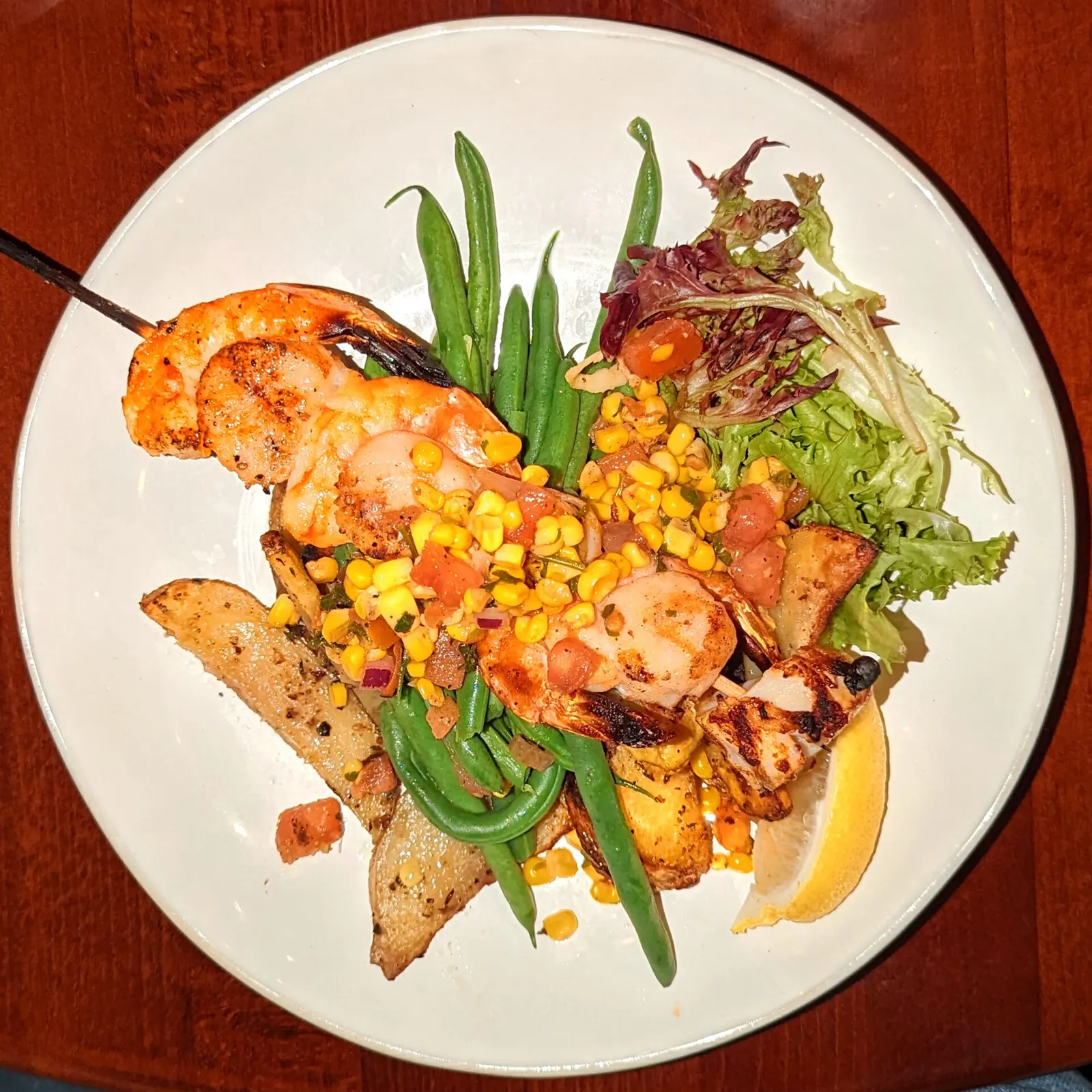
The grill changes everything. Flame caramelises the sugars, the shells blacken, the oil smokes. There is char on the plate now, and a thin white disappears against it.
You want a white that keeps its freshness but has some flesh. Corsican vermentino, white Patrimonio, white Bandol or a Cassis from Provence are built for this: broad without being heavy, with a salinity that echoes the sea. On a budget, Picpoul de Pinet punches far above 10 euros.
Eating outside around a barbecue, a serious rosé is a real answer, not a compromise: a Bandol rosé or a Tavel has the structure to meet the smoke head on.
Avoid the reflex reach for white Burgundy: a vanilla-scented Meursault against char tastes like an ashtray. An unoaked chardonnay, a Chablis or a Macon, puts it right.
What wine goes with shrimp scampi?
Shrimp scampi is garlic, butter, white wine, lemon and parsley over linguine. The pasta adds starch and weight that plain garlic shrimp does not have, so the wine can carry a little more substance.
Italian whites are made for it. Verdicchio dei Castelli di Jesi has the almond bitterness and lemon lift that answer butter and parsley. Soave Classico, Vermentino di Sardegna and Greco di Tufo work for the same reason, and Sancerre is the French equivalent. Best habit of all: cook the sauce with the wine you plan to drink.
What wine goes with tempura and fried shrimp?
Batter is fat, salt and crunch, and it asks the wine to do one job above all others: clean the palate.
Sparkling wine wins easily. An extra brut champagne or a brut cremant d’Alsace scrubs the fried coating away between bites.
Without bubbles, reach for the sharpest still whites: Chablis, Muscadet, Rueda verdejo or a bone-dry Alsace riesling. With coconut shrimp and a sweet dipping sauce, shift slightly off dry, to Alsace pinot gris or a demi-sec Vouvray, or the wine tastes sour.
What wine goes with spicy shrimp and Asian dishes?
Thai green curry, chilli garlic shrimp, sambal, tandoori, Sichuan-style prawns. Now you have chilli, sugar, acidity and often coconut fat at once, and the logic flips.
Capsaicin binds to the same receptors as alcohol, so the more alcoholic the wine, the hotter the dish feels. A fully dry wine on a slightly sweet dish also tastes lean and bitter. That is why Chablis, excellent with plain shrimp, dies against a curry.
What you need is low alcohol, a little residual sugar and plenty of aroma. The champion is a Mosel riesling kabinett, often 8 or 9 percent, whose 20 to 45 grams of sugar per litre calm the heat without turning syrupy. Behind it, Alsace pinot gris marries coconut milk, and a demi-sec Vouvray bridges sweet and sour.
Gewurztraminer, endlessly recommended as the shrimp wine, is misplaced on plain shrimp: too perfumed, it walks in front of the food. On a gently spiced curry or a ginger dish it is brilliant. A sauce wine, not a shellfish wine.
Which wine for which shrimp dish?
| Dish | Appellation | Why it works | Indicative price |
|---|---|---|---|
| Shrimp cocktail | Champagne brut blanc de blancs | Bubbles and acidity cut the sweet, hot sauce | 35 to 45 euros |
| Cold shrimp, mayonnaise | Muscadet Sevre et Maine sur lie | Briny and lemony, unbeatable at the price | 8 to 12 euros |
| Garlic butter shrimp | Albarino, Rias Baixas | Saline and fresh, low alcohol against garlic | 12 to 18 euros |
| Garlic shrimp in olive oil | Manzanilla, Sanlucar | The tapas bar reflex, cuts the oil dead | 10 to 16 euros |
| Grilled or barbecued | White Patrimonio, Corsica | Broad saline vermentino that holds the char | 14 to 20 euros |
| Barbecue, eating outside | Bandol rosé | Structure and ripe fruit, solid against smoke | 18 to 26 euros |
| Shrimp scampi with pasta | Verdicchio dei Castelli di Jesi | Almond and lemon lift answering the butter | 10 to 16 euros |
| Tempura and fried shrimp | Brut cremant d’Alsace | Scrubs the fried coating between bites | 12 to 16 euros |
| Chilli, curry, sambal | Mosel riesling kabinett | Light sweetness at 9 percent puts out the heat | 15 to 22 euros |
Can you drink red wine with shrimp?
Generally no, and it is chemistry rather than snobbery. Ferrous iron in the wine catalyses the oxidation of the shrimp’s polyunsaturated fats into aldehydes such as 1-octen-3-one, and that is what tastes of metal, rather like chewing on a coin. Tamura and colleagues pinned it down in 2009, and the more iron the wine carries, the stronger the fishy aftertaste. Tannin is a separate, secondary matter, not the source of the metallic finish.
The exception comes from the sauce. With shrimp in tomato sauce, chorizo or smoked paprika, a light red with no grip served cool at around 14 C does the job nicely: Brouilly, a light Chinon, or a simple pinot noir. The wine matches the sauce and the shrimp follows, the same mechanism as with red wine and fish.
What mistakes should you avoid with shrimp and wine?
Four traps come up again and again. New oak first: vanilla and butter against fine meat, and the shrimp loses every time. Then high alcohol on a garlic or chilli dish, which turns dinner into a burn. Third, a bone-dry wine on a sweet or spicy plate, where it reads as bitter. And finally serving too cold, because below 6 C a white has nothing to say.
The right temperature for these whites is 9 to 11 C, so take the bottle out of the fridge ten minutes before sitting down. On quantity, count 150 g of peeled shrimp per person as a starter, 250 g as a main, and a bottle between three if shrimp is the meal.
We have done the same preparation-by-preparation work for crab and for lobster.
Frequently asked questions
What is the best white wine with shrimp?
A dry, unoaked white with real acidity and a saline edge. The three most reliable bottles are Muscadet Sevre et Maine sur lie, village Chablis and Picpoul de Pinet. All three share the same virtues: bright acidity, a faintly salty finish, and no dominant aroma that would flatten the delicate meat. From there you adjust to the sauce and the cooking method.
Does it matter whether they are called shrimp or prawns?
Not for the wine. Americans say shrimp, the British and Australians usually say prawns, and most cookbooks use the two words for the same thing. Biologists do separate them into different families, and prawns are often the larger ones you see on a grill, but the flavour difference on the plate is far smaller than the difference between garlic butter and coconut curry. Pair the dish, not the label.
What wine goes with shrimp cocktail?
Cocktail sauce is sweet, sharp and a little hot, which is why a very dry, very acidic white can taste thin against it. Brut champagne, ideally a blanc de blancs, is the classic answer: bubbles and acidity cut the mayonnaise-rich version and the sweetness of the ketchup at once. A brut cremant de Loire does the same job for a third of the price.
What wine goes with spicy shrimp and Asian curries?
A low alcohol white with a touch of residual sugar. A Mosel riesling kabinett at 8 or 9 percent is the single most effective bottle: the sugar puts out the chilli, the acidity keeps the dish moving. Alsace pinot gris suits coconut milk, and a demi-sec Vouvray bridges sweet and sour sauces. A bone-dry white at 14 percent will only amplify the burn.
Can you drink red wine with shrimp?
Usually not, and it is chemistry rather than snobbery. Ferrous iron in the wine oxidises the shrimp's polyunsaturated fats into aldehydes such as 1-octen-3-one, and those are what taste metallic, a bit like chewing on a coin. The one exception comes from the sauce, not the shrimp: with a tomato, chorizo or smoked paprika dish, a light untannic red served cool at around 14 C, a Brouilly or a simple pinot noir, works very well.