With cheese fondue, pour a dry, high-acid white: Swiss Fendant, a Vin de Savoie such as Apremont, or a dry Alsace Riesling. The acidity cuts through the melted cheese and resets your palate between bites. Use the same wine you put in the pot, serve it around 10 degrees Celsius, and save the kirsch for the end.
That is the short answer. The detail is worth ten minutes, because three questions come up at every fondue night: what the kirsch does to the pairing, what to pour for the guests who refuse white, and whether the old no-water rule holds up.
Why does a dry white work best with cheese fondue?
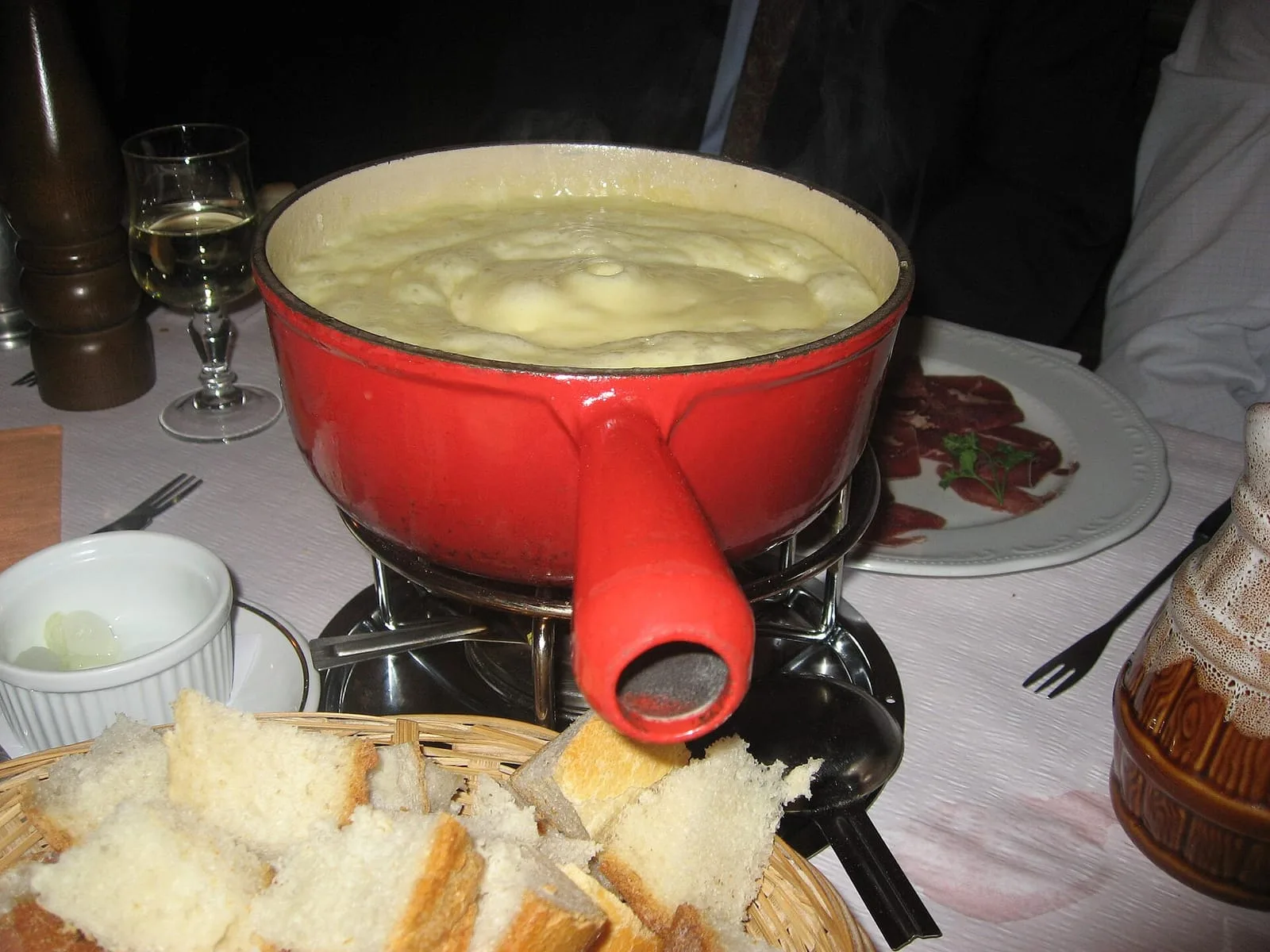
A cheese fondue is three things in a pot: hard alpine cheese, dry white wine and garlic. The Swiss classic is moitié-moitié, half Gruyère and half Vacherin Fribourgeois. The Savoyarde version uses Beaufort, Comté and Savoie Emmental. Either way the result is fatty, salty, hot, and it stays hot for two hours. The wine has one job: reset your palate before the next mouthful.
That is precisely what acidity in a dry white does. It cuts the fat, gets your mouth watering again, and keeps you reaching for another cube of bread twenty minutes in. A soft, round or slightly sweet wine does the opposite. It piles on top of the richness instead of slicing through it, and half a pot later everyone has given up.
The second reason is more practical: there is already white wine in the fondue. Pouring the same family of wine in the glass extends the dish rather than fighting it. Same principle as raclette and tartiflette, with one difference that matters here: fondue is saltier, and it carries cooking alcohol.
Which white wines go with cheese fondue?
The regional pairing does the work for you. Alpine whites are light, taut, low in alcohol and rarely expensive, which is exactly what a heavy dish spread over a whole evening needs. Chasselas is the historic grape, sold as Fendant in the Valais. Across the border in Savoie you get jacquère (Apremont, Abymes, Chignin), altesse (Roussette de Savoie) and roussanne, called bergeron in Chignin. Outside the Alps, any dry unoaked white with real acidity will do the same job.
| Wine | Why it works | Indicative price |
|---|---|---|
| Fendant du Valais (Swiss chasselas) | The original fondue wine. Light, saline, sometimes lightly spritzy | 14 to 20 € |
| Apremont, Vin de Savoie (jacquère) | Lemony and low in alcohol, clean acidity. The everyday classic | 7 to 11 € |
| Chignin, Vin de Savoie | A little rounder and more floral, good when the cheese is very salty | 8 to 12 € |
| Roussette de Savoie (altesse) | More weight and perfume, stands up to kirsch and to aged Beaufort | 12 to 18 € |
| Dry Alsace Riesling | Straight acidity, no oak. The best option outside the Alps | 10 to 16 € |
| Chablis or unoaked Mâcon-Villages | Chardonnay without the butter, easy to find anywhere | 12 to 20 € |
| Grüner Veltliner (Austria) | Peppery bite that lifts the cheese, widely available | 10 to 16 € |
| Muscadet Sèvre et Maine sur lie | The cheapest reliable answer. Saline, bone dry, very fresh | 8 to 13 € |
| Crémant de Savoie or du Jura | Bubbles scrub the fat better than anything still | 12 to 18 € |
The real shortcut: buy two bottles of the same wine. One goes in the pot, the other on the table. A fondue for four to six people drinks a third to half a bottle, so the dish then mirrors the glass exactly. It is the easiest pairing in all of mountain cooking.
Does the kirsch change the pairing?
More than people expect. Kirsch is a cherry eau-de-vie at 40 percent or above. A spoonful in the pot brings almond and stone-fruit notes, loosens the texture slightly, and pushes the salt of the cheese forward. The problem is that this intensity flattens the most delicate wines: a light Apremont can suddenly taste watery next to a well-kirsched fondue.
The fix is simple. If you use kirsch, move up a level in body: Roussette de Savoie, Chignin-Bergeron, or a Jura chardonnay made in the ouillé style, meaning topped up in barrel so it has no oxidative nutty character. Those wines have enough substance to answer back without ever turning heavy.
Then there is the coup du milieu, the shot of kirsch taken halfway through to keep going. It is a nice ritual, but be honest about what it does: after two centilitres of 40 percent spirit, your palate is blunted and the next glass of wine tastes flat. If the pairing matters to you, keep the kirsch for the end of the meal.
What if your guests refuse to drink white?
It happens at every table. Red is possible, but it has to be light, fruity, low in tannin and served cool. The salt and fat of hot melted cheese actually round tannin off, so a big structured red loses its grip and its fruit goes quiet, and with no bracing acidity left in the glass the fondue feels heavier than it really is. That is not snobbery, it is mechanics.
The reliable choices are Beaujolais gamay, ideally a cru like Fleurie or Chiroubles, Savoie mondeuse in a supple style, Jura poulsard or trousseau, and a light pinot noir from Alsace or Germany. Budget 10 to 18 euros. Serve them at 13 to 15 degrees Celsius, never at room temperature, or the alcohol takes over and the pairing collapses. Our guide to red wine serving temperature covers how to hit that without a thermometer.
The better alternative to red is usually sparkling. A crémant or an extra-brut Champagne scrubs the fat more effectively than any still wine, and it is the smartest choice if you are starting the evening with cured alpine meats.
Should you really never drink water with fondue?
No, and this is the most stubborn myth in alpine cooking. The story says cold water makes the melted cheese set into an indigestible ball in your stomach. Your body runs at 37 degrees, your stomach is acidic and churning constantly, and a glass of water is nowhere near enough to chill any of it. Nothing solidifies.
What is true is that fondue is very fatty and very salty, so it is slow to digest. Alcohol slows digestion further, which means the kirsch and the wine contribute far more to that heavy feeling the next morning than the water jug ever did.
So put water on the table, at room temperature if you prefer, and drink it. It spoils nothing, it stops everyone opening two extra bottles out of pure thirst, and the whole table remembers the evening.
What are the mistakes to avoid?
Heavily oaked chardonnay is the classic error. Buttery oak plus melted cheese is twice too much of the same thing, and the pairing turns into a spread. Sweet wine is the second: cloying within three mouthfuls. The third is the serious tannic red brought out to impress, which the cheese simply flattens: tannin rounded off, fruit buried, bottle wasted.
Two service details matter almost as much. Do not serve the white ice cold. At 6 degrees it has no aroma left and its acidity reads as aggressive, so aim for 10 to 12 degrees. And do not cook with a corked bottle or a white that has been open in the fridge for a week on the grounds that it is going to be heated anyway. Fondue concentrates faults, it does not hide them.
Finally, resist opening five different bottles. Fondue is a single-note dish that lasts two hours. Two well-chosen wines, a main white and one alternative, are plenty.
How much wine do you need for a fondue night?
Allow roughly 200 grams of cheese per person, and one bottle of wine for every two guests across the whole meal, cooking included. For six people that is three bottles, one of which partly goes in the pot. Keep a spare in reserve, because fondue is eaten slowly and the glasses empty without anyone noticing.
If you want to plan the rest of the season, our food and wine pairing guide collects every answer we have by dish, from raclette to roast capon.
Frequently asked questions
What white wine goes best with cheese fondue?
A dry, unoaked, high-acid white. The historic answer is Swiss Fendant, made from chasselas, and the easiest one to find outside Switzerland is a Vin de Savoie such as Apremont or Chignin, at 7 to 12 euros. Dry Alsace Riesling, unoaked Chablis, Grüner Veltliner and Muscadet all work just as well. Avoid anything oaked, sweet or heavily aromatic.
Should you drink the same wine you cooked the fondue with?
Yes, and it is the simplest way to get this pairing right. A fondue for four to six people absorbs a third to half a bottle of dry white, so buy two bottles of the same wine: one for the pot, one for the table. The flavours in the dish then echo the flavours in the glass. Never cook with a wine you would not happily drink.
Can you drink red wine with cheese fondue?
You can, as long as it is light, low in tannin and served cool, around 13 to 15 degrees Celsius. Gamay from Beaujolais, Jura poulsard and a light pinot noir all work, and so does Savoie mondeuse in a supple style, because a traditional mondeuse is the peppery, firmly structured one of the group. Big tannic reds do not: the salt and fat of melted cheese round their tannin off and mute their fruit, so the wine loses its shape while the fondue tastes twice as heavy.
Do you have to put kirsch in a cheese fondue?
No, it is optional. Kirsch is a cherry eau-de-vie at 40 percent or more, and it adds an almond and stone-fruit lift plus a little extra stretch to the texture. It also adds alcohol to an already rich dish. If you use it, one tablespoon for four people is plenty, and choose a slightly fuller white so the wine is not flattened by it.
Is it true you should never drink water with fondue?
It is a myth. The story says cold water makes the cheese set into a solid ball in your stomach, but your body sits at 37 degrees and your stomach is acidic and constantly churning, so nothing solidifies. Fondue is very salty and makes you thirsty. Put as many jugs of water on the table as bottles of wine.