With raclette, open a dry, high-acid white from Savoie: Apremont, Chignin or Roussette de Savoie. The acidity cuts through the melted cheese and resets your palate between plates, which a red cannot do. Outside France, a dry Riesling, an unoaked Chardonnay or a Grüner Veltliner does exactly the same job.
That is the short answer. The details still matter, because a raclette with cured meat, a smoked cheese or ten people around the table does not call for the same bottle.
What is actually on the table at a raclette?
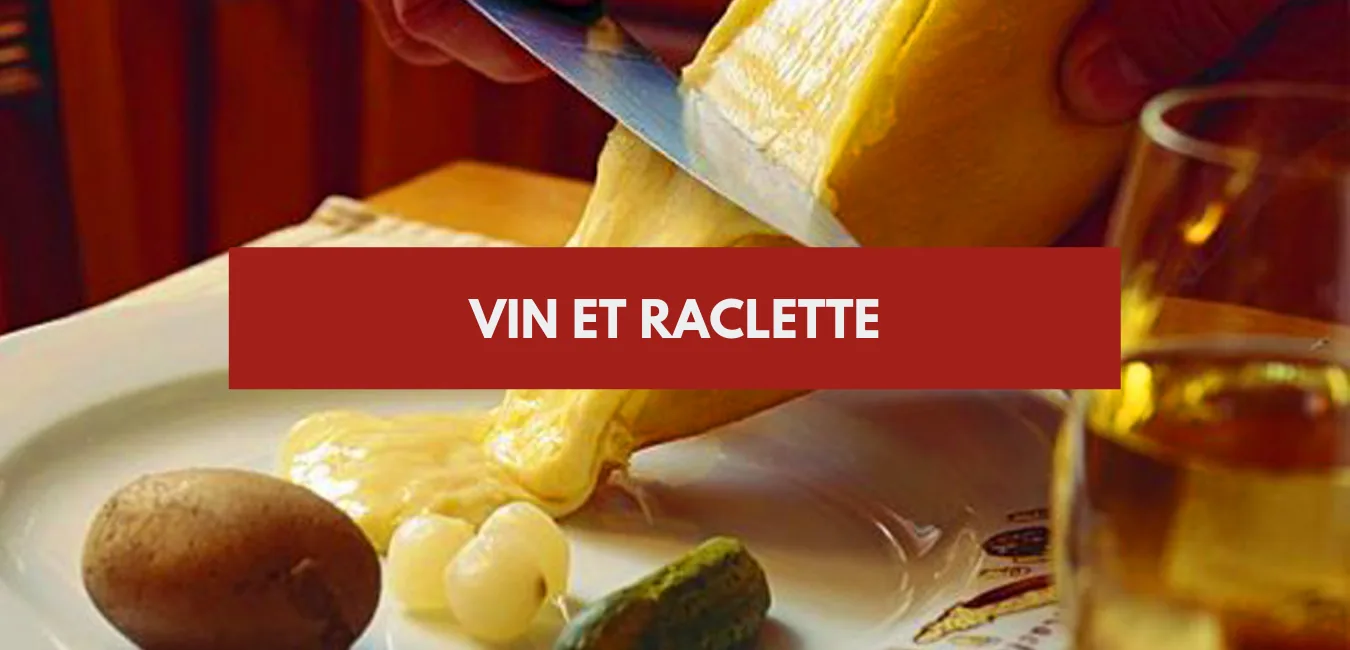
If you have just been invited to one, or you have unboxed a machine and have no idea what happens next, here is the shape of the evening. Raclette is a semi-firm cow’s milk cheese from the Swiss Valais and the French Alps. Traditionally a half wheel is heated and the melted face scraped onto a plate, which is where the name comes from. At home, everyone gets a small pan under a tabletop grill and melts their own.
Around it sit boiled potatoes, cornichons, pickled onions and, in most modern versions, a platter of cured meat. The meal lasts around two hours and nobody rushes. For the wine, that means three things are working against you all evening: fat, salt and heat, arriving in wave after wave.
Why does raclette need a white with acidity?
Melted cheese coats your mouth. It is rich, it is salty, and after two or three plates your palate stops registering flavour at all. The wine has exactly one job, which is to clear that away before the next mouthful. Acidity does it. It slices through the fat, makes your mouth water again, and keeps the fourth plate as good as the first.
Red wine brings tannins instead, the drying grip you feel on your gums after strong tea. Contrary to the usual advice, salt and fat do not harden tannin: the fat and protein in the cheese bind to it and round it off. The trouble is elsewhere. The red goes shapeless, loses the detail you paid for, and has no acidity left to clear the fat. The bigger the red, the worse it gets.
One myth worth retiring while we are here: white wine does not help you digest a raclette. The story about cheese setting solid in your stomach if you drink cold water is Alpine folklore. Drink white because it makes the meal taste better, not because it is doing you a favour.
Which Savoie whites should you look for?
The regional rule holds up perfectly here. Raclette comes from the Alps, and the Alpine whites are built for it: light, taut, low in alcohol and rarely expensive. Three grapes to know. Jacquère is sharp and lemony, the base of Apremont and Chignin. Altesse is rounder and more perfumed, and makes the Roussettes. Roussanne, called Bergeron in Chignin, gives the fullest white in Savoie.
| Bottle to look for | Why it works | Rough price |
|---|---|---|
| Apremont (Vin de Savoie) | Nervy, lemony Jacquère, low in alcohol. The absolute classic | €7 to €11 |
| Chignin (Vin de Savoie) | Same grape, rounder and more floral, easy across a long evening | €8 to €12 |
| Roussette de Savoie (Altesse) | More body and perfume, handles strong or aged cheese | €12 to €18 |
| Chignin-Bergeron (Roussanne) | The fullest Savoie white, for smoked or peppered raclette | €15 to €22 |
| Fendant du Valais (Switzerland) | The historic Chasselas of raclette, light and faintly spritzy | €14 to €20 |
| Dry Riesling, Alsace or Germany | Straight-line acidity, no oak. The best option outside the Alps | €10 to €16 |
| Grüner Veltliner (Kamptal, Weinviertel) | Peppery, brisk and dry, and sold everywhere in the UK and the US | €10 to €16 |
| Mâcon-Villages or Saint-Véran | Unoaked white Burgundy, round and fresh, findable in any shop | €10 to €15 |
| Arbois or Côtes du Jura Chardonnay | Saline with a faint walnut note, superb against melted cheese | €14 to €20 |
What can you buy if Savoie wine is nowhere to be found?
This is the honest problem with every raclette article written from France. Savoie is a small region that drinks most of what it makes, so Apremont is genuinely hard to buy in London, New York or Sydney. Do not spend your evening chasing it.
Three substitutes cover almost every shop. Dry Riesling is the closest match in spirit: high acid, no oak, moderate alcohol. Check the label says trocken or dry, because an off-dry Riesling adds sugar to an already rich plate. Grüner Veltliner from Austria is the sleeper pick, peppery and bone dry, and the litre bottles are ideal for a long meal. Unoaked Chardonnay is the safest bet of all, meaning Mâcon-Villages, Saint-Véran, Chablis or a cool-climate bottling from Australia or Oregon that does not mention barrels on the back label.
What fails in white is worth knowing too. Heavily oaked Chardonnay puts butter on top of fat, so the whole thing becomes twice too much. Sweet or off-dry whites turn the meal cloying. And loudly aromatic wines, Gewurztraminer above all, argue with the cheese rather than accompany it.
Can you drink red wine with raclette?
White is still the better answer, but half your table will want red, and there is a right way to do it. Light, fruity, low in tannin, served cool.
Mondeuse, the historic red of Savoie, is the best compromise: peppery, with fine tannins and the freshness that bigger reds lack against the fat. Then come the Gamays, from Savoie or from Beaujolais crus like Chiroubles, Fleurie or Juliénas, whose crunchy fruit slips straight through. In the Jura, a pale Poulsard or Trousseau works on the same principle. Unoaked Pinot Noir does the job too, whether it is a village Burgundy or a German Spätburgunder, and so does a light Austrian Zweigelt, a different grape built on the same lines. And if the table is loaded with charcuterie, a young unoaked Loire Cabernet Franc, Chinon, Bourgueil or Saumur-Champigny, adds a bit more body without breaking the rule.
Temperature is the part people get wrong. Serve your red at 13 to 15°C, which means twenty minutes in the fridge. Cool, it keeps its fruit. At room temperature next to a scalding plate it just tastes of alcohol.
The reds that fail, plainly: young Bordeaux, Châteauneuf-du-Pape, Cahors, Malbec, Napa Cabernet, anything big and oaked. That is the bottle people open to impress their guests, and it is almost always the worst pairing of the night.
Does Crozes-Hermitage or Saint-Joseph work with raclette?
Yes, and the white is the better bet. These two Northern Rhône appellations are famous for Syrah, but both also make whites, mostly from Marsanne, often with some Roussanne, the same Roussanne that goes by Bergeron in Chignin. They are broad wines: more body than Jacquère, but less acidity too, because Marsanne is a low-acid grape, and usually less tension than a Chignin-Bergeron. So they clear the fat less well, but they have the weight to stand up to a smoked raclette or a well-aged cheese, where a light Apremont can start to taste thin. Pick one with no obvious oak, serve it well chilled, and keep Jacquère for plain cheese. Expect roughly €18 to €30 a bottle in France.
The white is the rarer of the two colours. Jean Esprit, who farms in Crozes-Hermitage, told us on episode 24 of the podcast, back in 2020, that he was growing one hectare of white for fourteen of red, so ask a specialist merchant rather than scanning the supermarket shelf. Check the alcohol on the label as well: these whites often sit around 13 to 14%, so pick one at 13 or 13.5% if it has to last the evening.
The reds are Syrah, usually with more structure than Gamay and often more than Mondeuse (Syrah even has Alpine roots: Mondeuse Blanche, a white Savoie grape, is one of its two parents). On plain cheese these reds go shapeless like any bigger red, and the white wins. They earn their place when the table is loaded with charcuterie or air-dried beef, where the pepper and dark fruit of Syrah have something to answer the salt and fat. Choose them young, supple and without new oak, and check the alcohol as you would for the white, 13 to 13.5% rather than 14. Expect roughly €12 to €18 for a red Crozes-Hermitage and €18 to €28 for a Saint-Joseph.
Serve them at around 15°C, the top of the 13 to 15°C range and no colder, because cold firms up tannin and these reds carry more of it than a Gamay. Leave Hermitage and the oaky top cuvées in the cellar: too powerful for a cheese that flattens them, and too expensive to end up next to boiled potatoes. The same goes for a big, ripe, oaked Shiraz at 14.5%. It is the same grape in the opposite style, and it belongs on the list of reds that fail.
What about the charcuterie and the cornichons?
Originally raclette was cheese, potatoes, cornichons and pickled onions, nothing else. The charcuterie came later, and it shifts the balance: more salt, more fat, sometimes smoke.
Two ways to handle it. Stay on white but step up in body, to a Roussette de Savoie or a Chignin-Bergeron, which have enough substance for air-dried beef and cured ham. Or switch to a light, cool red, Mondeuse or Gamay, which meets the fat of a coarse salami head on.
The cornichons are the sneakier problem. Vinegar is more acidic than any wine, so a mouthful of pickle makes the next sip taste flat and dull. You cannot beat it, only prepare for it: choose a wine that is already very sharp, and take a bite of potato between the pickle and the glass.
What if the cheese is smoked or flavoured?
Supermarket packs now mix plain, smoked, peppered, garlic and truffle in one tray. Each one pulls the pairing somewhere different.
- Smoked or peppered: step up in body without losing freshness, to a Chignin-Bergeron or a well-chilled white Crozes-Hermitage with no obvious oak, or switch to a peppery red like Mondeuse.
- Garlic or herbs: stay on Jacquère, whose lemon note follows herbs neatly.
- Truffle: the one case where a lightly oxidative Jura white becomes genuinely exciting.
- Goat or sheep raclette: a Roussette, or a dry Sancerre if you are shopping outside the Alps.
Mixed tray and only one bottle to open? Take a Chignin or a Roussette de Savoie. They absorb the most variants without ever landing wide.
What should you avoid?
- Bringing your best tannic red up from the cellar. It is the most disappointing match of the evening.
- Serving the white straight from the freezer. At 6°C it has nothing left to give.
- Forgetting the cornichons and pickled onions in your calculation.
- Choosing anything over 13.5% alcohol. Two hours in, the evening gets long.
For the method rather than this one dish, everything is gathered in our food and wine pairing guide. And for the other great Alpine cheese dish, we ran the same exercise with tartiflette, which is creamier and slightly more demanding.
Frequently asked questions
What wine goes best with raclette?
A dry, high-acid white from Savoie in the French Alps. Apremont and Chignin are the classics, both made from Jacquère, light in alcohol and citrusy. Roussette de Savoie has more body if the cheese is strong. Expect to pay roughly 7 to 18 euros. The acidity is what matters here, because it cuts the fat of melted cheese and keeps the fourth plate as good as the first.
What can I buy instead of Savoie wine in the UK or the US?
Savoie makes very little wine and exports only a small share of it, so do not spend your evening hunting for Apremont. A dry Riesling works beautifully, German or Alsace, as long as the label says trocken or dry. Austrian Grüner Veltliner is arguably even better, and unoaked Chardonnay such as Mâcon-Villages, Saint-Véran or Chablis is the easiest of all to find.
Can you drink red wine with raclette?
Yes, if it is light, fruity, low in tannin and served cool at 13 to 15°C. Mondeuse from Savoie is the local answer, followed by Gamay, a Beaujolais cru such as Fleurie or Chiroubles, pale Jura reds, and unoaked Pinot Noir. Salt and fat round big tannic reds off rather than sharpen them, so they go shapeless and bury the cheese, which is why the Bordeaux, the Malbec and the Napa Cabernet stay in the rack.
What wine works with raclette when there is charcuterie on the table?
Charcuterie adds salt and fat, so the wine needs slightly more substance. Move up from Apremont to a Roussette de Savoie or a Chignin-Bergeron in white, or pour a Mondeuse or a chilled Gamay in red. Watch the cornichons too. Vinegar strips the acidity out of a wine and leaves it tasting flat, which is one more reason to choose something naturally sharp.
How much wine do I need for a raclette, and how cold should it be?
A raclette is eaten slowly over about two hours, so count one bottle for every three people across the whole meal, plus a spare in the fridge. Serve white at 10 to 12°C, cold but not frozen, and red at 13 to 15°C after twenty minutes in the fridge. Put as many jugs of water on the table as bottles, because the salt makes everyone thirsty.
Does Crozes-Hermitage or Saint-Joseph go with raclette?
Yes, especially the white versions. Made mostly from Marsanne, often with some Roussanne, white Crozes-Hermitage and Saint-Joseph are fuller than most Savoie whites but lower in acidity. Pick one with no obvious oak and it handles a smoked or well-aged raclette well, at roughly 18 to 30 euros, though a Savoie white still wins on plain cheese. The reds are Syrah, usually with more structure than Gamay and often more than Mondeuse, and they go flat against the cheese on its own. Keep them for a raclette loaded with charcuterie, choose young bottles without new oak and serve them at around 15°C.