Almond desserts need a wine sweeter than the plate: a demi-sec Vouvray, a sweet sparkler like Clairette de Die, or a Coteaux du Layon. Frangipane is loaded with butter, sugar and ground almond, so a brut fizz tastes thin and sour beside it. Serve very cold, around 7°C.
That is the short answer, and it covers frangipane tarts, Bakewell, almond cake and the French galette des rois alike. Below we take each one separately, with real appellations and real prices, plus the one thing almost everybody gets wrong on Twelfth Night.
Why are almond desserts so hard to pair?
Because we treat them as cake when they behave like a rich, fatty dish.
A frangipane tart is three opponents at once: a lot of sugar, since almond cream easily carries 150 to 200 grams per kilo; a lot of butter, because puff pastry is saturated with it by design; and toasted almond, which leaves a faint but real bitterness at the back of the palate.
Sugar is the dangerous one, because we perceive it in relative terms. Your mouth does not count grams in the glass, it compares the sip to the mouthful before it. Pour a brut champagne at 8 grams of sugar per litre after a forkful of frangipane and the wine has nothing left to answer with: all that remains is acidity, bubbles and alcohol. It tastes of lemon and metal, and we blame the bottle when the real problem was the running order.
Butter asks for the opposite: freshness and bubbles, to reset the palate between slices. Hence the compromise that wins almost every time, a sparkling wine that has sugar in it. That is the definition of a demi-sec.
What wine goes with a frangipane tart or a Bakewell?
Three good answers, depending on budget.
The 10 € reflex, sparkling Vouvray demi-sec. Loire chenin blanc keeps a razor of acidity even at 35 or 40 grams of sugar, so it stands up to almond cream without ever turning cloying. A Montlouis demi-sec does the same with a little more tension.
The clever pick, Clairette de Die Tradition. Widely overlooked and perfectly built for this: aromatic muscat, honest sweetness, fine bubbles and only 7 to 8% alcohol, which matters for a cake eaten in the afternoon. At 8 to 13 € it is the best value on the whole list.
The rich option, Coteaux du Layon. No bubbles, but botrytised chenin, quince, honey and enough acidity to keep it from collapsing into syrup. On a generous almond tart it is the most enveloping match of the three.
A Bakewell tart adds raspberry jam under the frangipane, which shifts things slightly. The jam wants fruit rather than honey, so a sweet sparkling Clairette or a young Brachetto d’Acqui reads better than a heavy botrytised wine. A lightly sweet pét-nat also works, as long as you taste it first: residual sugar varies enormously from one grower to the next.
The almond dessert and wine table
| The dessert | The bottle | Why it works | Rough price |
|---|---|---|---|
| Frangipane tart, galette des rois | Sparkling Vouvray demi-sec | Sugar and bubbles together, chenin acidity cuts the butter | 10 to 16 € |
| Almond tart on a budget | Clairette de Die Tradition | Aromatic muscat, only 7% alcohol, easy in the afternoon | 8 to 13 € |
| Rich, buttery almond cake | Coteaux du Layon | Botrytised chenin, quince and honey, weight for the cream | 12 to 20 € |
| Bakewell tart with raspberry | Brachetto d’Acqui | Sweet red fizz, red-fruit aroma that meets the jam | 10 to 15 € |
| Apple and almond tart | Monbazillac | Quince and dried apricot carry the cooked apple onward | 10 to 18 € |
| Pear frangipane tart | Jurançon moelleux | Sharp acidity under the sugar, made for orchard fruit | 12 to 20 € |
| Marzipan, almond petits fours | Muscat de Beaumes-de-Venise | Orange blossom and candied citrus, same register as the paste | 12 to 18 € |
| Chocolate and praline almond cake | Maury or Banyuls | Ripe grenache, real sweetness, a little tannin for the cocoa | 12 to 20 € |
| King cake, candied fruit brioche | Muscat de Beaumes-de-Venise | Sweet enough for the icing, floral enough for the candied peel | 12 to 18 € |
What wine goes with a galette des rois on Twelfth Night?
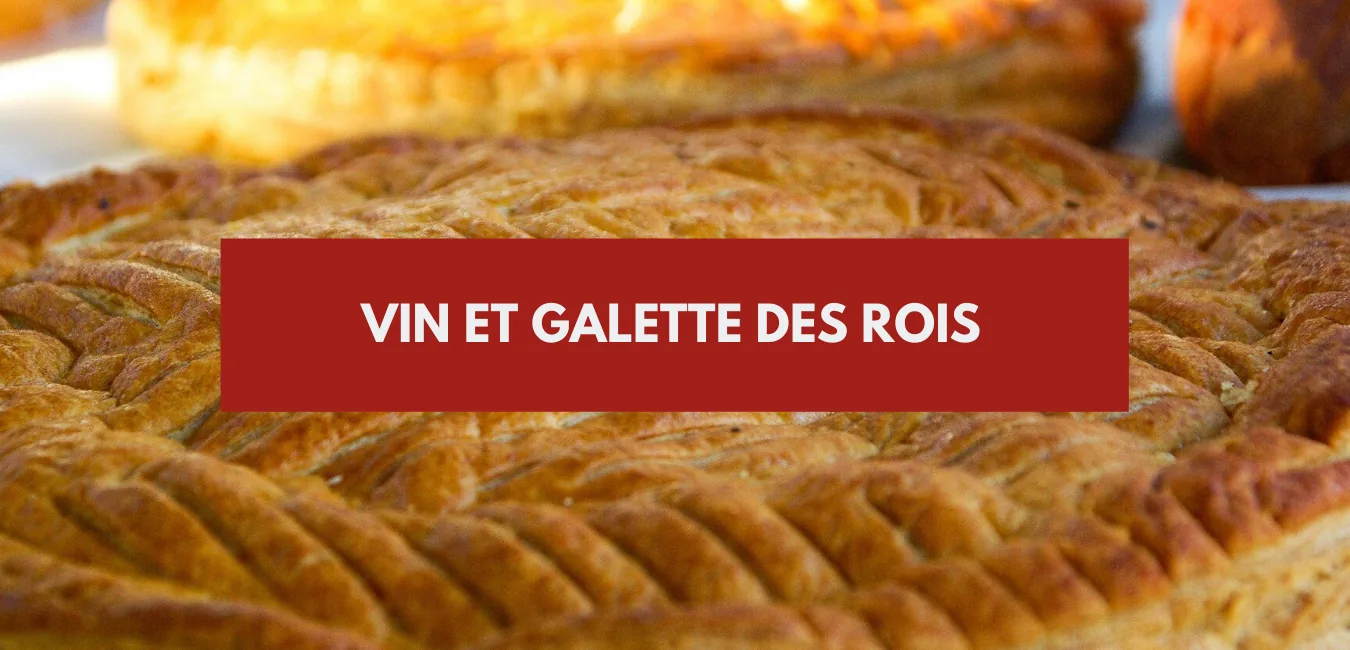
This is where the whole cluster comes from. On 6 January the French eat a galette des rois, a puff pastry disc filled with frangipane, with a charm hidden inside and a paper crown for whoever finds it. It is, in wine terms, simply the richest frangipane tart of the year, so the answers above apply directly: sparkling Vouvray demi-sec, Clairette de Die, or a Coteaux du Layon if you want something plush.
Two details worth borrowing from the French table. First, sweet cider is a completely legitimate choice, not a fallback. A doux cider from Normandy or Brittany has residual sugar, bubbles, an apple bitterness that answers the toasted almond, and only 2 to 3% alcohol, which matters when the cake is eaten at four in the afternoon with children around. Budget 4 to 8 €. A Domfront poiré does the same job with more finesse.
Second, nobody in France opens a grand bottle for it. The galette is a popular, generous bake, not a special-occasion dessert, and a 12 € Vouvray beats a 40 € champagne on the plate.
What wine goes with king cake and candied fruit brioche?
In the American South the same tradition arrives as king cake: a ring of sweet brioche, often cinnamon-filled, iced and covered in coloured sugar. Southern France has its own version, the couronne des rois, scented with orange blossom and studded with candied fruit. Less fat, far more perfume.
The reference match is a Muscat de Beaumes-de-Venise. Muscat and orange blossom speak the same language, and the candied citrus in the wine answers the candied peel in the dough. A Rivesaltes ambré, more oxidative, brings bitter orange and walnut if you like that register. An Alsace Gewurztraminer vendanges tardives works too, if you can live with a very demonstrative wine. For a whole table, a demi-sec crémant de Loire is the easiest compromise.
What about marzipan, macarons and almond biscotti?
Marzipan is close to pure sugar and ground almond, so light sweet wines get flattened. Go fortified: Muscat de Beaumes-de-Venise, Rivesaltes ambré, or a 10-year tawny port whose walnut and dried apricot land exactly where almond paste lives.
Almond macarons are lighter and much more about texture, so a chilled Moscato d’Asti at 5.5% is the happier answer. Cantucci and almond biscotti have their own historic pairing in Vin Santo, and dipping the biscuit is part of the ritual. On a chocolate and praline almond cake, change families altogether and pour a red vin doux naturel, Maury or Banyuls, using the same logic as our wine and chocolate pairings.
How cold, and how much?
Three settings that matter more than the label you choose.
- Temperature. 6 to 8°C for sweet whites and demi-sec sparklers, 12 to 14°C for a Maury or a Banyuls. A sweet wine served warm turns syrupy within two sips.
- Volume. 6 to 7 centilitres a head, not a full glass. One 75cl bottle comfortably covers ten slices.
- Timing. Pour alongside the slice, not after it. On a palate already saturated with frangipane, the wine has far less to give.
Three mistakes to avoid
- Brut fizz on frangipane. Champagne, crémant or prosecco brut all read sour and hard next to almond cream, and it is not the wine’s fault.
- A tannic red. Tannin and sugar dislike each other. A young Bordeaux or a Cahors against an almond tart turns instantly drying and bitter.
- A wine less sweet than the dessert. This is the single rule that decides everything, and we break it down dessert by dessert in our guide to wine and dessert.
Want the reasoning rather than a list to memorise? It comes down to two quick checks, sugar and acidity, and we walk through both in our food and wine pairing guide. Once you have them, you can improvise on any sweet plate, Twelfth Night included.
Frequently asked questions
What wine goes with a frangipane tart?
A demi-sec sparkling wine is the safest answer. Sparkling Vouvray or Montlouis demi-sec, Clairette de Die Tradition or a demi-sec crémant all bring the sugar that matches the almond cream and the bubbles that rinse the butter out of the pastry. Budget 8 to 16 € a bottle and serve it at 7°C. A Coteaux du Layon does the same job, richer and without bubbles.
Does champagne work with almond desserts?
Only if it is not brut. A brut champagne carries around 8 grams of sugar per litre while frangipane carries twenty times more, so the wine reads sour, hard and metallic next to it. You need a demi-sec, between 32 and 50 grams, or a doux if your merchant stocks one. It is the most expensive bottle on this page, roughly 25 to 40 €, and not the best one.
What wine goes with a galette des rois?
The French Twelfth Night cake is a frangipane tart in puff pastry, so treat it as one. Sparkling Vouvray demi-sec, Clairette de Die Tradition or a Coteaux du Layon are the three classic answers, and sweet Normandy cider is the traditional low-alcohol option in northern France. Serve very cold, in small pours, alongside the slice rather than after it.
What wine goes with marzipan and almond petits fours?
Marzipan is almost pure sugar and ground almond, so it needs a fortified sweet wine rather than a light one. Muscat de Beaumes-de-Venise is the reference at 12 to 18 €, all orange blossom and candied citrus. A Rivesaltes ambré or a 10-year tawny port works too, adding walnut and dried apricot that suit the almond paste beautifully.
How cold should a dessert wine be with almond cake?
Colder than most people pour it. Sweet whites and demi-sec sparkling wines want 6 to 8°C, red vins doux naturels such as Maury or Banyuls want 12 to 14°C. A sweet wine served warm turns syrupy after two mouthfuls. Keep the pours small as well, 6 to 7 centilitres rather than a full glass, so the third slice still tastes good.