With chocolate, fortified wines win almost every time: Maury, Banyuls, Rasteau, tawny or late bottled vintage Port. Their residual sugar cancels the bitterness of the cocoa and their alcohol cuts through the cocoa butter. Dry tannic reds turn hard and metallic. The higher the cocoa percentage, the sweeter the wine has to be.
Let us be honest about it: this is one of the hardest pairings in the kitchen, and most of the wine and chocolate matches we are served are failures. Chocolate is bitter, fatty and sweet all at once, and each of those three characters attacks the wine differently.
Why is chocolate so hard to pair?
Three mechanisms combine, and they all pull the same way. Bitterness first. Cocoa carries its own tannins, the same family of polyphenols as grape skins, so a tannic red on dark chocolate simply adds one bitterness to another: the mouth goes dry, almost metallic, and the fruit of the wine vanishes.
Then sugar. One rule governs every dessert, which is that the wine has to be sweeter than the plate, otherwise it tastes thin and sour. Next to a fondant, a dry red turns abruptly astringent.
And finally fat. Cocoa butter melts at body temperature and coats the mouth with a film that insulates the taste buds. Getting through it takes the power of a fortified wine, somewhere between 15 and 17 degrees of alcohol. A fortified wine solves all three problems at once: sugar against the bitterness, alcohol against the fat, and a jammy dark fruit that speaks the same language as cocoa.
What wine goes with dark chocolate, percentage by percentage?
The cocoa percentage is the only number that really matters, because it measures the bitterness and the fat together.
Between 55 and 65%, chocolate stays sweet and supple. This is the easy zone. A Banyuls rimage or a young Maury, bottled early to keep its fruit, works straight away: blackcurrant, black cherry, and a note of cocoa already sitting in the wine.
Between 70 and 75% we reach the heart of the matter, and this is where the fortified wines of Roussillon are unbeatable. Their residual sugar, often around 90 grams per litre, stands up to the bitterness without smothering it. Rasteau, in the Rhône, plays the same tune for a few euros less.
Above 80% the balance of power flips: bitterness dominates and most sweet wines suddenly taste too light. You need a rancio, an aged Banyuls or Maury with its walnut and roasted coffee notes, or a syrupy Pedro Ximénez from Jerez at close to 400 grams of sugar per litre.
At 100% there is no pairing left. No wine survives pure cocoa. An old rum, a peated whisky or a plain coffee do far better.
What wine goes with milk chocolate?
Milk chocolate rarely passes 35% cocoa. It is barely bitter, very sweet and above all lactic: caramel, condensed milk, hazelnut. The trap is no longer bitterness, it is heaviness, two creamy textures stacked on top of each other.
So look for the toasted note rather than raw power. A ten year old tawny Port is the benchmark: its tannins have melted away during oxidative ageing, and its caramelised hazelnut extends the flavour of the chocolate. A Rivesaltes ambré does the same thing for less money, with dried apricot and milky coffee.
A vin de paille from the Jura brings the acidity that a very sweet bar is missing. Avoid the biggest red fortified wines here: they ride straight over milk chocolate instead of accompanying it.
What wine goes with white chocolate?
White chocolate is not really chocolate: no cocoa solids at all, just cocoa butter, sugar and milk. No bitterness, no tannin. The whole problem shifts to the fat.
The answer is acidity. A Moscato d’Asti, light, barely sparkling, around 5.5 degrees of alcohol, rinses the palate between mouthfuls. A Jurançon moelleux or a Coteaux du Layon bring the citrus the dessert lacks, and a late harvest Gewurztraminer is superb whenever there is mango or passion fruit on the plate. This is also the one chocolate where a young Sauternes belongs: on dark chocolate that great wine is simply eaten alive.
The pairing table to remember
| Wine | Why it works | Price band |
|---|---|---|
| Maury | Fortified Grenache, black fruit and cocoa: the benchmark on 70% | 12 to 20 € |
| Banyuls rimage | Young, black cherry: perfect on mousse and fondant | 15 to 25 € |
| Aged Banyuls or Maury | Rancio, walnut and coffee: the answer above 80% | 25 to 45 € |
| Rasteau vin doux naturel | The Roussillon profile from the Rhône, for less | 12 to 18 € |
| Tawny Port, ten years | Hazelnut, caramel, melted tannins: milk chocolate | 20 to 30 € |
| LBV Port | Power and black fruit, for a dense cake or a tart | 18 to 35 € |
| Pedro Ximénez | Fig, raisin, 400 g of sugar: stands up to bitter cocoa | 15 to 30 € |
| Rivesaltes ambré | Dried apricot and milky coffee, lovely on praline | 12 to 20 € |
| Moscato d’Asti | Light, tangy, low in alcohol: the white chocolate answer | 10 to 15 € |
Ganache, mousse or brownie: does the form change the wine?
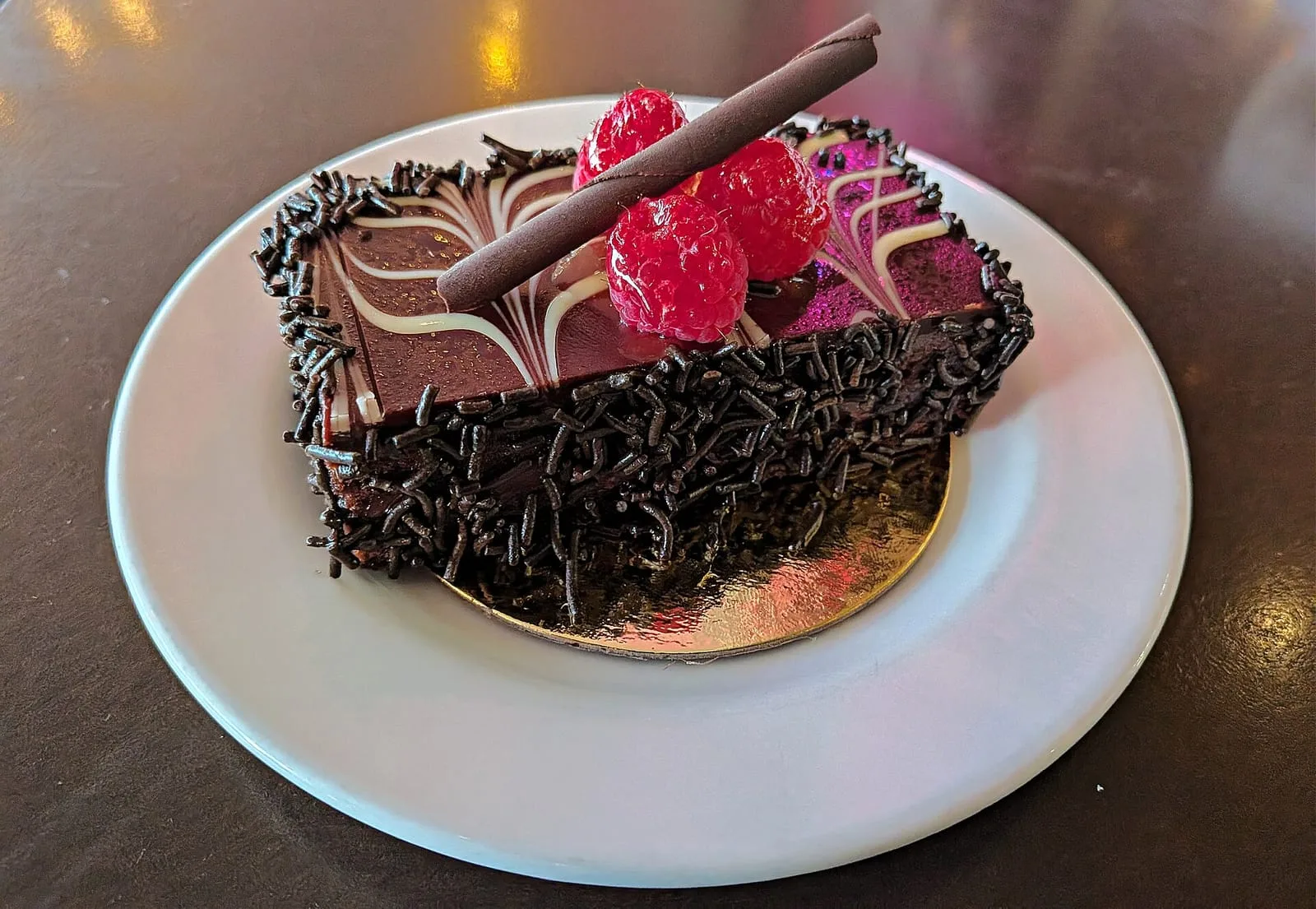
As much as the percentage does, and most guides forget it. Ganache is the extreme case, cocoa and cream, so maximum fat on the palate; it calls for the most concentrated wine on the list, an aged Banyuls or Maury with its roasted notes, or a Pedro Ximénez, far sweeter than the young fortified reds. A mousse is airy, cold and far less concentrated than it looks, so a Banyuls rimage is plenty and a thick wine crushes it.
A fondant is served hot, and heat exaggerates alcohol, so pour the wine two degrees cooler or reach for a tawny. A dense brownie or fudge cake, with flour and butter diluting the cocoa, finally gives an LBV or vintage Port something to hold on to.
The rest of the plate counts as much as the chocolate itself: cherries in a Black Forest gâteau, Banyuls rimage; candied orange, Rivesaltes ambré; salted caramel, Pedro Ximénez; coffee, old tawny. As with every sweet pairing, follow the dominant ingredient rather than the name of the dessert.
Can you serve a dry red wine with chocolate?
It is the question we get most often, and the honest answer is rarely, and never with a classic red. A young Bordeaux, a tannic Malbec or a big oaky Cabernet on dark chocolate leave the mouth dry and bitter.
If you insist, three conditions apply: very ripe, almost jammy fruit, soft tannins, and a few grams of residual sugar. Primitivo di Manduria, Californian Zinfandel and Amarone della Valpolicella tick those boxes. The best of the lot is Recioto della Valpolicella, a sweet red made from dried grapes that keeps the shape of a red wine while carrying the sugar the pairing needs.
Which pairings should you avoid?
Brut Champagne is the most common mistake, and the most photogenic. Its acidity and fine bitterness stack on top of the cocoa and the result tastes metallic. A demi-sec passes, but only on milk or white chocolate.
Dry whites, Sauvignon or Chablis, disappear behind the fat. Young oaky reds remain trap number one. Sauternes on dark chocolate brings sugar but not enough shoulder, so keep it for white chocolate. And serving too cold: a fortified wine at 6 degrees gives you sugar and nothing else.
What temperature, and how much?
Serve red fortified wines between 14 and 16 degrees, tawny Port between 12 and 14, Pedro Ximénez around 14, sweet whites and Moscato between 8 and 10. The chocolate itself should be at room temperature: straight from the fridge it says nothing at all.
Five to six centilitres is enough. These wines often reach 16 degrees of alcohol and arrive at the end of a meal. And if you are tasting several chocolates in a row, work from the palest to the darkest, never the other way round.
In short
Dark chocolate: Maury, Banyuls or Rasteau, and a rancio above 80%. Milk chocolate: ten year old tawny or Rivesaltes ambré. White chocolate: Moscato d’Asti or a tangy sweet white. Dry red: only if it is very ripe and low in tannin.
Open two glasses against the same bar, a Maury and a tawny Port, and the gap is obvious in one mouthful. Our wine pairing chart covers the broad principles, and all our other food and wine pairings sit on a single page.
Frequently asked questions
What wine goes with dark chocolate?
A fortified wine, almost always. On a 70% bar, a Maury or a Banyuls from Roussillon is the benchmark: the residual sugar cancels the bitterness of the cocoa and the alcohol cuts through the cocoa butter. Rasteau does the same job for a few euros less, and a late bottled vintage Port handles a dense chocolate cake. Above 80% cocoa, move to an aged rancio or a Pedro Ximénez.
Can you drink dry red wine with chocolate?
Rarely, and never a classic one. Cocoa brings its own tannins, and the sugar in the dessert makes any dry wine taste suddenly astringent, so a young Bordeaux or a tannic Malbec finishes dry and metallic. If you want red, you need very ripe fruit, soft tannins and ideally a few grams of residual sugar: Primitivo di Manduria, Zinfandel, Amarone, or better still a Recioto della Valpolicella.
Does Champagne work with chocolate?
Brut Champagne, no. It is the most common mistake at the end of a dinner party. Its acidity and its faint bitterness stack on top of the cocoa and the result tastes metallic, which flatters neither the wine nor the chocolate. A demi-sec works, but only with milk chocolate, white chocolate or a light mousse. On dark chocolate a fortified wine wins every time.
What wine goes with chocolate mousse or a molten fondant?
The texture matters as much as the cocoa percentage. A mousse is airy, cold and less concentrated than it looks, so a young fruity Banyuls rimage is enough and a thick wine flattens it. A fondant is served hot, and heat exaggerates the perception of alcohol, so pour the wine two degrees cooler than usual or choose a mellow ten year old tawny Port instead.
What temperature should you serve these wines at?
Serve red fortified wines like Maury, Banyuls and Rasteau between 14 and 16 degrees. Tawny Port prefers 12 to 14, Pedro Ximénez around 14, and sweet whites such as Moscato d'Asti between 8 and 10. Too cold and a fortified wine gives you nothing but sugar. Pour five to six centilitres per person: these wines often run to 16 degrees of alcohol and arrive late in the meal.