For Christmas dinner, three bottles cover everything: a dry sparkling wine for the aperitif and starter, a light red such as Burgundy pinot noir or a rich white for the roast turkey, and a sweet wine for the pudding. If you only want one bottle, make it Champagne, which carries the whole meal.
That is the short version. The detail still matters, because what you pour depends on your menu, how many people are round the table, and whether you want to be juggling five bottles while the turkey rests.
What wine should you serve as an aperitif?
Something sparkling, and dry. Brut Champagne, a Cremant de Bourgogne or de Loire, an English sparkling wine, a good Cava: they all do the same job, which is waking the palate up without tiring it. Serve between 8 and 10 degrees, in a white wine glass rather than a flute, and you will smell three times as much.
The trap here is sugar. A demi-sec fizz, a sweet vermouth or a syrupy cocktail dulls the palate before the food even arrives, and everything after it tastes flat. Stay on brut, or extra brut if you are handing round smoked salmon blinis, cheese straws and salty nibbles.
A useful money-saving trick: the aperitif bottle can carry straight on into the starter. That is one fewer wine to buy, and nobody at the table will complain.
What wine goes with the Christmas starter?
Three starters come round every year, and they do not want the same bottle.
Smoked salmon is fattier and saltier than it looks. A dry Loire chenin, an Alsace riesling or a Chablis all hold up far better than an oaky Chardonnay, which just adds weight to something already rich. We went through the options in our piece on wine and smoked salmon.
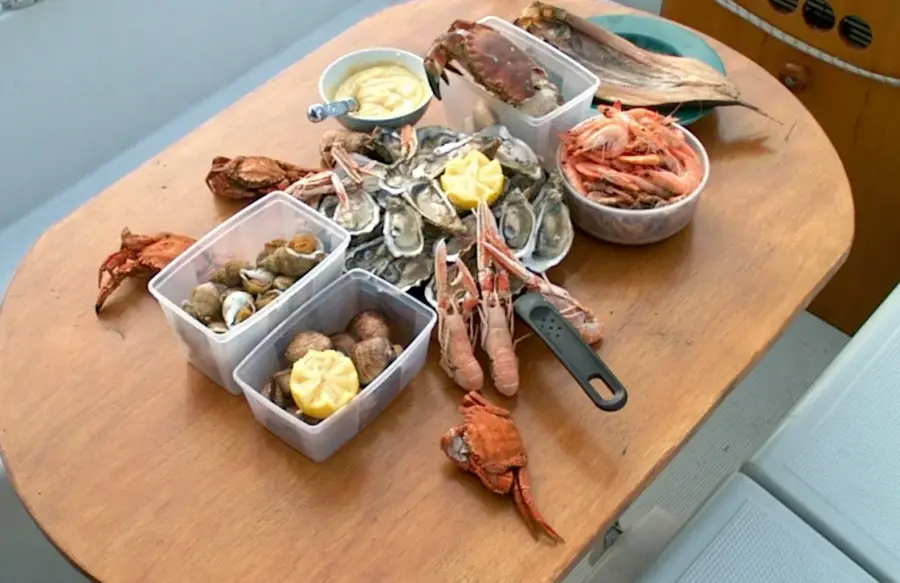
Prawns, oysters and shellfish platters want the opposite: sharpness and salinity. Muscadet Sevre-et-Maine sur lie, Picpoul de Pinet, Chablis, or the sparkling wine you already opened. Cheap and reliable, all of them.
Pate, terrine or foie gras is the one that splits opinion. The traditional answer is a sweet wine, Sauternes or Monbazillac, which works if you serve it properly chilled and keep the pours small. My own preference is a tense dry white such as a dry Jurancon or an older Champagne, because it cleans the palate instead of piling richness on richness.
What wine goes with roast turkey and all the trimmings?
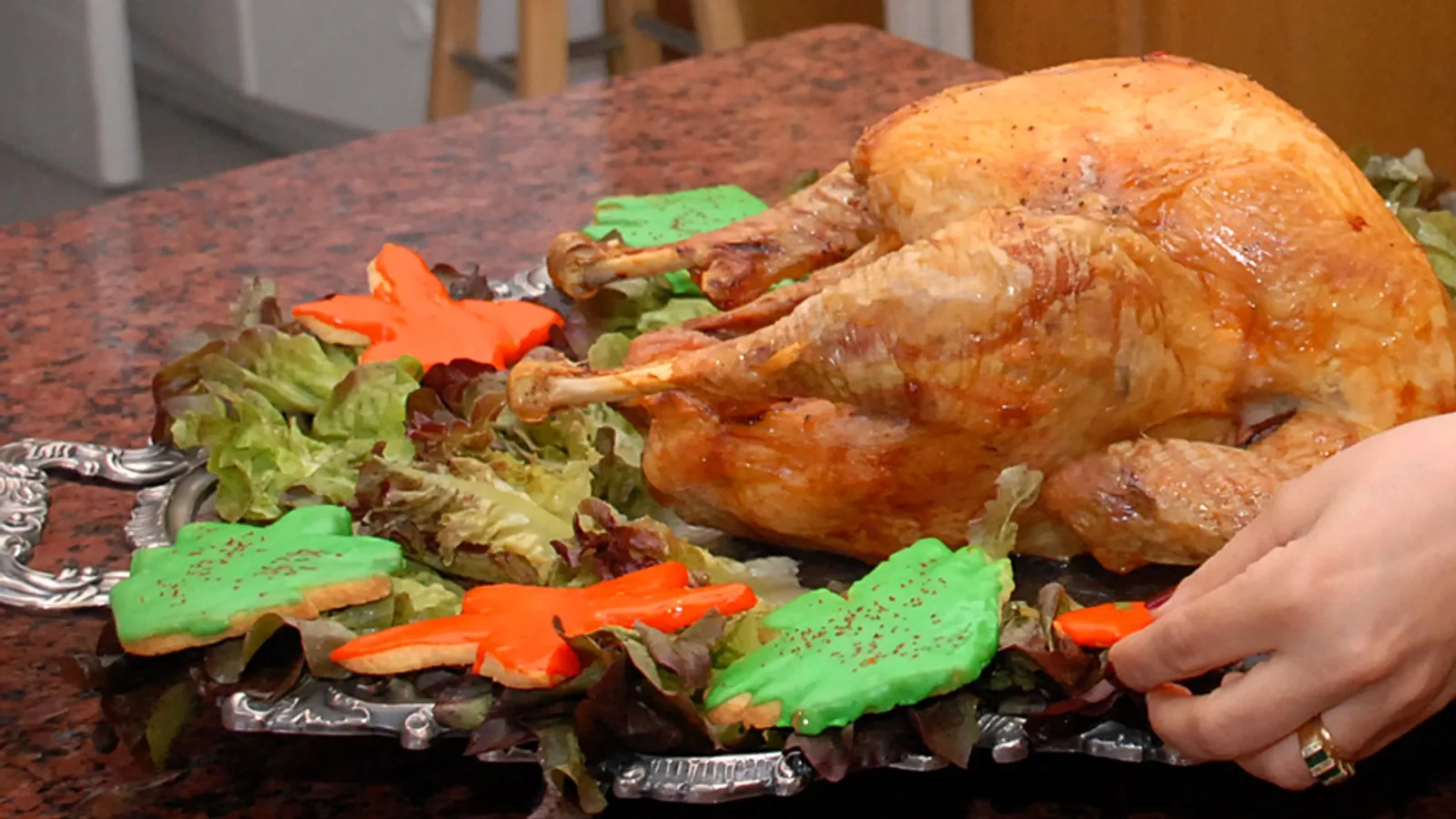
Turkey itself is easy: lean, mild, gently savoury. It is the trimmings that decide the bottle. Roast potatoes in goose fat, pigs in blankets, sausage meat stuffing and bread sauce all add fat and salt, while cranberry sauce adds sweetness and a sharp edge.
That combination points to a light, fruity red with soft tannins. Burgundy pinot noir is the benchmark, and villages like Mercurey, Savigny-les-Beaune or Marsannay sit at a sane price. Alsace pinot noir, a Beaujolais cru such as Fleurie or Morgon, and a cool-climate Oregon pinot all do the same job. Serve it at 15 or 16 degrees, not at central-heating temperature.
If your table prefers white, a full but fresh Chardonnay is arguably the better match: Saint-Aubin, Meursault, a good Macon, or a Chablis premier cru if the sauce is creamy. The weight follows the stuffing without steamrollering the meat. It is the same logic we use for chicken, only with a richer plate around it.
Goose and duck are fattier and need more acidity or a touch of sweetness: Alsace pinot gris, German riesling kabinett, or a northern Rhone syrah. Beef rib takes the opposite turn, towards claret. And if you are cooking capon rather than turkey, we covered it in detail in wine and Christmas capon.
What should you pour at each stage of the meal?
The table below is the shortcut. The price bands are what you would pay at a decent wine merchant, not on a restaurant list.
| Stage of the meal | Appellation | Why it works | Indicative price |
|---|---|---|---|
| Aperitif, sensible budget | Cremant de Bourgogne brut | Chardonnay and pinot noir, the Champagne recipe at half the money | 10 to 16 EUR |
| Aperitif, special occasion | Non-vintage brut Champagne | Fine bubbles and acidity wake the palate without filling anyone up | 28 to 40 EUR |
| Pate or foie gras | Jurancon moelleux | Lighter than Sauternes, with acidity that resets after every mouthful | 12 to 20 EUR |
| Smoked salmon, prawns | Muscadet Sevre-et-Maine sur lie | Saline and taut, very cheap, made for salt and smoke | 7 to 12 EUR |
| Roast turkey, white option | Saint-Aubin or Macon-Villages | Ripe Chardonnay that follows the stuffing without burying the meat | 15 to 35 EUR |
| Roast turkey, red option | Mercurey or Savigny-les-Beaune | Supple pinot noir, soft tannins, red fruit against cranberry sauce | 18 to 30 EUR |
| Goose, duck or rich gravy | Crozes-Hermitage or Gigondas | Peppery syrah or spicy grenache, with the body to handle fat and dark meat | 15 to 25 EUR |
| Cheese board, Stilton | Tawny Port or Sauternes | Sweetness balances the punch of blue cheese where red wine turns bitter | 15 to 25 EUR |
| Christmas pudding, mince pies | Pedro Ximenez or Rivesaltes ambre | Sweet enough for dried fruit and brandy, with the raisin notes to match | 12 to 20 EUR |
What wine goes with the cheese board?
This is where most tables go wrong. The red from the main course is still open, out comes the Stilton and the mature cheddar, and the pairing collapses: the umami in aged cheese makes red wine taste more bitter and more astringent, and soft cheese flattens fruit.
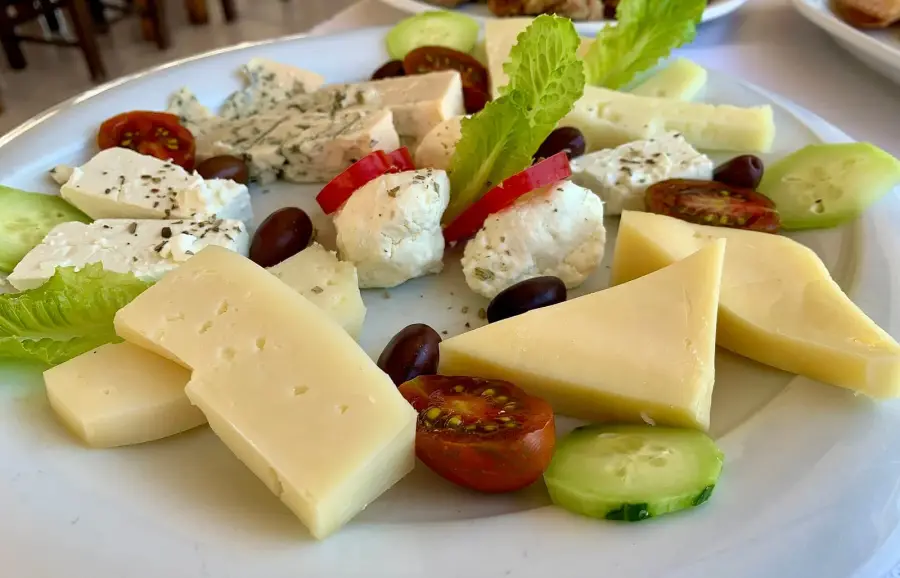
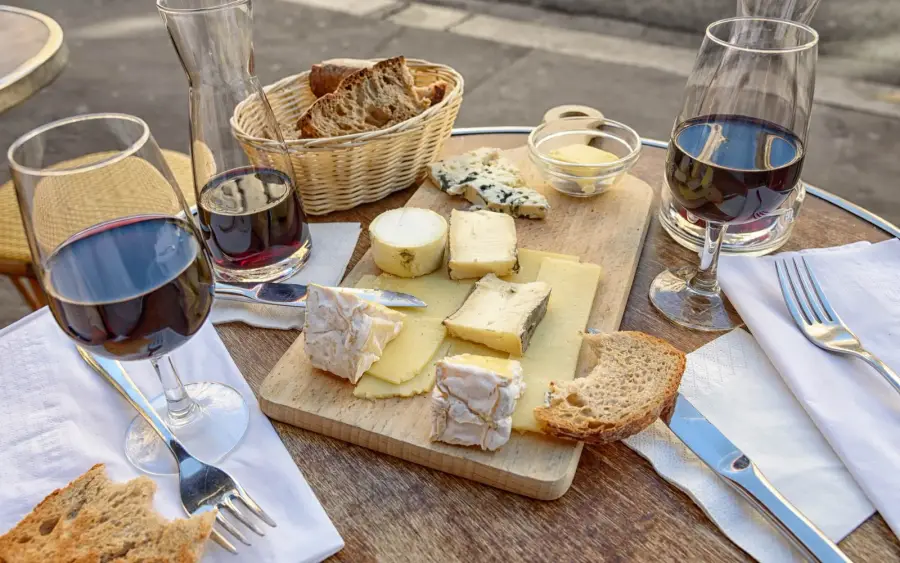
Two easy answers. Either stay on white, where an off-dry Loire chenin such as Vouvray or Montlouis covers almost the whole board, from goat’s cheese to hard cheddar. Or open something sweet for the blues, because Sauternes with Stilton is one of the few textbook pairings that genuinely delivers, and a tawny Port does the same for less.
If you want to finish the red, pick the cheeses to suit it: young comte, a mild tomme, a soft washed rind. And skip the eight-cheese board. After four hours at the table, nobody is following that closely.
What wine goes with Christmas pudding and mince pies?
One rule only: the wine has to be at least as sweet as the dessert. Brut Champagne against a pudding gives you acidity and bitterness on both sides, and the wine suddenly tastes thin.
- Christmas pudding and mince pies: Pedro Ximenez sherry, tawny Port, a young Sauternes or a Rivesaltes ambre. All of them echo the dried fruit and the brandy.
- Chocolate log or chocolate torte: Maury or Banyuls, the fortified reds of Roussillon. Chocolate and wine is a genuinely awkward pairing and these are the most reliable way through it.
- Trifle, pavlova or anything fruity: a young Coteaux du Layon, a late-harvest riesling, or a Moscato d’Asti if you want something light and low in alcohol.
- Cheese and a glass at midnight: demi-sec Champagne is the most consensual bottle of the night.
Can one bottle cover the whole Christmas dinner?
Yes, and it is a good idea if you are cooking for a small table, short of fridge space, or simply not interested in running five services on top of the food.
The best single bottle is Champagne, or a Cremant if the budget is tight. A brut, blanc de blancs if your menu leans towards fish, blanc de noirs if it leans towards roast bird, will carry the aperitif, the starter, the main and much of the cheese. It only stalls on a sweet pudding, so either keep two small glasses of something sweet for the end, or accept dessert without wine.
The other single-bottle answer, less obvious, is a dry, full-bodied white: Alsace pinot gris, a white Rhone, an unoaked Jura Chardonnay. Enough weight for turkey and stuffing, enough freshness for smoked salmon.
One red for the whole meal, on the other hand, does not work. It is lost at the aperitif, awkward with pate, and heavy by the time the pudding arrives.
How many bottles do you need for Christmas dinner?
The rule we use: half a bottle per adult for a short meal, a full bottle per adult for a long one. Christmas lunch runs four to five hours, so the second one applies.
For ten adults that means two bottles of sparkling, three of white, three of red, one sweet, plus a spare of whichever wine everyone reached for. Nine or ten in total. There will be some left, which is exactly what you want on 25 December.
Add as many jugs of water as bottles of wine, and one non-alcoholic drink worth drinking. Sparkling grape juice or a decent kombucha beats a bottle of cola for the people who are not drinking.
Temperatures, since they matter more than the labels: sparkling 8 to 10 degrees, dry white 10 to 12, light red 14 to 16, sweet wine around 8. A red pulled off a shelf in a room heated to 22 degrees is too warm to taste good, and fifteen minutes in the fridge fixes it.
The mistakes people make on Christmas Day
- Saving the best bottle for last. After the cheese, nobody is really tasting it. Open it with the main course.
- Lining up five different wines. Three good ones beat five average ones, and the total bill is the same.
- Forgetting to chill. White and sparkling need three hours in the fridge, not ten minutes.
- Shopping on Christmas Eve morning. The shelves are stripped, and a bottle shaken about in the car boot needs a rest before it shows well.
- A young, tannic red on lean turkey. It is the classic failed pairing of the day, every year.
For the general method rather than this one menu, everything is gathered in our food and wine pairing guide.
Frequently asked questions
How many bottles of wine do you need for Christmas dinner?
Christmas lunch runs four to five hours, so budget a full bottle per adult rather than the usual half. For ten people that means two bottles of sparkling, three of white, three of red, one sweet, plus a spare of whichever wine went down best. You will have some left over, which is the point. Put as many jugs of water on the table as bottles of wine.
Can you serve the same wine through the whole Christmas meal?
Yes, if you pick the right one. A brut Champagne, or a Cremant if the budget is tight, handles the aperitif, the starter, the turkey and most of the cheese board. It only fails on a sweet pudding, so keep two small glasses of something sweet for the end. A dry, full-bodied white such as Alsace pinot gris is the other single-bottle answer. One red for everything does not work.
What red wine goes best with roast turkey?
A light, low-tannin red with real fruit. Burgundy pinot noir is the benchmark, from a village like Mercurey or Savigny-les-Beaune, and Alsace pinot noir or a good Beaujolais cru such as Fleurie do the same job for less. Turkey is lean and mild, and cranberry sauce adds sweetness and acidity, so a big tannic Cabernet flattens the plate and tastes bitter alongside it.
What order should you serve Christmas wines in?
Lightest to fullest, driest to sweetest, youngest to oldest. In practice: sparkling with the aperitif, a crisp dry white with the starter, a rich white or a light red with the turkey, something slightly firmer or an off-dry white with the cheese, and a sweet wine with the pudding. The one accepted exception is a sweet wine served early, with pate or foie gras.
What wine goes with Christmas pudding?
Christmas pudding is dense, boozy and very sweet, so the wine has to be sweeter still. A young Sauternes, a Pedro Ximenez sherry, a tawny Port or a Rivesaltes ambre all work, served cool at around 10 to 12 degrees in small glasses. Brut Champagne with pudding is the classic mistake: the acidity and the bitterness stack up and the wine tastes thin and sour.