With asparagus, pour a dry, high-acid white with little or no oak: Loire Sauvignon Blanc (Sancerre, Pouilly-Fumé), Austrian Grüner Veltliner, dry Riesling or Muscadet sur lie. Asparagus contains sulphur compounds that make most wines taste metallic, and those four styles stand up to it far better than anything else.
Asparagus has the worst reputation of any vegetable at the dinner table, and for once it is earned. It does not merely sit awkwardly next to wine, it rewires how the wine tastes, which is why plenty of sommeliers quietly pour water through the asparagus course. We are not going to do that, because the problem has a simple chemical explanation, and therefore simple fixes.
Why is asparagus so difficult with wine?
Three things happen on the plate at the same time, and they stack.
First, the sulphur. Asparagus is rich in asparagusic acid, a molecule that breaks down during cooking into volatile sulphur derivatives, the same ones behind that famously recognisable smell an hour after dinner. In the glass they amplify anything remotely resembling reduction. A white that smelled perfectly clean on pouring can taste like a rusty nail by the second mouthful.
Second, the bitterness and the green note. Asparagus carries saponins and green compounds that put it in the same neighbourhood as artichoke and green pepper. On a rich, round or barrel-aged wine, that bitterness adds to the bitterness of the oak and the heat of the alcohol. The wine does not turn bad, it turns hard.
Third, whatever you dress it with. Asparagus almost always arrives alongside something acidic: vinaigrette, lemon, hollandaise. Any wine less acidic than the plate immediately reads as soft and sugary.
Does the sauce matter more than green versus white asparagus?
Yes, and this is the part almost everyone gets backwards. People spend ages agonising over green spears versus white spears, when the vinaigrette, the melted butter or the hollandaise moves the balance of the dish far more.
Steamed green asparagus and steamed white asparagus want essentially the same wine. Asparagus in a sharp vinaigrette and the same asparagus under hollandaise do not. The first wants a bone-dry, high-acid white. The second wants acidity too, but with a bit more flesh so it is not drowned by the butter.
The green versus white difference does exist, it is just subtler. Green spears are more bitter and more herbaceous, white spears sweeter and fleshier, almost milky at the tip. Green pushes you toward Sauvignon and Grüner Veltliner, white toward dry Riesling, Pinot Blanc and Silvaner.
What white wine goes with green asparagus?
This is Sauvignon Blanc territory, as long as you choose the restrained version. Sancerre, Pouilly-Fumé, Quincy and Reuilly have the mix of citrus, flint and green-herb character that meets asparagus rather than running from it. The pairing works by resonance: the same aromatic family on both sides.
Austrian Grüner Veltliner is the other great answer, and many sommeliers reach for it first. It has Sauvignon’s acidity, a slightly broader texture, and above all a white-pepper grip that absorbs the vegetable’s bitterness instead of underlining it. Look for Kamptal, Kremstal or Weinviertel, roughly 12 to 20 €.
If you are in the UK during the short British season, English Bacchus is genuinely one of the best matches going: it is basically built on the same hedgerow and elderflower register, with sharp acidity and no oak. English sparkling wine works on the same principle for a celebratory version.
Grilled or roasted spears change things slightly, because charring adds sweetness and smoke. Santorini Assyrtiko, Basque Txakoli and a serious Vinho Verde handle that register better, thanks to their saline cut.
What wine goes with white asparagus?
White asparagus is sweeter, fleshier and less bitter than green, so it tolerates a marginally rounder white, provided it stays dry.
Dry Riesling is the classic, from Alsace or from Germany. Its lemon acidity slices the tender flesh and its mineral edge answers the earthy note of a vegetable grown underground. A Pinot Blanc or a ripe Silvaner give you a gentler, usually cheaper version of the same idea. For the historic regional match, dry Alsace Muscat is the one: grapey perfume, bone dry, and one of the very few dishes where that grape truly shines. We cover the region in more depth in our guide to Alsace wines.
Served with prosciutto, serrano or crisp pancetta, white asparagus picks up salt and fat. Dry Alsace Pinot Gris or a dry Vouvray absorb that extra weight more comfortably.
| Preparation | What to pour | Why it works | Price band |
|---|---|---|---|
| Green spears, vinaigrette | Sancerre or Pouilly-Fumé | Same green family, acidity that survives the dressing | 15 to 25 € |
| Grilled or barbecued spears | Assyrtiko or Txakoli | Saline cut that answers the char and smoke | 14 to 25 € |
| Roasted with parmesan and lemon | Verdicchio or Soave Classico | Unoaked, soft almond texture, cuts the cheese | 12 to 20 € |
| White asparagus, steamed | Dry Alsace or German Riesling | Lemon acidity on sweet flesh, zero oak | 15 to 25 € |
| With hollandaise or melted butter | Village Chablis | Chalk and lemon scrub the butter without covering it | 15 to 25 € |
| Asparagus with poached egg, dinner party | Extra-brut blanc de blancs Champagne | Bubbles cut the yolk, low dosage avoids sweetness | 35 to 60 € |
| Wrapped in prosciutto or pancetta | Dry Alsace Pinot Gris | Extra weight to match the salt and cured fat | 14 to 22 € |
| Asparagus risotto or soup | Grüner Veltliner or Soave | Peppery grip and creamy texture in one glass | 12 to 20 € |
| Cheapest reliable option | Muscadet Sèvre et Maine sur lie | Dry, saline, unoaked: exactly the right profile | 8 to 14 € |
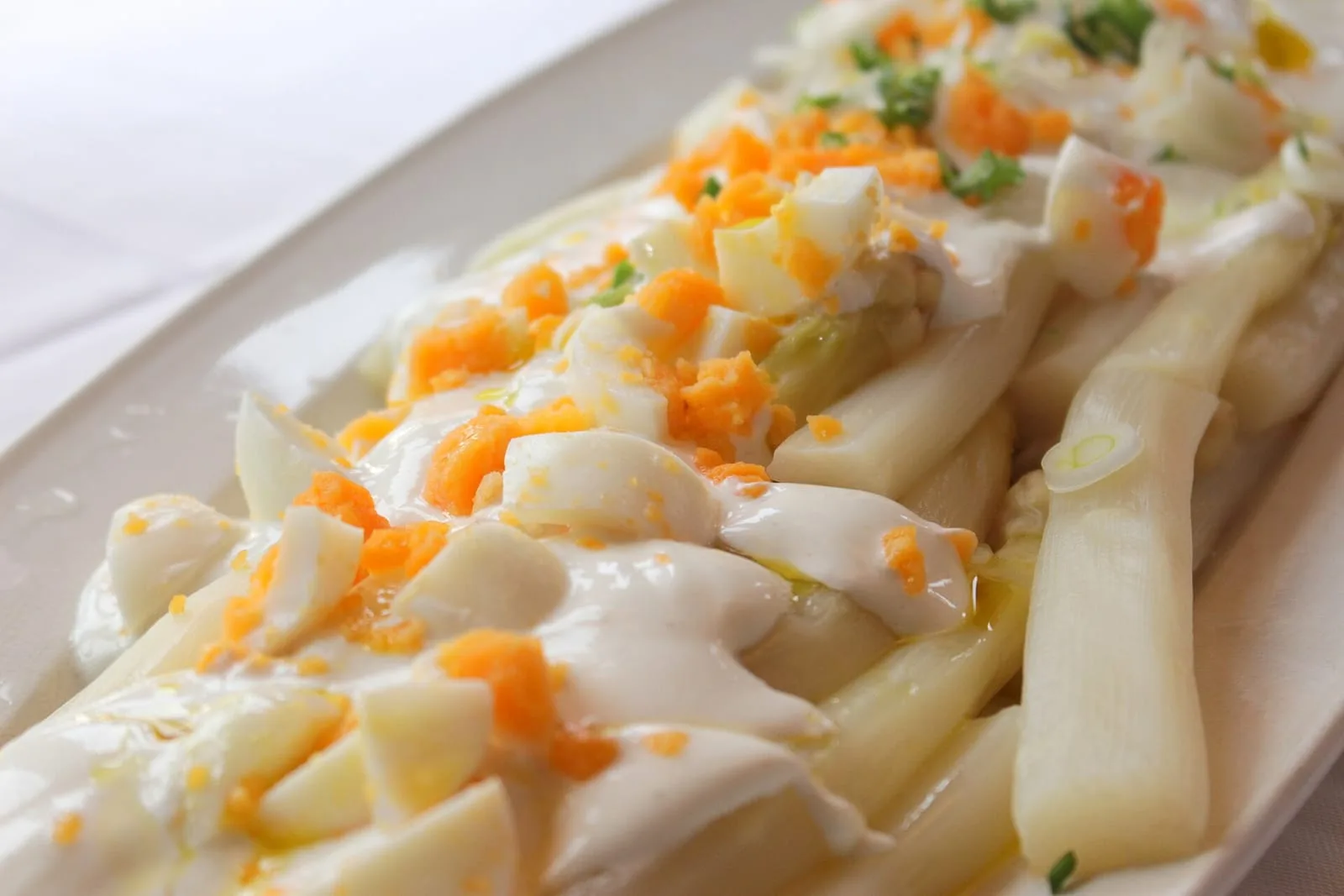
What wine goes with asparagus and hollandaise?
Butter, egg yolk, lemon. Hollandaise adds fat and richness but also acidity, and it is paradoxically the easiest asparagus dish to pair, because the butter buffers some of those sulphur compounds.
Village Chablis is the cleanest match. Chalk and lemon deal with the butter, and the absence of barrel ageing means you are not adding bitterness to a plate that already has plenty.
Extra-brut or brut nature blanc de blancs Champagne is the other great answer, and probably the best of all on a spring starter. The bubbles and acidity strip the butter with every sip. A heavily dosed standard brut, by contrast, leaves a sugary trace that argues with the bitterness, which is the same caution we apply to scallops.
For plain melted butter or a simple mousseline, Chablis, a good Bourgogne Aligoté or an unoaked Mâcon-Villages are plenty.
Can you drink red wine with asparagus?
Nine times out of ten, no, and this really is not a matter of principle. Tannin reacts with the vegetable’s sulphur compounds, and the metallic taste that results flattens everything else. A young Bordeaux with asparagus wastes both.
The tenth time exists, and it needs two conditions together. First a recipe that bridges the gap: roasted spears, prosciutto, bacon, morels, a meat jus. Second a red with almost no tannin, served cool at around 13 °C. Alsace Pinot Noir, Jura Poulsard, Touraine Gamay or a light Chiroubles all pass.
Rosé is often the smarter escape route. A dry Loire rosé, a Sancerre rosé or a pale, brisk Provence rosé keep a white’s acidity without the loud aromatics, and they are excellent on a warm asparagus salad. The same trick rescues a plate of smoked salmon.
Which wines should you avoid with asparagus?
Mistake number one is heavily oaked Chardonnay. The vanilla and toast of the barrel add to the bitterness of the vegetable, and the glass turns rasping within two mouthfuls. If you want Chardonnay, make it an unoaked one.
Mistake number two is high-alcohol, round whites: Condrieu, warm-climate Viognier, ripe southern Rhône whites. Alcohol and bitterness amplify each other and the finish burns. The same logic rules out off-dry and sweet wines: residual sugar against vegetal bitterness never resolves.
The third trap is subtler: loud Marlborough Sauvignon Blanc. It is not wrong here, it is redundant. Its blackcurrant leaf and green pepper double the green note on the plate rather than balancing it, and plenty of drinkers find the result cloying. Loire Sauvignon, more restrained, remains the better bet.
The last one gets forgotten most: vinegar. An over-sharp vinaigrette kills any wine, including everything on this list. Swap part of it for lemon juice or verjus and half the problem disappears before you open anything. Fix the dressing, not the bottle.
Where should you start if you are not sure?
One bottle and one rule. The bottle is a Sancerre or a Grüner Veltliner, because either one copes with vinaigrette, hollandaise, green spears and white spears alike. The rule is to look at the sauce before you look at the colour of the asparagus, the same way you look at the pan before choosing a white for fish.
For more of the same, our food and wine pairing guide collects the whole spring family of dishes, from scallops to smoked salmon to soft cheeses.
Frequently asked questions
What is the best wine with asparagus?
A restrained dry Sauvignon Blanc from the Loire, so Sancerre, Pouilly-Fumé or Quincy, is the most reliable bottle across every preparation. It has the acidity to handle a vinaigrette, a green note that meets the asparagus halfway, and no oak to pile more bitterness onto an already bitter vegetable. Austrian Grüner Veltliner does the same job with an extra peppery grip.
Why does asparagus make wine taste metallic?
Asparagus is rich in asparagusic acid, which breaks down during cooking into volatile sulphur compounds. Those compounds push forward anything in a wine that resembles reduction, and the palate reads that as metal or tin foil. On top of that, asparagus carries bitter saponins and a green, artichoke-like note that hardens alcohol and oak. Three problems at once, in one vegetable.
What wine goes with asparagus and hollandaise?
Hollandaise adds butter, egg yolk and lemon, so you need acidity to cut the fat without fighting the sauce. A village Chablis is the cleanest answer: chalk, lemon, no oak. An extra-brut blanc de blancs Champagne is even better, because the bubbles scrub the butter between bites. Avoid anything round and oaky, which turns the whole plate heavy immediately.
Can you drink red wine with asparagus?
Almost never. Tannin reacts with the sulphur compounds in asparagus and the finish turns distinctly metallic. The exception needs two things together: a recipe that bridges the gap, such as roasted asparagus with prosciutto, bacon or morels, and a red with almost no tannin served cool at around 13 °C. Alsace Pinot Noir, Jura Poulsard or a light Beaujolais cru all qualify.
What wine goes with grilled asparagus?
Grilling adds char and caramelised sweetness, which softens the raw green edge and asks for something saline rather than merely green. Assyrtiko from Santorini, Basque Txakoli and a serious Vinho Verde all handle it beautifully. Grüner Veltliner remains the safe all-rounder. If the spears come with parmesan and lemon, a dry Italian white such as Verdicchio slots in perfectly.