Headline talk about vineyard robotics often jumps straight to driverless farms where machines run the entire growing season alone. Down in Champagne, the reality at Champagne Deutz looks far more practical and far more interesting. Since late 2024, the historic house based in Aÿ has been running a one-tonne, four-wheel-drive electric straddle robot called VitiBot Bakus, built just up the road in Reims. (Despite sharing a name, VitiBot’s majority owner SAME Deutz-Fahr has no connection to the Champagne house.)
Now in its second season across roughly 12 hectares of Deutz’s 50-hectare estate vineyard, the robot is not replacing the vineyard crew. Instead, as vineyard director Cédric Georget explained in a 17 November Le Figaro Vin interview, it absorbs specific repetitive jobs on the steepest, dullest passes so the team can focus elsewhere.
What Bakus does at Deutz, and why 10-hour consistency matters
On paper, VitiBot’s Bakus S specification sheet lists a modular electric carrier built to handle soil cultivation, inter-row mowing, canopy trimming, pre-pruning and precision passes. In practice, Deutz programs its machine for only two jobs: mechanical soil work and mowing.
Its real advantage is stamina without drift. With up to 10 hours of continuous battery autonomy, Bakus works day or night at roughly the same pace as a conventional straddle tractor. Georget points to the difference between hour one and hour eight: a human driver sitting high above metre-wide Champagne rows inevitably tires over an eight-hour shift, and fatigue is where clipped posts, scuffed vines and alignment mistakes creep in. The robot repeats hour eight with the exact same rhythm as minute one.
Why human-driven tractors still handle summer trimming
If the robot already sits in the machinery shed, why not mount trimmers on it too? Canopy trimming (rognage) has to be repeated several times across June and July to open up the fruit zone, boost airflow and reduce humidity before fungal diseases take hold. Georget gives two concrete operational reasons why Bakus sits those weeks out:
- Single-row versus double-row speed: Bakus straddles one row at a time, whereas Deutz’s manned straddle tractors haul double-row trimmers (rogneuses doubles) covering two rows per pass. When rain clears and a whole estate needs trimming before the next storm, halving work speed makes no sense.
- Parcel-by-parcel GPS mapping: Using dual RTK GPS antennas accurate to 2 to 3 centimetres, Bakus cannot simply be unloaded onto a fresh slope and switched on. Phase 1 teaches the robot every track, headland, entrance and boundary; Phase 2 runs it empty down every single row to register each vine trunk in memory. So far, only about 12 of Deutz’s 50 hectares have completed that mapping.
Deutz’s split across the vineyard calendar shows how selective modern automation really is:
| Vineyard operation | Equipment used at Deutz | Operational reason |
|---|---|---|
| Soil cultivation and mowing | VitiBot Bakus electric robot (1 row) | 10-hour battery autonomy, steady speed, zero operator fatigue |
| Summer canopy trimming | Manned double-row straddle tractor | Double work rate during tight June and July weather windows |
| Winter pruning and harvest | Estate vineyard team by hand | Individual vine judgement and AOC Champagne hand-picking rules |
Safety, labour and the zero-herbicide squeeze
Behind every vineyard robot purchase in Champagne sit three pressures that rarely make it onto a bottle’s back label.
First is driver safety. Champagne’s grand and premier cru slopes can be narrow, cambered and unforgiving. As Georget notes candidly, every single year in French vineyards, straddle tractors (tracteurs-enjambeurs) and tracked crawlers (chenillards) tip over on difficult plots. Sending an unmanned one-tonne electric machine onto the steepest or tightest parcels removes human operators from serious rollover risk.
Second is recruitment. Finding trained, dependable vineyard drivers across France has grown noticeably harder over the past decade, with widespread reluctance toward outdoor agricultural work. Automation helps stretch an experienced crew over more hectares without burning people out on monotonous mowing loops.
Third is chemical herbicide withdrawal. Moving away from herbicides means grass and weeds between and beneath the vines have to be controlled mechanically, often requiring several extra passes every spring and summer. Those repetitive passes are exactly the workload an electric carrier handles best, freeing skilled staff for finer viticulture. That shift feels even sharper in extreme weather years like Champagne’s record-early 2026 harvest, when compressed growing seasons squeeze every team’s calendar.
What robots still cannot touch, and the sustainability question
Does any of this point to an empty vineyard? Georget is blunt: “Today, when you send out a tractor driver, a person drives the tractor. It is the same for the robot: someone manages it.” Parcels still need preparing, obstacles need clearing, batteries need charging and unexpected stops need human eyes.
Even more importantly, Champagne’s defining work remains firmly in human hands. Winter pruning requires reading each individual vine’s age, health and spur balance, and AOC Champagne rules mandate hand picking at harvest so whole clusters reach the press intact. When we spoke with Champagne cellar master Guillaume Lété, every step from vineyard maturity to blending depended on people weighing tiny seasonal shifts.
On sustainability, calling a machine “electric” is a starting point rather than a finished balance sheet. Zero tailpipe exhaust, quieter operation near villages and a relatively light one-tonne frame (which helps limit soil compaction compared with heavier diesel rigs) are clear positives. Yet full-season measurements covering battery lifecycle, electricity sourcing, maintenance and performance on wet chalk slopes remain the evidence worth watching over the next five years.
Why this belongs in how we think about Champagne
With Champagne shipments facing softer demand in France alongside tougher farming costs, houses cannot afford flashy gadgets that fail in real mud. Watching how Deutz uses Bakus strips away both the hype and the panic: technology earns its keep when it saves backs, prevents tractor rollovers and keeps mechanical soil work reliable across steep chalk rows. Next time you pour a glass, remember that behind the mousse sits a very practical conversation about slopes, tools and the people deciding which work still belongs strictly to human hands.
Sources: Le Figaro Vin report on Champagne Deutz and its VitiBot robot (17 November 2026), VitiBot Bakus S technical documentation
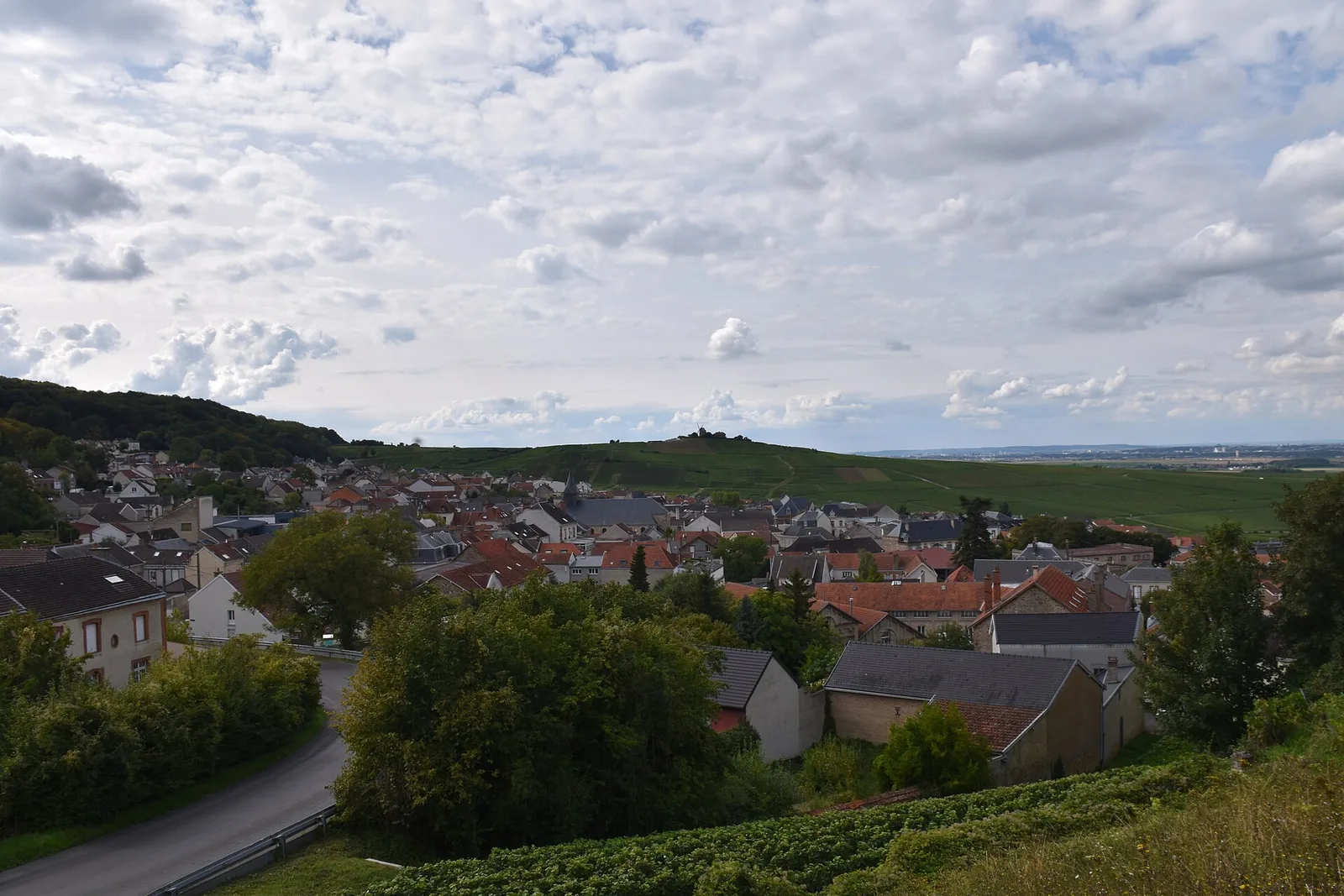
Hero photo: hillside vineyards surrounding Verzenay and its windmill in Champagne, by Renhour48, CC0, via Wikimedia Commons.
Frequently asked questions
What tasks does Champagne Deutz's vineyard robot perform?
According to Le Figaro Vin's 17 November 2026 report, Champagne Deutz uses its electric VitiBot Bakus robot strictly for soil work and mowing across roughly 12 hectares of its Marne estate.
Why does Deutz not use the Bakus robot for canopy trimming yet?
Bakus straddles one vine row at a time, whereas Deutz's double-row trimmers cover two rows simultaneously during tight summer weather windows. In addition, only about 12 of Deutz's 50 hectares have been mapped for centimetre-level RTK GPS navigation.
Can an autonomous vineyard robot replace Champagne's vineyard workers?
No. An operator still prepares parcels, programs tasks, monitors work and handles emergencies, while skilled manual jobs such as winter pruning and mandatory AOC hand harvesting remain strictly human.