China’s Singles’ Day shopping festival is no longer a 24-hour midnight sprint. On JD.com, the 2026 campaign ran for 35 days from 8 October to 11 November, ending with JD Liquor reporting a 25% year-on-year rise in total alcohol transaction value. Put that next to the top ten wine brands published shortly after, and a richer picture emerges than the usual cliché that Chinese online buyers only click on red Bordeaux and Penfolds.
Penfolds still wears the crown, yet sharing the top ten with it are a New Zealand dry white specialist, two domestic Chinese giants, a sweet fizz sold in 500ml beer-style bottles and an importer umbrella brand spanning alcohol-free options. Looking past the top three reveals just how fragmented Chinese online wine shopping has become.
The full JD.com Singles’ Day 2026 wine top 10
Vino Joy News published the brand breakdown on 17 November from JD.com’s official JD Liquor update:
| Rank | Wine brand | Origin or profile | Extra JD.com ranking notes |
|---|---|---|---|
| 1 | Penfolds | Australia | Also #1 flagship wine store and #9 in instant retail |
| 2 | Changyu | China | Also #8 in international spirits through its brandy line |
| 3 | Great Wall | China (COFCO) | Cases of Five Star Cabernet Sauvignon jumped +72% in value |
| 4 | DBR Lafite | France (and Shandong) | Also #10 in instant retail |
| 5 | Cloudy Bay | New Zealand | Only top-10 brand known primarily for dry white wine |
| 6 | Montes | Chile | Also #2 official flagship wine store |
| 7 | Lamontagne | Importer multi-origin brand | Also #3 official flagship wine store |
| 8 | Casillero del Diablo | Chile (Concha y Toro) | Everyday Chilean varietal specialist |
| 9 | Tonhwa | China (Jilin) | Sweet wines and 7% ABV 500ml sparkling in beer-style packaging |
| 10 | Lecurson | Domestic and imported mix | Blends Chinese and imported sourcing under one label |
Two boundaries frame that table before we interpret a single rank. First, the headline +25% growth figure covers all alcohol, from baijiu and beer to Cognac, so it cannot be quoted as a 25% jump for wine. Second, JD.com did not disclose whether its wine rankings were sorted by gross sales value or bottle volume.
Why the undisclosed value-versus-volume choice matters
Picture two brands inside the exact same platform total. Brand A sells 10,000 bottles at 100 yuan each; Brand B sells 1,000 bottles at 1,000 yuan each. Both generate exactly one million yuan in revenue, yet Brand A puts ten times as many bottles into circulation while Brand B collects ten times the money per cork.
Without knowing whether JD.com ranked by yuan or by units, we cannot tell if a spot near the bottom of the top ten came from pallet-loads of discounted 500ml bottles or fewer cases of higher-priced wine. Nor does a brand rank reveal which bottle inside a large portfolio actually moved. Look at Château Haut-Brion: it was the only wine name on JD’s high-growth brands list after crossing RMB 1.43 million (roughly US$210,000) in transactions. Yet JD did not say whether that came from the First Growth Grand Vin itself or from Clarendelle, the far more accessible Bordeaux range distributed in China by ASC Fine Wines. Those are two completely different buying stories under one family crest.
Three surprises hiding inside the ranking
Even with that caveat, three signals stand out clearly from the top ten:
- Dry white wine and beer-bottle sweet fizz sit inside the same top ten. Cloudy Bay at fifth confirms that China’s growing appetite for Marlborough white wine has moved well beyond restaurant wine lists into mainstream e-commerce. Meanwhile, Tonhwa’s climb to ninth builds on a 500ml, 7% ABV sweet sparkling wine packed like craft beer, chasing young casual drinkers who never cared about Bordeaux classifications.
- Importer umbrella brands and origin questions are part of the market. Seventh-placed Lamontagne is operated by a Chinese importer selling French and Italian wines alongside alcohol-free lines, formulated wine-based drinks and small formats. As Vino Joy noted, some products marketed as French imports are bottled in China, making careful label reading essential.
- Brand rankings and flagship store rankings split sharply. JD’s top five official wine stores were Penfolds, Montes, Lamontagne, C’est la vie and COFCO Wine & Wine. Notice that Changyu, Great Wall, DBR Lafite and Cloudy Bay all placed in the top five brands without cracking the top five stores. Shoppers bought them heavily through JD’s own supermarket retail arm and multi-brand fine-wine merchants rather than single-brand flagships.
Across the board, local Chinese producers remain a pillar of online demand alongside imports, spanning everyday names like Great Wall and Changyu as well as estate projects such as Lafite’s Chinese venture, which we explored in our conversation with Charles Treutanaere at Domaine de Long Dai.
Instant retail and Cognac put wine’s share in honest perspective
Whenever a wine chart looks impressive in isolation, checking the rest of the drinks aisle brings helpful humility. JD.com also released numbers for JD Wine World, its on-demand instant-delivery drinks channel where bottles arrive at the door in under an hour:
- Positions one through three belong to Chinese baijiu: Moutai, Wuliangye and Luzhou Laojiao.
- Positions four through six belong to beer: Pearl River, Tsingtao and Yanjing.
- Positions seven and eight belong to Cognac: Rémy Martin and Martell.
- Wine takes just two spots in the top ten: Penfolds at ninth and DBR Lafite at tenth.
Zoom out to JD’s international spirits chart and Cognac’s “big three” (Rémy Martin, Hennessy and Martell) swept the podium, led by triple-digit gains on 700ml bottles of Martell Cordon Bleu (+167%) and Rémy Martin Club (+112%), with Hennessy up 28%. Scotch whisky took four spots (The Macallan, Johnnie Walker, Glenfiddich and Talisker), alongside Dassai sake (#6), Changyu brandy (#8) and Yamazaki (#9). That instant-retail snapshot reminds us that in China, wine is still competing for the table against deeply rooted spirits and beer habits, even when Penfolds wins its own aisle.
How to use sales charts when buying wine online
A platform best-seller table is a starting line for curiosity, never a buying instruction. Promotional weeks in China or anywhere else mix genuine gifting demand, steep coupon stacking and big-brand recognition. We saw how digital discovery shapes the path from screen to dinner table in our interview with Wine App founder David He: convenience gets a user into the store, yet clarity is what helps them pick a good bottle.
Before checking out during any online sale, apply our guide to buying wine online and verify five specifics that a brand chart hides: the exact cuvée (Grand Vin versus second wine or merchant range), the vintage, the bottle volume (750ml versus 500ml or half-bottle), where it was bottled and who is fulfilling the order. A top-ten badge tells you what sold well in November; checking the label tells you what will actually taste good in your glass tonight.
Sources: Vino Joy News report on JD.com Singles’ Day 2026 wine and spirits rankings
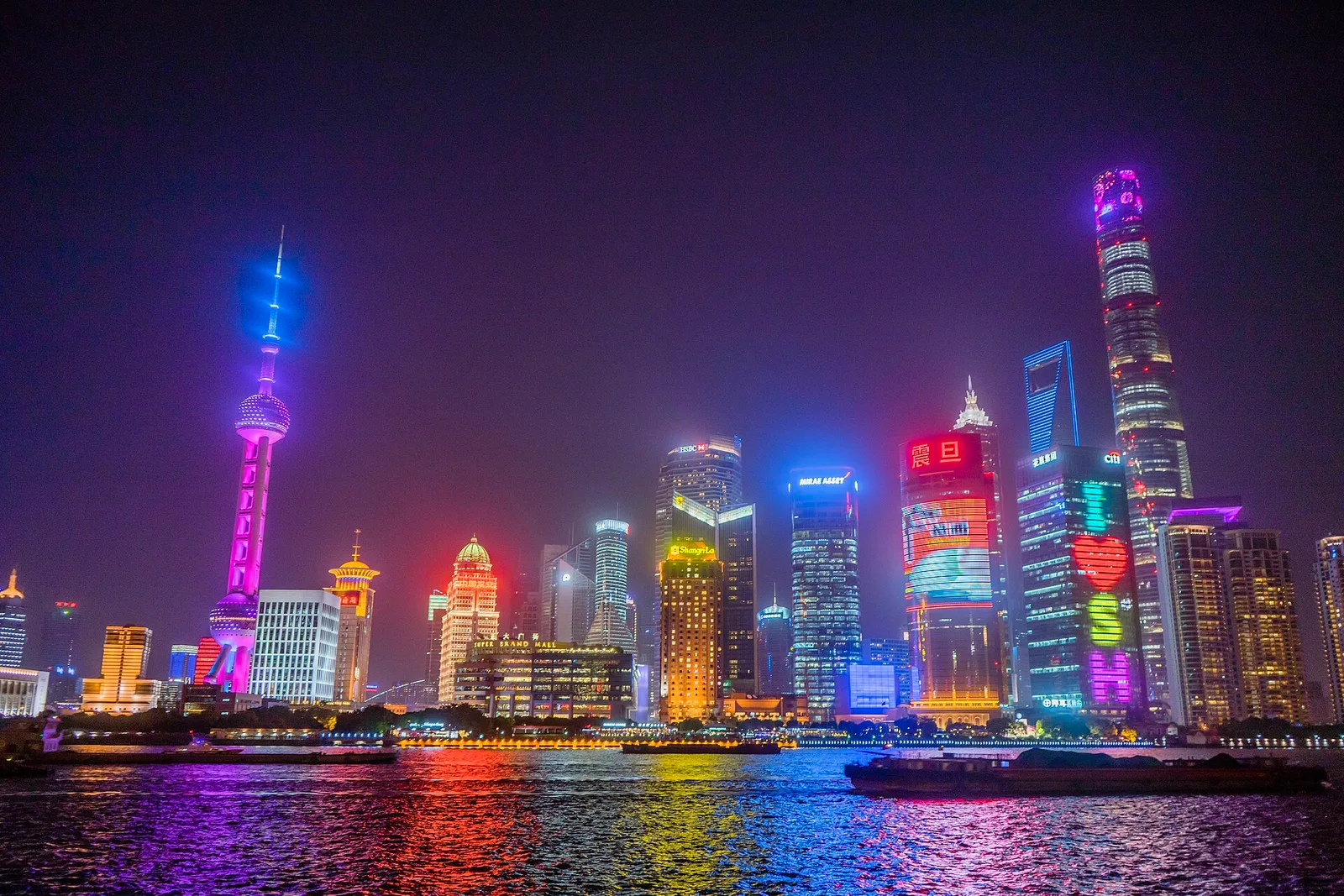
Hero photo: Shanghai’s Lujiazui skyline at night across the Huangpu River, by Larry Qian, CC0, via Wikimedia Commons.
Frequently asked questions
Do JD.com's Singles' Day rankings cover all wine sales in China?
No. They reflect activity on JD.com during its 35-day Singles' Day campaign from 8 October to 11 November 2026. They exclude rival platforms, offline wine shops and restaurants, and JD did not disclose whether positions use sales value or bottle volume.
Which wine brands topped JD.com's 2026 Singles' Day rankings?
Penfolds placed first, followed by Changyu, Great Wall, DBR Lafite and Cloudy Bay in the top five, with Montes, Lamontagne, Casillero del Diablo, Tonhwa and Lecurson completing the top ten.