Beaujolais Nouveau 2026 arrives today, Thursday 19 November. And this year, an English wine gives us another reason to pay attention: Sandridge Barton’s Chub Nouveau, made in Devon. The interesting part is the invitation they share. Open something young, gather a few people and enjoy the harvest while it still feels recent.
We have already covered the 2026 Beaujolais harvest and early expectations. Today, we are looking at the celebration itself, and how its appeal travels.
What is happening for Beaujolais Nouveau Day?
The Beaujolais wine body’s November programme places this year’s release on 19 November, with celebrations continuing through the weekend. Its event directory brings together tastings, wine bars and producer visits. That is a useful starting point if you want to join a local gathering rather than organise your own.
There is something reassuringly uncomplicated about a wine with a shared release day. You do not need a cellar or a special anniversary to take part. The date supplies the occasion.
It also gives us a chance to ask the person selling the bottle a better question than whether the vintage is “good”: what is this producer trying to make, and how would they serve it?
Why is an English nouveau joining the conversation?
Country Life’s report on Sandridge Barton, published on 17 November, describes Chub Nouveau as a Devon red made from Pinot Noir Précoce. Grapes picked on 10 September went into stainless-steel vats as whole bunches. The producer recommends enjoying it young.
That makes it an interesting companion to the French celebration, without turning it into Beaujolais. The name of a region and the idea of releasing a young wine are different things. We would put the bottles beside each other to explore that difference, not stage a competition between countries.
We have not tasted the 2026 Chub. Its presence in the conversation is the news; any judgement about the wine in your glass should wait until it is poured.
How would we taste the two together?
Keep the comparison simple. Choose a Beaujolais Nouveau and an English nouveau, use the same glasses and note the producer, grape and vintage before opening them.
Then give yourself three questions:
- Which aromas do we notice first, without borrowing the back label’s vocabulary?
- Which wine feels fresher, rounder or more structured to us?
- Does our preference change once food is on the table?
For the French bottle, our Beaujolais Nouveau food guide offers a few starting points. For serving, consult our red wine temperature guide and adjust to the bottle, rather than assuming every young red behaves identically.
There is no requirement to find a winner. Discovering that you enjoy two different expressions of a young red is a perfectly good result.
The part of the tradition worth keeping
We like the fact that Nouveau gives wine a place in ordinary life. A bottle can be interesting because it belongs to a moment, because someone made it nearby, or because it starts a conversation.
An English addition makes that conversation wider. It does not need to replace the French original. If it encourages us to ask about the grower, try an unfamiliar grape and share our impressions without reaching for a score, the party is doing its job.
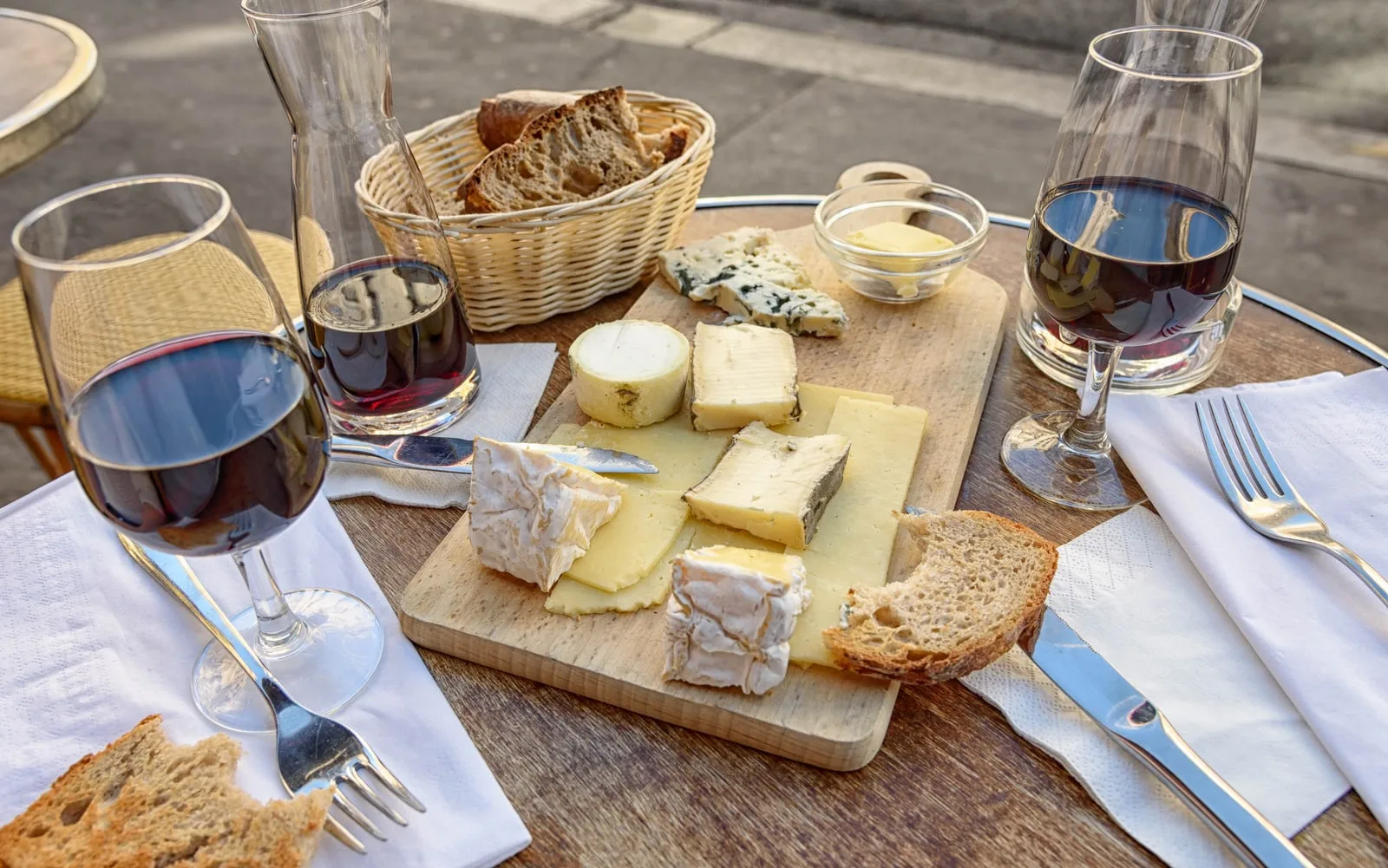
Hero image: a café table with red wine and cheese, used as an illustration of the occasion.
Frequently asked questions
When is Beaujolais Nouveau Day in 2026?
Beaujolais Nouveau Day falls on Thursday 19 November 2026, the third Thursday of November.
Is Chub Nouveau a Beaujolais wine?
No. Chub Nouveau comes from Sandridge Barton in Devon, England. It shares the idea of an early-release red, but not Beaujolais origin.