This week, for the first time, Paris is hosting a Champagne Week. From 19 to 25 October, restaurants, bars, brasseries, wine shops and hotels across the city are pouring Champagne at tastings, food pairings, brunches and even tea time. The Comité Champagne, the body that represents both the growers and the houses, says the aim is to get people drinking it “beyond the big occasions” it is usually saved for.
Read that again, because it is quietly a big admission. The people who sell Champagne are telling the French to stop keeping it for weddings. The latest shipment figures show why.
The headline number hides two opposite stories
From January to September 2026, Champagne shipped 174.2 million bottles, up 3.2% on the same period last year. That sounds like a recovery, and abroad, it is:
- Exports: 109.8 million bottles, up 6.8%. The EU grew 8% to 32.1 million, and countries outside the EU grew 6.3% to 77.7 million.
- France: 64.4 million bottles, down 2.5%.
That is not a one-off wobble. The Comité’s own full-year figures for 2025 already showed 266 million bottles shipped, slightly down on 2024, with France at about 114 million and exports at about 152 million. France is still Champagne’s biggest single market, and the Comité calls it “an absolute priority”. It is also the one that keeps shrinking.
Over the twelve months to the end of September, shipments total 271.4 million bottles, up just 0.8%. So the region is not booming. It is treading water, carried by export.
The people losing most are the growers
This is the part we care about most. Champagne is shipped by three kinds of producers, and they are not having the same year:
- The houses (the négociants, including all the big brands): 133 million bottles, up 5.1%.
- The co-operatives: 13.8 million, roughly flat.
- The growers who make and sell their own Champagne: 27.4 million, down 4%, and down 7% in France.
Growers have always sold a large share of their wine to French customers, often direct from the cellar door or through local wine shops. When the French market softens, they feel it first, while the houses lean on their export networks. So when you hear “Champagne is back”, it is worth asking: whose Champagne? The small family estates that make Champagne interesting are having the hardest time.
Meanwhile, in the vineyard
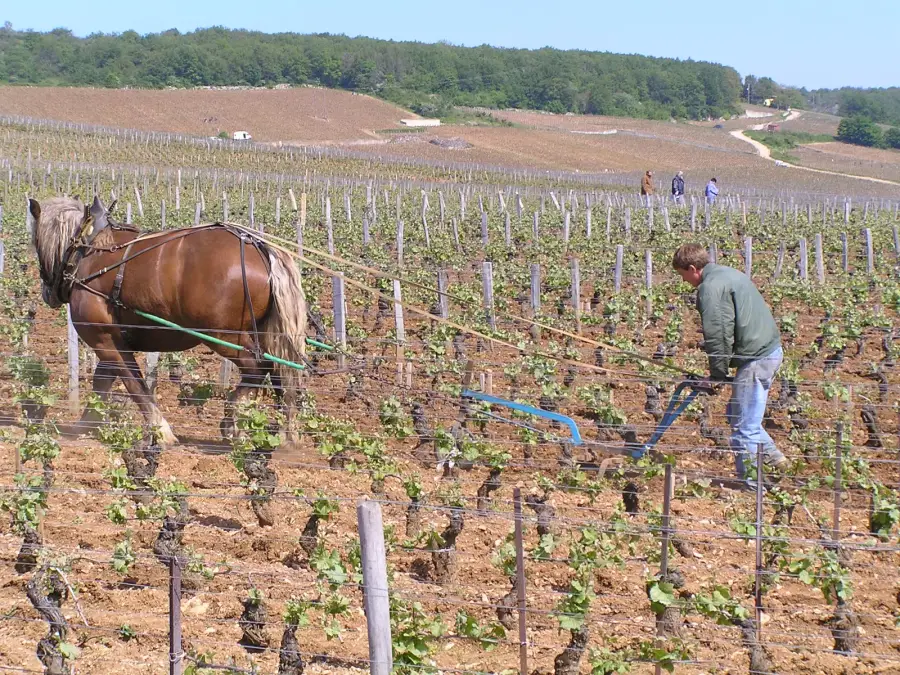
Supply is being tightened on purpose. In July the Comité set this year’s marketable yield at 8,800 kg of grapes per hectare, to keep bringing down the stocks of wine that built up while sales slowed. Then came the harvest we wrote about back in July: the earliest Champagne has ever recorded. The first grapes were picked on 6 August, after spring frost and five heatwaves. Picking became general from 17 August, about fourteen days ahead of 2025.
The Comité’s harvest report says the grape musts recall, in some of their balances, great vintages of the twentieth century such as 1921, 1947 and 1959. It is exactly the kind of line that turns into “2026 is the new 1959” by the time it reaches a wine shop.
A quick number check: the comparison is about the balance of the freshly pressed juice, not about a finished wine. The Comité itself says it is too early to judge the wines. The wine cannot be bottled for its second fermentation before January 2027, and vintage Champagne must then age at least three years before release (the best are kept far longer). So nobody will buy a 2026 vintage Champagne before 2030. Treat “the new 1959” as a promising weather report, not a tasting note. We have seen this region’s numbers get stretched before, as with the 15% alcohol story.
What Champagne Week gets right
We like the idea, and not only because we like Champagne. The whole “only on special occasions” image is exactly the kind of snobbery that makes people afraid of a wine. Champagne is a brilliant food wine. Its acidity and bubbles are made for salty, crunchy, fried things: crisps, tempura, fried chicken, a plate of fritters. You do not need a reason to open it, beyond the fact that it is Tuesday and dinner is ready.
And if you want to help the part of Champagne that is struggling, buy grower Champagne. Look for “RM” (récoltant-manipulant) in small print on the label, which means the person who grew the grapes also made the wine. In France, good grower Champagnes regularly start at around 25 to 35 euros at a wine shop, often less than a big-brand bottle, and they taste of a place rather than a house style. Our guide to natural sparkling wine is a good next step if you want to go further off the beaten track.
The rest of the world has rediscovered Champagne this year. It would be a shame if the French were the last to remember it is just wine.
Sources: La Champagne de Sophie Claeys on shipments to September, from Comité Champagne figures, Comité Champagne on Champagne Week, Comité Champagne on 2025 shipments, Comité Champagne on the 2026 yield, Comité Champagne on the 2026 harvest
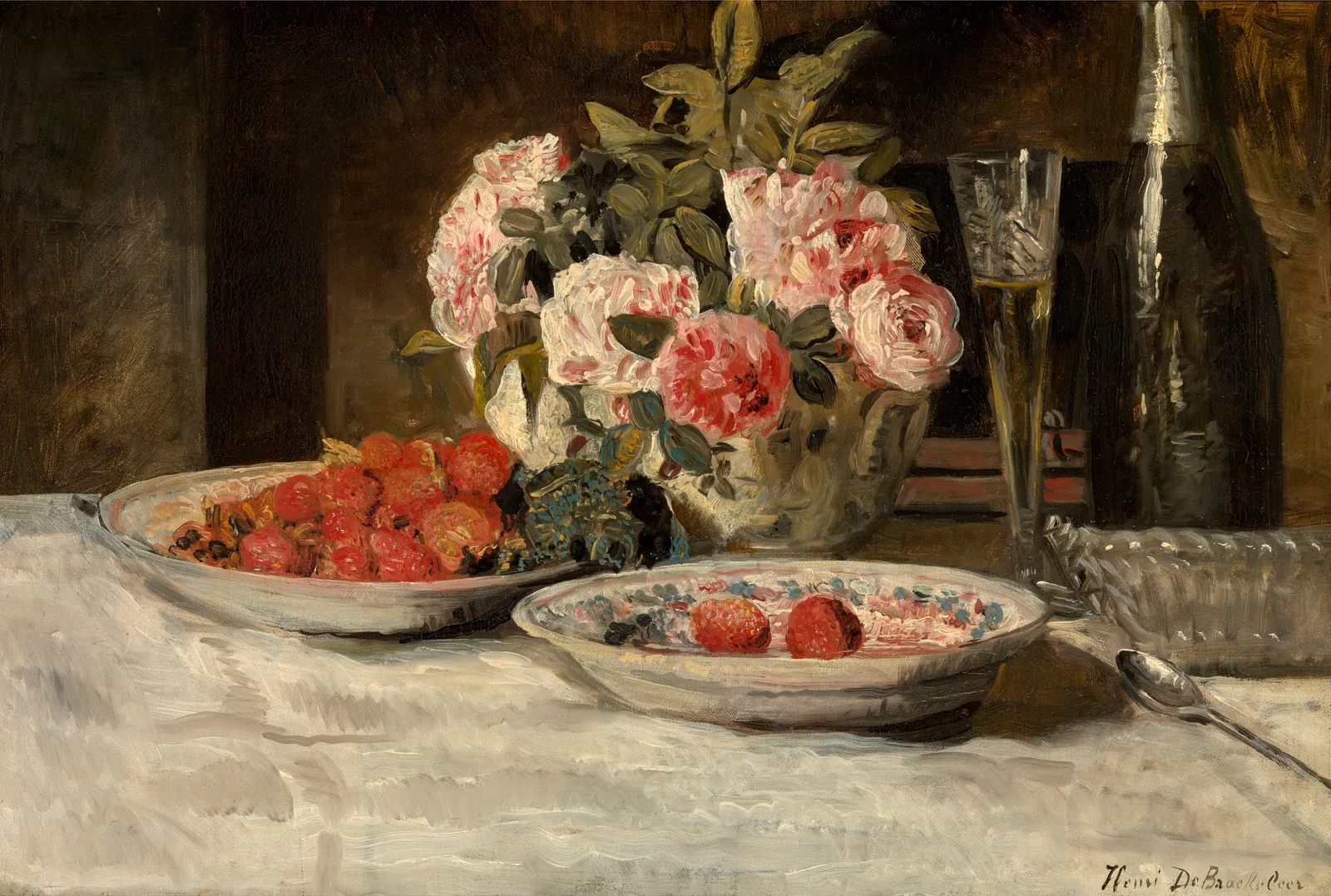
Hero painting: “Strawberries and Champagne” (Aardbeien en champagne), Henri de Braekeleer, 1883, Royal Museum of Fine Arts Antwerp, public domain, via Wikimedia Commons.