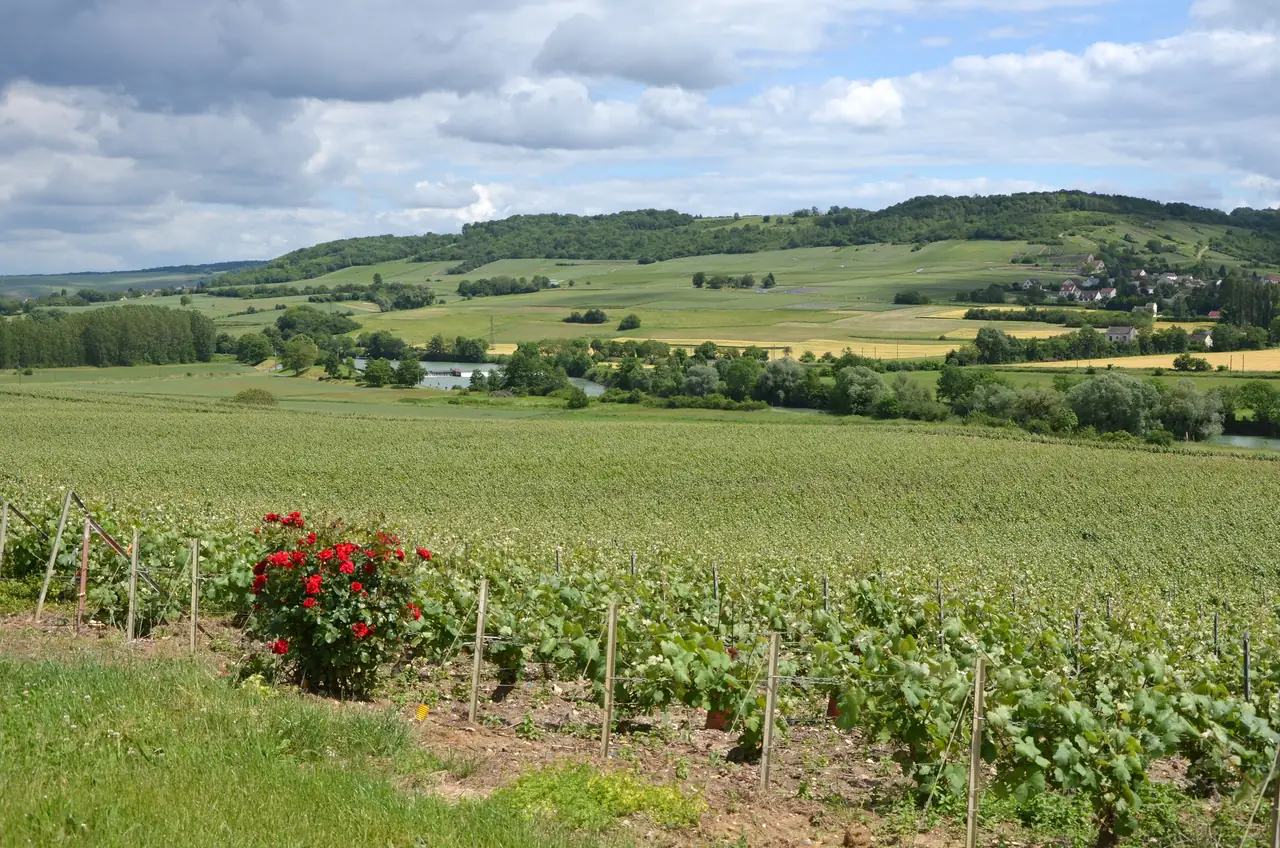
If the weather holds, pickers will be out in the Champagne vineyards around the middle of August, and possibly as early as the 10th in the warmest corners like Montgueux. That may not sound dramatic until you know the history. It would be the earliest start Champagne has recorded in roughly two hundred years, beating the previous record set in 2020, which itself beat 2003. A region that used to bring the grapes in around late September is now looking at picking in the first half of August. Let that sink in.
We think this is a story worth telling properly, because the headline (“earliest harvest ever”) sounds like a disaster and the reality is more interesting. Yes, the season has been brutal. But Champagne, of all regions, is unusually well armed to ride it out, and the reasons why tell you a lot about how the place actually works.
What actually happened this year
Two things collided. First, frost. Several cold nights in April hit the vines just as they were waking up, and on average around 40% of the earliest buds were killed. That alone sets the tone for a smaller crop. Then came the heat. June was the hottest the region has on record, followed by more hot, dry weeks with very little rain. Warmth speeds everything up, so flowering and fruit set came early, and the whole growing calendar got pulled forward by weeks.
Put frost and heat together and you get the picture: fewer grapes, ripening fast. The growers’ union now estimates the harvest will come in around 10% below last year. Across the rest of France the same heat is biting even harder, with Bordeaux looking at something closer to a 20% drop, so by French standards Champagne is getting off relatively lightly.
Why 10% fewer grapes does not mean 10% less Champagne
Here is the part most people miss, and it is the thing that makes Champagne genuinely different from almost every other wine region. Champagne keeps a bank. In good years, houses and growers set aside a portion of the wine as “reserve wine”, stored and held back rather than sold. In lean years, they draw on it.
That reserve is not a nice-to-have, it is the whole insurance policy. It means a 10% shortfall in the vineyard does not translate into 10% less Champagne in the shops, because the region has literally been saving for a rainy day, or in this case a scorching one. The blend you drink is almost never a single year’s grapes anyway, and that library of older reserves is exactly what lets the big non-vintage cuvées taste consistent no matter what the sky did. It is also why houses that specialise in long-aged, reserve-heavy wines, like the ones Maud Rabin works with on rare Champagne, can shrug off a single hard season.
A region that pulls together
The second piece of armour is less about wine and more about how Champagne is organised. This is one of the most collective winegrowing regions on earth. Growers, cooperatives and houses negotiate together, share data on ripeness and set a framework for the harvest as a group rather than every estate fighting the weather alone. When a year goes sideways, that coordination matters. Picking dates, yield ceilings and how much to put into reserve are decisions taken with the whole region in mind, not just one cellar.
We have heard this resilience first-hand from the people living it, whether it is Agathe Portail on surviving a year defined by frost or the houses now rebuilding their whole approach around a warming climate. None of them pretend it is easy. But nobody is panicking either, and the structure is a big reason why.
Every year leaves a fingerprint
Now the didactic bit, because this is where wine gets fun. A vintage is just a snapshot of a year’s weather written into the bottle. A cool, slow season and a hot, fast one do not taste the same, and they are not supposed to. Early, hot years like this one tend to bring riper fruit, rounder flavours and lower natural acidity, which for Champagne, a wine built on freshness and tension, is the balance winemakers watch most closely.
That is exactly why the reserve wines and the blending skill matter so much. A cellar master’s job in a year like 2026 is to lean on cooler, older material to keep the wine lively, so the finished Champagne still crackles even though the grapes came in under a very different sun than usual. When someone tells you every vintage is different, this is what they mean, and it is a feature, not a bug. Each year is a slightly different chapter of the same place.
The part I hate to admit
I will say the quiet thing out loud, and it stings a little as a Frenchman.
“If the heat keeps pushing north, the map of great sparkling wine is going to stretch with it. England is already making seriously good fizz on the same chalk that runs under Champagne, and I would not bet against more of the north joining in. As a Frenchman that is hard to type. As a wine lover, honestly, I am curious to taste where it goes.” — Antoine
That is not a prediction that Champagne is finished, far from it. The name, the chalk, the know-how and the reserves are not going anywhere. But the story of the next few decades in sparkling wine will be written a good deal further north than it used to be, and pretending otherwise would be silly. If you want a sense of where lighter, fresher fizz can come from once you leave the famous name behind, our guide to natural sparkling wine is a good place to start.
So no, an August harvest is not the end of Champagne. It is a hard year in a region that has spent centuries learning how to handle hard years, with a savings account of reserve wine and a habit of facing the weather together. The grapes are coming in early. The Champagne, we suspect, will taste just fine.
Source: The Drinks Business