We do not usually publish scores. The whole point of this place is that a number out of a hundred tells you almost nothing about whether you will enjoy a bottle on a Tuesday.
So the interesting thing about Rare Champagne’s Millésime 2012 is not that it has taken 100 points. It is that the house sat on this wine for an extra year or two because it did not think it was finished.
The news comes straight from the house, announced in Reims on 1 September and carried from there. Suckling’s report is not public yet, so the tasting note further down is the one Rare published. That is the normal way a score like this travels.
The vintage that came out in the wrong order
Champagne houses release vintages in order. It is not a rule anyone wrote down, it is just what happens: you make the 2012, you release it, then a couple of years later you release the 2013.
Rare did the opposite. The 2013 came out in 2023, and the 2012 followed it.
The reason the house gives is not commercial. Émilien Boutillat tasted the 2012 and decided it was not ready. He has said he found a kinship between it and the 2002, a vintage still treated here as one of the high-water marks, and that a wine heading in that direction deserved more time on its lees rather than less.
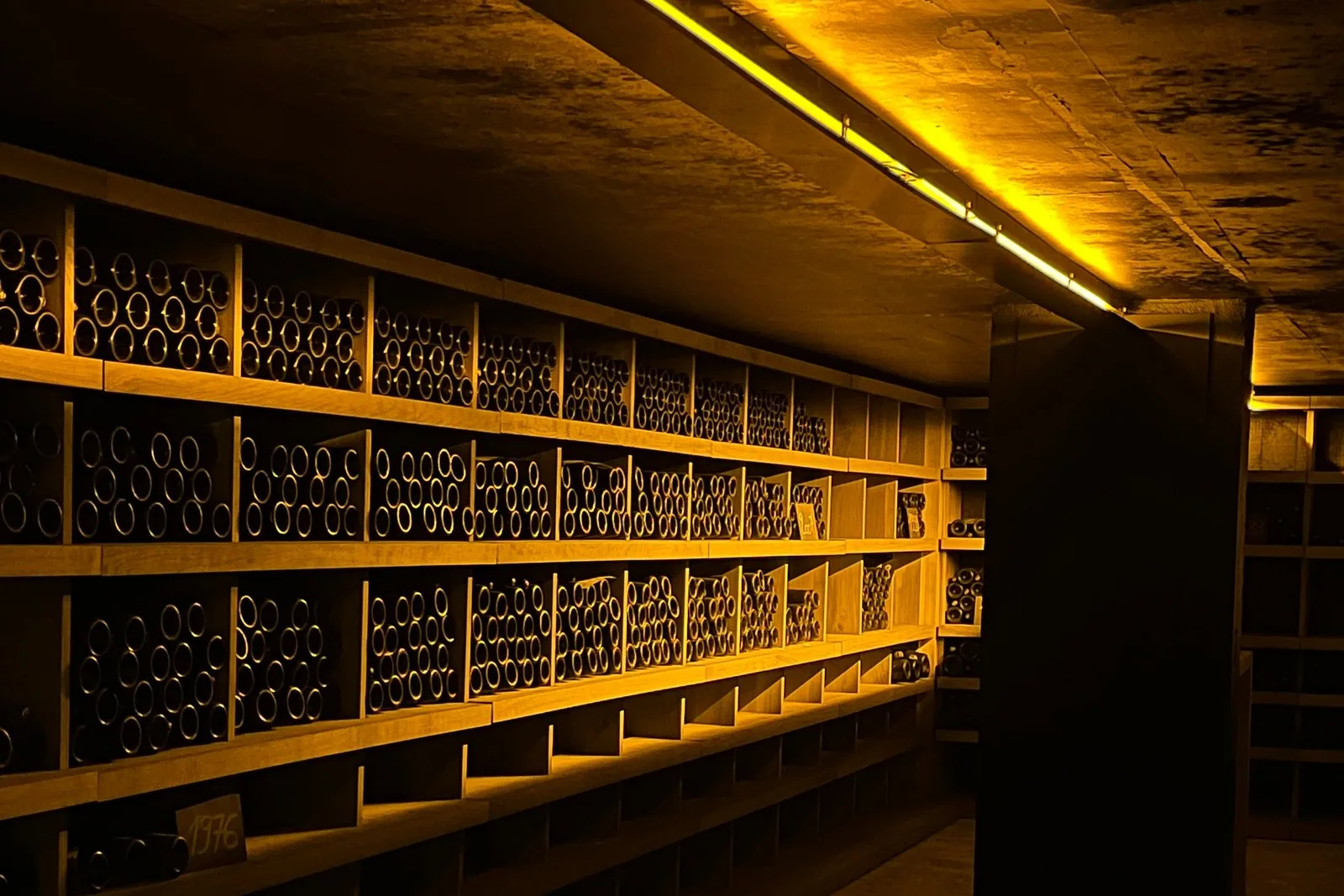
There is another reading worth putting on the table: 2012 is widely held to be one of the great recent Champagne vintages, and holding a great vintage back to release it on its own, older and with a better story attached, is also good business. Both can be true at once, and usually are. What is not in doubt is that the wine got the extra time, and extra time on lees is where Champagne buys its texture.
What “not ready” actually costs
A prestige cuvée sitting in a cellar is money that is not moving. It is stock you have paid for, in a category where allocation is planned years ahead and importers in a dozen markets have already been told what is coming. Releasing out of order means explaining yourself to every one of them.
And Boutillat was new to this particular job. He had been chef de cave at Piper-Heidsieck since 2018, but Rare only passed to him in 2022, when Régis Camus stepped back after 26 years across the houses. The 2013 went out roughly a year after that. So the call to reorder the releases came from someone barely a year into custody of a cuvée another man had shaped for two decades.
Boutillat has since been named Sparkling Winemaker of the Year twice at the International Wine Challenge, in 2021 and 2023. But holding a wine back is the least glamorous decision available. Nobody writes about the vintage you did not release.
What we heard in Reims
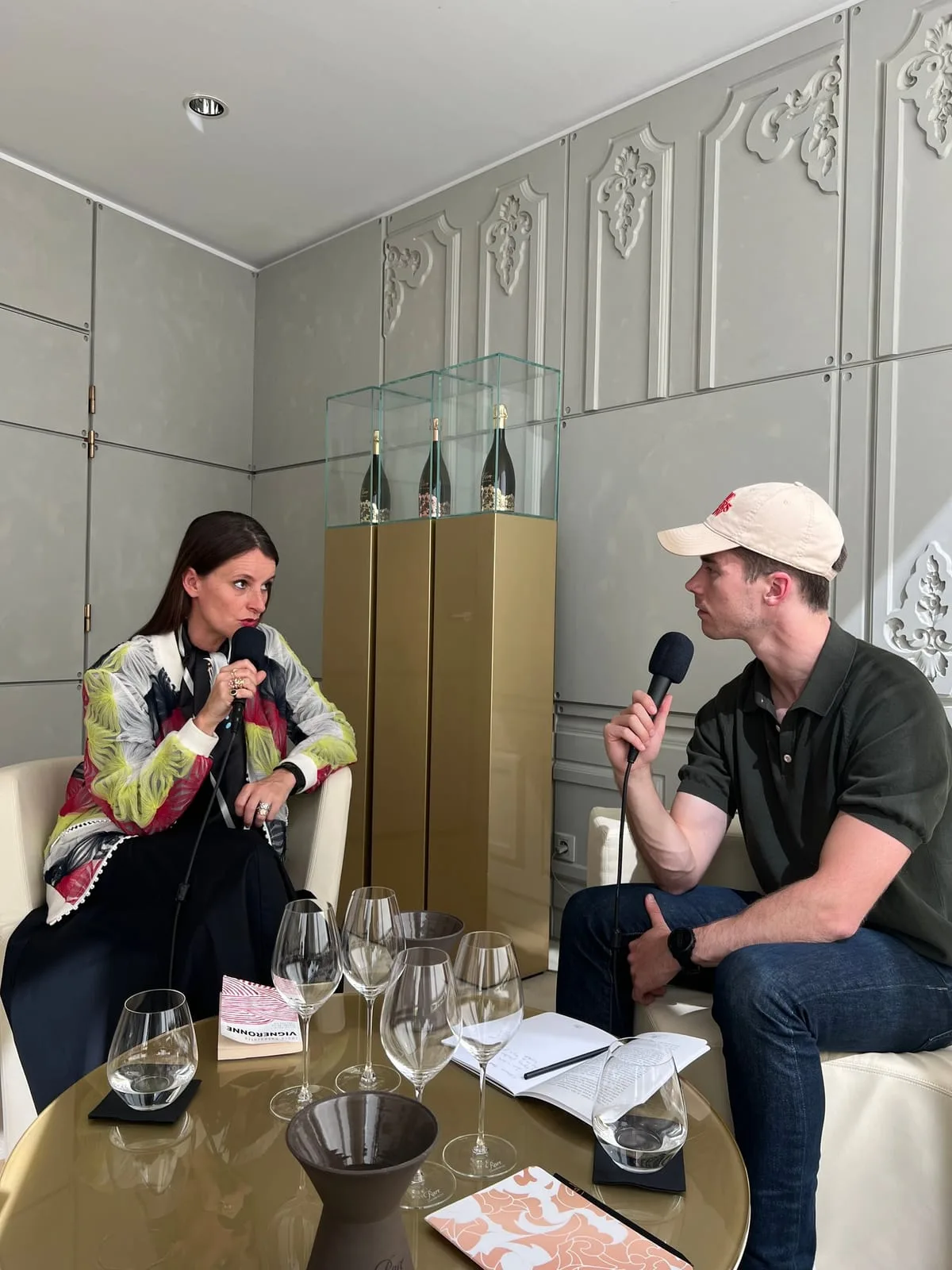
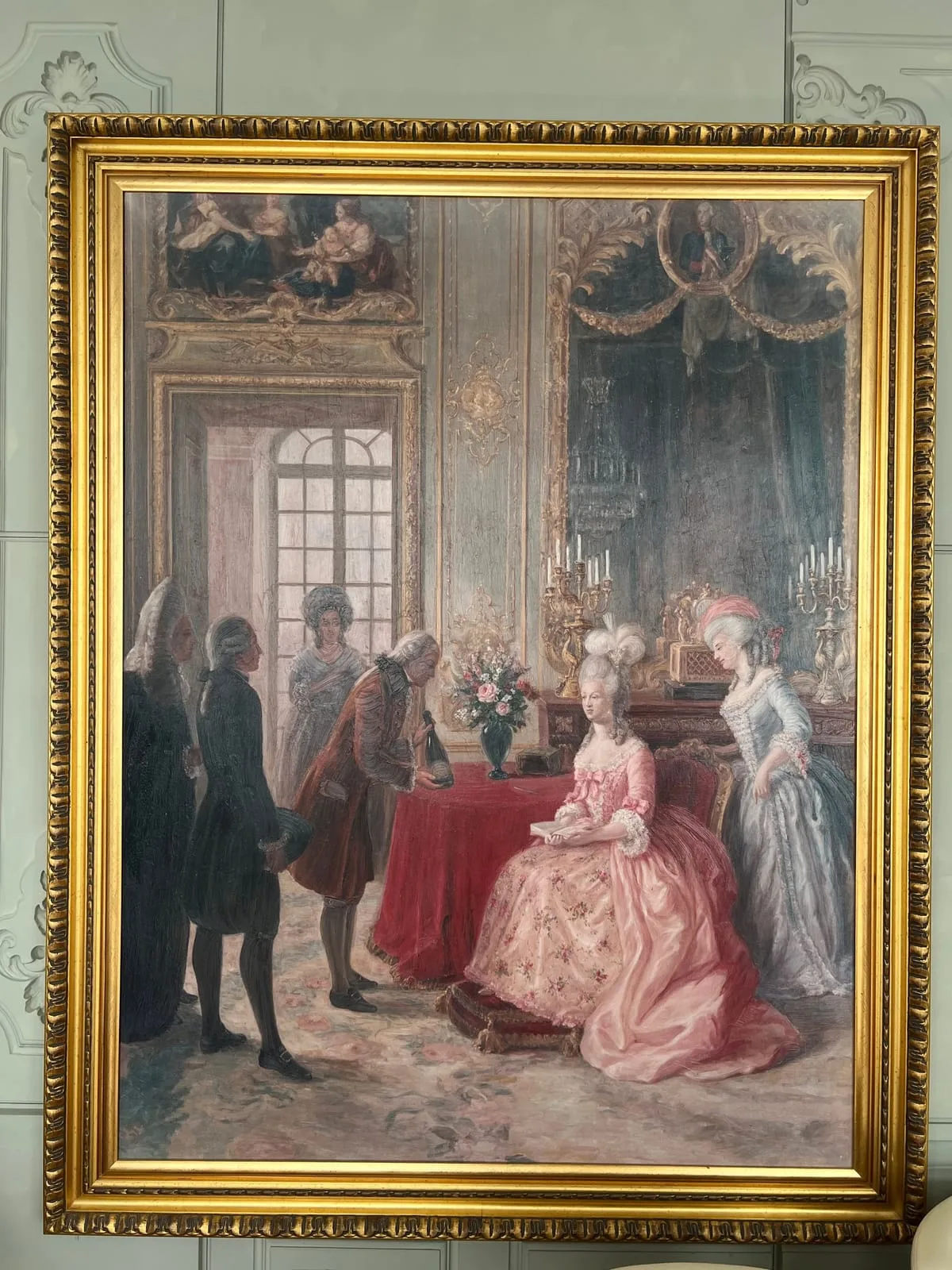
When we recorded our episode with Maud Rabin, managing director of Rare Champagne, in the Salon Marie-Antoinette at the house’s headquarters, she described the two wines side by side, and the contrast is the whole argument.
The 2013 was already generous: apricot, cooked pineapple, brioche, honey. The 2012, at that same moment, was still tight and citric, all lime and bergamot. One was ready to be poured. The other was clearly going to be better later, and was not there yet.
She also explained the part that makes the decision thinkable at all. Rare only declares a vintage when the wine carries the house signature, the tropical, floral, spicy-nut register that Camus spent two decades refining, and which the house traces back to a blend built in 1785 for Marie-Antoinette. Some years there is no Rare at all, though Maud noted that warmer, riper years are making those skipped vintages less frequent than they used to be. In a house prepared to write off a whole year, delaying one is a smaller step than it looks.
So what is the score worth?
Here is where I have to be honest about my own scepticism.
A hundred points is a critic saying a wine was faultless on the day he tasted it. It is one palate, one bottle, one afternoon. It is not a promise about the bottle you buy, which will have travelled, and which you will open in a different room, at a different temperature, next to different food.
Suckling’s note, as the house quotes it, opens with “One of the best 2012s released. This is so fresh and transparent, with superb clarity and brightness,” and ends on “Haute couture. Sophisticated.” Read it closely and it is a note about precision and polish. Whether polish is the thing you want out of a bottle is a separate question, and it is yours, not his.
The release also puts numbers on the ageing that is the whole point here: a minimum of ten years on the lees before disgorgement, then at least nine months more in bottle, on a blend of 70 percent Chardonnay and 30 percent Pinot Noir. Suggested retail is 250 dollars.
What the score does do is settle an argument. Somebody backed their palate against the calendar and against the commercial logic of their own company, and the most widely followed scorer in the category has now agreed with them. The 2012 also took a Grand Master at the Champagne Masters earlier this year, so Suckling is not alone in rating it highly.
The bit worth taking away
Every house will tell you it is uncompromising. Very few can point at a moment when being uncompromising was inconvenient.
I do not think you should buy a bottle because a critic gave it a perfect mark. I think the 2012 is interesting because a cellar master barely a year into a job with a very long shadow looked at a finished wine and said not yet.
If you want the full story of how this house ended up with a tiara glued on by hand and a founding myth that runs through Versailles, the episode with Maud Rabin is the place to start. And if you want the grape behind that blend, our guide to Chardonnay covers why it does the heavy lifting here.