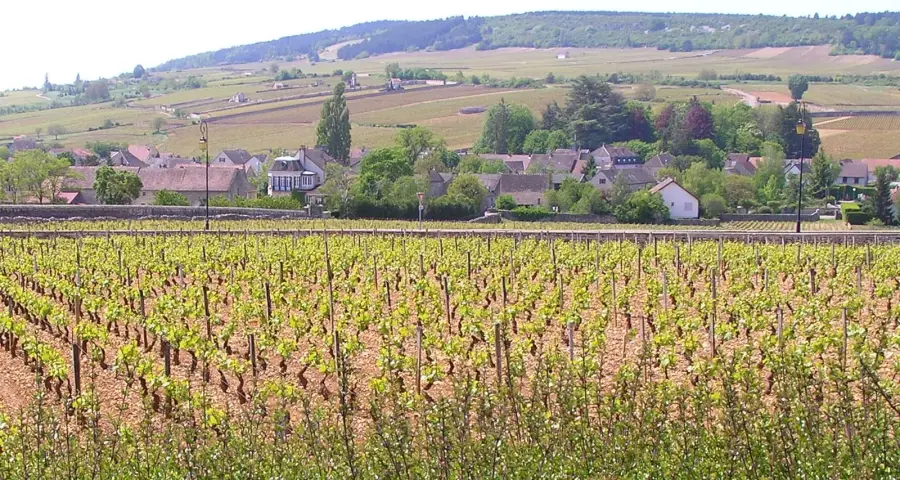
Bloomberg ran a story this week that went around Instagram fast: California has so much good wine it cannot sell that a bottle carrying a $150 price under its winery’s own label can turn up for under $30 under a retailer’s label. One reviewer of Costco wines called the deals “insane”.
We think the story is true, the deals are real, and the most interesting part is the part nobody led with. If a wine can be sold for $30 the moment its name is taken off, what exactly was the other $120 paying for?
What is going on in California
California makes about four out of every five bottles of American wine, and Americans are drinking less of it. Industry figures put US wine sales at 427 million cases in 2020 and 329 million in 2025, a fall of 23% in five years. Moderation, younger drinkers who never picked up the habit, inflation and the new weight-loss drugs all show up in the same direction. Wineries planted and produced for the demand of a decade ago, and the wine is still sitting in tanks and barrels.
The supply side is correcting, painfully. Between October 2024 and August 2025 California growers pulled out around 38,000 acres of vines, about 7% of the state’s wine-grape area, and another 40,000 or so are projected to come out this year. Going into the 2026 harvest, roughly half of the state’s crop had no buyer under contract, against a normal 70 to 80%. And last month Gundlach Bundschu, the oldest continuously family-owned winery in California, filed for Chapter 11 with more than $37 million of debt.
So there is a lot of finished wine, a lot of it good, and the people who made it need it gone.
Why it shows up under somebody else’s name
A winery with too much wine has a handful of options: sell it off cheaply under its own label, sell it in bulk, store it and hope, blend it into future releases, or pour it away.
Discounting under your own label is the one that does lasting damage. If your Cabernet is $149 on the website and $59 in a closeout, it is a $59 wine from then on. So a lot of this wine is being sold quietly, in bulk, to retailers who bottle it under labels they own: Costco’s Kirkland Signature, Grocery Outlet’s cheerfully named Second Cheapest Wine, the private-label ranges at Kroger, Aldi and Total Wine. The deals usually come with a non-disclosure agreement, so the label tells you the region and the grape but not the winery.
The scale has changed. Grocery Outlet’s wine buyer told Bloomberg that when he started in 2018, a bulk offer was typically 1,000 to 3,000 cases. He now sees offers of 20,000 to 200,000. He cited a Napa Cabernet that could carry $45 to $85 under its winery’s label selling at $9.99 under the house brand.
Checking the “$150 for $30” number
This is the figure that travelled, so we went looking for where it comes from.
It comes from one example. The president of Navigator Wine Collection, a company that makes private-label wines for retailers, described a Napa Cabernet carrying a $149 retail price that Navigator plans to sell at $29.99. It is a real example, but it is a seller describing its own product, under the kind of agreement that stops anyone checking which wine it is. And “$149 retail price” means the winery’s list price, which is not necessarily what the wine was actually selling for. A wine that was flying off the shelves at $149 would not be in a bulk deal.
So we would not write “a $150 wine for $30” as a fact. We would write: a wine its own maker priced at $149, which did not sell at that price.
The $9.99 Napa example is the one that makes us sit up, because there is a number to hold it against. Napa’s average grape price in the 2025 crush report was about $6,770 a ton, across all varieties, and Cabernet runs higher than that. A ton of grapes makes roughly 60 cases, or 720 bottles. That puts the fruit alone at over $9 a bottle at today’s Napa prices, before the barrel, the bottle, the cork, the tax, the trucking and the retailer’s margin. A Napa Cabernet at $9.99 on the shelf is being sold below what its grapes would cost to buy today. Somebody is taking a loss on wine that was made in better years, and you are the one who gets to drink it.
What the $150 was for
Here is the anti-snobbery point, and it is not a small one.
The wine in the $29.99 bottle and the wine in the $149 bottle are, in the example above, the same wine. What changed is the name on the front. The winery would rather sell it at $29.99 anonymously than cut the price under its own name, because the $149 is part of what it is selling. It holds up the brand, the tasting-room experience, the allocation list, the idea that this is a serious bottle.
None of that is fake, exactly. A name built over decades is worth something, and a winery is entitled to protect it. But it means the price of a premium bottle tells you a great deal about the brand’s position and much less about what is in the glass. This glut is simply making that visible, in public, on a supermarket shelf.
We say this a lot, and it is nice to have the market say it for us: the price is a decision, not a measurement.
How to find the good ones
Most private-label wine is not secret Napa. Plenty of it is ordinary wine bottled cheaply, which is fine, but not this story. Some things on the label help you tell them apart.
- Look at the appellation. Under US rules, a wine labelled with an American Viticultural Area such as Napa Valley, Oakville or Russian River Valley must have at least 85% of its grapes from there. A label that only says “California” can come from anywhere in the state. The more precise the place, the more likely you are looking at surplus from a serious source.
- Check the vintage. A Napa Cabernet with two to four years on it, at a supermarket price, is the profile of a winery clearing old stock.
- Read the small print about who bottled it. “Produced and bottled by” means the bottler fermented at least 75% of the wine itself. “Cellared and bottled by”, “vinted and bottled by” or plain “bottled by” usually means the wine was bought in. On a private label that is not a warning, it is the giveaway.
- Buy one, then buy six. These are one-off lots. The next bottle with the same label and the same price may be a completely different wine from a different winery. If you find one you love, that is the moment to buy more, not next spring.
Does any of this matter outside America?
Mostly these labels are American, so if you are reading us from Hong Kong or Lyon you will not find Second Cheapest Wine down the road. But the mechanism is universal, and we know it well in France. Bordeaux and the south have spent the last few years with too much wine and too few buyers, and the result there looks the same: supermarket own-labels with a serious appellation on them, négociant bottlings that do not say which château the wine came from, and crisis distillation for the wine nobody would buy at any price. We wrote about the hardest-hit corner of it in our piece on Roussillon.
Wherever a region overproduces, good wine ends up anonymous and cheap. The trick is the same everywhere: read the appellation, ignore the story on the back, and trust your glass over the price tag.
What we are watching
The people quoted in the reporting expect the surplus to take another 12 to 24 months to clear. After that, with tens of thousands of acres of vines gone, some in the trade are already worrying about the opposite problem: not enough grapes. If you drink California, this is a window, not a new normal.
Sources: Bloomberg on premium wine in private labels, Briefs summary of the Bloomberg report, Vinetur on California vineyard removals, Farm Progress on the 2026 removals, 2025 California Grape Crush Report, KTVU on Gundlach Bundschu’s Chapter 11, Vinetur on the uncontracted 2026 crop, US federal wine labelling rules (27 CFR part 4)
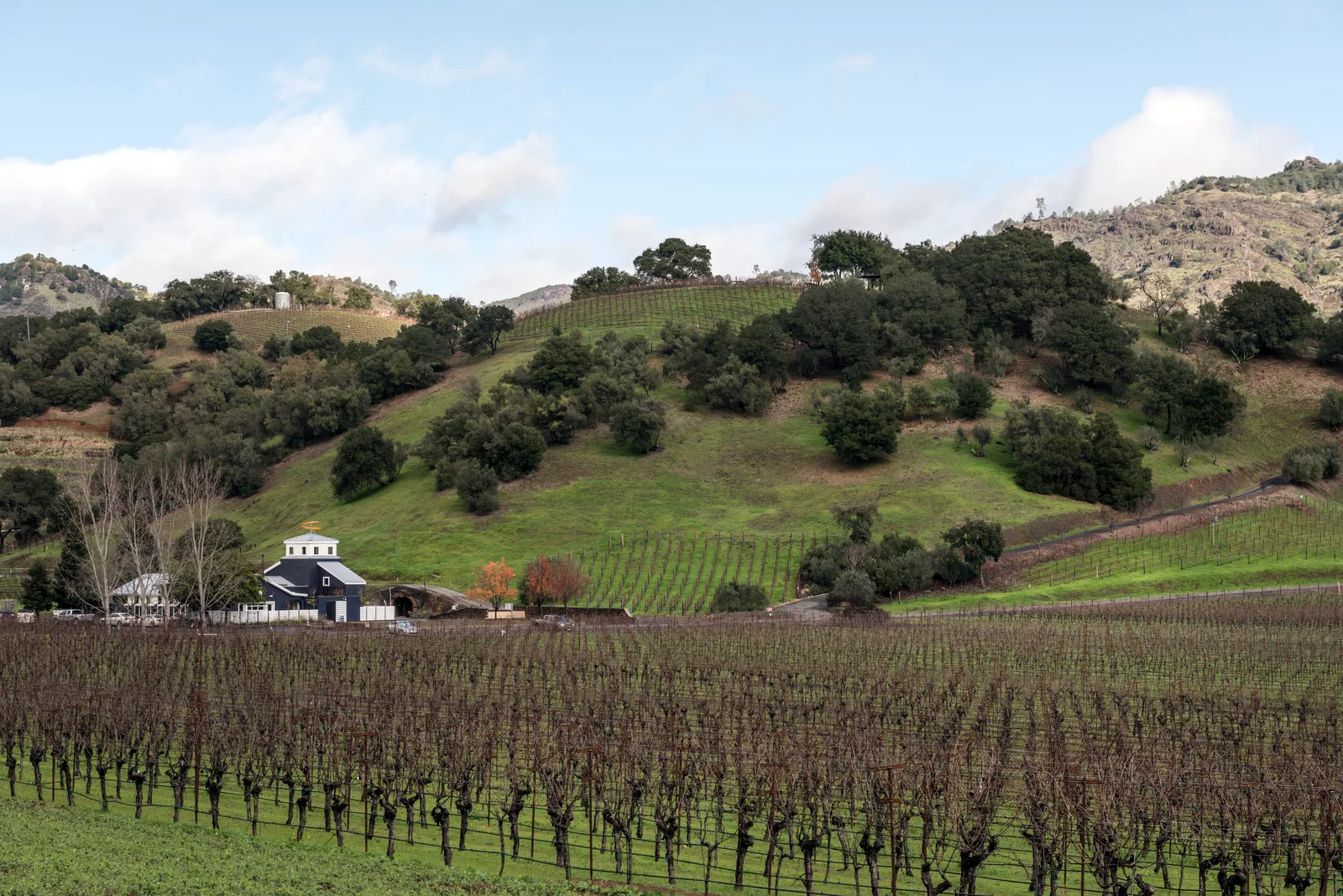
Hero photo: vineyards in Napa Valley, California, by Carol M. Highsmith, public domain, via Wikimedia Commons.