With mozzarella, pour a dry, unoaked white with real acidity: Fiano di Avellino, Soave Classico, Verdicchio or Vermentino. Add tomato, as in a caprese, and you need a wine that is sharper still, or a dry rosé with some weight. With burrata, which is much richer, go for something sparkling.
Why is mozzarella harder to pair than it looks?
Mozzarella has almost no power. It is a fresh pulled-curd cheese, more than half water, barely salted, with a gentle lactic tang and a fat that coats the palate. Nothing like an aged Comté or a blue, which impose themselves on the wine.
That is exactly where the difficulty lies: a quiet cheese gets flattened by almost anything. An oaked white walks over the milk with vanilla and butter, a high-alcohol wine erases the freshness, a tannic red leaves a drying aftertaste.
Then there is the real trap: the tomato. Raw tomato reads sharp on the palate, with almost no sugar to soften it, and acidity in a dish always makes the wine beside it taste rounder, so a wine short of acidity goes flat. Tomato also brings a lot of glutamate, which means umami, and umami sharpens the bitterness of tannins.
So the pairing is never about the mozzarella on its own, but about fresh milk plus tomato acidity together. As everywhere on our food and wine pairing hub: you pair the dish, not the ingredient.
Buffalo, fior di latte or burrata: is it the same pairing?
No, and assuming otherwise is the most common mistake. All three sit in the same chilled cabinet under the same word, but they are three different cheeses and they want three different wines.
Mozzarella di bufala campana is made from water buffalo milk in southern Italy. Richer, fattier and tangier, with a faintly animal note and a salty finish. It has character, so it can carry a white with substance: Fiano di Avellino or Greco di Tufo, two Campanian whites from the hills inland of the buffalo plains, with a waxy texture and a bitter-almond edge that answers the salt.
Fior di latte is the cow’s milk version: milder, springier, more neutral, less fatty. It wants a lighter, more lemony white that will not bury it, such as a Soave Classico, a Verdicchio dei Castelli di Jesi or a Lugana. A Picpoul de Pinet does the same job for less money.
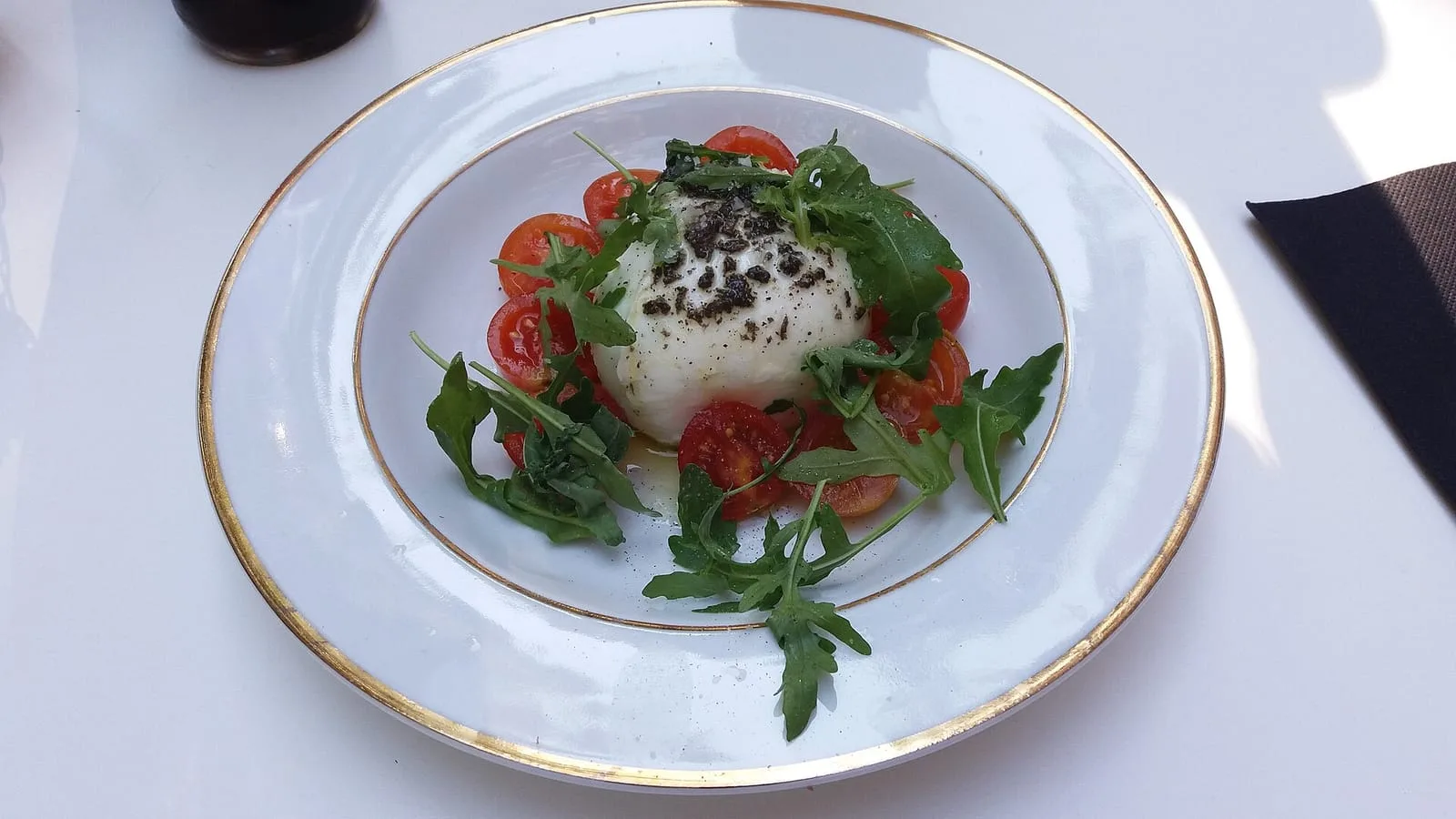
Burrata is not a mozzarella at all: it is a fior di latte pouch filled with stracciatella and cream. That fat changes the brief, and acidity alone is no longer the point. What matters is whether the wine can clear the cream between mouthfuls, so bubbles win: brut Franciacorta, Prosecco Valdobbiadene Superiore, or a Crémant de Loire. Without bubbles, an Etna Bianco holds up nicely.
The logic to remember: the fattier the cheese, the more acidity or bubble you need. The more neutral it is, the quieter the wine should be.
What wine goes with caprese salad?
Caprese is three ingredients and one argument. The cheese pulls toward milky softness, the tomato pulls toward acid, and the wine has to hold both ends.
The rule is simple: the wine needs acidity to spare, or the tomato flattens it. A Verdicchio dei Castelli di Jesi is the most reliable answer, with its lemony tension and almond bitterness on the finish. Soave Classico, Greco di Tufo and Ligurian Vermentino work as well.
Basil, fresh and almost aniseed, loves faintly herbal whites and hates ripe, jammy ones. A restrained Sancerre does a lovely job.
And rosé? Often the best choice in hot weather, as long as you skip the pale, timid ones. You want weight and acidity: Cerasuolo d’Abruzzo, Tavel, Bandol. Cerasuolo, deep-coloured and made from montepulciano, feels invented for this table.
The one thing to avoid outright is oaked Chardonnay. Butter and vanilla against raw tomato produce a distinctly soapy sensation. If you want Chardonnay, take it unoaked.
What wine goes with margherita pizza?
Pizza changes two things: the tomato is cooked, so more concentrated and far more savoury, and the mozzarella is melted, so fattier and saltier. You have left the light-white register behind.
Here an Italian red is the right instinct, provided it is acidic and low in tannin. Chianti Classico, Barbera d’Asti, Montepulciano d’Abruzzo, Valpolicella: all have high acidity with fine tannins, precisely what cooked tomato sauce asks for. Serve them cool, around 14C.
In white, a Falanghina del Sannio holds its own on a margherita, and on a pizza bianca, with no tomato at all, white goes back to being the best choice.
What wine goes with aubergine parmigiana?
Parmigiana, or eggplant parmesan if you grew up in the States, stacks up everything that complicates a pairing: fried aubergine, so fat; long-cooked tomato sauce, so acid and sugar; melted mozzarella and parmesan, so a great deal of umami.
You want a red, but one with fine tannins. Etna Rosso, made from nerello mascalese, is the most elegant call: light in colour, firm in acidity, with a volcanic smokiness that answers the grilled aubergine. A Sicilian Cerasuolo di Vittoria or a Chianti Classico do well too.
What you should not do is reach for Cabernet Sauvignon or Barolo. Strong tannins plus the umami of parmesan produce a genuinely unpleasant bitterness. The frying fat rounds the tannin off a little, but it does not erase that bitterness.
What wine goes with plain mozzarella and olive oil?
This is the most honest test of all. A ball of buffalo mozzarella at room temperature, a slick of olive oil, black pepper, flaky salt, nothing else. With no tomato in play, the problem is no longer acidity: it is the milk and the oil.
Now you can chase finesse rather than tension. A Fiano di Avellino with two or three years in bottle is glorious on buffalo mozzarella: waxy texture, pear, hazelnut, and a saltiness that carries the cheese’s finish onward. An Etna Bianco or a white Cassis does the same.
A green, peppery oil needs a wine with a little bitterness on the finish, or the pairing falls flat. That is exactly what vermentino and verdicchio deliver.
Which wine for which mozzarella?
| Dish or cheese | Appellation | Why it works | Rough price |
|---|---|---|---|
| Plain buffalo mozzarella | Fiano di Avellino (Campania) | Waxy weight and bitter almond, from the same corner of Campania | 14 to 20 EUR |
| Plain fior di latte | Soave Classico (Veneto) | Light and lemony, never buries the milk | 9 to 14 EUR |
| Burrata, stracciatella | Brut Franciacorta (Lombardy) | The bubble clears the cream with every sip | 20 to 30 EUR |
| Caprese salad | Verdicchio dei Castelli di Jesi | Sharp acidity that stands up to raw tomato | 10 to 15 EUR |
| Margherita pizza | Chianti Classico (Tuscany) | Acidic, low-tannin sangiovese built for cooked tomato | 14 to 22 EUR |
| Aubergine parmigiana | Etna Rosso (Sicily) | Fine tannins and volcanic smoke against the frying | 18 to 28 EUR |
| Mozzarella with olive oil | Vermentino di Sardegna | Salty and herbal, meets the oil and the basil | 10 to 16 EUR |
Can you drink red wine with mozzarella?
With plain mozzarella, no. Milk fat and protein soften tannin, but a cheese this light carries too little of either to absorb a structured red, so the astringency stays and the cheese, too quiet to argue back, vanishes behind the wine.
The moment cooked tomato is on the plate, the reasoning flips. With pizza, parmigiana or a baked pasta, a bright low-tannin Italian red becomes the best possible pairing, because it matches the sauce rather than the cheese. Chianti, Barbera, Valpolicella, or a chilled Beaujolais.
The rule fits in one line: light acidic red if there is sauce, white or rosé if there is not.
What temperature should mozzarella and wine be served at?
This is the detail almost everyone gets wrong. Mozzarella straight from the fridge is rubbery and mute. Take it out thirty minutes before you sit down, still in its water, and let it come back to around 18C. The fat loosens, the milk flavour returns, and the pairing makes sense.
For the whites, aim for 9 to 11C: colder and the wine shuts down while its acidity reads as aggressive against the milk. Rosé, 10 to 12C. Light reds, 13 to 15C.
On quantity, plan a 125g ball per person as a starter, two if it is the main event. To sharpen what you notice in the glass, our guide on how to taste wine gives you the reference points.
Frequently asked questions
What wine goes with buffalo mozzarella?
A dry white with some body to it, not a thin one. Buffalo mozzarella is fatter and tangier than fior di latte, so it can handle a wine with real texture. Fiano di Avellino and Greco di Tufo, both grown in the Campanian hills inland of the buffalo plains, are the most convincing matches. Vermentino di Gallura or a white Cassis from Provence work just as well.
What wine goes with a caprese salad?
A very crisp dry white, or a full-bodied dry rosé. Raw tomato reads sharp because it carries almost no sugar, and its acidity makes the wine beside it taste rounder, so a soft wine goes flat and oddly sweet. Verdicchio dei Castelli di Jesi, Soave Classico and Vermentino are the safe bets. For rosé, look at Cerasuolo d'Abruzzo, Tavel or Bandol. Avoid oaked Chardonnay, which turns soapy against tomato.
What wine goes with burrata?
Something sparkling, first choice. Burrata is not really mozzarella at all: it is a fior di latte pouch filled with stracciatella and cream, so it is far richer. You need a wine that scrubs the cream off the palate between mouthfuls. A brut Franciacorta, a Prosecco Valdobbiadene Superiore or a Crémant de Loire all do that. Without bubbles, Etna Bianco and Vermentino di Sardegna are excellent.
Can you drink red wine with mozzarella?
With plain mozzarella, no. The tannins dry the palate out, and the cheese, which has very little presence to begin with, simply disappears behind the wine. Once cooked tomato is in the dish, though, red becomes the best answer. With pizza, aubergine parmigiana or a baked pasta, a chilled Chianti Classico, Barbera d'Asti or Valpolicella matches the sauce and the cheese follows happily.
What temperature should mozzarella and the wine be served at?
Never serve mozzarella straight from the fridge: it goes rubbery and loses most of its flavour. Take it out thirty minutes before the meal, still sitting in its water, so it comes back to around 18C. For the wine, aim for 9 to 11C for whites, 10 to 12C for rosé, and 13 to 15C for a light red. Colder than that and the acidity turns aggressive against the milk.