Ask almost anyone in the wine trade which market in Asia matters and you will get the same answer. China. Everyone has a China strategy, a China distributor, a China slide in the deck. Meanwhile the numbers for the first half of 2026 came out this month, and they say something else entirely.
Japan imported more wine than mainland China. Not by value only, which would be the easy caveat. By both.
The two sets of numbers, side by side
Here is the first half of 2026, January to June, from each country’s own customs data:
Japan: 110.54 million litres, down 0.72%, worth ¥121.67 billion, which is about 757 million US dollars, up 5.8%.
Mainland China: 101.4 million litres, down 10.98%, worth 710.2 million US dollars, up 0.83%.
Japan is ahead on both counts, and it got there without growing. Its volume was essentially flat while China’s fell by more than a tenth. That is the whole story: Japan did not surge, China contracted around it.
It is worth being precise about what this is and is not. These are import figures, not consumption. China makes a lot of its own wine, Japan makes far less, so the total glasses poured tell a different story from the total bottles landed. But for anyone selling wine into Asia, imports are the number that decides whether you have a business, and on that measure Japan is now the biggest room in the region.
Both markets are shrinking and improving at the same time
Look at the direction of the two columns and you see the same pattern twice. Volume down, value up. Fewer litres, more money per litre.
That is not a market dying. That is a market sobering up, in the literal and the useful sense. People are drinking less wine and choosing better when they do. In Japan the growth is being driven by premium French bottles, helped along by restaurants recovering and by the enormous wave of inbound tourism. In China the value line went positive for the first time in years after a long, painful decline, which is a small green shoot in a market that badly needs one.
If you have read our piece on China’s white wine boom crashing Marlborough’s prices, this is the other half of that picture. Cheap Sauvignon flooding in at the bottom, premium French climbing at the top, and the comfortable middle getting squeezed from both sides. Same thing is happening in Japan, just with less drama.
For drinkers, honestly, this is not bad news at all. A market that buys fewer, better bottles is a market where importers work harder on what they choose. The trade panics about falling volumes. The person opening the bottle mostly notices that the shelf got more interesting.
The part that gets left out: Japan also makes wine
Every one of these stories treats Japan as a buyer. It is also a producer, and a genuinely interesting one.
I got into this properly with Reeze Choi in episode #102. Reeze was crowned Best Sommelier of Asia and Pacific, and rather than settle into the trophy he went and started making wine in Hiroshima. We spent a good chunk of that conversation on the rise of Japanese wine regions, and it stuck with me, because he was talking about it from inside a cellar rather than from a tasting note.
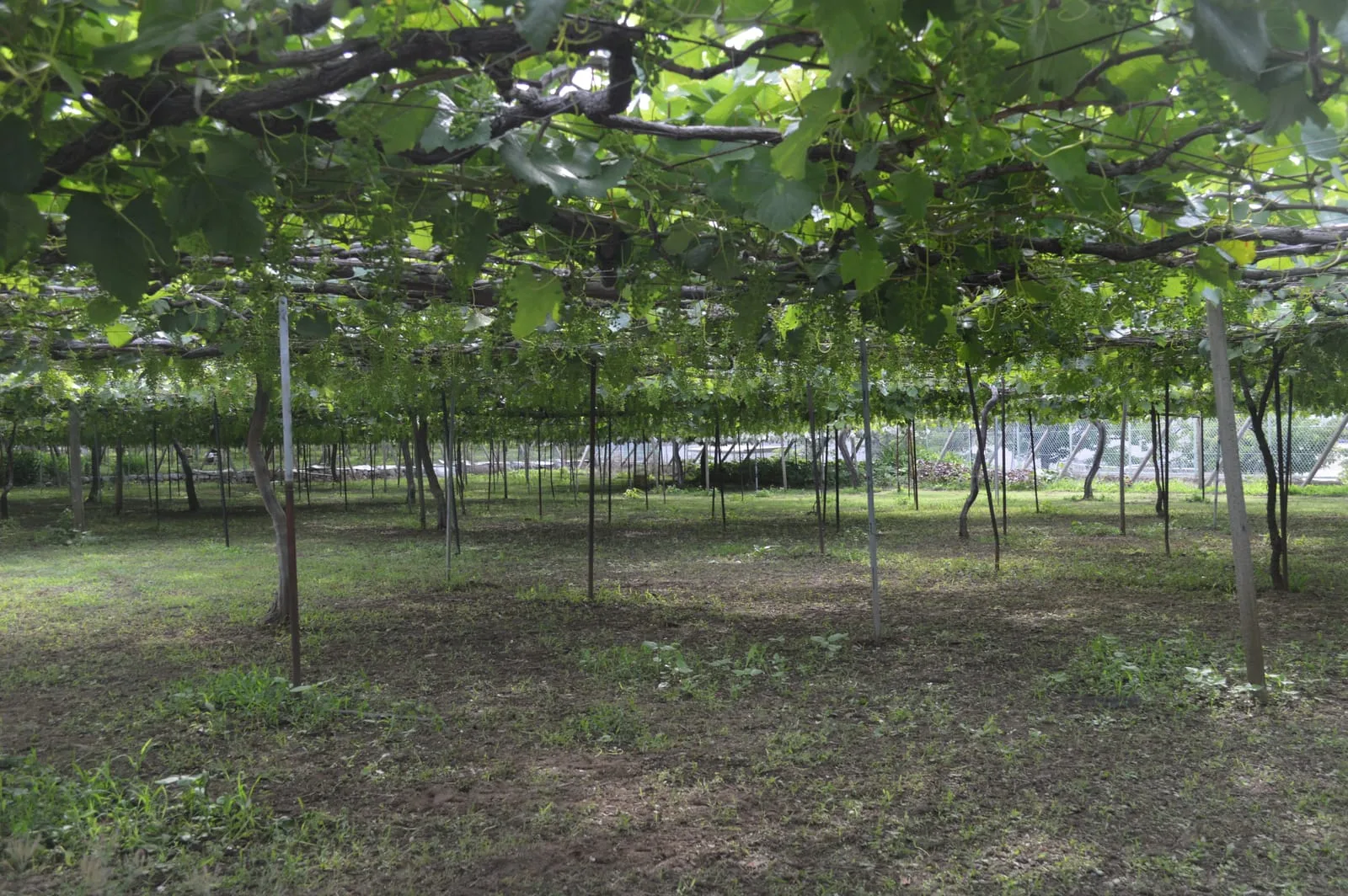
I have tasted a few Japanese wines since. Koshu in particular is a strange and lovely thing: a pink-skinned grape grown on those overhead pergolas you see in the hero image above, giving wines that are pale, low in alcohol, faintly citrus and almost weightless. It is not a wine that shouts. It is the sort of bottle that makes complete sense next to food, which is very much how Japan drinks.
I have not been to a Japanese winery yet, and I would love to. Yamanashi, Nagano, Hokkaido, Hiroshima with Reeze. If you are reading this from a Japanese cellar, consider this an open request.
What it means if you sell wine, and if you just drink it
For producers and importers, the takeaway is blunt: if your Asia plan is a China plan, your Asia plan is missing the biggest market in the region. Japan is stable, premium-leaning, deeply food-driven, and full of buyers who have been doing this carefully for forty years. Less glamour, less volatility, more actual sales.
For everyone else, the useful bit is this. The next time someone tells you Asian wine is a China story, you now know it is not. And the next time you see a bottle of Koshu on a list, order it. Not because Japan is winning a table of import statistics, but because it is genuinely good and almost nobody around you will have tried it.