For this 23rd episode of the Wine Makers Show, Wine Makers Show sits down with Jean Esprit. At the head of Domaine Esprit for the past few years, Jean walks us through how he set up shop and reshaped the family estate.
Can you start by introducing yourself?
I’m Jean Esprit, 5th generation on the family estate. We’re in the Crozes Hermitage appellation, in the village of Pont de l’Isère.
Has wine always been a passion for you?
It was my great great grandfather who started the activity in 1909. We’ve always had a vineyard. They made their own wine back then. That said, it was with my father that I learned wine. I trained later. I’ve been studying wine and training for 15 years. Since 2017, I’ve launched out by creating our brand and our range.
Can you tell us more about your training?
I was lucky to have a connection with nature from a very young age. From the end of middle school, I went into the wine world. I spent two years in the Châteauneuf du Pape area. Then I spent two years in Beaune in Burgundy where I learned a lot and had wonderful encounters. I finished in Montpellier in the Languedoc with more advanced, complementary work.
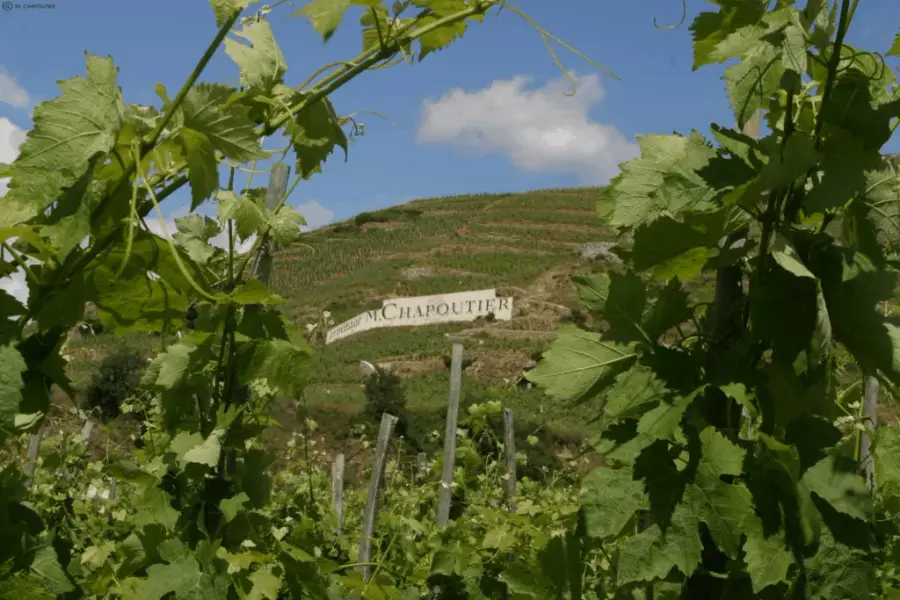
I worked in different houses and cellars, including at Chapoutier and other peers in the region. I went to Provence to make rosé. I went abroad, mostly to New Zealand. I learned a different work philosophy from France there. The work mindset was very healthy and very motivating.
Did you already have it in mind to take over the family business?
It’s been on my mind for nearly 10 years. I wanted to launch the activity. My father was 300% behind me. You don’t build something overnight, you have to think it through and plan everything. These things take time to come together.
What elements from your experiences do you draw on today?
I have a great diversity of experiences. I’ve seen lots of things and I can pick from different places to form my own idea and my own conception of wine. A wine represents the person. It can’t go any other way.
How long did it take to make this real here? What do you need before launching into the adventure?
I think you need training first. Anyone can make wine, but there are things to master and know. For that you need to do harvests and vinifications. I saw the different vinification stages with different winemakers. Then you have to go to your bank, of course, so you need time to budget, and the investment has to be carefully thought through.
What’s the first brick of the project?
When the diggers arrive and you start digging, that’s when it hits. We have an estate with a farmhouse and the vineyard around it. It’s a privilege to be able to walk to your workplace right next door. When you see those diggers, it’s still hard to grasp. What’s impressive is when you have the bottles in your hands, when sales begin and when you also win your first awards.
There was a year of design, a year of construction, and our first harvest was in 2017. Traditionally we sold the harvest to other houses. Today we transform our own grapes.
What was the reaction around you?
For me it was obvious, and for my father too. For other people, there was probably a bit of fear and uncertainty. It’s a life project, you don’t build a winery just for fun. It’s a passion job, otherwise it doesn’t work. Once the feedback is good, the doubters become proud and turn into real ambassadors for our products.
Did you already know what kind of wine you wanted to make, or not at all?
I’m someone who’s pretty structured and I have my ideas. I had my vision. That said, the first vintage is still a discovery. I didn’t know the potential of all my plots. We tested them all. I had pleasant surprises, especially thanks to our old vines.
Can you tell us about how the vineyard is structured?
We have 15 hectares in Crozes Hermitage, of which 14 are red with Syrah, and 1 hectare in white from Marsanne and Roussanne. Our vineyard is split into three parts: vines around 70/80 years old, the oldest hit 100, another third with vines around 40 years old, and another third I planted with young vines.
All this gives us three cuvées, can you tell us about them?
We have three reds. The first cuvée is called Esprit. It’s one where we go for finesse. It’s the friendly wine to share with friends, with a lovely suppleness. Then there’s the Perle Noire cuvée from our 40-year-old vines. It’s a cuvée with a bit more structure. This cuvée also gets a year of barrel ageing. Perle Noire is a bit of a snapshot of Crozes Hermitage. It’s very representative of the appellation. To finish, of course, we have our flagship cuvée, Le Zouave, in tribute to my great great grandfather. It was him who, in 1909, came back from the 4th Zouaves regiment, settled here and started planting the first vines. We still have vines from his time. We took the photo from his regiment and put it on the label. In white, we have the Perle d’Ivoire cuvée which can accompany lovely dishes but can also be served as an apéritif. It’s very versatile.
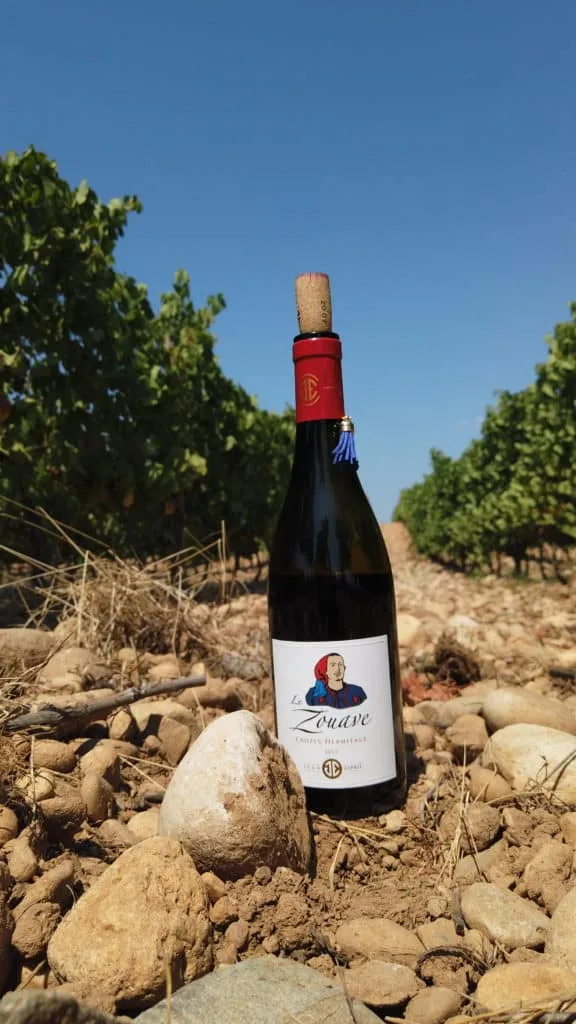
A word on the bottle labels: your great great grandfather’s photo isn’t the only tribute
On our first cuvée in Crozes Hermitage red, the Esprit cuvée, we used my grandmother’s signature. It’s an old-style handwriting and we wanted it as a wink. On Perle Noire and Perle d’Ivoire, we put the estate forward. The “perle” name came from harvest reception, when we really see little beads. That precious side is what we liked.
You also work the vineyard organically
In the vineyard, we work the soils with ploughing systems and add natural matter. We’re on fairly draining soils with the rolled pebbles that cover our terraces. We then have 25 metres of gravel underneath. These soils dry out very fast and need a bit of substance. We greatly limit inputs and focus on biological elements. Analytically we could be certified organic wine and biodynamic. Wine is life, and for that you need balance and exchanges.
Our soil is typical of the appellation, with rolled pebbles laid on our terraces. The interesting thing is that during the day they store the heat. That heat is then given back to the grapes at night. We’re often the first to harvest: it favours an early maturity.
How do you vinify here?
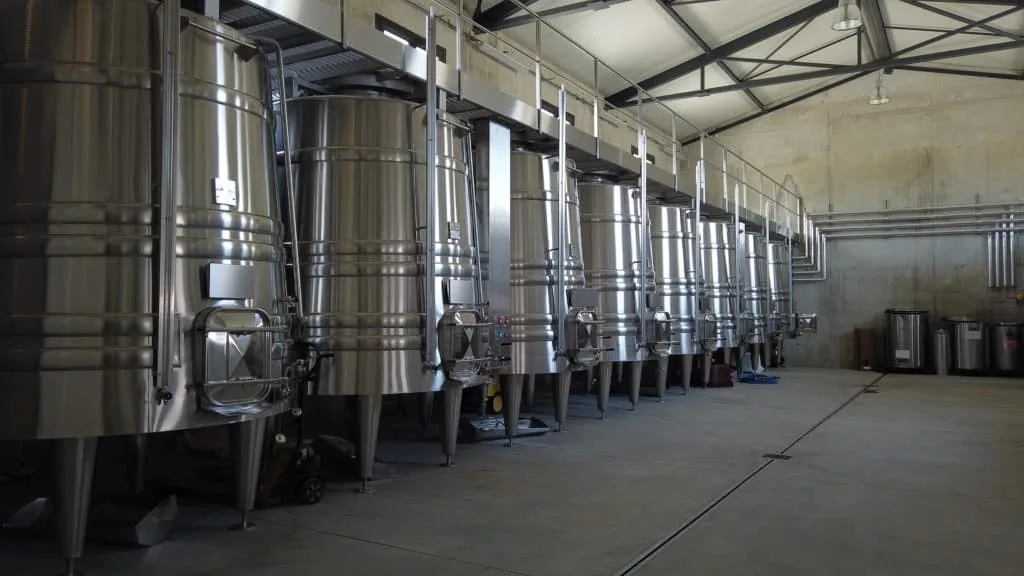
We do a traditional vinification but we intervene as little as possible. A great wine is grapes. Get great grapes and you’ve made 70% of the wine. If grape quality is mastered, the wine generally follows. You then need to adapt temperatures a bit, but the base is the grape. The rest is minimal.
What does your day-to-day look like today?
Our acreage grows year on year and we have a lot to do everywhere. Luckily my father helps me on the estate. We adapt to grow under the right conditions.
Historically there was a lot of viticulture in this area. So we were able to plant new vines on terroirs that hadn’t been worked yet. We always have plenty of ideas. We had the chance to acquire a small parcel in the historic centre of Cornas. It’s a real gem on a steep slope with great exposure and lovely sun. We can’t wait to introduce it to you.
What should we wish you for the next 10 years?
I think if we want to stay in a simple, healthy context and manage production well, around 20 hectares is doable. Beyond that, we go into other spheres and other worlds, and that’s not my goal. I want to stay a medium-sized, family-scale entity. We want to maintain this environment. We want to do haute couture.
Where can I find your wines?
At Michelin-starred restaurants and great bistros. At wine merchants too. We’ve also set up an online sales system. Then people can come see us at the estate. The cellar is always open, but you have to call or email. The appointment is booked to feed your thirst for wine tourism.
To contact Jean Esprit:
You won awards for your wines very quickly?
We were a coup de coeur in the Hachette guide from the very first vintage with two stars. That gave us a great spotlight. We had other awards at the local level, since we’re not the best known in the area. What’s important is that people taste the wines. We also get a bit of traffic from tourists who come visit, mostly Americans and people from Northern Europe.
How would you describe your wines in one sentence?
That’s tough. I try to make wines that look like me. Fruit, structure, something fresh and silky that you remember. Creativity matters a lot to me in my wines.
Do you have perspective on how your wine ages?
We’ve always made wine at home, so we have good visibility on about 10 years of hindsight. We can also compare with what my parcel neighbours do. Our wines can be drunk in their youth, but you can wait a few years if you can. They can age 10 to 15 years in a wine cellar without any problem.
If you had one piece of advice for a young winemaker who wants to start out, what would it be?
You have to travel, taste and understand. When you make a wine, you make a wine that matches you. That ripens over several years.
Do you have a wine book to recommend?
There are plenty of wine books. We’re part of the Vignerons Indépendants and had a book made called Fascinante Drôme that brings together various estates with their stories. It’s a beautiful work from Éditions du Sud Ouest.
Do you have a recent favourite tasting?
It was a Vosne Romanée with a lovely structure and beautiful finesse. We thought it was past its prime, but not at all. Lovely discovery.
Who should be my next guest?
I’m thinking of a peer on the right bank, Domaine Jolivet in Saint Joseph.
Amazon links on this page are affiliate links. They cost you nothing extra, and they help me keep this going.