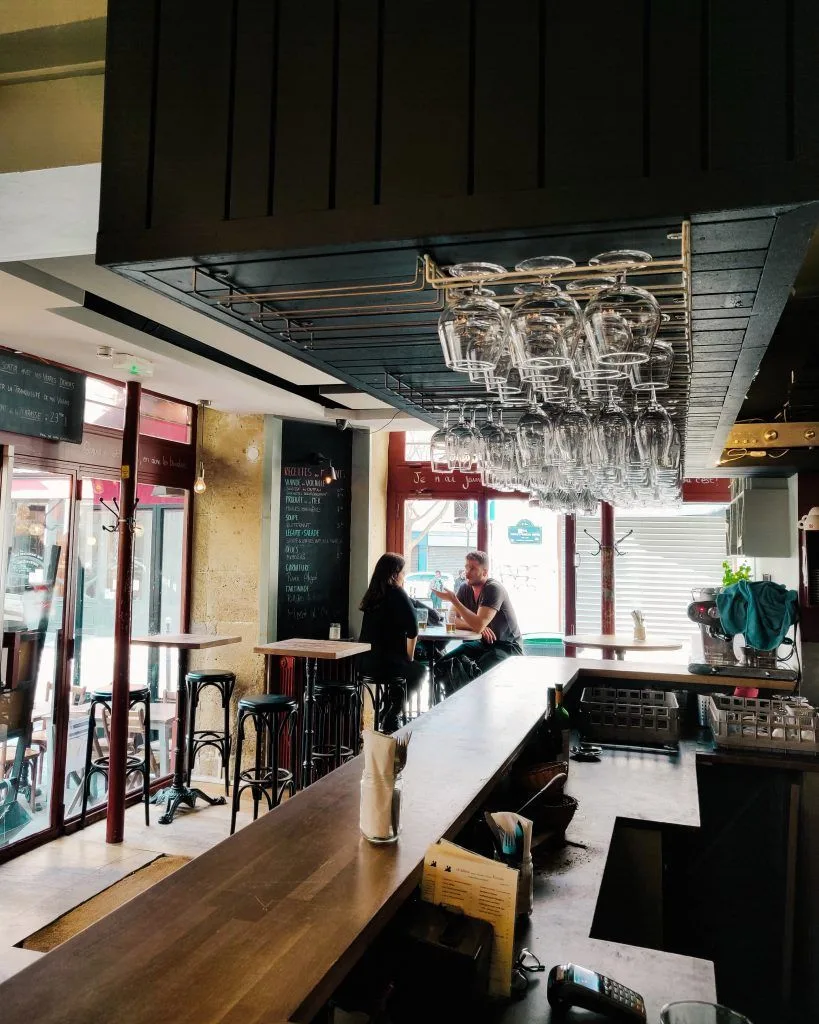
In a previous article, we already told you about Le Barav: a wine bar in Paris. To let you discover this spot in more detail, we went back to Le Barav and interviewed Théodore. Le Barav’s wine merchant and sommelier walked us through his journey in the wine world and gave us more info about Le Barav and what you’ll find there. We hope you enjoy this interview.
Introductions: Théodore, wine merchant and sommelier at Le Barav
WMS: Thanks so much for agreeing to this interview. We’re at Le Barav today, located at 6 rue Charles François Dupuy in the 3rd arrondissement of Paris. It’s an excellent wine bar we can only recommend. Théodore, can you start by introducing yourself?
Théodore: My name is Théodore. I’m the wine merchant and sommelier at Le Barav. Originally, I did law, pretty classic studies at the Sorbonne. At one point, I shifted to wine, without really knowing why, except for taste and pleasure. I think the turn was during my master’s in political science. I had the chance to do a thesis on the European Union’s wine policy. That was my first trip to the vineyards, since I had chosen the Pessac-Léognan area. I think I drank more Bordeaux back then than today. I got interested in this vineyard which is both close to the city and known worldwide. I had gone to see the appellation’s union, I had met producers, the administrative side too. I did this thesis and in parallel I really started getting interested. Little by little, you get closer to the world of wine merchants and retailers. I read quite a bit too. One thing that really struck me was Jonathan Nossiter’s film, Mondovino. The film was a condensation of a larger work: a series of 10 one-hour episodes on the wine world. He must have shot it in 2001 / 2002. The film itself is more of a pamphlet whereas the 10 episodes are more objective on wine in France, in Europe and in the United States. I read other works, and I started getting interested in the world of ratings, notably Robert Parker’s.
Then, I started working in a cellar in Bastille. I acquired the basics through exchange, tasting and work in this place. I was working both for this cellar and for an event agency in wine: I was starting to give tasting classes. That was at L’Atelier des Chefs, a kind of cooking school. It was very formative to pass on the knowledge I had acquired very recently at the time. In parallel, I went to Dijon to do the oenology technician diploma.
WMS: Speaking of which, I was going to ask you if, on top of having learned through practice, you had been able to take studies or training?
Théodore: The University of Burgundy diploma is one day a week. It really plunged me into the Burgundy vineyard and I was able to make many super interesting encounters. There was a winemaker who worked at Jacques Frédéric Mugnier, a great winemaker from Chambolle-Musigny. There was a winemaker who was a history professor and who, now, is fairly known: Raphaël Monnier and his Ratapoil wine. I met two fairly known Japanese guys, one for being a critic and importer, the other for having set up his domaine on the island of Hokkaido. He makes natural wines that are today considered the best wines of Japan. It was interesting in human terms, and also to get closer to the Burgundy vineyard.
WMS: A vineyard you knew a bit less?
Théodore: When I started working in the cellars I shifted toward it. Taste evolves, that’s what makes the charm of this trade. At that time, I was very curious about Burgundy, its climats and its winemakers. A really particular world, different from Bordeaux.
Then, I did the OIV’s master’s in Wine Management. It lasts a year and a half. It’s an itinerant master’s delivered by Paris Nanterre University but it’s run by the Organisation Internationale du Vin. You go a bit around the wine world, you meet the actors in their environment: producers, cork makers, coopers. We met masters of wine in New Zealand, wine makers in South Africa. You also do the trade fairs: London Wine Fair, Vinexpo Bordeaux. It’s a fairly interesting master’s. You find what you’re looking for: you have to put in the effort.
WMS: Were you continuing to work during this master’s?
Théodore: Actually no. It’s 18 full months during which we travel a lot. The difficulty of this master’s is that we’re in a group and we have to organize ourselves to get housing.
WMS: Was it during these 18 months of study that you were able to meet the most people?
Théodore: It was a big plus for the international part. I keep strong ties with some master’s classmates. It’s a very interesting human experience. The people I met around the world, I haven’t necessarily seen them again, having decided to settle in Paris. I finished this master’s in 2009. I then set up my cellar for 6 years with a partner. Then I left on travels again and now here I am.
WMS: I propose we go back to what you just said. In 2009, you finish your master’s and you set up a cellar with a partner.
Théodore: Yes, someone who had experience. We often crossed paths at trade shows. We came together on this idea. It lasted six years. We set up a wine cellar / wine bar. We went to see winemakers to get allocations. That is, a tacit contract with the winemaker who offers you a quantity and a price. An offer you must accept so as not to lose the allocation the following year.
WMS: Then you took up traveling again?
Théodore: We did 6 financial years as two partners. Then I bought out my partner’s shares. I made the choice to continue with a few silent partners for three years. A buyer came forward. I had the opportunity to keep my allocations and resell the business assets. It was an opportunity to change scenery.
WMS: What did you do from there?
Théodore: When you sell your business assets, legally, you have a delay so that the proceeds from the sale are blocked for a little while. So I had the time to travel a bit. I left for three months on a one-way ticket. It allowed me to complete my other travels. I discovered Burmese wines for example. I went to visit my friend in Japan during harvest: we helped with hand destemming (a stage of red wine vinification). I went to Oregon too. It’s a bit the Burgundy of the United States with grape varieties that are mostly pinot noir. I did Chile and Argentina a bit, but especially Argentina for wine: a country with incredible quality-price ratios (and wines you don’t find in France).
WMS: Did you really make this trip to go to vineyards?
Théodore: No but I take advantage, my temperament always brings me back to it. I did New Zealand too, I was able to do the south island which I didn’t know at all. When you’re a bit passionate and obsessive, you find wine everywhere.
WMS: Do you have a best memory or an encounter that struck you during these travels?
Théodore: An encounter that struck me is in the Stellenbosch region in South Africa. There’s a vineyard called Franschhoek, which refers to France. We had met a winemaker who makes sublime wines. A man who came from Namibia and who really makes incredible wines in this region. I don’t know if you’ve ever heard of the Cape floral region?
You have six or seven floral environments in the world. There’s a floral environment that corresponds to 0.1% of the planet, it’s around the Cape. There are plants and flowers that only grow there. It was very impressive in olfactory terms, it really struck me. As part of this trip, we visited this domaine, which made incredible wines.
Back to Paris and the start of the Barav adventure
WMS: You finish this world tour, you come back to Paris and you arrive at Le Barav?
Théodore: When I came back, I set up a small company to continue with the winemakers I had left a few months ago. The idea was to set up a buying-selling, aging and tasting activity. After that, I wanted to work and change neighborhoods, atmosphere. Every evening, it’s packed with people here and it’s a very interesting clientele. Because of how busy it is, we don’t take reservations.
WMS: What attracted you to Le Barav?
Théodore: The people I met and the position offered. That is, a hybrid position between wine merchant and sommelier, a big turnover, lots of throughput. On top of that, they were giving me the chance to evolve the wine selection and to give direction to the cellar.
WMS: Did you have the opportunity to change things?
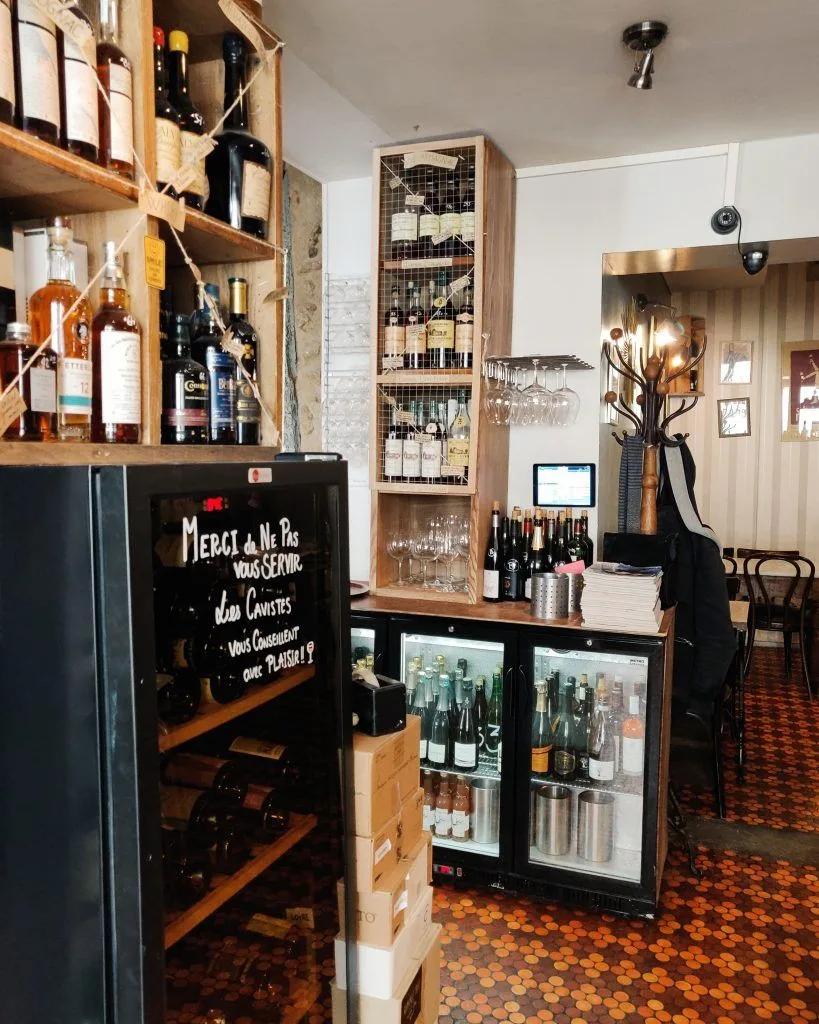
Théodore: Le Barav has existed for about 12 years so when I arrived the cellar was already there. I made a wine selection in my image to offer the wines I think are most pleasant to work with for the clientele. I kept some things and changed others. We developed the Burgundy allocation range. We also developed biodynamics and natural wines. Finally, we put forward foreign wines by importing wines into France that we didn’t know a few years ago. We also developed events.
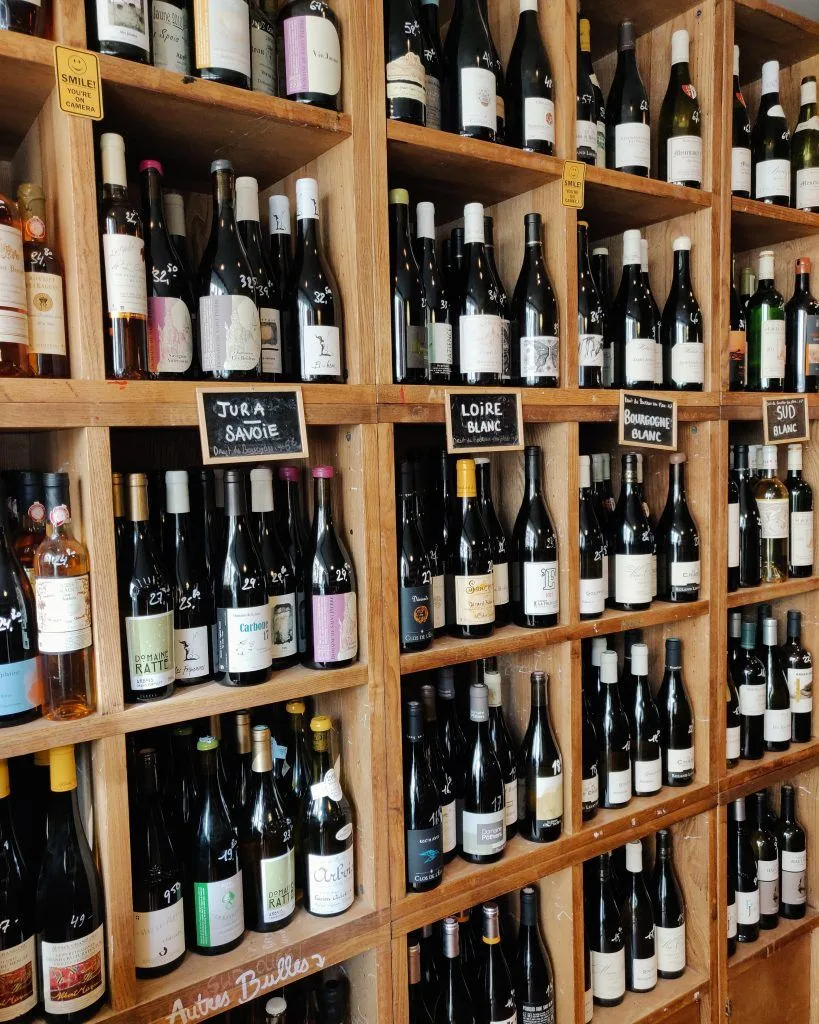
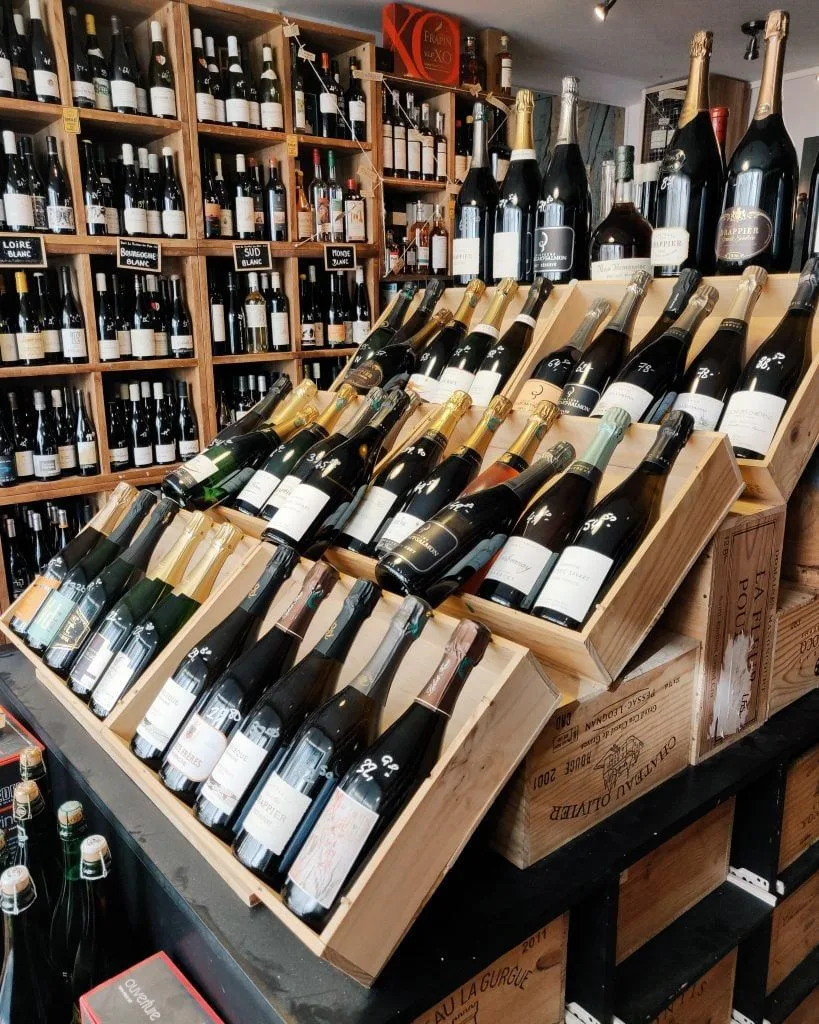
WMS: So speaking of which, can we talk about the events at Le Barav?
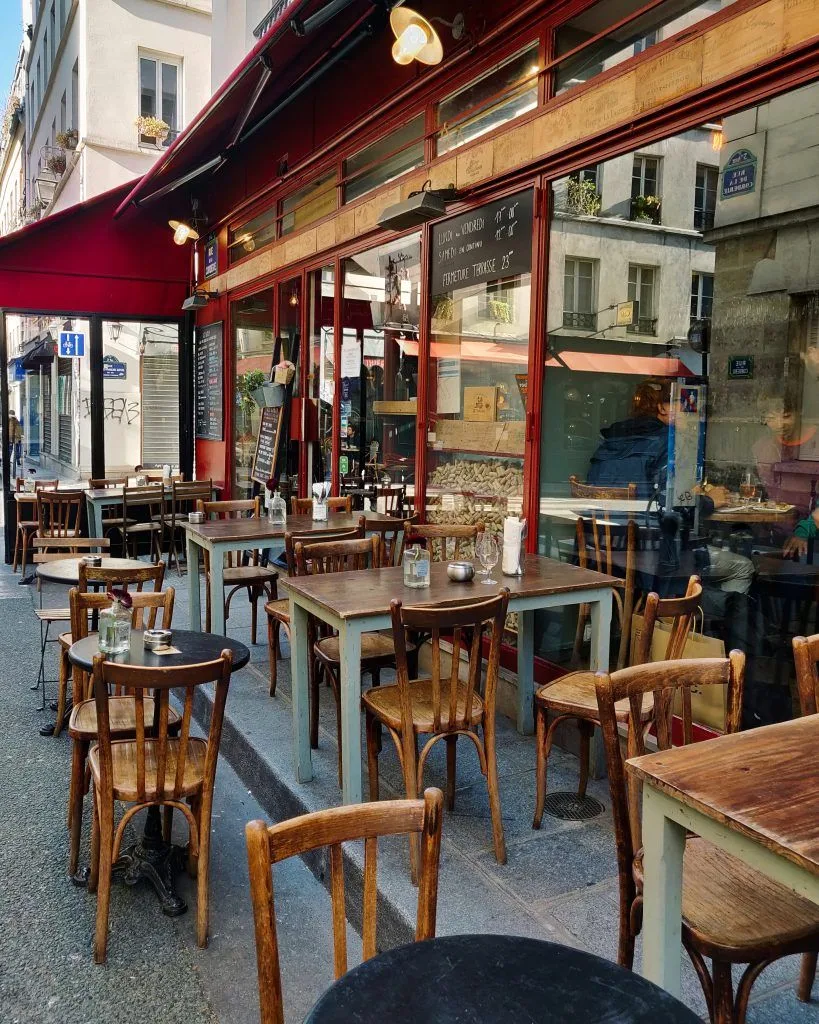
Théodore: We offer a seasonal program with themes and tastings, every other Saturday. People are free to sign up for these tastings, generally blind. They’re great evenings where you can taste things you don’t necessarily usually drink. I try to dig up things we won’t necessarily have for sale but that are interesting. Outside of that, we try to bring in winemakers. We have a beautiful sunny pedestrian terrace at Le Barav so organizing a mini trade show could be a good idea.
WMS: How do you sign up for events at Le Barav?
Théodore: We generally print a program available at the cellar and bar. We post on Instagram and Facebook and you can reserve by phone. We also do bespoke: anyone is free to organize a tasting.
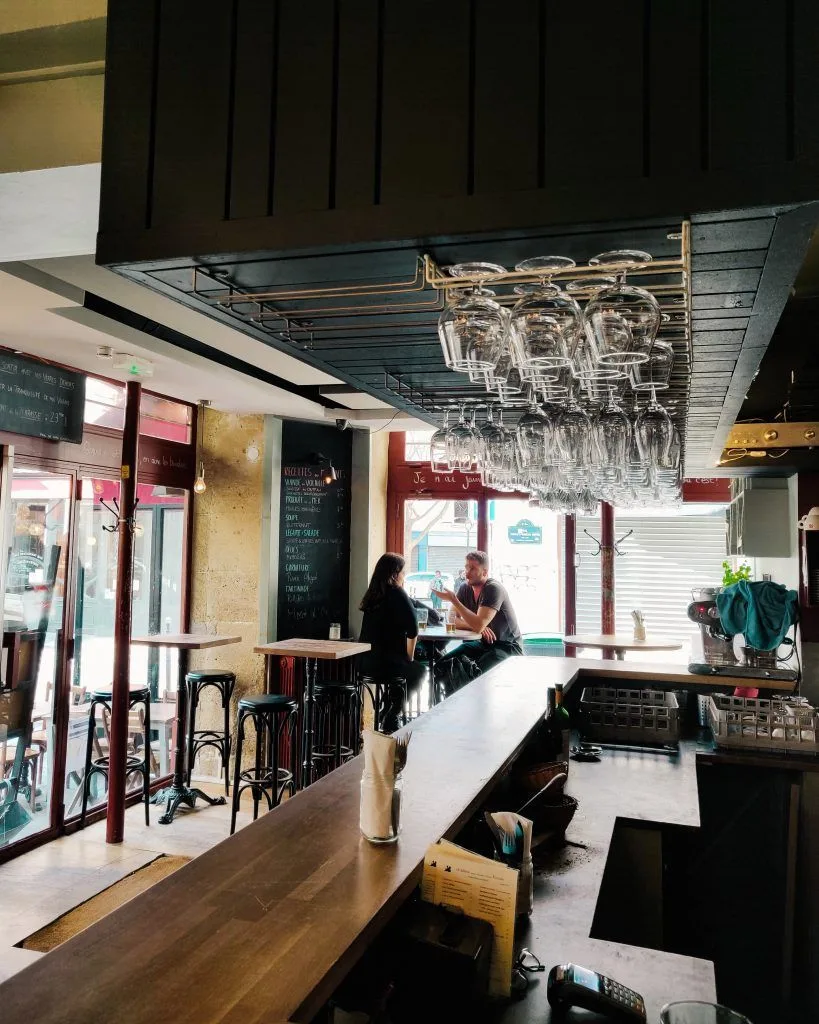
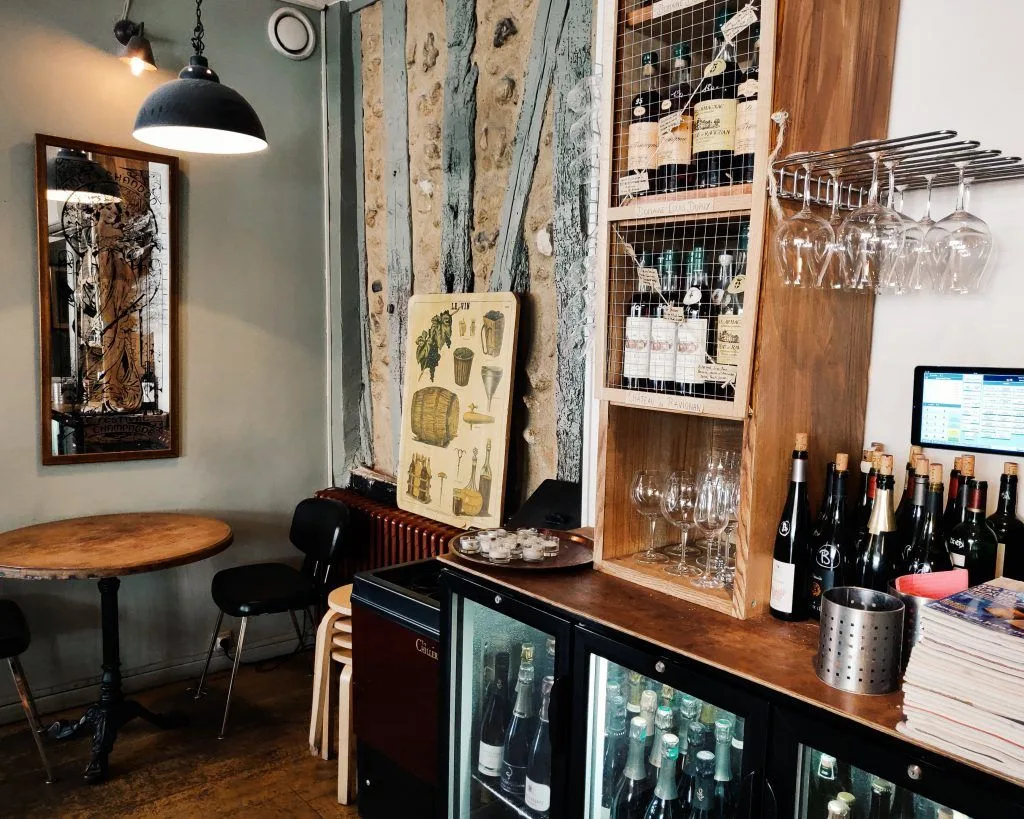
WMS: To go a bit more into detail about Le Barav: there’s a cellar part and a bar part. The two are connected. You can buy your wine to take away, on your advice and that of your assistant, or taste it here with a charcuterie board.
Théodore: Exactly, we do takeaway sales or drinking on site with a small corkage fee.
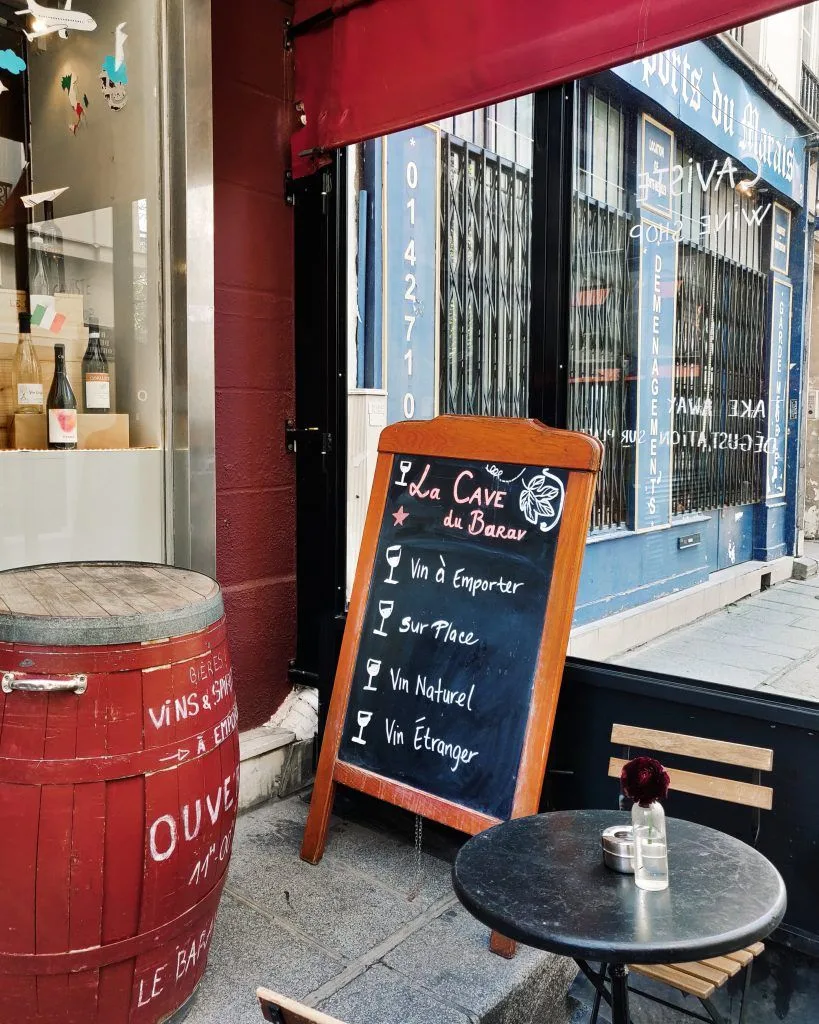
WMS: Is your advice different when you sell takeaway versus on site?
Théodore: Absolutely. The takeaway clientele is generally loyal and really trusts us. The recurring question is to know the pairing to make so as not to make a misstep. Here, we’re a wine bar, we offer charcuterie boards, small dishes to share. We don’t do high-gastronomy food and wine pairings: it’s a young and dynamic spot. We’re more here to discover something new, atypical and original.
WMS: In Le Barav’s cellar, do you have a favorite wine? Or an idea of the wine that pleases the most?
Théodore: I’m not very strong in terms of best-sellers. One domaine works very well in Côtes Chalonnaises. It’s Domaine Gouffier in Mercurey. They’re very good quality-price ratios. These wines are often out of stock so it must be a success.
WMS: In addition to the events you organize at Le Barav, there’s also a little game, the mystery wine.
Théodore: It’s existed for a very long time here. We have about a dozen wines by the glass here, including a mystery wine. We give a small sheet with a pencil. You then have to find the region, the appellation and the grape variety. Depending on what the customer finds, they can win from a glass to a bottle.
WMS: What’s the success rate of the game?
Théodore: Glasses and half-glasses are often won. The bottle is regularly found too since that’s when we change the mystery wine. It goes from a few days to two or three weeks maximum.
WMS: Do you have a regular mystery wine clientele?
Théodore: There are mystery wine regulars at Le Barav. There are a few game enthusiasts.
Conclusion of this interview
WMS: We’re getting to the end of this interview. Two classic questions for guests: if you had a book to recommend on wine?
Théodore: At the risk of answering off-topic, it’s not a book on wine. However it struck me for the tastings. So I recommend the book Le Parfum by Patrick Süskind. [You can get this book by following this link].
WMS: If you were leaving for a desert island, with a bottle of wine. Which would it be?
Théodore: I think, to prolong the pleasure, I’d take a vin jaune from the Jura. It’s a wine from the Jura, oxidative and that can be drunk at higher temperatures. For the practical side it seems perfect to me. You can drink it over a month, a month and a half even, even more. The wine I would take would be a bottle of Arbois Pupillin.
WMS: Do you have it here at Le Barav?
Théodore: Yes, I’m pretty much a fan of vin jaune so we have quite a bit here.
WMS: Have you seen a rise of vin jaune?
Théodore: I observe a rise of Jura wines globally. These winemakers make classic red and white wines. You also need oxidative wines, not necessarily vins jaunes. They try their hand at making vin jaune. I went some time ago to a wine bar called Le Verre Volé. I found a vin jaune there from Etienne Thiebaud called Domaine des Cavarodes. I realized it wasn’t sold by the bottle but by the glass. It remains more anecdotal.
The Le Barav cellar Instagram account Le Barav Facebook page Le Barav website Le Barav’s address: 6 rue Charles François Dupuis - 75003 Paris.
Amazon links on this page are affiliate links. They cost you nothing extra, and they help me keep this going.