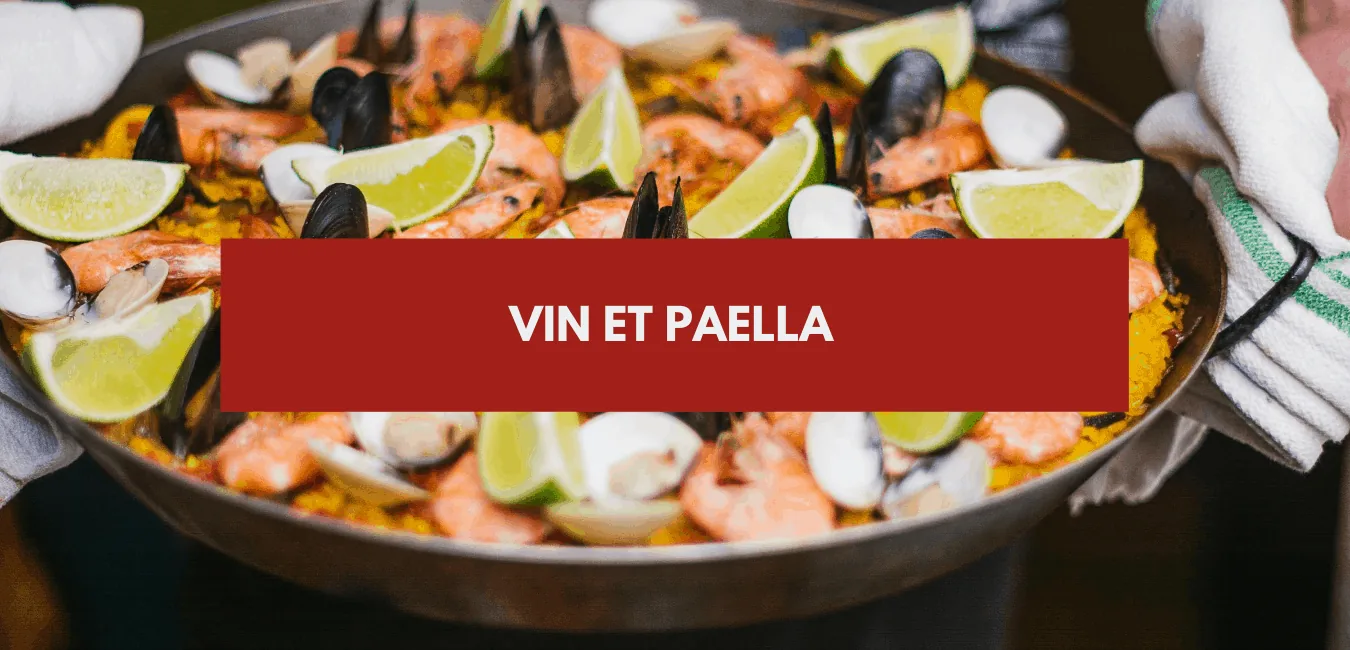
With paella, open a dry Spanish white: Albariño from Rías Baixas or Verdejo from Rueda. For a mixed paella with chorizo, pour a Navarra rosado. For a valenciana with rabbit and chicken, a light Garnacha served cool. Saffron and smoked paprika are the two flavours the wine actually has to handle.
Why saffron and smoked paprika decide the bottle
Paella is not a fish dish and it is not a meat dish. It is a rice dish. What flavours the rice is not the prawn or the chicken, it is the base: saffron, smoked paprika, tomato, olive oil, and the caramelised crust stuck to the bottom of the pan that Spaniards call socarrat.
Saffron first. It is a fragile aroma, faintly bitter, slightly honeyed, with a hay note. It hates new oak. An oaked white brings vanilla and butter that step straight in front of the saffron and erase it. That is the first reflex to unlearn.
Then smoked paprika, the pimentón de la Vera. Smoked paprika carries its own bitterness, which stacks on top of the tannin, so a tannic red turns dry and almost ashy in the mouth. You want either no tannin at all, or very soft tannin served cool.
Finally, fat. Rice cooked in olive oil leaves a film on your palate, and without acidity the dish feels heavy by the third forkful. It is the logic we apply across our wine pairing guides: match the seasoning and the cooking, not the headline ingredient.
What wine goes with seafood paella?
This is the version most of us cook outside Spain: prawns, mussels, squid, sometimes a little white fish, and nothing else. Iodine, saffron, lemon, olive oil.
Spanish whites are unbeatable here, and that is no accident, they grew up alongside the dish. Albariño from Rías Baixas in Galicia is the most reliable answer. Saline, lemony, vivid, rarely above 12.5% alcohol, it travels with the iodine instead of fighting it. Budget €12 to €18 for a serious bottle.
Just behind it, Verdejo from Rueda costs half as much and brings a fennel bitterness that cuts the oil. If your pan is loaded with squid and the rice is rich, a Godello from Valdeorras adds volume without ever going heavy. A Brut Nature Cava works too, the bubbles resetting your palate between mouthfuls.
From France, Picpoul de Pinet does the job under €10. What to avoid is oak: a long-aged white Rioja or a vanilla-heavy Chardonnay will paint over the saffron. Same reasoning as our guides to prawns and to a seafood platter.
What wine goes with mixed paella, with chicken and chorizo?
Paella mixta adds chicken, usually chorizo, sometimes pork belly. In Valencia that is cheerful heresy. On the plate it is simply a much richer dish: pork fat, smoked paprika, browned meat, and still the iodine of shellfish over the top.
A white on its own starts to feel thin. This is exactly where Spanish rosé earns its keep, and it has little in common with a pale Provence rosé. A Navarra rosado made from Garnacha is macerated longer, deeper in colour, fruitier, with real substance and real freshness. It takes the paprika and the chorizo without flinching, for €8 to €13. Rosados from Rioja and Cigales behave the same way. Our piece on rosé explains why these bottles are sturdier than their reputation.
The other strong answer is a Reserva Cava, Brut Nature. Bone dry, no dosage, fine bubbles and at least eighteen months on the lees, it cuts through the fat of the rice better than any still white. And if you want red, pour a Mencía from Bierzo, light and peppery, served cool.
What wine goes with paella valenciana, with rabbit and chicken?
The original: rabbit, chicken, flat green beans, big white garrofó beans, rosemary, sometimes snails. No seafood, no chorizo. The dish turns earthy and herbal, with meat juices and far less iodine.
Now red finally makes sense, as long as it stays light. Garnacha from Calatayud or Campo de Borja gives ripe red fruit, supple tannin and a peppery edge that echoes the rosemary, often under €12. A high-altitude Garnacha from Sierra de Gredos does the same with more finesse. Mencía from Bierzo or Ribeira Sacra is just as good, and a young Rioja Crianza works provided oak is not running the show.
Serve these reds cool, around 14C, never at the ambient temperature of a summer lunch. If you would rather stay on white, a modern white Rioja from Viura, unoaked, holds up nicely against rabbit.
What wine goes with arroz negro, the squid ink rice?
Black rice changes the brief entirely: squid ink, deep iodine, usually a spoon of garlic alioli on top. It is salty, marine and fatty, the hardest member of the family to match.
You need a white with real tension and real salinity. Txakoli from the Basque country, a Getariako Txakolina at 11% with its faint prickle of gas, is built for it. Albariño works too. But the best answer comes from Jerez: a well-chilled Manzanilla from Sanlúcar, or a Fino, dry and saline, slices through the ink and the alioli cleanly.
No red here, not even a light one, because iron in the wine oxidises the marine fats in the ink and the squid, which leaves a metallic finish. The same rules apply to fideuà, the short-noodle version, which you treat like the paella it copies.
Which wine for which paella?
| Style of paella | Appellation | Why it works | Price band |
|---|---|---|---|
| Seafood | Albariño (Rías Baixas) | Saline and lemony, low alcohol against iodine | €12 to €18 |
| Seafood, on a budget | Verdejo (Rueda) | Fennel bitterness that cuts the olive oil | €7 to €11 |
| Seafood, squid heavy | Godello (Valdeorras) | Volume without oak, stands up to squid | €13 to €20 |
| Mixta, chicken and chorizo | Navarra rosado (Garnacha) | Fruit and weight, handles smoked paprika | €8 to €13 |
| Mixta, very rich pan | Cava Reserva Brut Nature | Dry bubbles that scrub the fat off the rice | €12 to €18 |
| Valenciana, rabbit and chicken | Garnacha (Calatayud) | Soft tannin and pepper, served at 14C | €9 to €14 |
| Valenciana, meat juices | Mencía (Bierzo) | Light, floral red with no dead weight | €12 to €20 |
| Arroz negro, squid ink | Manzanilla (Sanlúcar) | Dry and saline, the tapas bar answer | €10 to €16 |
Why does a big oaked red flatten paella?
It is the most common mistake at the table: Spanish dish, therefore famous Spanish red. A Priorat, a Ribera del Duero Reserva or a Rioja Gran Reserva are lovely bottles, but with paella they win the match instead of sharing it.
Three effects pile up. New oak adds vanilla, coconut and toast, which cover saffron, the most delicate aroma in the pan. The bitterness of the smoked paprika stacks on top of the tannin, so the wine reads drier and more bitter, and the iron in the wine oxidises the fats in the shellfish, which is what leaves that metallic aftertaste, a mechanism Japanese researchers pinned down in 2009. And 14.5% or 15% alcohol amplifies how salty and how spicy the rice tastes, so the dish suddenly feels more aggressive than it is.
The rule is simple. If you want red with paella, choose it light, fruity, low in tannin, under 13.5%, and serve it cool. Save the Priorat for roast lamb. Our tour of Spanish wine helps you place each region before you buy.
What temperature, and how much wine per person?
Temperatures that work: 9C to 11C for whites, 10C to 12C for rosados, 14C for light reds, 7C to 8C for Manzanilla. Below 6C the wine goes mute and the saffron goes with it.
Watch the sun. Outdoors a bottle gains three or four degrees in twenty minutes, and a rosé that was perfect in the first glass is flabby by the third. The ice bucket stays on the table, not in the kitchen.
On quantity, paella is a long shared lunch. Count one bottle per two to three people, aperitif included. For six guests, two whites and one rosado cover the meal comfortably. And if you open a light red, save it for the end, when everyone is scraping the socarrat off the bottom of the pan. That is when it gives its best.
Frequently asked questions
What white wine goes best with paella?
A dry, saline white with no oak. Albariño from Rías Baixas is the safest call: lemony, faintly salty, rarely above 12.5% alcohol, so it carries the iodine of shellfish without burying the saffron. Verdejo from Rueda does nearly the same job under €11, with a fennel bitterness that cuts olive oil. For a richer, squid-heavy pan, choose a Godello from Valdeorras.
Can you drink red wine with paella?
Yes, but only with the meat versions: valenciana with rabbit and chicken, or a mixta with chorizo. Pick something light, fruity, low in tannin and under 13.5% alcohol, then serve it cool at around 14C. Garnacha from Calatayud, Mencía from Bierzo and young Rioja all work. With a seafood paella, iron in the wine oxidises the fats in the shellfish and the finish turns metallic.
Why does a big oaked red ruin paella?
Three things stack up. New oak brings vanilla and toast that smother saffron, the most fragile aroma on the plate. The bitterness of smoked paprika stacks on top of the tannin and the wine turns dry and bitter. And 15% alcohol amplifies the salt and the heat of the pimentón. A Priorat or a Ribera del Duero Reserva is a fine bottle, but it turns the paella into a side dish.
Which Spanish rosé works with a mixed paella?
A Navarra rosado made from Garnacha. It is macerated longer than a pale Provence rosé, so it is deeper in colour, fruitier and has enough weight to handle chorizo and smoked paprika. Budget €8 to €13 a bottle. Rosados from Rioja and Cigales follow the same logic. Serve them at 10C to 12C, and keep the bucket on the table outdoors.
What wine goes with arroz negro, the squid ink rice?
A very saline, high-acid white, or a glass of sherry. Txakoli from the Basque country, at 11% with its faint spritz, scrubs the iodine of the ink and the garlic fat of the alioli. A chilled Manzanilla from Sanlúcar at 8C does it even better and is what a tapas bar would pour. No red here: iron in the wine oxidises the seafood fats and the finish tastes metallic.