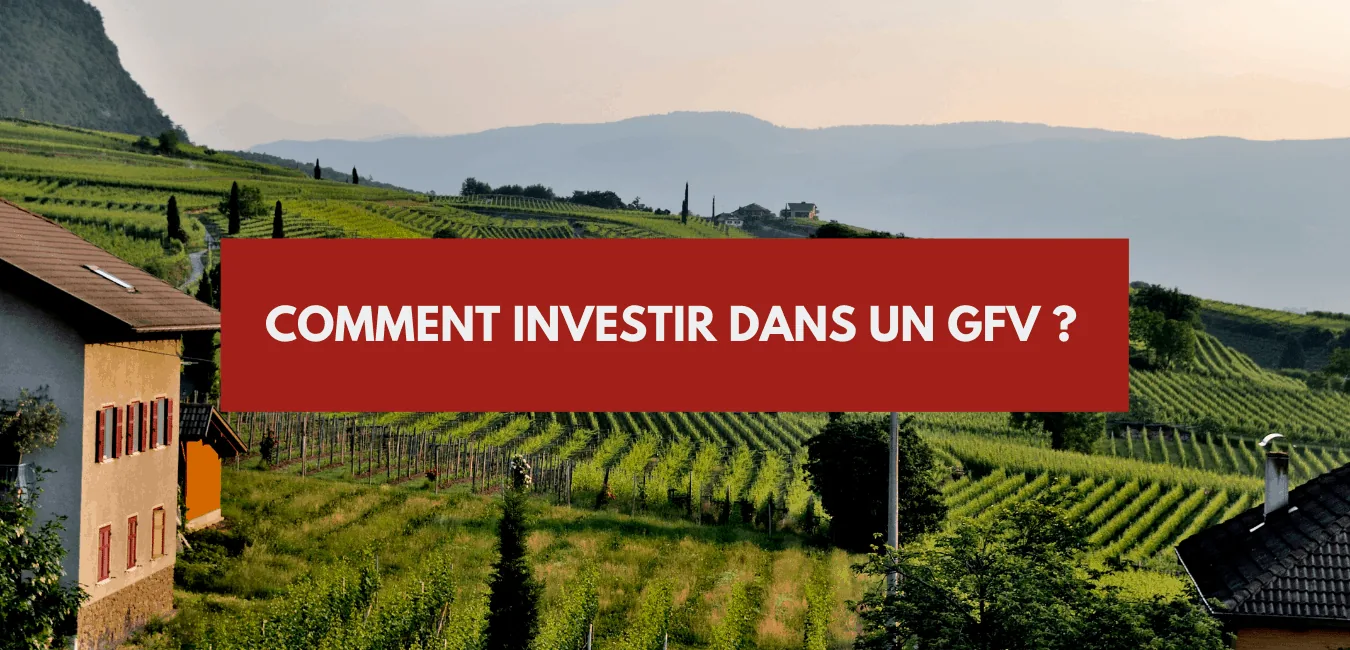
A GFV (Groupement Foncier Viticole) makes it easy to invest in wine. The Groupement Foncier Viticole lets you own vines and hand the operation over to a working winemaker. In this article we walk through the GFV and all of its rules. By the end you’ll know exactly how to invest in a GFV.
What is a GFV?
A Groupement Foncier Viticole is a civil partnership that lets members co-own a wine estate and entrust its operation to a winemaker. In other words, when you invest in a GFV, you’re buying vines but you won’t be the one farming them. You hand the operation over to a winemaker. They pay rent back to the partnership, which can then pay you in cash or in bottles of wine.
How does a GFV work?
The way a GFV works is to generate income from leasing out plots. It’s also worth highlighting the different players inside the group.
How a Groupement Foncier Viticole runs
The way a GFV works is, in the end, pretty simple. You invest in the group. The group buys vines and plots. It then leases them to a working winemaker through a “fermage” lease. The winemaker pays a form of rent for operating those plots. The group then pays back its members a share of the rent based on the size of their stake and the percentage it represents. Worth noting: the fermage amount is set every year. It’s the préfecture, in partnership with the local wine industry body, that’s in charge of setting it. This happens in November. This setup is widespread across every wine region. You’ll find a GFV in Bordeaux, in Burgundy, in Champagne or in the Rhône.
The players in a Groupement Foncier Viticole
To really understand the GFV and how it operates, it helps to highlight the three main players: the management company, the investors, and the winemaker. First, the management company runs the group. It’s the one finding the winemaker, paying the ongoing costs, distributing the rent and so on. It earns its keep through a management fee taken from the fermage income (usually around 3%). Next, the investors are the private individuals buying shares in the group. Buying shares is what allows the group to acquire the vines. Finally, the working winemaker (often a company) farms the estate. Their goal is to make the operation profitable by selling wine whose revenue exceeds their costs (which include the fermage).
How to invest in a Groupement Foncier Viticole
To invest in a Groupement Foncier Viticole, there are several things to keep an eye on. They’ll help you account for all the factors in your investment and make informed decisions.
Warnings before investing in a Groupement Foncier Viticole
That said, before investing in a Groupement Foncier Viticole: do your homework and, if it makes sense, get professional advice. This investment carries a risk of capital loss. Take the time to read the documentation carefully and don’t hesitate to ask questions if anything isn’t clear. In other words, even if a GFV is a “pleasure” investment, take precautions and study each deal up close.
Doing your homework on the different Groupements Fonciers Viticoles
Before investing in a GFV, do your research. There are several websites you can check, like GFV-enligne or Patrimea. Also, pay attention to the management fees. Fees are charged by the management company. They obviously need to make money, but excessive fees can kill the deal’s profitability.
Subscribing to shares in a GFV
You can subscribe to a GFV when it’s first created or on the secondary market, by buying from people who want to sell their shares. Investment amounts typically range from 5,000 to 50,000 euros. Note that entry fees may apply when subscribing to GFV shares. Generally, these entry fees are around 8%. Buying GFV shares is a straightforward process that only requires a few documents, so don’t be intimidated. Each year, an activity report is sent to all shareholders. This report also notes the income amount you’ll need to declare to the tax authorities.
Revenue from a Groupement Foncier Viticole
Income from a Groupement Foncier Viticole comes from the fermage. Its amount is set in November by the préfecture together with the local wine industry body. Members then receive a share of this fermage proportional to the shares they hold. A member can also choose to receive this income in kind, meaning as bottles of wine. These are then valued at production price and distributed to the member based on their stake in the group.
What’s the yield on a GFV?
The yield on a Groupement Foncier Viticole is relatively low: generally 1 to 3% per year. To this, however, you need to add the increase in the value of the GFV shares if vineyard prices rise. You can also choose to be paid in bottles. Each year you’ll receive a number of bottles based on your stake in the group. The bottles are valued at production price with a discount versus the commercial price (between 20% and 60% depending on the case).
Why set up a Groupement Foncier Viticole?
Using a GFV can be an excellent opportunity for a winemaker. First, these structures give them access to large operating areas without having to go into debt or pay a large sum upfront. The GFV also relieves the tenant (the working winemaker) of certain tax burdens like property tax, which is naturally borne by the partnership that owns the vines. So setting up a Groupement Foncier Viticole can be a good opportunity for a winemaker. They get access to vines and a substantial operating area while limiting their investment and administrative load.
What’s the tax treatment for a GFV?
The income you earn through your GFV is treated as property income. However, it’s taxed under income tax (IR) under the micro-foncier regime. For this, your GFV income must not exceed 15,000 euros per year (which is realistic given the relatively low yields). You can also opt for the réel tax regime, which lets you easily deduct certain expenses. Capital gains you make are subject to the real estate capital gains regime with allowances based on how long you’ve held the shares. Your capital gains are also exempt from social security contributions if you hold the shares for at least 30 years. The GFV also offers some tax benefits. Capital gains on sales below 15,000 euros are exempt from tax. GFV shares also qualify for exemption from the IFI (real estate wealth tax) and can be used to optimize your estate. For example, in inheritance, GFV shares are exempt from inheritance tax up to 75% for an amount below 300,000 euros. This exemption is only valid if the heir agrees to hold the group’s shares for at least 5 years. More rarely, some GFVs may give you the option to claim a deduction on your income tax. So pay close attention to the documentation you receive. In any case, if you’re dealing with these tax questions, you can turn to a wealth management advisor who can answer all your questions and walk you through the process.
Exiting a GFV
Exiting a Groupement Foncier Viticole isn’t hard. A member can leave the group at any time. That said, the rules for selling shares vary depending on the type of group. In every case, the value of the group’s shares is reassessed each year by the management company. So the price of your shares can move year to year (especially based on land prices).
Sale of shares in a fixed-capital Groupement Foncier Viticole
Members can leave this group at any time. If you’re a member of a fixed-capital GFV, you can exit whenever. You just need to find a buyer for your shares and pay the registration fees on the transaction (4.8% of the transaction amount).
Sale of shares in a variable-capital Groupement Foncier Viticole
In a variable-capital GFV, you can also exit at any time. Find a buyer and sell them your shares. In this type of group, your transaction is not subject to any registration duty.
Should you invest in a GFV?
It’s hard to answer the question “should you invest in a Groupement Foncier Viticole?”. That said, you can at least understand the pros and cons. From there you can form your own opinion on the GFV and on the opportunity to invest.
Advantages of the Groupement Foncier Viticole
One of the advantages of investing in a GFV is the relatively low entry cost. You can invest in a Groupement Foncier Viticole from about 5,000 euros. So it’s a fairly accessible investment, especially compared to buying a large wine estate outright. Since you can also choose to be paid in bottles, the GFV is a great way to stock your wine cellar on the cheap. You can then share wine made from your own vines with your friends. Finally, the GFV tax benefits around inheritance and IFI exemption are worth considering when picking this kind of investment. In short, here are the main advantages of investing in a Groupement Foncier Viticole:
- Relatively low entry barriers;
- A great way to stock your wine cellar;
- Possible tax advantages.
Drawbacks of the Groupement Foncier Viticole
The downside of the GFV is that you can end up pretty far from the actual vines. Even though investing in a Groupement Foncier Viticole is often pitched as a “pleasure” investment, in most cases you’ll be fairly removed from the daily operations. So you might find yourself a little frustrated in pursuing your wine passion. Investing in wine can be a pleasure in other forms if that’s what you’re after. The return on a GFV investment is also pretty modest (between 1% and 3%). So it’s a potentially interesting diversification investment, especially if you want to build up vineyard real estate without dropping hundreds of thousands of euros. Finally, while the rules for selling shares are fairly simple, they aren’t necessarily very liquid. In short, here are the main drawbacks of investing in a Groupement Foncier Viticole:
- An investment potentially far from the vines;
- A fairly low return;
- Low share liquidity.