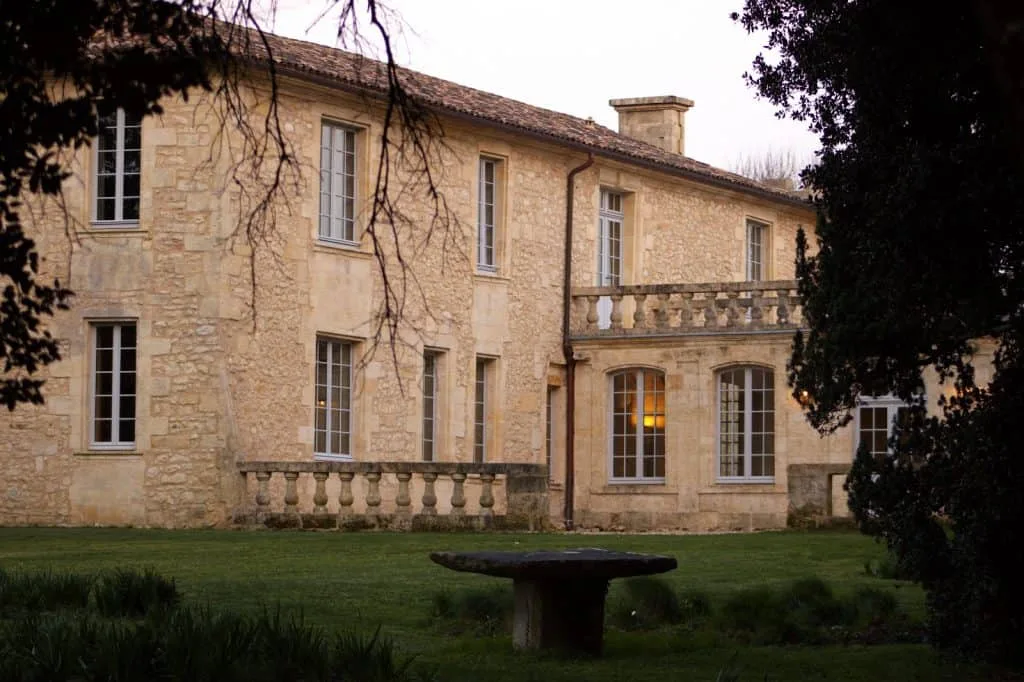
For the 41st episode of the Wine Makers Show, we sat down with Pauline Bich and Philippe Chandon-Moët at Château de Ferrand. Here’s the first couple interview for a duo at the head of an extraordinary adventure in Saint-Émilion. I wish you excellent listening and a wonderful discovery of Château de Ferrand.
Antoine: Hi Pauline, thank you so much for hosting me here at Château de Ferrand. For the people listening, we arrived yesterday at the end of the day after a journey to Saint-Émilion in the Bordeaux region. We had dinner together and spent the night here and we’re meeting right after breakfast with magnificent sun outside to record this episode. I’m really thrilled to meet you and to know a bit more about you. We’re going to talk about lots of things in this episode because you have a rich history and you have plenty to tell us about what you do here at Château de Ferrand.
Before we dive into all that, can you start by introducing yourselves?
Pauline: Hello again Antoine, it’s a joy to welcome you to Château de Ferrand which is a Grand Cru Classé of Saint-Émilion; a joy because you also embody new technologies, the future of youth and youth entrepreneurship. I’m an industrialist’s daughter, the tenth of eleven children. My professional path took me for many years into operational roles within the BIC Group, including logistics in real estate. I was lucky enough to live through an era, a very particular moment in the life of businessmen and visionary entrepreneurs that was my father, the Baron Bich, when in 1978 he acquired Château de Ferrand by changing his water into wine. I’ll tell you a bit more.
Philippe: Hello again Antoine, I’m Philippe Chandon-Moët, I’m 58 years old and my path has been much more about passion. The passion of several activities, the world first of all of finance, I started very early to learn everything that was the rules of the stock market. I created investment clubs at age 18 and I was lucky to win a prize in 1982 from a weekly called “La vie française” which doesn’t exist today. That allowed me to continue my professional experience through internships then jobs in the United States, in England. I’m myself from a family established in Champagne since Moët-Chandon is the Champagne house created by my ancestors in 1743. My father didn’t work for this company, my grandfather having decided it was one person and only one per generation, so it was his older brother Jean-Rémi Chandon-Moët who was Chairman and CEO of Moët-Chandon; my father was a banker, I followed in his footsteps a bit. The second passion is the world of perfume where I wanted to enter this world and everything olfactory with essences. Then I was in London for 5 years and my great-uncle Frédéric Chandon de Briailles called me to work within Moët-Chandon in the 90s. At that time, Mr. Arnault had already started buying shares of Moët Hennessy and the merger with LV, and in 1993-1994, I had to leave the group and got back into finance before losing my father quite young at age 56. I then took care of the family property in Hautvillers where I had the chance to inherit from my father a few parcels of vines, which allowed me to be a winemaker. The vine experience and that of Moët-Chandon led me with Pauline to join this life journey we’ve been leading together since 2005.
Antoine: I’d like to know a bit more: Pauline, your father bought Château de Ferrand in 1978, is that right?
Pauline: That’s right!
How did it go for you? At that time, you were the tenth of eleven children, did you come here to spend time, what was that period like for you?
Pauline: No, we didn’t spend time at Château de Ferrand, it was never a family place, it was always considered a professional place even if today we consider that Château de Ferrand is a family property. Speaking of that, several of my sisters are all today shareholders of the property, the family dimension and family entrepreneurship is very anchored and very strong in our family and at home. My father was visionary, he received a file presenting the Château de Ferrand property. He went and acquired Ferrand. He was the second industrialist to take an interest in vineyards and vine matters in 1978 after Marcel Dassault who had bought Château la Couperie in the 50s and which has since become Château Dassault. My father was an epicurean, he loved nature and drew enormous lessons from it and he was very happy with this acquisition. He gave it the means, he restructured it and made many investments when he acquired Ferrand; which had always been and was known to be one of the most renowned properties of its appellation at the start of the 20th century.
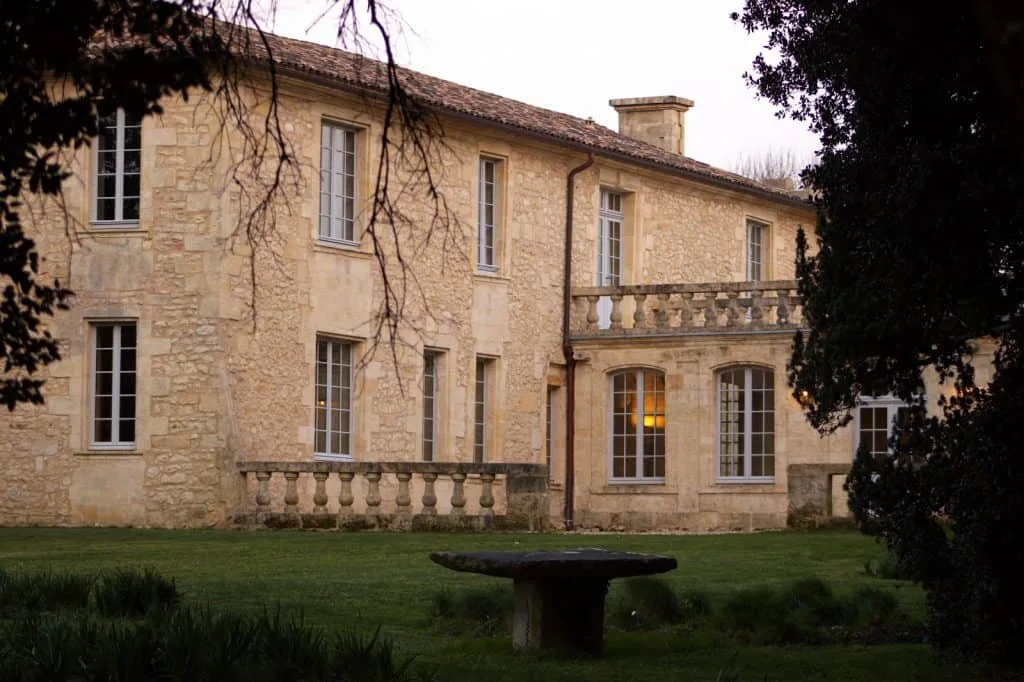
After it lived through wars and we know how much vines went through difficult moments even in the post-war. For me, this first nod was during this family lunch, because we had the chance to have a father who when he wasn’t traveling came home for lunch with us and was very present. He told us, “I’ve changed, my children, I’ve changed my water into wine,” meaning he had sold the shares he held in a mineral water house to acquire a vineyard in Saint-Émilion. With a lot of humor, as he had, he told my brothers, “There won’t be any more beer at home, only red wine.” I think he had largely understood very well what would today be the potential of these wine properties. He had a deep love for heritage and conservation of know-how. Since he was very respected in the trade he knew little about, he held us: we didn’t talk about or do what we didn’t know. So at his death, the property went to my mother, my brothers and sisters. Having married a Champenois in 1997, I decided in 2005 to re-embrace the entrepreneurial vocation. I went to see my mother and my younger brothers, explaining that we were ready to make Ferrand a life project with them. And the adventure started again in 2005 with a very beautiful team and in a very beautiful place. Ferrand being a 42-hectare property of one piece with an 18th-century Château, caves and a terroir since our core business is wine and only wine. We have a remarkable terroir that’s only asking to express itself and to keep progressing because we’ll only ever be one link in a long chain.
Very good! Thank you very much for these stories. Philippe, what happened between your wedding and 2005 for you both to make this decision to make Ferrand a life project and spend much more time there?
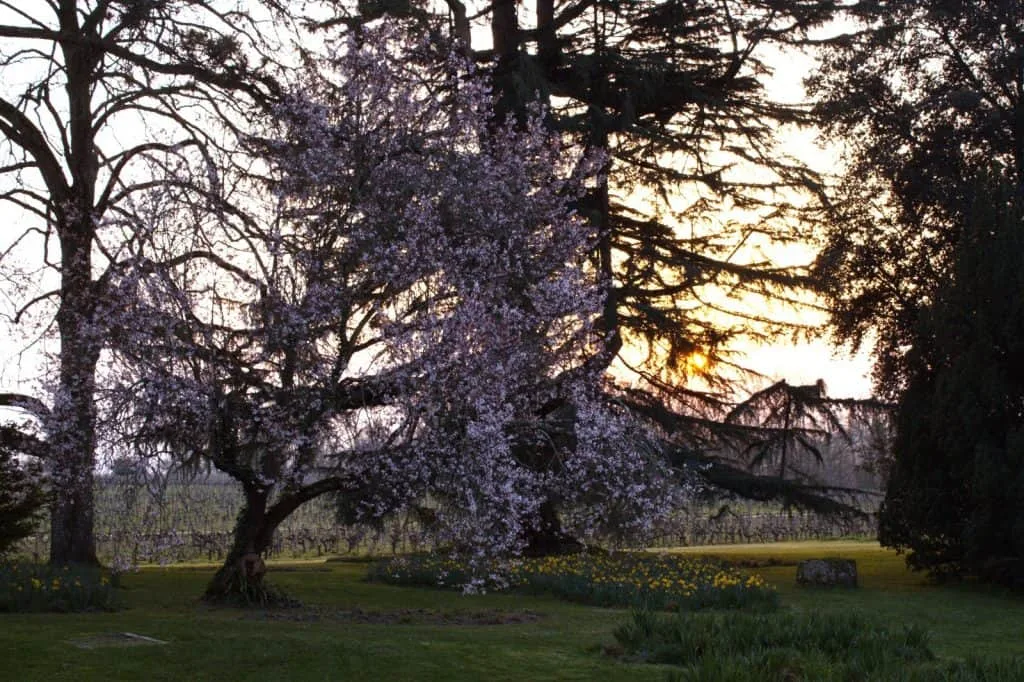
Philippe: I think the main thing is being able to run a property, develop wines, present them to the wine amateur and also represent these wines abroad. I had the chance at that time to tell myself that the banker’s job was perhaps on the dawn of evolutions and that today, I was returning to my earlier passions, that is everything olfactory then tasting, blending and talking about wine to our friends, to people who are most centered on this trade because you have to be very humble. Nature spoils us but from time to time it can also be grumpy and we have to be able to develop what nature gives us. We’re lucky as Pauline says to have an exceptional terroir, this 42-hectare property of which 32 are planted so there are 10 hectares of woods that are the belt of this property and give a fairly exceptional ecosystem. You have to take it for what it is and do exceptional work with it, which we try to do and improve every year.
You mentioned biodiversity, the environmental dimension with these 32 planted hectares and these 10 hectares of woods surrounding you, Château de Ferrand is part of a real environmental approach, as you told me yesterday, so it seems you have labels attached to it, a real approach?
Philippe: Yes we always wanted to reduce the use of pesticides, when we took over this Château which was Grand Cru and which became Grand Cru Classé in 2012, I’d say we made an enormous effort on the work of the vine itself with restructuring and we have today 3 labels: Terra Vitis, HVE 3 and ISO 14001. We’re today in the process of converting to organic, so starting from harvest 2021 with certification hopefully in 2023, it’s a very important step for us. As I told you, this wooded belt is generous, it gives us tons of qualifications to allow us to advance and we do it because it’s in the property’s genes to be able to present a wine considering biodiversity.
Pauline: I’d add to that by saying that the environment has always been a dimension, a family DNA, we’ve always been very close to nature, raised with nature. As early as 1978, all the electric poles had already been buried so there’s no visual pollution in the property from the early 80s. Apart from that, the fact that the property is 42 hectares and only 32 planted truly reveals a will of conservation of this heritage, of this ecosystem, and the temptation could have been great to use and convert part of these hectares into plantation. But that’s not the case because we’re also convinced that this wine property is a whole and this conservation of its heritage as a whole is an asset, a difference and also respect for the elders and for future generations.
Since 2005 when you’ve been very involved with Château de Ferrand, you’ve changed quite a few things, you’ve not only taken over the property but surely breathed new life into it here. What are the main transformations you’ve made in these last fifteen years?
Pauline: You see me smiling because the adventure brings joy. With my sisters and the Ferrand team, our first objective in 2005 was to take care of the vine and the wine. We led that initially and we continue to pursue it because it’s about duration and as Philippe was saying you need a lot of humility but especially a lot of patience. So we undertook a first restructuring of the vineyard from 2006. We renovated the production tool, that is the cellars, in order to vinify and age the wines with more precision and elegance, work we still pursue today because as I was saying earlier, it’s a question of generation. After this first cellar renovation that was finished in 2010, we set about building, opening a first room which is the wine tourism, which allowed professionals and wine amateurs to come taste Ferrand on site, at the property. We were quite attentive or stooped by the Champenois DNA and the development of hospitality that had taken place over several generations to understand the importance offered to us of being able to host our professionals and their clients but also wine amateurs who come from all over the world to know and learn our know-how and our heritage. We had entrusted this activity to a sommelier who is for us the right person because, to tell the truth, you need to know how to talk terroir and wine, you also need to know how to receive including on weekends and how to host. We were taxed as avant-gardists in Saint-Émilion under this theme since today we are often qualified as locomotives so what has become no longer just wine tourism but also hospitality. Having reached this level, we prepared and presented ourselves to the Saint-Émilion classification in 2012, the property having 300 years of history with the terroir we know, we estimated we had our chances and we had the great reward of being named Grand Cru Classé.
We started from there with the favor of all the work we’ve done, the work we continue on vinifications, on aging, our wines were presented, retasted at the primeurs, which hadn’t been the case since 1982. It’s purely a property error and we’ve seen our ratings evolve since. Today Château de Ferrand is a property rated by the great French and international critics between 92 and 96 out of 100, it’s a recognition. Finally, what I hadn’t been told, what I hadn’t realized when I went off into this adventure is that it’s work of every moment. Philippe spoke of years, I speak of days because it’s the detail of each day that allows us to progress, to lead this wonderful work in excellence with the whole team and with the Director of the property. We’re in 2014, we clearly see the dynamism that’s operating in Bordeaux and we already start thinking about how to carry Château de Ferrand into the 21st century. That’s where we called on and reflected with three different architects, a Bordelais, an Italian and a Frenchman to finally choose Patrick Jouin and his partner Sanjit Manku with Arnaud Boulard who is an executive architect from Bordeaux and partners to carry out the entire renovation of the Château and its outbuildings. So we’re not yet there now, it’s work that continues. The works were finished in 2019, we continue and pursue excellence in the meticulous work we do in the vine. We’re currently busy and mainly we’re going to enter the period of primeurs, it’s a period when we present the wines to all of the profession and tasters. We’re also very busy on environmental questions, conversion of the vineyard to organic and ISO 14001 certification.
Antoine: It’s a real approach you carry to the vine and that also translates to the Château since you also have this promotion of an art-of-living dimension. Is that so?
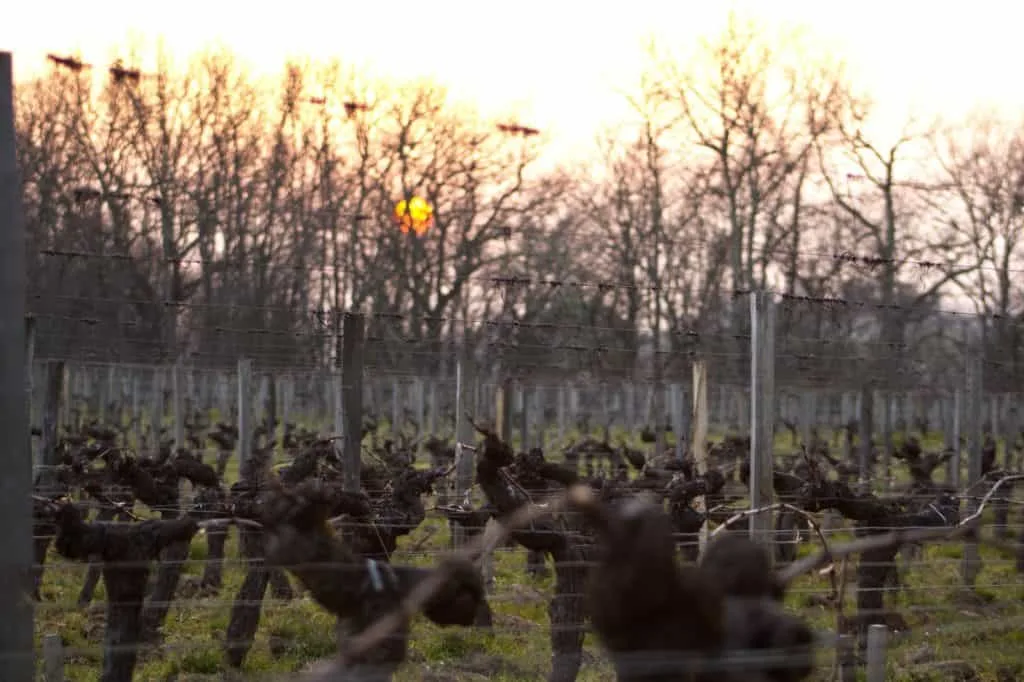
Philippe: Yes absolutely! We’re lucky to have this jewel case, first the exposure of the vines themselves, we’ve talked little about it but with the vines we’re on the heights of the Plateau de Saint-Hippolyte southwest of Saint-Émilion. The advantage of the vines is that they’re planted between 80 and 101 meters above sea level. This slope allows us to benefit from all climatic environments and I’ll take the example of 2017 which was for Saint-Émilion cruel because many properties of our colleagues and friends unfortunately couldn’t present wines. The Château de Ferrand property had this joy of being able to present a 2017 vintage that tastes pleasantly well. The fact is the vines weren’t frozen or were very little, and it’s the very exposure of the terroir in adequacy with the biodiversity I mentioned earlier. When we took over this property in 2005, we had these dominant Merlot parts at over 75%, about ten percent Cabernet Franc, and the rest in Cabernet Sauvignon. As we leaned on vineyard restructuring, increasing the number of vines per area, on soil work, we noticed that part of Ferrand’s terroir was cold and the wines were a bit hard at tasting. We seriously oriented ourselves toward changing the balance of this vinification and these grape varieties. We have, thanks to these two restructurings of the vineyard, gradually eliminated Cabernet Sauvignon in favor of cabernet franc and today in the blend of our vintages, we’re at over 80% Merlot and 20% Cabernet Franc with a maximum of 1% Cabernet Sauvignon. We wanted to find elegance again, a very chiseled style and taking up Ferrand’s terroir which is on a minerality that allows the wine to be able to express itself through the glass and give very careful and fine tannins to the wine amateur.
Antoine: Magnificent, that makes one want to do a good tasting. After talking about wine and terroir, of the vineyard here, I’d like us to come back to all your architectural projects.
Can you tell us more about all this work and this approach? About this salon we’re in too, it’s pretty spectacular, the Bic salon where the entirety of the walls has been decorated thanks to a Bic pen with a 4-season landscape at Château de Ferrand. Can you tell us more about all these projects to make listeners want to come see you, to visit Château de Ferrand during their stay in Saint-Émilion?
Pauline: There’s a lot to say Antoine, because it’s a true passion; it’s a fact, a life, a gaze, a love of old stones, a love of design that leads us where we are. I think I saw a lot of my mother who over her life renovated many houses that were family houses for us; with trade bodies that were attentive to making beautiful things. It’s also an experience for me as I told you, I worked in the Bic company for several years for the real estate park representing the company. I acquired some experience on the functionality of places and on the importance of design to translate a brand and especially bring well-being to those who live part of their day there. As I told you Antoine, the first part of these works was to renovate the cellars, there we needed function and aesthetics. We chose there to let nothing pass to the outside since nothing had moved and didn’t move in 300 years of history but everything happens inside. First thing, the roof of the cellars and the framework was raised to host this first tasting room we call the cellar room and which allows seeing the property at 360°, what nature gives to man and what man returns to nature. Indeed, when you’re in this place you have the possibility of tasting the property’s wines facing the vines while having a view of the vat room, the aging cellar and the storage which is quite unique and pleasant for a city dweller or for any person who loves this trade or has discovered it. The meeting with Patrick Jouin happened one morning at 8:30. I meet Patrick who tells me, “Something happened, a revelation”; revelation because he was won over by this place. He also told me, “We have something that connects us; for me, the Bic Cristal ballpoint pen has always been the object I’ve been drawing with since my childhood.” We immediately understood and saw in the project Patrick presented that there was an interest in the purity of design but more exactly carried out by craft artisans and journeymen.
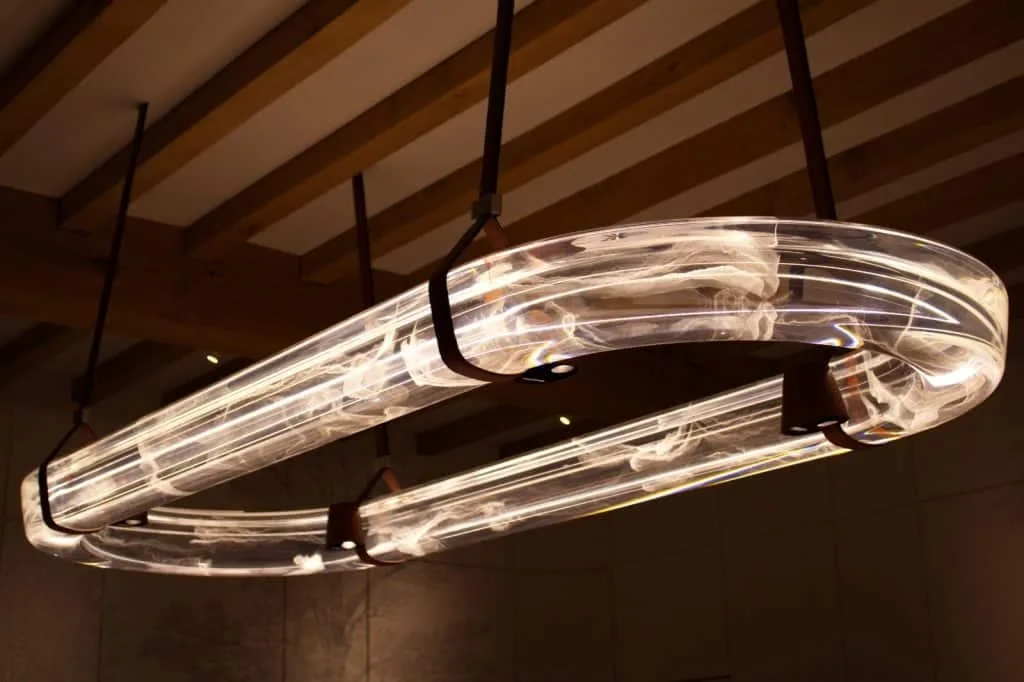
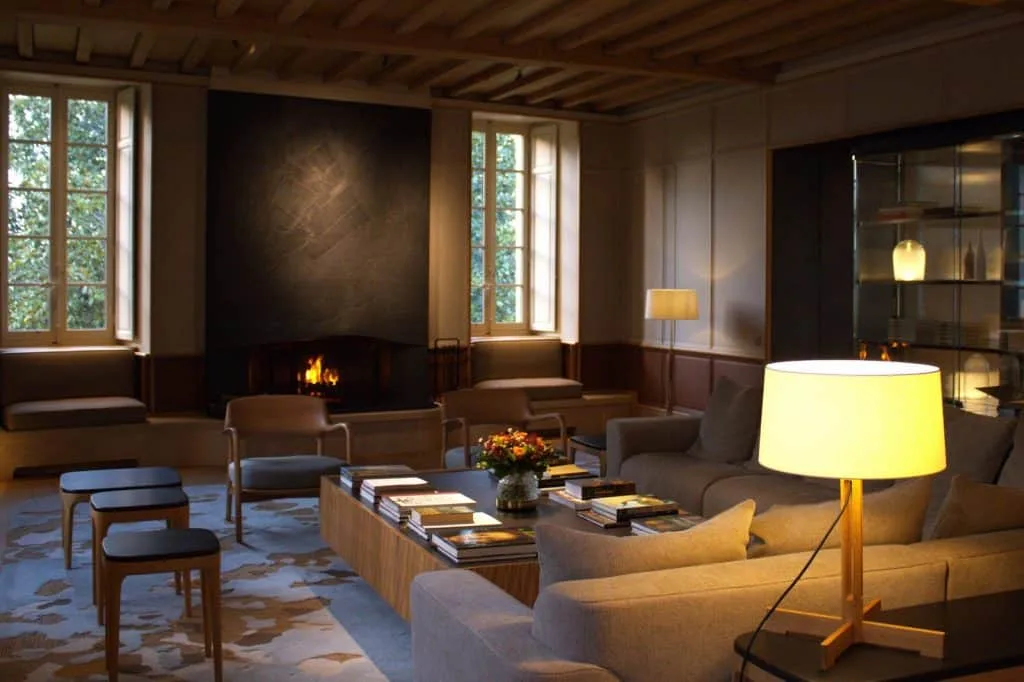
We had the opportunity to work on this restoration with the best craftsmen of France in terms of woodwork, frameworks as well as furniture, and foundry too since the mantle of the chimney of the château salon is a perspective of the property, an object of one piece. What is quite remarkable, in particular also the orangery furniture was designed by Patrick Jouin and made by an Italian company for the tables; on the other hand, the entire furniture was made by a best craftsman of France. It’s quite extraordinary, this work for the renovation of the château and the orangery took almost 5 years. Each thing, each place and each color was studied to satisfy, give a desire to the wine amateur, feel welcomed in a beautiful but also functional place that will cross the times, because it was about having a lot of taste. As I tell you, we’re only a link in a chain and it was important that this renovation took place. When you have heritage like this that forges respect, it can also attract and conserve this respect for the generations that follow. We arrive in the Bic tasting room which is at the heart of the château and which is a very important place since it’s a place where the property’s wines are tasted; it’s also a place that for us had to be qualified as the identity of the place and the owners. We therefore chose to have this panoramic drawn on the walls of this tasting room with a Bic ballpoint pen. This realization is unique since it describes the landscape of the property in different seasons. But the technique of drawing with a ballpoint pen is known because it fits into a first movement that dates from the 60s called Arte Povera which was an Italian movement. Today our family and the Bic company has an art collection qualified as Bic-Arts and which is constituted of drawings by recognized artists and younger artists exclusively with Bic ballpoint pens. I invite you to see it, because it requires enormous beauty and precision in the drawing.
Magnificent! Indeed, I’m in this room and I’m really very admiring of these walls which are very pretty. What do you have in store for us in the future?
Philippe: Lots of things, we have lots of projects! I don’t know if Pauline told you about the Château de Ferrand caves. The Château was built in 1701 by Elie de Bétoulaud, in honor of Louis XIV. There are next to the Château these caves which are open. There’s a historic part since we find Mlle de Scudéry, the precieuse ridicule who came to the property; Elie de Bétoulaud himself had a nickname Damon. This historic part is important to us, it conceals a story that encompasses the property. We were talking about a jewel case earlier, if I can summarize I’d say we have the Château itself; then the rooms that were designed, developed by Patrick Jouin which are unique; there’s also the terroir itself which abounds with enormous wealth that improves every year; we have the park which is classified with these tricentennial trees. To answer your question, I’d say with Pauline and the whole Château de Ferrand team we’ve achieved a lot of things. We move toward excellence and that’s our wish: bring a final bottle to consumers, to wine amateurs and to professionals so that they can come back with stars that are the benefit of the Château de Ferrand environment.
Pauline: Me, I’d talk about a joyful heart because wine is a moment of sharing (must be consumed in moderation) but the human dimension is the sharing in agreement around a glass of wine and which in a beautiful place is a unique experience; it must remain an experience that makes people happy.
And it’s often the case, I couldn’t contradict you on that. How does Château de Ferrand today occupy a considerable place in both your lives? Are there moments when you manage to talk about other things between you besides Château de Ferrand, or is it difficult?
Philippe: We have a family of three children, it’s also the education of our children, that they can complete their studies which are very different from each other. To eventually transmit this property, that it stays anchored in families. There’s the other region we’ve expressed ourselves little about, that’s the Champagne region; we’re lucky to have kept this family property near Hautvillers, the heart of the Champagne vineyard. Our children are raised with the notion of work, being hungry. It’s important that today our children can shine in their lives by themselves. We’ve given them all this cultural baggage of meaning, a sense of duty, of responsibility and of fun. There are other activities; I myself am passionate about the field of perfumes and everything olfactory; I try to browse magazines, buy perfumes, discover what comes out. The LVMH group produces lots so it’s fantastic to be able to enjoy these great perfume houses. We also love the mountains a lot, going walking and letting ourselves be carried by mountain landscapes either in summer or in winter and nature spoils us a lot today.
You’ve never wanted to create your own perfume at Château de Ferrand?
Philippe: No, no, no! I leave that to those great houses; these juices that are exceptional; the nose isn’t given to everyone. I’d say you have to stay in your place and benefit if you have the chance to take advantage of this essence found through the Château de Ferrand park. It’s an extremely favorable environment for thought and well-being!
Antoine: Got it!
Pauline: For balance!
Philippe: Couple balance of course, household balance!
Antoine: Pauline, did you want to add something?
Pauline: I wear three hats: a wife, a mother; I let my husband and my children argue about that question, and professional functions. I was also lucky to be a director of the family business, the Bic company, for fifteen years. These dimensions of advice and accompaniment of family shareholding are also part of my life.
At any moment did you tell yourself: it’s hard to be here at Château de Ferrand, it was really something difficult or a deep almost discouraging challenge? Was that ever the case?
Pauline: Yes! There was a night when frost was present; those nights of 2017 where you know that nature will always be stronger than you and you share the worry. What can be anguish for an ignorant person to see their harvest annulled. There were also moments of doubt, that’s part of it; what’s interesting is having the possibility of exchanging with the team, in particular with Gonzague de Lambert the General Director of the property, with the Technical Manager, the Hospitality Manager and others… even the Administrative Accounting Manager to think about finding the right solutions. Life is also made of trials and difficulties; it’s still wonderful to know that at this moment we were able to find together solutions whether right or wrong, we can be wrong. But it’s also having the satisfaction of getting out of these moments of doubt. It’s also one of the dimensions of entrepreneurship; I think if you’re helped, you have a lucky star. You have to have confidence in life, in this adventure, in men and women too! As my father would have said, because I heard this phrase every morning when he left home at 7:40, he said, “Avanti Savoia,” which means “forward.” Each time, you’ll put your work back on the loom.
Philippe, was there a moment when it was difficult for you?
Philippe: It’s certain that Bordeaux, for 15 years, the properties today march toward excellence and we wish to go with these properties because we form a whole. There’s an appellation, it’s true there’s an appellation through Bordeaux but it’s the wines of Bordeaux we carry throughout the world! I was named Jurade of Saint-Émilion in 2012, being part of the Jurade of Saint-Émilion is an honor not just to talk about Château de Ferrand, but also Saint-Émilion wines, Bordeaux appellation wines. Like any human person, we have moments easier than others, moments of wonder, of sadness; but life is a staircase that goes up bit by bit. What Pauline and I really wanted to do, as we told you, is that in 2005 we knew very little about Bordeaux, and we wanted to discover what the Bordeaux world and the wine property world was. So with my short Moët-Chandon experience, interesting and fruitful, and to tackle vineyards, which is the body of our trade with these beautiful clusters we harvest meticulously, and then tackle the beauty of the Château. It’s being able to present to our friends, to our wine amateurs, to these professionals who travel the world between Asia, the United States, Australia. There were moments of discouragement but also moments of wonder, satisfactions, joys. We wanted to transmit that to our children so they’ll be part of Château de Ferrand’s identity, so part of our families.
Pauline: To complete this answer, I have to add something important which is that in these moments of wonder or doubt, my family and the shareholders of Château de Ferrand brought essential support. In the framework of the development of this property, it’s a development where support is essential because you know, when you have a family property and you have brothers and sisters, new nieces; you have a responsibility, you have the responsibility to carry the briefcase. The sisters during the development of the property have an ethic, the importance of ethics in what you do, you undertake, in what comes out of the product, in the wine which is the fruit of the earth and which is the work of men that’s developed. I think we are the greatest victory we’ve reached, a link, and that this property will stay in our family.
Is there a question you would have liked me to ask you and that I didn’t ask?
Philippe: I’d say we’re lucky to be interviewed by you, you were able to participate in the visit of the cellars, the vineyard, the Château and you were able to be lodged, you tasted our wines. This wonder must allow listeners to come discover our site, our wines and the wonder of Château de Ferrand.
Antoine: I invite you to come to Château de Ferrand if you’re listening to this podcast. I hope it gave you a great desire to do so. Pauline and Philippe, if you’re around I’d be thrilled to welcome listeners and exchange with them in passing. The doors are wide open, don’t hesitate to come, you’ll be very well received here. I have three questions left to ask you, traditional questions in this podcast. So I’ll ask both of you and you can both answer each of these questions.
The first question: do you have a recent tasting that stood out?
Pauline: I have a lot of admiration and a crush on the Haut-Bailly wines and notably the 2005 vintage and I’ll remain a faithful ambassador of Sauternes, an elegant wine, it’s a joy.
Philippe: I come back to my tradition, it’s Champagne, the one who developed it: Dom Pérignon. So you have different vintages but those of 2006, 2004 are extremely well-vinified, chiseled, charming vintages and opening a Dom Pérignon bottle is not the object of a tasting like the others. It’s the magic of this cellarer monk who lived in the town of Hautvillers, these hundreds of millions of bubbles in this beautiful bottle, exceptional format, was developed at Moët-Chandon.
Would you have a wine book to recommend to me?
Pauline: Yes, in these times we’re living, I had the opportunity to read in English the book “Wine & Wars” which retraces what the lives of French winegrowers were during the Second World War despite the difficult times. It’s a great message of hope since the vine is something, one of the elements that crosses the times and which for me forges a true respect for the generations who preceded us.
Who should be the next person I should interview in this podcast?
Pauline: Antoine, I’d recommend you interview Angélique de Lencquesaing!
Antoine: Already done!
Pauline: She’s been one of the pillars but it doesn’t surprise me because she’s an avant-garde woman with wonderful knowledge of our wines and wines.
Antoine: I had an excellent time with Angélique back then and we had exchanged a lot on the place of digital in the wine world, the way sales work. Knowing iDealwine was created in 2000 or 2001, it can’t have been an easy experience.
Pauline: I didn’t do my preparation work all the way through and we remained very humble too. Have you had the opportunity to interview Véronique Sanders again? She’s a great lady of wine and runs her properties with immense talents. I’d happily recommend you interview her.
Antoine: Noted! We’ll do everything possible to meet her in the weeks and months to come. It will be with great pleasure that we’ll go to Haut-Bailly to admire their work. Thanks so much Pauline and Philippe for the time you gave me this morning, for your welcome here at Château de Ferrand and generally for this interview. I really enjoyed exchanging with you and doing this podcast here.
Amazon links on this page are affiliate links. They cost you nothing extra, and they help me keep this going.