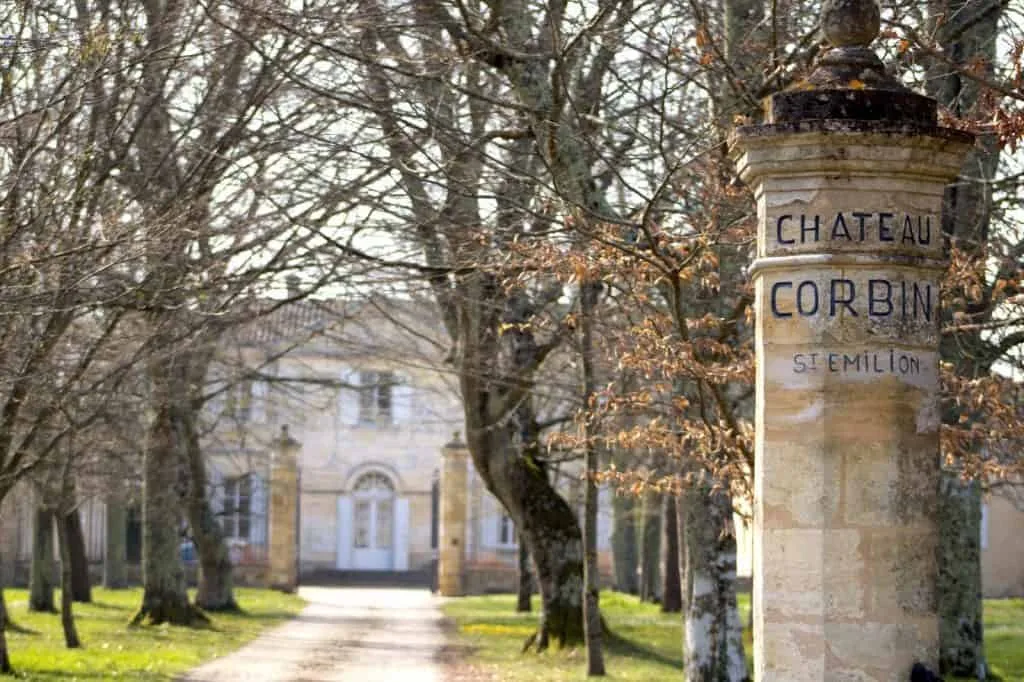
Château Corbin, grand cru classé of Saint Emilion, is a true gem we had the chance to discover. To learn more about Anabelle and Château Corbin, you can discover an interview from your favorite wine podcast. Without further ado, I wish you an excellent listen of this episode of the Wine Makers Show.
We’re going to talk about a lot of things, but first can you start by introducing yourself?
My name is Anabelle Cruse Bardinet and I’m both owner, oenologist, winemaker, and head of Corbin.
Can you tell us how you came to wine?
It’s very simple. I think I was kind of born into wine, or into a vineyard, with two families coming from the world of wine. My father’s, the Cruses, in the Médoc. My father was a farmer who made wine, raised cows, horses. I was always raised in the countryside, in the middle of the vines. My mother’s family was settled here, on the right bank, at Corbin and at Pomerol.
So you had a childhood in the vineyards?
A childhood as a little peasant girl, you could say. I lived through the seasons, experiencing the harvests year after year. And I very quickly wanted to make wine. At 15, I decided I wanted to make it my profession. It guided me for the rest of my life, in my studies. In fact, I really wanted to do it professionally, not just by arriving and learning in an ancestral way with my parents or grandparents. So I studied oenology in Bordeaux and continued with a master’s in wine management.
Was this trigger at 15 sudden, or were you always interested in wine?
I think there really was a trigger. I was asking more and more questions because it interested me and I was conscious that it was part of my heritage. I had this notion of a person who takes care of a cru, of a vine, and who is a transmitter in life. I had very quickly realized I’d have this place as a transmitter. And when I asked questions, I often found that the answers lacked a lot of precision. So you never know if the answers lack precision because, finally, in a family steeped in roots like mine, we talk about wine all the time, and at the same time we never talk about it. And I like precise things, and the answers to my questions didn’t satisfy me. So it’s true, I think I had this trigger at 15, saying “I’m tired of these vague answers, so I’m going to go look for knowledge.”
What was your parents’ reaction at that time? Were they rather happy, proud, or did they say “it’s not very useful, you might as well stay here and learn on the job”?
In fact, I have no memory of that, of their reaction. I have two sisters too. I just know that they raised me telling me that it was imperative to have training, whatever you do afterwards. There was no question of not training to do whatever profession you decide on.
Are your two sisters also in wine?
One is in wine, yes, although she has architectural training. The other is a farmer, she raises cows, and she has somewhat agricultural and environmental training.
Starting at 15, you arrive in this training: what does it consist of? And did it meet your expectations?
In fact, no, I continued my normal studies at 15 until the baccalaureate. Then, I followed the classic path to get an oenology diploma: the DNO at the University of Bordeaux, and then continued at Bordeaux Sciences Agro for a master’s. And I started working.
Did it meet your expectations of precision, of discovery?
The oenology diploma yes, very much, absolutely. Really. It made me completely enter the world of wine: understanding how wine was made through the chemistry of wine, the balance of wine. Then, I wanted to complete it with management training, because I knew I wouldn’t just have the pleasure of making wine, but I also had to have the pleasure of managing it.
We arrive at a moment when you’re a graduate, after five years of studies, around 22-23 years old. What’s happening at that moment?
I had a job that came after an internship, the most natural thing in the world. I was super happy. It was at Branaire-Ducru, in Saint-Julien in the Médoc, with Philippe Dhalluin. I loved it! I learned a lot. He was running Branaire, which had just been taken over by an important group; a property that had been bought, so in full restructuring. It was fascinating. He taught me everything I think, a lot, the basics of the profession. A first fascinating job. Then I had the desire to leave, telling myself I wasn’t going to leave Bordeaux and that life was going almost too fast without my having been able to live a tiny bit outside this whole Bordeaux world. So I left this job and I took a sabbatical year, six months spent in India, doing humanitarian work. It was a childhood dream that I needed to fulfill before things went too fast. And then six months making wine in California, in the Napa Valley.
How were these first six months in India?
It was just extraordinary. It marked my life a lot, but marked in the good sense. I learned a lot. I left for two months, I stayed six months, that’s how good it was. I think I learned to live, precisely, without these peasant roots which are very strong, this link to the land. I found myself alone facing myself. I loved this life of giving your time freely. This luxury, finally, of being able to give your time, of not being accountable to anyone, of not depending on anyone, of being no one’s daughter, no one’s sister, I found that quite extraordinary. And then this discovery of this Asian culture that I love.
Have you had the opportunity to go back to India, since?
No. I dream of it, with a small apprehension because I have very fond memories of it. But I’m going to do it. My only dilemma is that I know my attraction for this part of the world: I’d better not leave for fifteen days and end up staying six months.
Then you find yourself in the Napa Valley. It must have still been the early days of Napa?
No, Napa was well established. It was magnificent. It was also one of my student dreams to be able to make wine on a different continent. It was a tremendous opportunity. I left with one of my oenologist friends, we had a small house perched in the mountain on the heights of Napa, a Beetle: it was San Francisco on the weekend and the winery all day, the harvests and the Mexicans in the chai, the music. It was very fun discovering a different world, a world of wine different from ours.
Wasn’t it too hard to come back after that, after India and California?
Very. Yes, I admit, it was difficult. And at the same time, it was real life there without being real life, I knew it wasn’t my life. I took it as a richness and a wonderful moment. And back to reality.
What did you learn in Napa that was useful to you afterwards?
I learned that there were in fact a multitude of ways to make wine: you could make wine in an industrial way, you could make wine in little jewels, there were all sizes. But I think I especially discovered this American spirit that I find wonderful, where everything is possible.
Is that something you tried to replicate afterwards?
I tried, a little bit, but I have to say in France not everything is possible the same way as there. It was very strong, those tests, those incredible experimental setups, and there isn’t the weight of history that’s extremely heavy here. And that, I had clearly felt. I also needed to leave for that, there was no longer the weight of these families, the weight of this history in our vineyards. There, without this weight, necessarily, you have wings much more spread out.
Is that something you really felt coming back here to Bordeaux?
I especially felt it leaving for there. Coming back, I returned to the norm I knew.
So there you come back from this sabbatical year. What happens to you next?
When I came back, I started working here again, with the very strong desire to go work for my father who was a vine grower in the Médoc. In my head, I had programmed myself to take over from him and so work with him. In fact, I asked him to work with him. He accepted. I don’t know if a father can refuse his daughter to work with him. In parallel to that, my mother died quite young and she was an only child, so I was very close to my grandmother who was running Corbin at that time, and who really wanted me to come and take care of it in her place. Me, I didn’t really want to, the property was in joint ownership, I found they were squabbling, I found I was too young to take all these blows, to come into the middle of all these stories, and that they had to settle them first before I arrived. My grandmother accepted that, but she was quite incredible and very strong. She just asked me to accompany her each week to Corbin with her, when she came to spend a moment here, and look around, saying “I need you to support me, I need you to accompany me.” In fact, I did it out of kindness for this grandmother whom I adored. I had wonderful memories of Corbin, as a child. But by coming little by little, every week with her, for one year, two years, three years, she managed to make me fall in love with Corbin. It was very strong. I realized it long after. She was very clever in her way of approaching things. She knew very well how I worked. In parallel, I worked with my father for four years. It wasn’t a success at all, it was very complicated. I had all my new ideas, coming back from California, anything is possible, you just have to set it up, and then hop, off we go! My father wasn’t at all in that, and in fact, I shook him up a lot. Even though we got along very well, it wasn’t simple at all. So after four years, I left, slamming the door a bit. Finally, in the meantime, I had realized what Corbin represented, both for my grandmother, and I realized that for me it represented a jewel; it was also the emotional link with my mother who was no longer there. Everything came together: my grandmother took over Corbin for herself, getting out of this big joint ownership. I accompanied her a lot to do that, we did it together. When she had Corbin to herself, she told me “listen, now it’s no longer possible. There’s no longer everything you didn’t like at Corbin, there’s only what you love, so you can no longer say no to me.” And I arrived at Corbin.
What was the relationship with your father when you left for Corbin? Did he resent you, or was it a relief for him not to have to set up all these new experiments?
I think it was a relief for him to say “she’s going to get some air elsewhere, she’s going to do what she wants elsewhere.” No, I think he was necessarily affected, but my father was really very wise, really feet anchored to the ground, a peasant in the noble sense of the term. I think it was very good news for him. He accompanied me a lot here, we had a much better relationship. He supported me, he encouraged me. I really discovered my father much better with this distance, where finally I was doing the same thing as him, but each in their own place. He had a very benevolent eye.
Did he come by often?
Not very often. He was a very discreet man. But always when I needed him, he was there and he came. He trusted me.
You arrive at Corbin, off you go. What’s the state of the property when you arrive?
It’s a beautiful sleeping beauty. It was 1999. Corbin had not been inhabited for 30 years.
Do you live here now?
Yes. There hadn’t been any investment for 30 years either. Let’s say it was an enormous worksite, of which I only saw the tip of the iceberg. And thank God by the way, fortunately I hadn’t seen everything else! So I dove in with overflowing energy and I worked at a forced pace of investments, of enthusiasm, of cheerfulness, and discovered this profession in its own right, with all the hazards.
What were the first projects undertaken?
The vine. The vineyard. Really.
You had to restructure everything, replant?
Exactly. For me it was really the basis to start with the vineyard and I started it right away. My first investments: pulling out parcels, draining them, replanting them, doing a soil study, understanding which grape varieties on which parcels I should put, moving the planting densities. I really questioned what was done and verified that if it wasn’t done well, it had to be changed, done differently.
How long did it take, to do all that?
It took fifteen years, at a forced pace, with the means of a family and not of an outside investor who arrives, with a grandmother who was there too and whom I had to support through Corbin which was her main source of income. And the vineyard never stops once you’ve started. But let’s say there, things took a normal pace. Very quickly after the vineyard, I launched a year later a big round of work on the technical installations. It hasn’t stopped. There was a first big round, ten years later, a second big round on the buildings. The last big investment was on the cuvier in 2016.
Can you introduce Corbin to us today? What is Château Corbin?
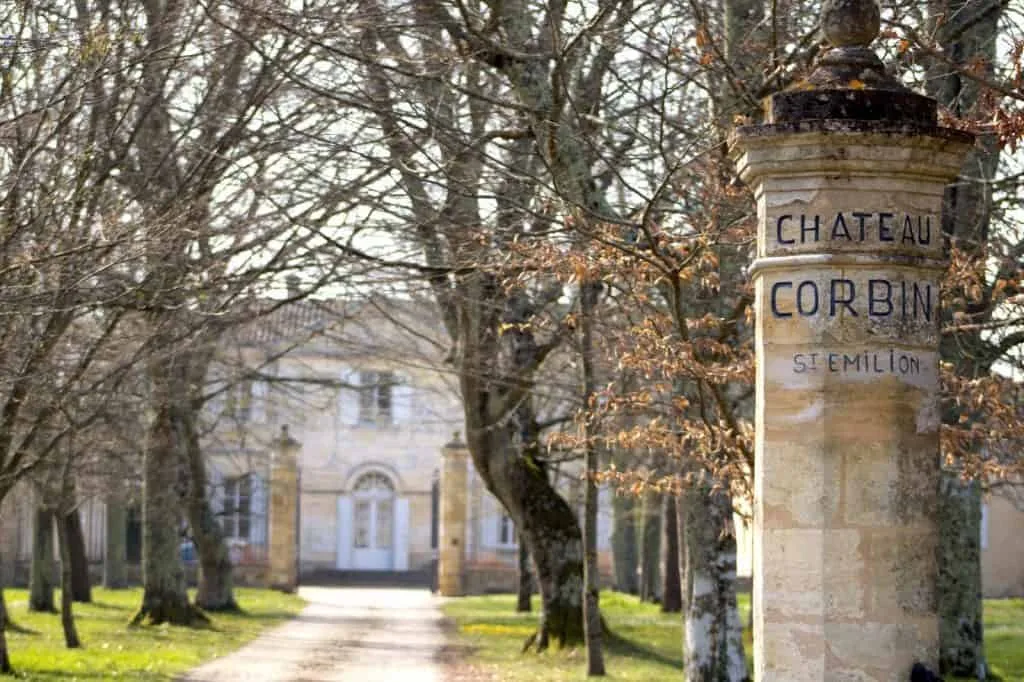
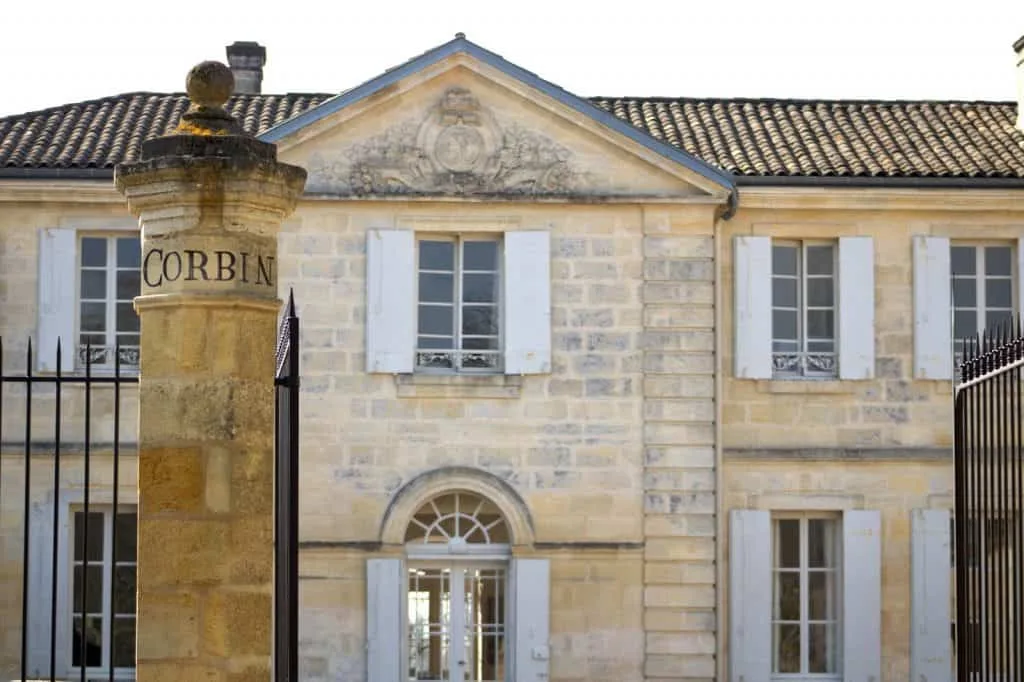
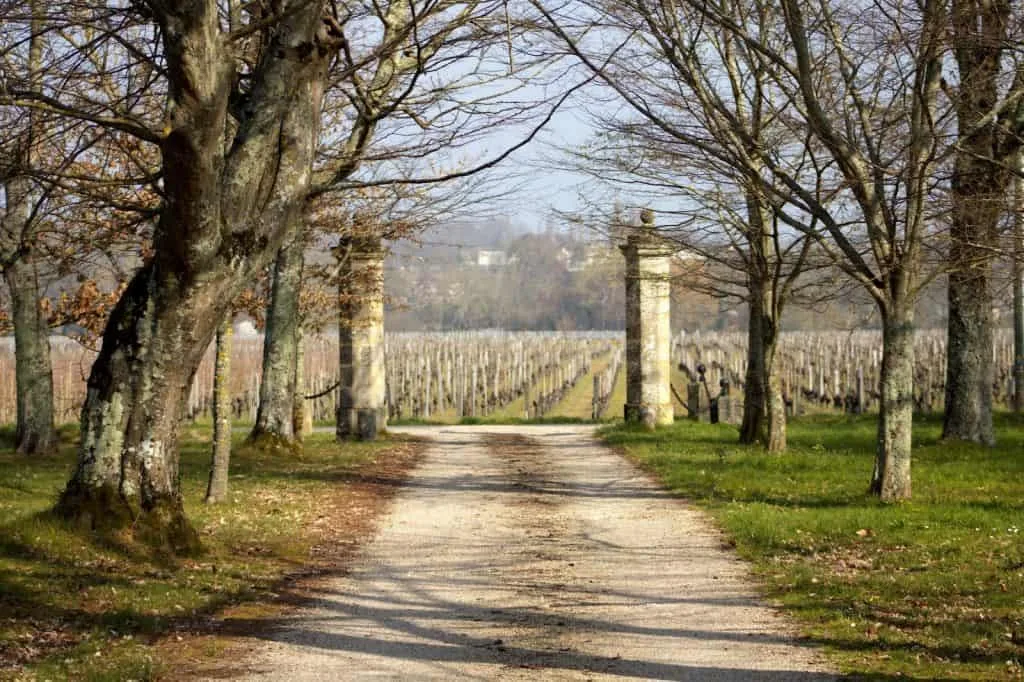
Corbin is a large garden. A vineyard of thirteen hectares, located six kilometers from the village of Saint-Émilion, close to Pomerol. It’s a grand cru classé of Saint-Émilion since the origin of the classification in 1955. It’s a family property that my great-grandparents bought in 1924 and which has always been run by women and transmitted through the female line, until me. Corbin is a property with a strong soul, it’s a place of life, it’s a place where you feel good. And that, that was very important to me. I settled at Corbin in 2001. I really wanted to be at the heart of this vineyard. It’s all around the château, that’s why I say it’s my garden. It’s a little jewel.
You spoke of being a transmitter and the transmission of the château. Do you have daughters?
I have one daughter and two sons.
How old are they? Are they already interested in wine?
So they’re already interested in wine, yes. But I did everything for it. In fact, I moved to Corbin in 2001. I wanted to raise my children here, for two reasons. I have three children. I wanted to be a mother, I wanted to take care of them. My first vinifications, I had just given birth to the second, and the second harvests, in 2000, I did them while living in Bordeaux. And for a month, I left in the morning, my children were sleeping, I came back in the evening, they were sleeping too. I didn’t see them for a month. At the end of the harvest, I told myself “but you’re completely crazy, this isn’t a life.” And so there, I decided to settle here because it wasn’t manageable, throughout the seasons and throughout the activity of this profession there would be too many moments where I wouldn’t see my children. But I think deep down I really wanted to give them real peasant roots and to give them the sense of the land, the sense of the vine: all these seasons that are important, the cycle, the harvests, the bottling, all the work of the vine. Today, they’re 23, 21, and 15. They’re studying.
It’s the life I had imagined. If I had to do it again, I’d do it the same way.
How is Corbin sold? Through the place de Bordeaux?
Yes, completely.
What’s a bit the typical profile of the lovers of Château Corbin?
That’s a very good question. We chose the place de Bordeaux, of course. It’s distributed by about thirty merchants, primeur allocates. Corbin is distributed in about forty countries, on all continents. We don’t really have a predominant market. The first country is often France, but it’s sometimes the United States, sometimes the United Arab Emirates, also. We have these three big markets. In Europe, we have Switzerland which is also a very important market for us. But we still have an extremely scattered distribution and a pie chart that’s pretty well distributed.
It’s also the strength of the place de Bordeaux: the distribution network and the international and global reach of this distribution which is impressive.
Exactly.
Have you kept ties with Napa?
A little bit, yes. I’ve kept some ties with people I met there and worked with.
And do you sometimes exchange practices or ideas?
Well, the winemaker I worked with retired.
Has he come to Corbin?
No, he has never come to Corbin unfortunately. We don’t exchange on practices, no. We still have different climates, things are still quite different. No, we don’t exchange.
What’s the future for Château Corbin?
That’s a very good question. The future for Corbin… In fact, I don’t know. I think Corbin is a person in its own right. My job is really to put Corbin in the best dispositions to pass the different milestones of climatic hazards, of the different crises, whatever they may be, that we can experience. My role is to adapt to Corbin. And finally, the future of Corbin, I don’t know. I don’t know if it belongs to me, the future of Corbin. I tell myself that when the hour has come, Corbin will have to choose the person who will run it after me. But finally, I’m not able to answer you. I think it’s a beautiful future, whatever happens. It’s certainly a family future. I have full confidence in the next generation to build this future.
You spoke of adaptation, of crisis. There’s necessarily an important question which is that of climate change. Is it something you feel, here?
Yes, very clearly. I long thought and hesitated, it wasn’t a certainty. I think 2015 is the year when I told myself it was no longer a hypothesis, it was a certainty, by the excesses we were experiencing, the climate excesses from one year to the next: heat excesses, cold excesses, late frost, drought excesses, heat peaks, strong things that require permanent adaptation and a questioning of how we manage.
How do you do to manage all that?
We do lots of things. I think there’s really an adaptation in cultural methods, in soil work which is very important, an adaptation in trellising the vine, keeping freshness, shade, a kind of measured shading on the bunches, doing a lot of prophylaxis with regard to vine diseases. In fact, it’s more and more precision in this work of the vineyard, to bring the fruits in the best conditions at the time of harvest. And then, a key step which is the harvesting of these grapes and the choice to take them at the best moment, on the fruit, ready, crunchy. It’s really important this work too, which is done more and more by tasting rather than with analyses. And then also adapting our vinification methods. That, I’m very helped by my new cuvier since 2016, which is a parcel-based cuvier: a vat for each parcel, which allows me to really adapt the mode of vinification to each type of grape, of grape variety, the age of the grapes, the terroir, with milder temperatures, extractions or infusions, depending on the vintage and the characteristics of the fruit. And then, a big work which is really my current research work today: the aging of the wine until bottling. In fact it’s a search for balance. For fifteen years I worked a lot on the search for balance in the vineyard, by adapting the load, the number of buds, so that each plant is really an entity taken as an individual, cherished, and adapted, given the best conditions for development. Once this balance is found in the vine, finding it during vinifications and now refining this balance during aging. All this with the goal of giving more pleasure to the consumer, to the lover of Corbin.
In parallel to that, there are two big transformations we see a bit transversely across all the evolutions in the wine world, which are digital and wine tourism. Do you have ongoing projects on these? First, can we visit Corbin?
Of course. It’s really part of the first things I did at Corbin. I found these properties that were closed terrible, and then I was very marked by the Médoc where all these large beautiful châteaux, when I was a child, that we crossed this road, they were all closed. It marked me a lot, that’s why I wanted to come live at Corbin and have a welcoming, open property, and receive at Corbin. You said something that touched me a lot. Then, this wine tourism, it has developed a lot and I realized I was reaching my limits because it was me of course who opened the door, who received, who welcomed and who did the visits. Saint-Émilion is extremely touristy, we have a lovely region, so it attracts a lot of people. So yes, I committed quite a bit to this wine tourism. I had even taken the leap last year, of hiring a person to occupy this position, this role. Unfortunately, the Covid crisis got the better of this novelty, so we couldn’t continue, we had to stop this trial. But it’ll come back. It’s almost an obligation to open one’s doors, to make people dream, to make them understand, to educate them in the world of wine. It’s a great opportunity.
The second transformation parallel to that is digital. Is it something you experience daily?
Let’s say yes, of course.
In what forms? For me, there’s digital in the vines or the management of the estate in general, whether the vine itself, the chai, even in the administrative management of the estate. The second aspect, vis-à-vis amateurs, consumers, customers, via social media, via the website, etc. Do you share these two aspects of transformation?
Yes, I share them fully. I always try to use new tools. Innovation is good all the time. It’s wonderful, a small tool, a small vineyard, allows for a lot of experimentation, a lot of trials, and to follow them. Then, I think we have a profession that’s very linked to observation. There are all these new observation tools that are extremely interesting and useful. The difficulty we can have at Corbin in the end, is to be at the level of the great ones with a tool that’s also small, that doesn’t allow either to develop everything we’d want for questions of profitability, of tools that often serve once a year. New tools are sometimes not adapted to a small surface area. You really have to make distinctions and go look for the best tools.
We’re in March 2021, which means you can see the 2020 vintage coming, since the primeurs aren’t very, very long now. Everyone is telling us it’s an incredible vintage. Is it something you confirm?
I confirm completely. It’s incredible for lots of reasons. The first is that with the year we’ve had, having harvests as beautiful as 2020, telling ourselves that the vine wasn’t catching Covid in the end, was really something wonderful. Living through the first lockdown with spring coming out, the buds bursting and the vine pushing, I assure you it was an incredible balance and a strength that was given to my team and me. We experienced something really very strong at that level. Already, it was wonderful for that, this harvest. Then, it was a harvest that was made after a lot of excess: we almost froze in late April, late, we battled several nights with anti-frost measures; then, we had a window of opportunity to have an incredible flowering; lots of rain in the spring, so Mildew which had very, very strong pressure; and when all that stopped and we could rest a bit, recover from our emotions, we entered months of drought, well months without water and extremely hot and sunny. All these excesses required us to adapt all the time, to make decisions like that very quickly. I think that’s what makes this vintage extraordinary, it’s the beauty of the grapes we were able to harvest, after everything the vintage went through.
So you did the first lockdown here? It must have been out of time?
Oh yes, it was out of time, that’s exactly it. I lived through 2020 in a wonderful way. I found it to be of incredible richness, of incredible strength. I think the world has changed, clearly. It really allowed me, this year, to put myself face to face with myself, face to face with my vines. Being there all the time, making important decisions for the future of Corbin, exactly. My vision of wine has changed.
Oh yes? In what sense?
Both in being able to make a synthesis of all these elements that change: the climate change you talked about, the fact that my aging has changed too. In fact, in 2017 my entire harvest froze, the entire vineyard froze. I decided that with the very small harvest I had, I couldn’t make Corbin, it wasn’t possible to make a great wine. I only made a very small portion of second wine. So when I bottled my 2016, all my barrel stock, I sold it, no longer having wine to put in the barrels. Barrels, you can’t keep them empty, you know. When 2018 came, I bought back the usual proportion of new barrels for Corbin and I was confronted with the fact that I was used to aging all of Corbin in barrels, but in first-wine barrels. I didn’t want to buy back barrels that came from elsewhere, second-hand, it wasn’t conceivable for me in terms of traceability for Corbin. So in the end, I changed my aging mode which was in new barrels and in vats, what I call today my fruit reserve. Finally, I realized I found that it gave the wine a freshness, a light, something new and different. That, I realized at the end of aging in 2018, I confirmed it. That was right in the middle of lockdown, exactly. So I made a choice that was still very strong: starting from this 2018 vintage, to continue aging the wines only partly in new barrels and the rest in fruit reserve. I started looking for new containers to age this “fruit reserve” portion of Corbin. That, that’s the start of a new adventure of searching for balance in aging that’s been very important. In parallel to that, this lockdown year and this world that has changed, I also realized that the consumer was changing their tastes and wanted to order a wine by pressing three buttons, that the wine arrives at their home and it’s pleasure, because we were in a world where finally we realized that happiness is small daily pleasures, maybe even more than before. For that, the bottle has to provide an emotion to the wine lover who’s going to order a case or three bottles, and that they want to open their bottle when it arrives, not put it away in their cellar, and that the glass they’re going to drink tells them a story, like the one we’re telling ourselves here, this morning, because you’re the first to say it: when you drink a wine, you want to know what’s behind it. And so the wine has to first provide you with an emotion, that it opens in the glass and unrolls the story as the tasting progresses. That, I really became aware of last year. In parallel to that, during this lockdown, it was the opportunity to open old vintages of Corbin, great bottles, and I told myself that finally the ancients, with much fewer means and certainly taking much fewer risks than us to wait perhaps for a more perfect maturity, they harvested the grape at the moment when they wanted to bite into the fruit, and they made grandiose wines. I notably tasted two great bottles: a Corbin 1961 that I loved, and a Lafleur 1945. These wines amazed me, and I told myself that’s what I wanted to make: wines that were both capable of aging, all on the fruit, but at the same time, capable of opening a Corbin 2018 today and that it provides you with a real emotion. So that changed my vision of wine.
It’s a profound change. Both personal, but which also engages the property.
Very profound, exactly.
Didn’t it scare you at first, doing that?
It scared me a little, but in the end it made me understand that it was up to me to adapt to the climate change you were talking about earlier. Corbin remains a great terroir of Merlots and will remain a great terroir of Merlots, I think. Finally the great chance we have is to have clay, which on the 2020 vintage was this sponge that absorbed water, that was capable of giving it back to the vine and making sure it had regular hydric feeding and the cycle went very well. Finally, it allowed me to harvest early, September 8, to harvest fruit on freshness and to manage the very important and powerful potential of these grapes with lots of tannins and great richness, so I did infusions in the chai, to seek this balance that nature had perhaps a bit unbalanced by the climate exactly. And so it made me realize that it was me who had to adapt to what was happening, and not the other way around by making big revolutions. It was small revolutions by seeking even more precision and balance in the vinification, in the aging, until bottling.
It’s quite uncommon, in Saint-Émilion and in Bordeaux in general, to have this aging with one third of new barrels and two thirds of not barrel.
Yes, or half in new barrels, it depends a bit on the vintages, it oscillates between 35 and 50%.
In this podcast, I try to interview diverse profiles, under all profiles, in terms of types of jobs in wine, personal histories, and also gender. You’re one of the rare women who makes wine that I’ve interviewed in the last few months. It’s been a long time since I’ve interviewed a woman who makes wine. Normally it’s 50% of humanity, so it should be 50% in this podcast too. Is it something you feel a bit in the world of wine, or not at all? Especially, there’s this story in Corbin, transmitted from woman to woman.
The difference of being a woman compared to a man to make wine? I’m not sure I feel a difference. The woman has assets of demand, of work accomplished to the end, in the details perhaps, to make a great wine. She also has disadvantages. I think we’re more linked to our personalities, more than to the gender, man or woman, and to our sensibilities.
In any case, businesses run by women during Covid did much better performances I believe, than businesses run by men. There are quite a few studies that show that gender equality within a company, without saying run by women or run by men, but in any case equality within boards, boards of directors, often implies better decisions, in the end.
It’s rich, it implies different decisions and obviously we have reasoning that’s perhaps a bit different. For me, the big difference with women is that we always have to manage a second job, which is our family, our children, so which always obliges us to be in efficiency.
You spoke of the 2017 vintage. At any moment did you want to stop, to say “that’s enough, at a given moment I want to do something else” or “I’m a bit fed up”?
Never, never. God knows if that year, that 2017 that wasn’t there, it laid the vineyard flat, but it laid Anabelle flat in the same way. I really lived in symbiosis with my vines and I came back to life a year later, when 2018 arrived, but it was terrible. For all that, I didn’t want to stop. It’s terrible.
It’s also the story of a lifetime.
It’s part of me, that’s it, it’s my life.
Is there a teaching or piece of advice you’d like to give to a young winemaker, young vine grower who would be starting out?
To not stay alone; to know how to surround oneself; to know how to leave one’s vines to come back with a fresh eye; and to exchange, to share.
Is it important to be in this discovery, to have the gaze of others permanently? Is it something you do here?
Yes. It brings me a lot.
With people from the region?
With people from the region, with people from outside. Exchanging on the way we do things, having an outside eye that comes to taste your wine, going to taste other wines, yes it’s very, very rich, certainly the richest teachings.
Anabelle, thank you so much for this time. I have three traditional questions left in this podcast. The first is do you have a recent tasting favorite?
Do I have a recent tasting favorite? Yes, in fact I have two, if I can give two. It’s this Lafleur 1945, from Pomerol, tasted this summer, which was a revelation. I couldn’t imagine that a wine of that age could have such freshness, so much fruit. Extraordinary. I admit it’s not given to everyone, it was a bottle from my grandfather’s cellar. Incredible. The other revelation was a Domaine Leroy, 2002, tasted at friends’ in Saint-Émilion, which just enchanted me throughout the dinner. It was wonderful because exactly the wine told me a story in the glass throughout the evening, and I found that there’s nothing more beautiful. It changed my vision of wine.
Is there a wine book you’d like to recommend?
So I read a wonderful book, it’s a trilogy: it’s called “Les vignes de Sarah,” by Kristen Harnisch. It tells the story of Sarah who leaves France, she’s from a wine family, who has an estate in the Loire. She’s forced to leave France, she goes to the United States, and in fact, those are the beginnings of the Napa Valley. They create a vineyard there. At the same time, there’s a love story that’s quite beautiful. Both the earthy roots, the creation of a vineyard on another continent, and she returns to her roots in the Loire: it’s just a life, I would have loved to have a life like that and have a vineyard in the Napa Valley, with Corbin in addition.
To finish, who’s the next person I should interview in this podcast?
You’re stumping me, like that. There are tons of incredible people you could interview… I know! You should interview two people I love enormously, they’re people who sublimate wine properties: they’re called Guy Troprès and Caroline Marly. They’re architects, the A3A agency. It’s with them that I did all the renovation work at Corbin. They have a love of the wine world and they have a way of respecting the soul of a cru, by building it and sublimating it. I think they have a great part in our profession.
Amazon links on this page are affiliate links. They cost you nothing extra, and they help me keep this going.