For the 37th episode of the Wine Makers Show, your wine podcast, we went to meet Jean Antoine Nony: owner of Château Grand Mayne in Saint Emilion. Jean Antoine opened the doors of the château to us and we had an excellent time in his company. So I’ll let you discover his story, in Saint Emilion. Enjoy the listen.
Hello Jean-Antoine, thanks for welcoming me at Château Grand Mayne. Can you start by introducing yourself?
Of course. I’m Jean-Antoine Nony, I’m 42 years old, and I have the chance to be co-owner and manager of Château Grand Mayne, which is a grand cru classé of Saint-Émilion, which has belonged to my family since 1934.
Can you go back to the history of Château Grand Mayne?
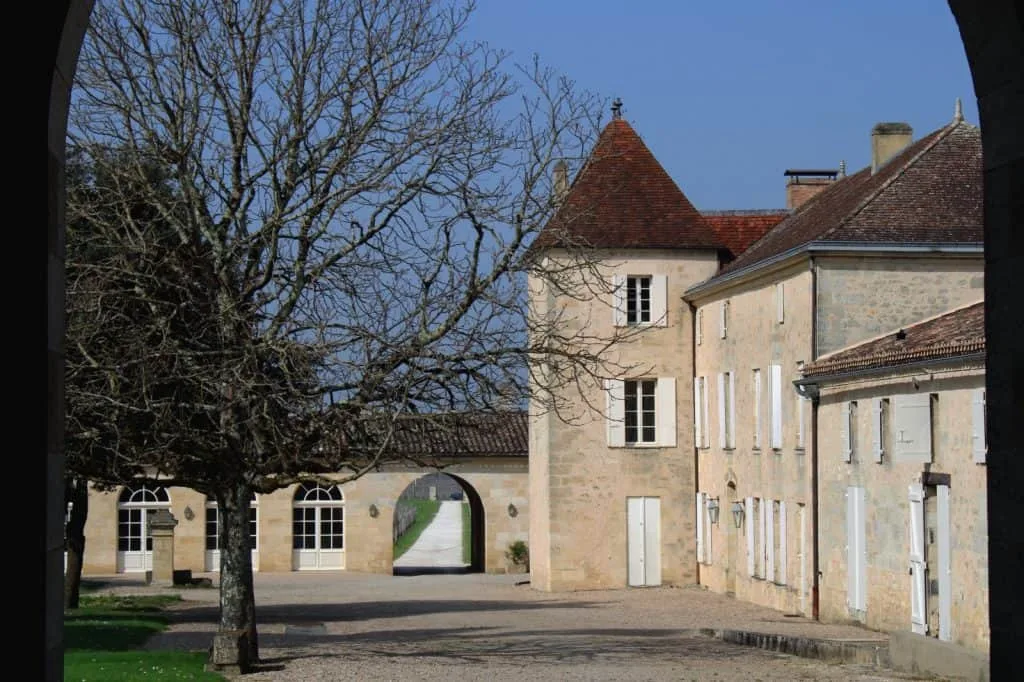
Grand Mayne is one of the oldest properties in Saint-Émilion. It’s an old building. The Mayne is a manor, in old French. It’s a very beautiful building dating from the late 16th century, that has crossed time, to then be called Grand Mayne, which is the heart of the historic estate. There were several successions, but it was historically a property that was over 300 hectares, with only 20 hectares of vines, but that had other crops, notably cereals. The vine wasn’t as planted as it is today, in Saint-Émilion, where the slightest square meter, without exaggeration, is exploited for the vine. There was therefore a play of successions, which happens in many regions, and which made the château finally end up in the hands of my grandfather, Jean Nony, who was originally from Corrèze, a wine merchant, who had settled in the Médoc first, in Margaux, and then in Bordeaux, in the historic Chartrons district. In 1934, after the sadly known crisis of 1929, which arrived in Europe at the beginning of the 1930s, wine sales were complicated for properties, and he fell in love with both the terroir and the building, the place. My grandfather continued to take care of the property until his death in 1975, distributing himself, via his merchant house based in Bordeaux. Then, my parents took over after his death and settled in 1977. They had two magnificent boys and energized Grand Mayne starting in the early 1980s. Then it was me who arrived starting in 2011. There you have it to summarize the arrival of the Nony family at Grand Mayne.
You, you grew up here?
Yes, I grew up here. I was born in Bordeaux. Mom was a nurse, she worked in hospitals in Bordeaux. But I didn’t live in Bordeaux, I lived right away at Grand Mayne. I went to school in Saint-Émilion, as a child, to middle school in Libourne, and then I went back to Bordeaux for high school, while still living in Saint-Émilion. I took my train every morning, from Libourne to go to Bordeaux. I really lived in Saint-Émilion, every day of the year until my baccalaureate. I have it in my blood, Saint-Émilion.
Was wine an obvious thing for you?
Not at all. My parents never pushed me to it. We had the chance to live in a quite exceptional setting, but they never pushed me to really get interested in the vine and wine. So much so that until 16/17 years old, I wasn’t a great enthusiast. We always tasted a bit of wine like that, but it didn’t give me any desire. It came through indirect means, when I was in high school, with friends. In Bordeaux we always have someone, in our family, who has a link with wine. If we don’t sell wine, we sell corks, barrels, we work for a merchant or other. It’s these friends, when I was in high school in Bordeaux, who transmitted that to me a bit. It’s not that my parents didn’t want to transmit it to me, but I wasn’t too interested in it, and they said “it’ll come sooner or later, he’ll fall into the pot one day.” It came like that, and then it became a passion. After, I got closer to my parents, especially Dad, to know a bit more about wine. He, who was very open about viticulture and wines in general. I had the opportunity to taste Bordeaux wines obviously, but also lots of wines from elsewhere.
What happened between high school and the moment you take over the management of Grand Mayne? How did this initiation go for you?
It’s really through these indirect means, with these friends, that I ended up coming to wine. I had good friends who had the desire to do studies oriented toward the wine world. They told me “well, you should launch yourself.” I wanted to follow them, and then I was starting to become passionate. I knew I also had a family setting that helped with all that. So I went to do a BTS in wine first, which I then continued with a diploma at the faculty of oenology which is the DUAD. During this BTS, of which I have very, very fond memories, I learned a lot of things, I met very good friends I still have today, and I was able to visit, to wander. We left class, we went to visit properties when we were 18-20 years old. We became, with friends, completely passionate about wine. It’s this path that made it so that from a son of a potential winemaker, but who wasn’t so involved or very concerned, I became someone passionate about wine, and who afterwards, this passionate person, became passionate about the family property. But it’s not necessarily my parents who pushed me to be passionate. It came through an indirect means but which made my opening to the outside. It allowed my enrichment in wine in general, in the passion of wine.
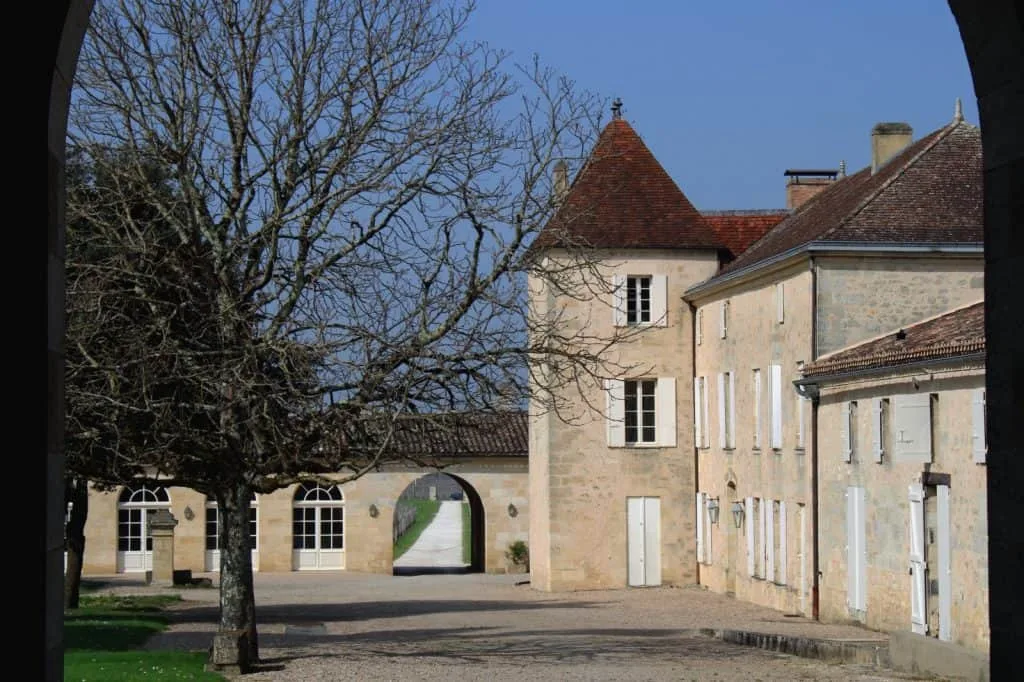 Château Grand Mayne - Saint Emilion
Do you think your parents expected you would end up falling into this passion of wine?
I don’t really know. Unfortunately, I lost my father too soon. He died, I was 21. Unfortunately, that’s part of the biggest regrets of my life, not having talked enough with him, especially about this passion, because I was really starting to be very passionate at that moment. He left too soon. After yes, I think he would have been proud that I continued in this direction. He was delighted to meet my friends. We had big traditional gatherings on Sunday evenings. When we were doing work at the château, we lived in a little house attached to the château and we met every Sunday evening with good friends. There were three or four of us coming and Dad was delighted to open beautiful bottles from everywhere, to have us discover blind. He was happy to see there was a good bunch of nice, open guys, and to see his son interested in this, looking to know a bit. I think that, from where he is, he’s happy I found my passion and that it’s in the family setting of this property.
Can you tell us how it went for you, your first steps here, at Grand Mayne?
I started quite early, I was starting to work when Dad was still here, at the end of the 2000s. Dad, unfortunately, left in March 2001. I started to work a bit with him, but it’s especially with Mom, after. There was the passing of the torch, because Dad’s death wasn’t planned, it was quite sudden. I worked with Mom, she took over a bit from Dad. Obviously, she handled mostly the property before transmitting anything to me. For some time I didn’t have a very important involvement. They left me the commercial side, doing promotional trips. Since it happened quite suddenly, I had perhaps lacked experience other than Grand Mayne, so I decided according to my desires and to proposals that were made to me, to be able to leave. I did harvests and vinifications in South Africa, I worked a bit in England with a merchant in London. In 2006 I started to work a bit more seriously on the property, at Grand Mayne. Mom let me have a bit more space on the commercial side, starting in 2008 especially. And then, time goes fast. My mother retired in 2011. I became fully manager of the property at that time. It’s there where it changed radically in terms of life and responsibilities, for me.
Was that change of responsibilities sudden?
It was less sudden than my father’s departure. I knew Mom had planned to stop at the end of 2011. She already had someone working with her after Dad’s death, who is still at Grand Mayne today, named Jean-François Plumas, who handles everything administrative and financial of the château. It was a bit prepared. She did this passing of the torch very well. So it was well experienced, even rather comfortable. Which allowed me to take the measure of the new tasks I had to face. There was one or two years where I had to take the measure of all that, to apply what I really wanted to do.
What were the first projects you had in mind?
There were several things, especially on the style of wine. I think every owner or director in properties, doesn’t necessarily want to imprint his style, but to have a bit of his stamp while being a guarantor of perpetuity. I wanted things that are more of my generation, to switch to a type of wine that is more my own, in any case to my taste. That’s on the wine side. On the viticultural side, there was important work to redo on the restructuring of the vineyard. There were some important projects to do, replanting, co-planting. I immediately studied a plan, which is still being scaffolded, between 2012 and 2035, to deeply restructure the vineyard while being in line with the style of wine I wanted, in partnership with my brother. We mustn’t forget Damien, my brother, who has a very present role at Grand Mayne, even if he isn’t in the executive today. That’s part of the discussions we had and still have a lot. Those were the two important projects when I took over the management of Grand Mayne.
Can you tell us a bit more about this plan? What will Grand Mayne look like in 2035?
There’s a restructuring of the vineyard because there are vines that are quite old. A vineyard, it lives, obviously. There are parcels at the end of life, others that are younger. You have to give a certain dynamic and a certain meaning to all that. The idea is to perpetuate, to have a performant tool over the long term, to have a rotation perhaps better than at a time when the vines were left for a moment without having a plan on replanting. The idea is to have a production tool that turns a bit better, that we have yields a bit more regular each year. That’s still the reward of all our work. That’s for the somewhat economic side. And on the qualitative side, on the qualitative part of wine and style of wine, it’s the return of a bit more Cabernet Franc in the blends, which historically, in the 1950s/1960s, was close to 40%. For different factors, whether the style of wine I want to give, climate change which is undeniable, the disease tolerance we can have, Cabernet Franc is very interesting. The result is already there, and even more in a few years we’ll have a more important proportion of Cabernet Franc at Grand Mayne, while still keeping Merlot which is the dad of Saint-Émilion. But this dad needs to have a beautiful mom. Having beautiful Cabernet Franc in the blend is very interesting, and it’s a grape variety that responds well to the challenges we have today and that we’ll have in the next few years.
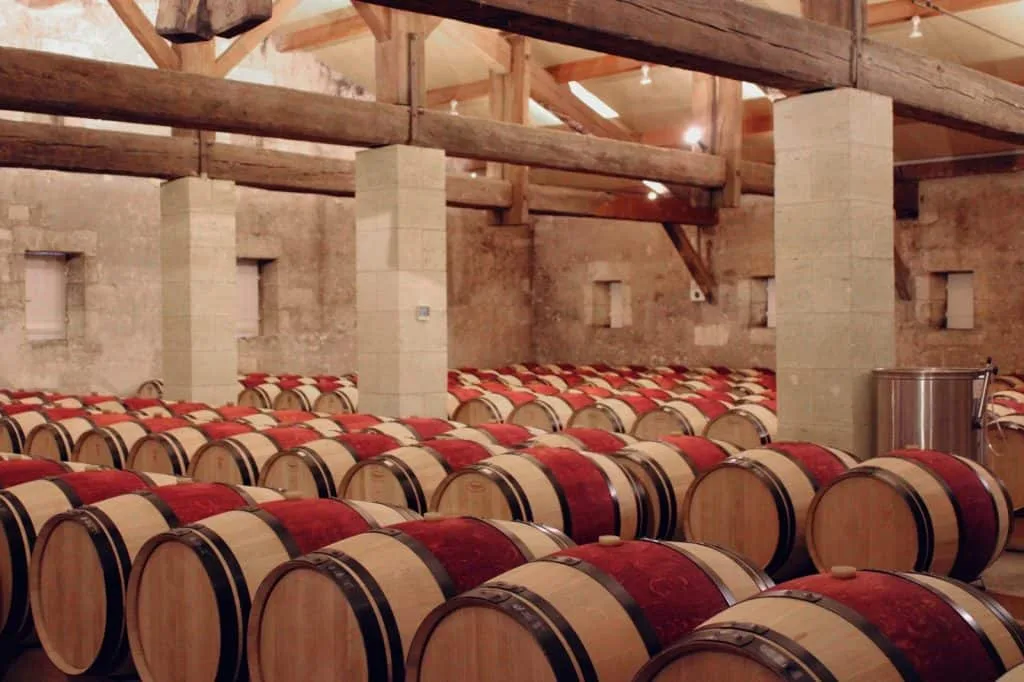 Barrel chai of Château Grand Mayne
You grew up in Saint-Émilion, it’s a place you’ve known forever. What are the major evolutions you’ve been able to observe here, in Saint-Émilion? Have you been able to see new trends emerge?
Saint-Émilion, I’ve always said it was a bit the village of Asterix and Obelix. It’s always dynamic, there are always stories. Some hit each other, like in Asterix there’s the fishmonger. Sometimes there’s the chief, sometimes there’s no chief. They have their magic potion, it’s a bit the wine of Saint-Émilion. There’s that side which is fascinating and amusing. And it has always been one of the most prestigious appellations of France, by its size, there are 4,500 or 5,000 hectares, it’s not a small appellation. This appellation has always been at the initiative of lots of things. Sometimes in excess. There was the advent of micro-cuvées, that was part of the renewal starting in the 1990s, with many arrivals of new winemakers from different horizons, who brought a bit of modernity, of difference on wines and on the way of running properties. We’re very ahead now on the environmental side. There’s an obligation on the Saint-Émilion appellation, in one or two years, to have an environmental approach. It’s a fascinating appellation. There’s also a mosaic of terroirs. There isn’t a true typicity in Saint-Émilion. Just take the two largest historical crus of Saint-Émilion, which are Ausone and Cheval Blanc. Ausone is on a limestone plateau. There are some common points with Cheval Blanc, especially the presence of Cabernet Franc, but they are really limestone soils. On the other side, we have Cheval Blanc which is on gravels, with clays too, in a different style. Around that, we have properties with clay-limestone, more sandy terroirs. There’s a mosaic of personalities in the wines, also, a mosaic of personalities in the management of properties, and a mosaic of places, of terroirs. It’s part of my sensibilities, but I think it’s present in many winemakers, it’s the notion of place and identity. There’s nothing more important than feeling a place in the wine. Saint-Émilion is also interesting for that: there are lots of personalities, lots of currents, which makes it dynamic. So sometimes there are excesses, but especially many interests.
When we think of Bordeaux wines in general, we don’t always think of wines of place. It’s not something that comes through in the image of Bordeaux wines, even though there’s a typicity that’s ultra different from estate to estate, parcel to parcel.
Exactly. I think it’s a very French-French thing, we like to put people in boxes and caricature sometimes. Not everyone, fortunately there are moderate people. Me, I’m rather someone reasoned, moderate, excesses I’ve never liked, whatever the subjects. It’s not because we’re not excessive that we don’t move forward. On the other hand, there are undeniable things, and indeed this notion of place, of identity, specific to many wine regions, must be maintained and glorified.
Château Grand Mayne is a magnificent building, it bears its name well. But especially, it was very modern for the time it was built. Can you tell us a bit more about the architectural vision of the estate?
The oldest part of the château dates from the 16th century, that’s the residential side. There are buildings around, of chais, dating from the 18th century, that were quite modern for the time. After, there were the exceptional projects my parents undertook in the very late 1980s, rather in the 1990s, where they developed a working surface with an underground chai, very modern at the time, which was quite unique for Saint-Émilion. It already existed at our friends in the Médoc, they were inspired a lot by the beautiful properties that are Yquem, Cru Larose, for the design of this chai. Also, the gravity work I accentuated a few years ago. There’s a space, tools, that are quite modern but that are now 30 years old. I have a bit of refreshing to do, but it had been done very well at the time, it was very cutting-edge. Indeed, my father was someone who liked new things, he liked to experiment. Whether for the production of wines, for the agings, he tried first on a small scale, and then if it turned out to be a good solution, on a larger scale. We have a technical tool that needs, it’s true, a bit of refreshing, it’s more brushstrokes than anything else, but that was very cutting-edge and very practical, even today.
On this architecture, by the way, it seems to me the facade of the building benefits from a classification as a historical monument?
Exactly. It’s indeed a very beautiful building. I invite the listeners to come visit. The heart of the building, the Mayne, the manor, dating from the 16th century, was classified by the Ministry of Culture, and is a historical monument, both the North facade and the South facade, as well as the roof, the body of the old building, since 2012. Especially since we’re in an appellation, in Saint-Émilion, that’s a UNESCO World Heritage site since 1999, that’s part of the very first vineyard landscapes to be classified. Grand Mayne is part of the jewels of the Saint-Émilion crown.
Do you do a bit of wine tourism here? Can people come visit?
We’re not yet completely developed in wine tourism. The idea is to do it in the next few years. I didn’t want to disperse myself too much right away, to work well on the wines, to undertake the evolutions I launched starting in 2014 and more particularly starting in 2016. But today we can do visits of Grand Mayne. I do a lot myself, or Pierre-Yves, our technical director. I think it’s important that it’s people from the cru who explore Grand Mayne. So we do a bit fewer visits, but they are beautiful visits, beautiful tastings. Eventually, the idea will be to have as many people as possible enjoy this magical place. It’s a very attractive region, there are more and more beautiful châteaux, beautiful people to meet in this appellation, and beautiful wine tourism circuits. The idea is, in the next few years, to be part of this circuit.
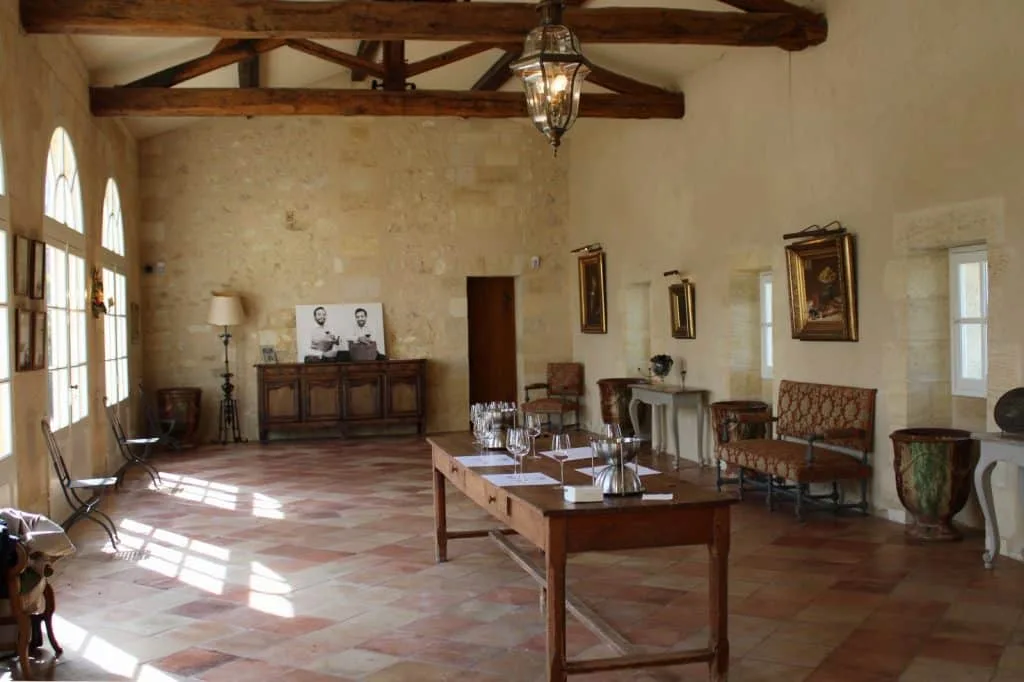 Tasting room Château Grand Mayne
What’s your daily life today?
My daily life… I live in Bordeaux with my wife who also makes wine in Saint-Émilion and Pomerol. Here, it’s a family property, I’m manager with my brother Damien who is a notary and is also invested in the property. My daily life, I’m at Grand Mayne every day. Sometimes I stay there in the evening too when there are some events or other. I have the chance to have Jean-François who worked with Mom, who is still at Grand Mayne, and there who’s passing the torch, he’s now close to retirement. So I still have this chance to be able to focus a bit more fully on the technical side and the commercial side. We always forget the administrative side, but it’s the one that makes you dream less, that’s for sure, and that’s perhaps less fascinating. I focus more on the technical side. I have a technical director with whom I get along very well, who’s been there since 2016, Pierre-Yves Petit. That’s part of the important daily things, to follow the management of both the vineyard, the chai, and obviously the tastings, the evolutions on the wine. I also focus on the commercial side, the follow-up with our partners, because that’s the right word, merchants in Bordeaux. Also the promotion. In this period of health crisis it’s a bit different, but people haven’t stopped drinking wine, even maybe more. Our restaurateur friends, unfortunately, are closed, but people might let loose a little more at home by putting in a slightly more important budget than what they could have put. Everything they don’t put in restaurants, unfortunately maybe they put it at home by making good dishes and taking nice bottles. My daily life is that. The management of teams too. We have about ten people. I try to be present, to follow a bit. It’s a team, a family too. We have a fairly family vision of the company, as we are ourselves. That’s the essential of my days, to follow all that. I’m not going to give you the entire exact inventory of my agenda. It’s not necessarily always very fascinating, but everything is around a passion. The technical side, the commercial side, and the follow-up of teams. And there I’m going to be in transmission, in the administrative side, in the next few weeks, for the future of Grand Mayne.
You’re co-owner of Grand Mayne with your brother. How does this relationship with your brother work? Are you able to talk about anything other than Grand Mayne?
Oh yes, we talk about lots of things, we get along very well. We’re two and a half years apart, we’ve always been very close, two boys, we did the same nonsense when we were very young. My brother is a very measured, intelligent boy. I hope he’s listening to me well. We get along very well on the management of Grand Mayne. He really lets me have free rein. Obviously, I exchange with him. He took over a notary practice because there’s no notary in the family, so he had to invest quite strongly in his new profession. The idea is that he also contributes to the rise of Grand Mayne. He’s going to try to take a bit of time from his notary work to support me on this administrative and legal side, because unfortunately, or fortunately for jurists, there’s more and more legal work in companies, whether wine or other. So it’s good to also have his opinion. We have a good understanding both of us, we have the chance to get along well, to be only two. We have at least this generation that’s a priori preserved, and we’ll see for the next ones. There’s a lot of exchange, we call each other almost every day, even several times a day. We have some challenges on the château, some investments to make, some visions to refine. We exchange a lot regarding that. It goes very well. Plus, our wives get along well. It’s not a detail, it’s important too in family cohesion. For now, I want to say everything’s rolling, and we hope it’s going to continue rolling like that.
You have two children who are still young. Is it for you a bit of a dream to transmit to them?
They know our sensitivity. Beyond being a profession, it’s a passion. That’s what I was explaining at the beginning, I didn’t enter through this because I was pushed in the back and told “go on, it’s your turn,” but really because I’m passionate about wine. I obviously have this sensitivity, my wife also makes wine and has vineyards on the right bank. So, indirectly we transmit that. Our children, as you’ve been able to see, are here on Wednesdays, we spend weekends quite regularly in Saint-Émilion. They’re still very young, but they’re sensitive, Grand Mayne is part of their fairly regular vocabulary. The vine, the grape remain quite minor in the discussion, but yes, there will be transmission, at least of the passion for something and for this place. Once again, this place, and there I’m not necessarily talking about wine, but the building, this family house, where they have the pleasure of going almost every Wednesday, some weekends, and seeing their cousins there. It’s rather through that that the transmission will perhaps be done. We’ll see how the future will be made. As we know, it’s always complicated when there are a few more in families, to keep the patrimony, today. We’ll see.
Is digital something you see developing in your activity?
I see it on a personal level, because I’m on social media, especially Instagram. I’m less on the new networks, the TikToks, all that, I’m not too aware of that. I’m rather old-school: Facebook, Instagram. It’s something we try to develop. We do everything ourselves. Everything myself. On one hand because I don’t necessarily have the means to put someone to take care of it. That’s a good reason, already. The second reason is also because I like to do it from time to time, I bring my personal touch. It’s sure that if I developed this, it would have to be done in a more professional way. It’s obviously a new mode of contact and transmission, of sharing our passion which is wine, which is obviously important. Today it’s no longer TV, newspapers, or less and less, but it’s videos. There, I had a few videos made to present Grand Mayne to be a bit present on Instagram and Facebook. It’s something very important. I’m also a good follower on Instagram of everything happening in wine. I think there are nice things to show via these communication modes. And podcasts, obviously!
You also have a real environmental approach. Can you tell us a bit more?
We’re sensitive, like a lot of people. It’s not something unique to Grand Mayne, all our neighbors and friends, in Bordeaux and elsewhere, we all have this sensitivity, it’s nothing new. It’s obviously developed over the last twenty years. We try to be cleaner, more respectful of nature, ecology, and our environment. It also goes back to respect for the place. We have some certifications, and on the wine side, we’re really on a more respectful approach to soil, plant, and therefore the consumer. Knowing that it’s not easy in Bordeaux. I’m not going to reopen this subject which can sometimes be sensitive, but which is an important subject in Bordeaux. We talk about it very often among ourselves, and not only my generation. We’re right in it, I’m doing everything to advance in it. I think we’ll have some nice news for Bordeaux in general, knowing that it’s not an easy region in terms of climate. In the next three or four years there will be a huge upheaval, a big change. We’ve kicked off in first gear, and I think we’re going to switch to second, third very quickly. It augurs very nice days for our region.
Do you concretely feel the impacts of climate change on your wines?
Obviously, we feel it for several years, for five or six years. It’s not a fashion phenomenon. We have somewhat rough weather episodes. There’s not a year where we’re not all scared in late April, early May, looking at the weather, finding solutions to fight against frost or hail episodes. It’s all recent in Saint-Émilion, now we’re going to be equipped in a general way over the entire appellation to fight against that. Climate change is here. We have earlier maturities than they were. With the goal of having slightly fresher wines, we move our harvests forward all the more compared to this climate change. We adopt a slightly different mode of working the vineyard and its leaf surface. Also, there’s the question of the presence of Cabernet Franc which is a slightly later grape variety than Merlot, and which has a card to play in this, beyond its resistance to Mildew, beyond its undeniable taste character, very interesting and historical in Saint-Émilion. We don’t fight, because we have this oceanic climate in Bordeaux which is a great chance, which sometimes is a bit annoying because of these little rains that come in spring, sometimes in summer, and which bring us some little fungi that we’d like not to see, but which gives us this meter of water more or less present every year and which helps us deal with this climate change. So I think Bordeaux is a region that has many qualities to coexist with this climate change. I’m obviously very concerned about that, but I think we have a way of being able to appreciate it in a fairly serious and interesting way.
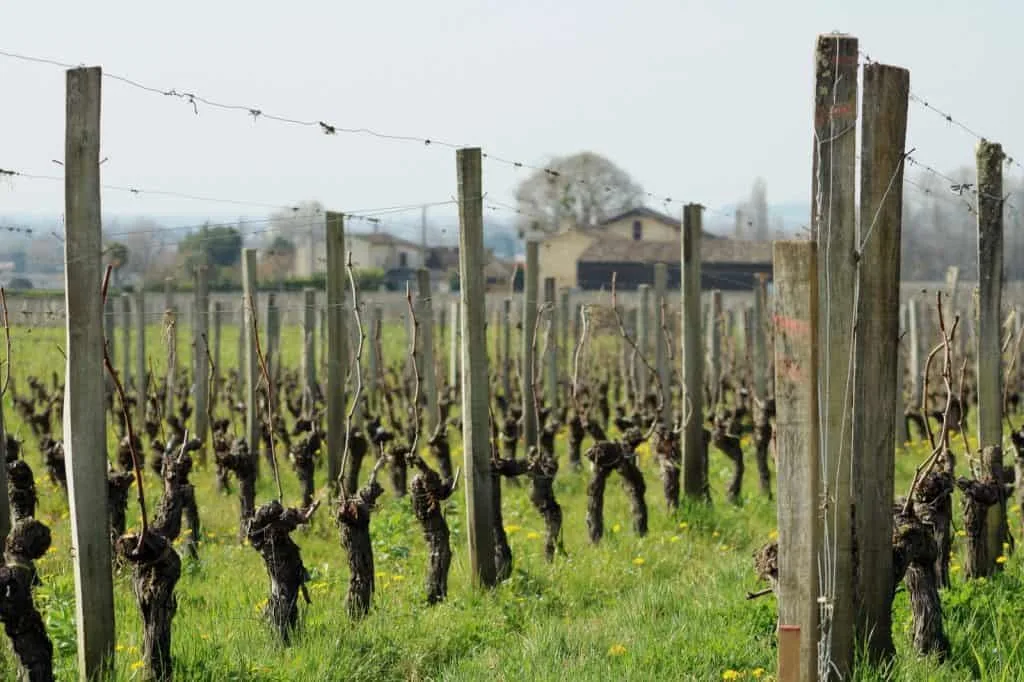 Vines of Château Grand Mayne
How does 2020 look?
2020 was harvested very early. 2020, at Grand Mayne, is the second earliest vintage since the property has been in the family, in 1934. There was 2003, which was the year of the well-known heatwave, and within one day, there’s 2020, where we started the harvests very early. We started the harvests on September 14 or 15. It was a fairly hot year, we had episodes with very high temperatures in August especially. We had a quite exceptional year in terms of climate, again. We have a succession of 2018, 2019 even higher, and 2020 which, at Grand Mayne, according to the tastings we had for the primeurs, is perhaps even more interesting than 2019. It’s really a good vintage, in the good sense of the term. It’s a good year. I’m quite proud, because it also goes with the new style, the new evolutions I’ve given to the framework of Grand Mayne. 2020 will be part of the great recent vintages. It’s true we have a nice succession of beautiful vintages recently. Here are some beautiful bottles to have in your wine cellar.
I’m part of the Union des Grands Crus, I’m quite present in the Union, having several roles. We’re discussing quite a bit, we’re going to have some events that will be done at the end of April. We hope by then we’ll be able to have a few more people who can come. The primeurs will be presented around the world, in several cities. The Union works hard for Bordeaux in general, to try to have a diffusion of primeurs around the world. We evolve week after week, you never know if we’re going to be between two lockdowns, in deconfinement, in lightening of measures. Once again, it’s a very great vintage that will be worth tasting in primeur, and obviously after the primeurs.
Historically, the primeurs is the first week of April, but because of the health crisis last year, it was postponed because we had to adapt to the situation, it’s not easy. It had been postponed, but no one could come to Bordeaux, so we decided to send samples. We had to see according to the legislation of each country, the way it’s processed, and send them to all journalists and critics around the world. Strong from this unfortunate experience of 2019, we were able to appreciate all that with the Union des Grands Crus, with at its head Ronan Laborde who is a young and dynamic president, to prefer an installation in 2020 that will be interesting. We’ll have a bit more capacity to be present on site. But we’d prefer to be there, in the châteaux, to receive and fully share our passions and our babies.
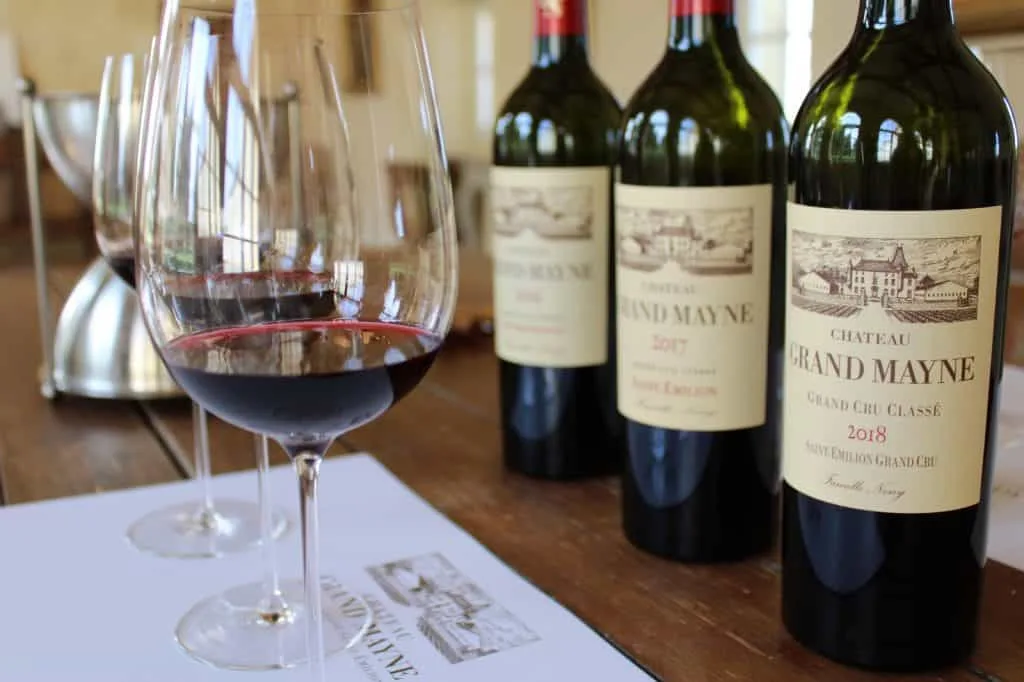 2016, 2017 and 2018 vintages of Château Grand Mayne
The primeurs is a moment when you can buy the wine of the very latest vintage while it’s still in full aging. You won’t have it for two years.
That’s it. What you have to say is that between the moment we do the harvests, we’ll take September 2020, you have to count two years before having it in bottle physically. The primeurs, at the moment we buy it, let’s say we cut the pear in two, it’s more or less halfway. It’s a bit before the intermediate summer. We can advance on the purchase of these wines, as a priority, with a more interesting price that’s supposed to climb after, once it’ll be available. This effect is especially more marked when they’re great vintages that are the most in demand. I think people who’ll buy Bordeaux wines, because I’m talking about what I know best, in 2020 in primeur, it’ll be a qualitative investment. At least for the quality of wines, it’ll be a very nice year. It obviously has its interest.
Was there a moment where you hesitated about Grand Mayne? A moment where you said “is it worth it”?
It’s happened to me. When I took over, there are moments when I had to commercially rework on the property, I had a style to give, one or two people don’t necessarily follow you, but it was very minor, it didn’t last very long. I’m someone who likes people, I trust a lot when I sense the people. I’m someone fundamentally positive. I’m well surrounded, with a wife who’s very positive, who pushes me a lot, who’s full of energy. It doesn’t last very long, those moments. But it’s true there are moments, when it doesn’t work very well, when everything accumulates, small worries, like we can all know in our professional life. We’re a bit down, and then we say “ah no, we’re on a beautiful property, we can take advantage of it to do I don’t know what.” It’s happened to me, but I’ve always known how to bounce back fairly quickly, and I’m still not the worst off of the boys in this lower world. And there’s a very interesting challenge. I want to give it my all for that, in the next few years. At 40, as they say, we’re in full possession of our means, we still have health and desires, so it’s the moment to exploit them to not have regrets later. We must not have regrets. That’s what my brother tells me. We’re between 40 and 50, it’s a period when we’re very dynamic. We have a few more bottles, more ease, more knowledge. It makes you want.
Jean-Antoine, thank you. I have three big questions left. The first, do you have a recent tasting favorite?
I have many! As I was telling you, I taste quite a bit of things. I have my fashions, my periods. As Picasso had his blue period, I have my Loire period, then I have my Barolo period. I have the chance, by my entourage, to have lots of friends in wine, whether producers, merchants or other, who are passionate about wine and who open very beautiful bottles. There’s a producer I really like in Burgundy, Pierre-Yves Colin-Morey, who makes sumptuous whites, that I really enjoy a lot. One of his Meursault 2015 that I tasted at a good friend’s in Saint-Julien, not long ago, that was really very, very good. It’s one of my last favorites that I appreciated. Our Burgundian friends are nice, but then it’s difficult to find their bottles after. I have a particular affinity for Burgundian Chardonnay. You have to find them!
Do you have a wine book to recommend?
There are several writings. I’m not going to bring out the great classics, Émile Peynaud and all that, that’s already been done. There’s one I read not long ago, on Burgundy. I’m passionate about Burgundy. Which is written by the former manager of Clos de Tart. The name escapes me, I don’t have it in mind anymore. It’s a bit of a dictionary of Burgundy, and especially with a presentation of all the Burgundian appellations. It’s both a bit of a dictionary and a presentation of the good producers. It’s a work that’s not very recent, that’s about fifteen years old I believe. That I read, that I still read. It’s an interesting reading on places. I’m passionate about the notions of appellation and origin. Editor’s note: We called Jean Antoine back to verify the reference. Here is the recommended wine book: Les vins de Bourgogne, by Sylvain Pitiot and Jean-Charles Servant.
Finally, who should be my next guest in this podcast?
Of my generation, we have a whole bunch of friends in Bordeaux, they’re really nice, and there’s really no competition, we discuss a lot, we exchange on lots of subjects. I’m not going to cite Saint-Émilionnais, that would be too easy, and you might see some in the next few days. People I had the chance to mix with more precisely in recent weeks because we were doing our presentations and we did training for sommeliers. Two guys with whom I shared good moments, who are François-Xavier Maroteaux, owner of Château Branaire-Ducru, who is a sensible guy, very open about wines, who knows lots of things, and who is a charming boy. And then a good friend too, who is Jean-Jacques Dubourdieu, who’ll talk to you about Sauternes like I’ve rarely heard, and who has the chance also to have the aura or the way of expressing himself that his late father had, Denis Dubourdieu, who was part of the great Bordeaux figures of modern oenology, who brought a lot to white wines in general. Jean-Jacques is a fascinating guy who’ll talk about Sauternes which isn’t always a wine well presented today, and who talks about it so well, who really makes you want to taste it. He made me fall in love with Sauternes. And he’s a charming, funny, intelligent guy. Then there are others, I’m not going to cite them all. I think of those two because I saw them recently. I see them quite regularly and they’re a bit favorites of the moment. There are lots of interesting people in the wine world, because it’s such an interesting passion.
Amazon links on this page are affiliate links. They cost you nothing extra, and they help me keep this going.