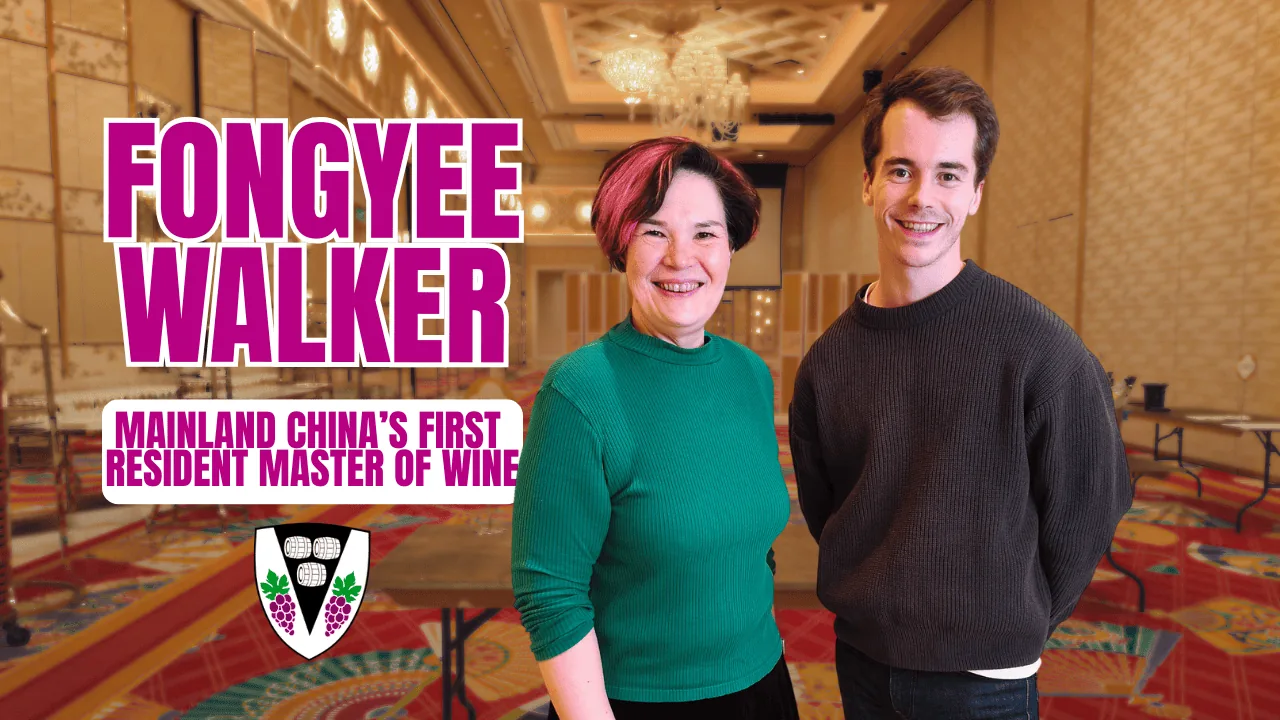
In the middle of intense tastings at the Wynn Signature Chinese Wine Awards, we sat down with Fongyee Walker MW, Mainland China’s first resident Master of Wine, and Judge and Vice Chair at the competition.
In this dynamic conversation, we dive into Fongyee’s incredible journey: from discovering wine at university to becoming a leading voice in China’s wine scene.
Together, we explore the evolution of Chinese wine, the rise of a new generation of curious drinkers, and the unique way wine education is transforming across the country. We also unpack what it really means to judge wines at an international level, and why culture, not just terroir, shapes great bottles.
If you’re curious about wine, China, or bold career paths, this episode will inspire you to taste, learn, and think differently.
Watch the full interview
Listen to the Podcast
A summary of the interview with Fongyee Walker MW
A global upbringing that shaped a unique perspective
Fongyee Walker MW brings a truly international background to the world of wine. Born in Malaysia to a Chinese mother and English father, and raised across countries like the UK, Canada, and Hong Kong, Fongyee developed an early openness to different cultures.
Wine was present in her childhood home, but it wasn’t an immediate passion. Instead, her curiosity grew gradually, rooted more in food and culture than in technical knowledge. This multicultural upbringing would later become central to her philosophy: wine is not just a product, but a bridge between cultures.
The spark: from intimidation to determination
Fongyee’s serious interest in wine began at university, when she joined a blind tasting team. Initially, the experience was intimidating. She recalls being dismissed for not knowing basic grape varieties.
Rather than discouraging her, this moment became a turning point. She embraced a mindset of continuous learning, refusing to equate lack of knowledge with lack of ability. Within a year, she became captain of the team, proving that curiosity and determination matter more than prior expertise.
Her story highlights a key belief: knowledge can always be learned, but attitude is everything.
Building wine education in China
After moving to Beijing with her husband, Fongyee began teaching, first English, then wine. She co-founded Dragon Phoenix Wine Consulting, starting with just a handful of students.
At the time, wine knowledge in China was minimal. Early classes struggled to attract even four participants. But over the past two decades, interest has exploded. Today, her students come from all walks of life: not just industry professionals, but enthusiasts seeking to expand their horizons, much like taking a yoga or cooking class.
Fongyee emphasizes that wine education in China is less about rigid technical systems and more about personal enjoyment and cultural exploration.
Wine as a cultural connector
For Fongyee, wine is a tool for cross-cultural understanding. She believes that learning about wine helps people better understand each other’s traditions, reducing fear and misunderstanding.
She often compares wine to tea in China: both are deeply tied to regional identity and everyday life. Just as tea preferences vary across China, wine consumption in countries like France is shaped by local tradition rather than formal study.
This perspective challenges the idea that traditional wine countries hold all the expertise. In fact, Fongyee argues that learners in China often gain broader global knowledge because they are exposed to wines from all over the world.
The evolution of Chinese wine
Over the past 20 years, Fongyee Walker MW has witnessed a dramatic transformation in Chinese wine. Early experiences included faulty wines and limited variety. Today, quality has improved significantly, driven by passionate winemakers and increased investment.
She attributes this progress not to soil or climate alone, but to people. According to her, great wine comes from human effort, ambition, and resources, not just terroir.
Chinese winemakers are now moving away from copying regions like Bordeaux and beginning to discover their own identity. This includes experimenting with grape varieties and styles better suited to local conditions, such as high-altitude or desert climates.
A new generation of wine thinkers
Fongyee is particularly excited about the new generation of Chinese winemakers and consumers. These individuals are more globally aware, better traveled, and more open to experimentation.
She believes the future of Chinese wine lies in discovering what works best locally rather than imitating established regions. Whether it’s Sauvignon Blanc, sparkling wine, or even new varieties, the potential is vast, and still largely untapped.
The reality of judging wine
As a judge in competitions like the Wynn Chinese Wine Awards, Fongyee offers insight into the demanding nature of professional tasting. Far from being glamorous, judging involves tasting dozens, sometimes over a hundred, wines in a day.
The process is rigorous and collaborative. Judges evaluate wines individually, then examine scores as a group to reach a consensus. Experience plays a crucial role, helping to balance personal preference with objective assessment.
Wine, stories, and humanity
When asked about wine books, Fongyee prefers those that connect wine to human stories rather than technical details. For her, wine represents science, art, history, and culture all at once.
This holistic view defines her approach: wine is not just something to analyze. Wine is something to experience, share, and use to understand the world.
Looking ahead
Fongyee remains optimistic about the future of Chinese wine. With growing expertise, investment, and curiosity, the industry is evolving rapidly.
Her journey, from an uncertain beginner to a leading voice in wine education, mirrors the development of wine culture in China itself: driven by passion, shaped by openness, and constantly learning.
Fongyee Walker MW recommendations
Books:
- Hugh Johnson’s Story of Wine, by Hugh Johnson
- Wine and War, by Donald Kladstrup and Petie Kladstrup
Discover more about:
Amazon links on this page are affiliate links. They cost you nothing extra, and they help me keep this going.