In the heart of France’s prestigious Champagne region, where tradition meets innovation, Maison Ayala has embarked on an ambitious environmental journey that positions the historic house as a sustainability leader in the wine industry. With support from energy transition specialist INITIAL Expertise, the 165-year-old champagne producer has launched a comprehensive decarbonation project at its historic production site in Aÿ-Champagne, aiming to slash greenhouse gas emissions by an impressive 90% by 2030. This bold initiative, which goes far beyond the regional target of 25% reduction, demonstrates how premium wine producers are reimagining their operations in response to climate pressures while maintaining the excellence that defines their brands.
Historic Champagne House Embraces Radical Energy Transformation
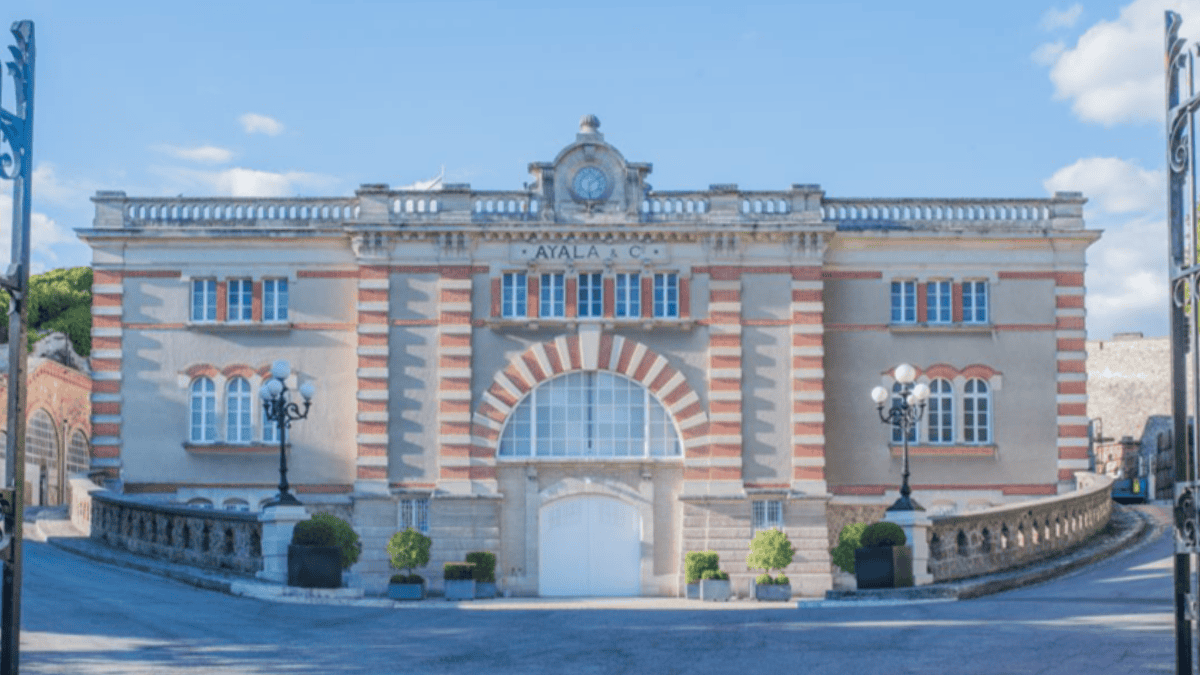
Founded in 1860 by Edmond de Ayala in the Grand Cru village of Aÿ, Champagne Ayala has been working with INITIAL Expertise for two years on a comprehensive decarbonation project for its historic production site. The collaboration represents a methodical approach to sustainability that prioritizes measurable actions over symbolic gestures.
Rather than starting with emission reduction targets, the house chose to “do the inverse work” by first identifying concrete actions they could implement. This pragmatic methodology has yielded remarkable results, with the house discovering it could achieve far more than the Paris Agreement’s 40% reduction goal for 2030.
According to Hadrien Mouflard, General Director of Champagne Ayala, the objective extends beyond mere consumption reduction. The strategy focuses on building a sustainable energy framework that respects both environmental imperatives and economic viability, creating positive impact from vine to glass.
Innovative Solutions for New Winery Construction
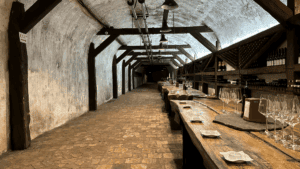
The most striking example of Ayala’s forward-thinking approach appears in the design of its new winery currently under construction. The semi-underground facility, buried 15 meters into the chalk, features a double insulation layer of 12 centimeters that proved more effective and cost-efficient than the initially planned 60-centimeter vegetated roof.
This decision exemplifies how rigorous engineering analysis can challenge conventional sustainability assumptions. The underground positioning provides natural thermal inertia, reducing energy requirements for temperature control—a critical factor in champagne production where precise climate management determines wine quality.
The new winery will reduce energy consumption by 70% compared to initial projections for the project. Additionally, a heat pump installation will produce hot water and provide office heating, eventually replacing the gas boiler that currently generates significant carbon emissions.
Comprehensive Building Efficiency Improvements
Beyond the new construction, Ayala has implemented numerous upgrades across its historic estate. The house acquired a professional programmer to optimize the timing of the ice bath refrigeration unit used in the disgorgement process, minimizing unnecessary energy consumption.
To address heat loss in heritage buildings, the company initiated a renovation plan including exterior joinery replacement. Insulated sectional doors will soon be installed in bottling areas, further reducing thermal inefficiency. These seemingly modest interventions collectively deliver substantial energy savings while preserving the architectural character of the historic site.
Shifting from Fossil Fuels to Renewable Energy
A central pillar of the decarbonation strategy involves transitioning the entire energy mix to 100% decarbonized sources. After conducting a carbon footprint assessment that revealed bottles represent one-third of emissions, the second major action area focuses on building energy performance and on-site energy consumption.
The shift from gas to electricity for multiple applications represents a fundamental transformation in how the house powers its operations. This transition aligns with broader Champagne region goals while positioning Ayala to benefit from France’s increasingly low-carbon electricity grid.
The INITIAL Expertise Methodology: Measure, Prioritize, Plan
Founded in 2018, INITIAL Expertise is a mission-driven company that advises private and public sector actors on energy transition projects and activity decarbonation. The Reims-based firm operates primarily in the Marne and Ardennes departments but also serves national and international clients.
Stéphane Flandre, Director of INITIAL Expertise, explains that their approach brings coherence and meaning to energy transition in the Champagne sector. The methodology doesn’t propose isolated solutions but transforms how energy is conceived, stored, produced, and consumed throughout operations.
The company’s tripartite framework—measure, prioritize, plan—ensures that Ayala’s energy transition remains sustainable, environmentally responsible, and economically viable. This orchestrated approach provides structure to what could otherwise become a fragmented series of green initiatives.
Broader Sustainability Commitments Across the Value Chain
Ayala’s environmental engagement extends well beyond its Aÿ production site. The house operates the Atelier Vignoble program, which supports partner winegrowers in adopting more sustainable practices. Globally, Ayala supports committed chefs who promote meaningful, responsible cuisine.
The company prioritizes local and recyclable raw material purchases, and continues developing an eco-designed bottle concept. These initiatives reflect a holistic understanding of sustainability that encompasses the entire champagne production chain from vineyard management to final packaging.
The house also focuses on transmitting traditional artisanal skills to its small, dedicated team while renovating the historic site—demonstrating that heritage preservation and environmental innovation can coexist productively.
Champagne Region Leads Wine Industry in Climate Action
Ayala’s ambitious project fits within a broader regional commitment to sustainability. The Champagne region adopted its first carbon plan as early as 2005, with the second Champagne Carbon Plan launched in 2015 targeting a 25% emission reduction by 2025. The region achieved a 15% decrease between 2003 and 2018.
The Champagne industry has committed to reducing its carbon footprint by 25% by 2025 and 75% by 2050, with approximately 20% of the region already achieving eco-friendly certification. The ambitious goal calls for 100% certification within the coming decade.
These collective efforts address multiple sustainability dimensions including sustainable viticulture machinery, packaging eco-design, building energy efficiency, freight optimization, circular economy principles, and governance structures. The comprehensive approach recognizes that meaningful climate action requires systemic transformation rather than incremental adjustments.
Rising Energy Costs and Environmental Pressures Drive Change
The context of rising energy costs and strong environmental pressure is accelerating sustainability initiatives among Champagne houses and throughout the wine-growing region. Economic considerations increasingly align with environmental imperatives, making the business case for decarbonation more compelling.
For Ayala, demonstrating that sustainability projects can be economically viable represents a core principle. As Mouflard emphasizes, sustainable development only succeeds when projects remain financially sound for enterprises. This pragmatic philosophy ensures that environmental commitments can be maintained over the long term rather than abandoned during economic downturns.
Quiet Leadership: Action Before Communication
In an era of corporate sustainability announcements and greenwashing concerns, Ayala has adopted a distinctive communication approach. The house’s philosophy emphasizes taking action before communicating, contrasting with other major houses that prominently feature their environmental initiatives.
This measured stance reflects confidence that genuine sustainability work speaks for itself. By allowing achievements to precede announcements, Ayala positions itself as a house where environmental commitment forms an authentic part of operational identity rather than a marketing strategy.
The company has presented concrete, ongoing implementation examples rather than aspirational targets alone—demonstrating accountability through tangible results.
Technology and Tradition: Preserving Terroir Through Innovation
For champagne producers, terroir represents more than geographical origin—it embodies the complex interaction of soil, climate, and human skill that creates distinctive wines. Mouflard articulates this connection clearly: champagne remains inseparable from its terroir, meaning that preserving nature equates to preserving the industry’s future.
This philosophy drives the house’s ambitious decarbonation commitment, affirming its determination to produce exceptional champagnes within environmental boundaries. INITIAL Expertise’s support provides the methodical, pragmatic framework necessary to translate this vision into measurable progress.
The collaboration between a historic champagne house and an energy transition specialist illustrates how traditional wine regions can combine heritage craftsmanship with contemporary innovation to address climate challenges. It confirms the pioneering position of the Champagne region in combating climate change while adapting viticultural and industrial practices.
Industry-Wide Implications and Future Outlook
Ayala’s comprehensive approach offers a replicable model for other wine producers confronting similar sustainability challenges. The project demonstrates that dramatic emission reductions—far exceeding international targets—remain achievable through systematic analysis, strategic investment, and operational transformation.
The Champagne industry aims to achieve carbon neutrality in vineyards by 2030 and net-zero carbon emissions by 2050. Individual houses like Ayala that exceed these collective goals help drive regional progress while proving that economic success and environmental stewardship can advance together.
As climate change increasingly affects harvest timing, grape quality, and production costs, the champagne sector’s proactive response provides valuable lessons for global wine industries. The Champagne region’s early adoption of carbon footprint measurement, collective action frameworks, and certification programs has created infrastructure that facilitates house-level innovation.
Consumer demand for sustainable luxury products continues growing, particularly among younger demographics who scrutinize environmental credentials alongside quality and heritage. Champagne producers investing in genuine decarbonation today position themselves advantageously for evolving market preferences while protecting the natural resources their businesses depend upon.
Conclusion
Champagne Ayala’s partnership with INITIAL Expertise represents more than an environmental project—it embodies a fundamental reimagining of how premium wine production can evolve to meet contemporary challenges. By targeting a 90% emission reduction by 2030, the house has set an extraordinarily high bar that challenges industry assumptions about what remains possible within traditional winemaking frameworks.
The project’s success depends on integrating multiple interventions: building efficiency improvements, renewable energy transitions, innovative construction techniques, and systematic operational optimization. This comprehensive approach acknowledges that meaningful decarbonation requires transforming energy relationships throughout production rather than implementing isolated green technologies.
As climate pressures intensify and regulatory requirements tighten, Ayala’s methodical, results-focused strategy offers a compelling blueprint for wine producers worldwide seeking to preserve their craft while protecting the environment that makes it possible. The house demonstrates that heritage and innovation need not conflict—when properly integrated, they can create more resilient, sustainable businesses capable of producing exceptional wines for generations to come.
Sources
- La Champagne de Sophie Claeys – “La décarbonation, le nouvel art de produire du Champagne Ayala” (October 8, 2025): https://lachampagnedesophieclaeys.fr/champagne-ayala-la-decarbonation-comme-nouvel-art-de-faire/
- Matot Braine – “Champagne et décarbonation : le pari gagnant d’Ayala” (October 2025): https://matot-braine.fr/au-sommaire/entreprises/champagne-et-decarbonation-le-pari-gagnant-d-ayala
- La Marne Viticole – “Aÿ-Champagne : le champagne Ayala poursuit sa démarche de décarbonation” (October 9, 2025): https://la-marne-viticole.fr/ay-champagne-le-champagne-ayala-poursuit-sa-demarche-de-decarbonation/
- INITIAL Expertise Official Website – “Conseil en transition énergétique et décarbonation”: https://www.initial-expertise.fr/qui-sommes-nous/
- Champagne.fr – “Carbon footprint”: https://www.champagne.fr/en/the-commitments-in-champagne/our-commitments/carbon-footprint
- Ethos – “Champagne’s Top Houses Confront a Changing Climate” (June 30, 2025): https://the-ethos.co/sustainable-luxury-champagnes/
- IBECI – “How Champagne Sparkles in Sustainability Leadership” (December 30, 2024): https://www.ibeci.com/post/how-champagne-sparkles-in-sustainability-leadership